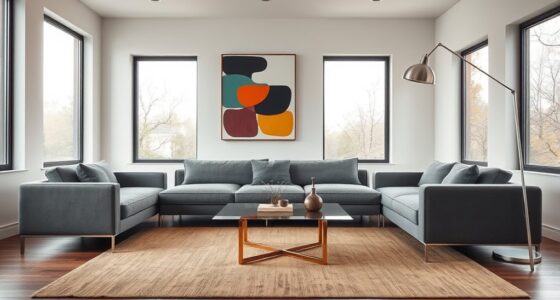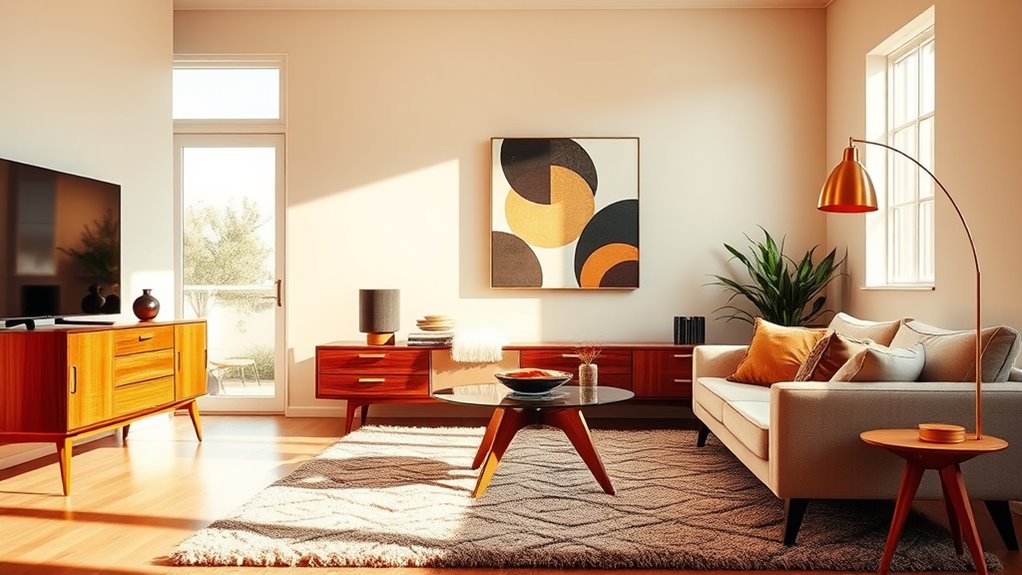

Mid-century modern design isn’t likely to ever truly die because it combines timeless appeal with sustainable, practical principles rooted in cultural optimism and craftsmanship. Its focus on clean lines, natural materials, and adaptability keeps it relevant across eras and styles. This style evolves without losing its core identity, making it resilient against fleeting trends. If you want to discover how this enduring design continues to inspire, there’s more to explore below.
Key Takeaways
- Its emphasis on quality craftsmanship and durable materials ensures long-term relevance.
- Mid-century modern’s simple, adaptable design continues to blend with evolving interior styles.
- Rooted in cultural optimism and innovation, it maintains a timeless appeal beyond fleeting trends.
- The style’s focus on sustainability and repairability aligns with contemporary eco-conscious values.
- Its ability to evolve with modern aesthetics secures its place in future design landscapes.
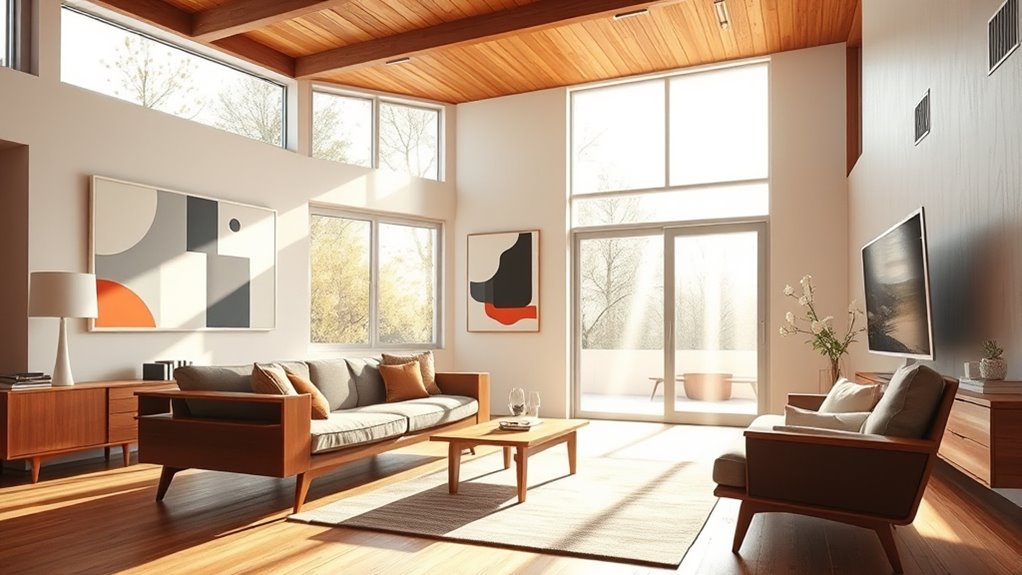
Mid-century modern design has experienced a resurgence in recent years, prompting many to ask whether it’s truly timeless or just a passing trend. As you explore this style, you’ll notice that its appeal goes beyond aesthetics. One key factor that keeps mid-century modern relevant is its focus on sustainability considerations. Many pieces are crafted with natural materials like wood, which, when sourced responsibly, promote eco-friendly practices. The clean lines and simple forms also mean less waste during manufacturing and easier repair or repurposing, aligning the style with contemporary environmental values. This emphasis on longevity and quality makes it more than just stylish; it’s practical and sustainable for the long haul. Additionally, the style’s emphasis on craftsmanship and quality helps ensure its durability and timeless appeal over generations.
Cultural influences also play a vital role in shaping the style’s endurance. Mid-century modern emerged during a time of rapid innovation and optimism in the post-World War II era. It reflected a cultural shift towards minimalism, functionality, and a forward-looking mindset. Today, those same influences resonate with modern sensibilities that value simplicity and purpose. You’ll find that the design’s roots in mid-20th-century optimism and its embrace of new materials and techniques contribute to its timelessness. The style’s adaptability also allows it to blend seamlessly with other design trends, making it relevant across different eras and cultural contexts.
What makes mid-century modern stand out is its ability to evolve with cultural shifts without losing its core identity. When you incorporate these pieces into your space, you’re not just following a fleeting trend; you’re embracing a design philosophy rooted in practicality, cultural history, and environmental mindfulness. This makes it more resilient against the whims of fashion. Even as new styles emerge, mid-century modern’s emphasis on craftsmanship and thoughtful design keeps it fresh and relevant. Its cultural influences continue to inspire reinterpretations, ensuring it remains a dynamic and enduring style rather than a passing fad.
In the end, whether mid-century modern ever truly dies depends on how well it adapts and resonates with your values. Its sustainability considerations and rich cultural history give it a foundation that’s hard to shake. Instead of fading away, it’s likely to keep evolving, always rooted in the principles that made it popular in the first place. So, when you choose mid-century modern, you’re not just opting for a look; you’re embracing a timeless approach that can adapt to any era or trend.
mid-century modern wood dining table
As an affiliate, we earn on qualifying purchases.
As an affiliate, we earn on qualifying purchases.
Frequently Asked Questions
How Has Mid-Century Modern Influenced Contemporary Interior Design?
Mid-century modern has substantially shaped contemporary interior design by inspiring sleek furniture manufacturing that emphasizes clean lines and functionality. You’ll notice its influence in popular color palettes, featuring earthy tones and bold accents that create a timeless vibe. These elements blend seamlessly into modern spaces, proving that mid-century modern’s focus on simplicity and practicality remains relevant, giving your home a stylish yet enduring appeal.
Are There Specific Materials Characteristic of Mid-Century Modern Furniture?
Did you know that over 60% of mid-century modern furniture features vintage materials? You’ll find iconic finishes like teak, walnut, and rosewood defining its look. These materials give the furniture its warm, organic feel and timeless appeal. You’ll notice sleek lines and minimalist designs, often highlighted with metal or fiberglass accents. This combination of vintage materials and iconic finishes makes mid-century modern furniture instantly recognizable and enduringly stylish in any space.
What Are Common Misconceptions About Mid-Century Modern Style?
You might think mid-century modern style is just trendy, but it actually has a timeless appeal. A common misconception is that it’s only about sleek, minimalist furniture, but it also emphasizes warm wood tones and functional design. Don’t confuse simplicity with a lack of character. Its enduring popularity comes from its ability to blend form and function, proving that mid-century modern isn’t just a passing fad but a lasting aesthetic.
How Can I Incorporate Mid-Century Modern Elements Into a Modern Home?
To make your modern home speak mid-century, you’ve got to strike a balance, and that’s where vintage accessories come in. Incorporate iconic furniture pieces and a carefully curated color palette, like warm earth tones or bold contrasts. Don’t be afraid to mix contemporary with vintage; it’s the secret sauce. Remember, a little goes a long way, and you’ll create a space that’s timeless yet fresh.
Is Mid-Century Modern Sustainable or Eco-Friendly?
Yes, mid-century modern can be sustainable and eco-friendly. You can choose furniture made from recycled materials and prioritize eco-conscious design principles, such as durability and minimal waste. By selecting pieces that emphasize sustainability, you help reduce environmental impact while maintaining the iconic style. Incorporating recycled materials and focusing on eco-conscious design makes your space stylish and environmentally responsible, ensuring the timeless appeal of mid-century modern endures.
natural material mid-century modern armchair
As an affiliate, we earn on qualifying purchases.
As an affiliate, we earn on qualifying purchases.
Conclusion
Think of Mid-Century Modern as a classic song that never fades—each time you hear it, it feels fresh yet familiar. Like the iconic Eames chair that still graces countless homes, this style’s blend of simplicity and elegance keeps it relevant. Its timeless appeal is like a sturdy oak tree in a shifting forest—standing tall amid trends. So, whether you see it as trendy or timeless, it’s here to stay, evolving but never losing its roots.
sustainable mid-century modern bookshelf
As an affiliate, we earn on qualifying purchases.
As an affiliate, we earn on qualifying purchases.
timeless mid-century modern lighting fixtures
As an affiliate, we earn on qualifying purchases.
As an affiliate, we earn on qualifying purchases.