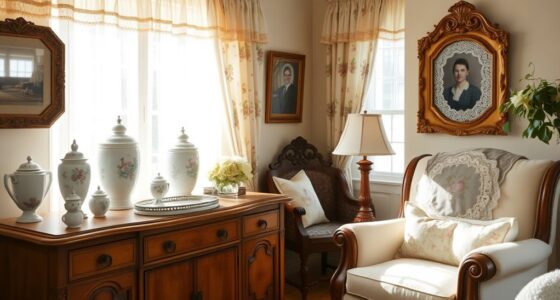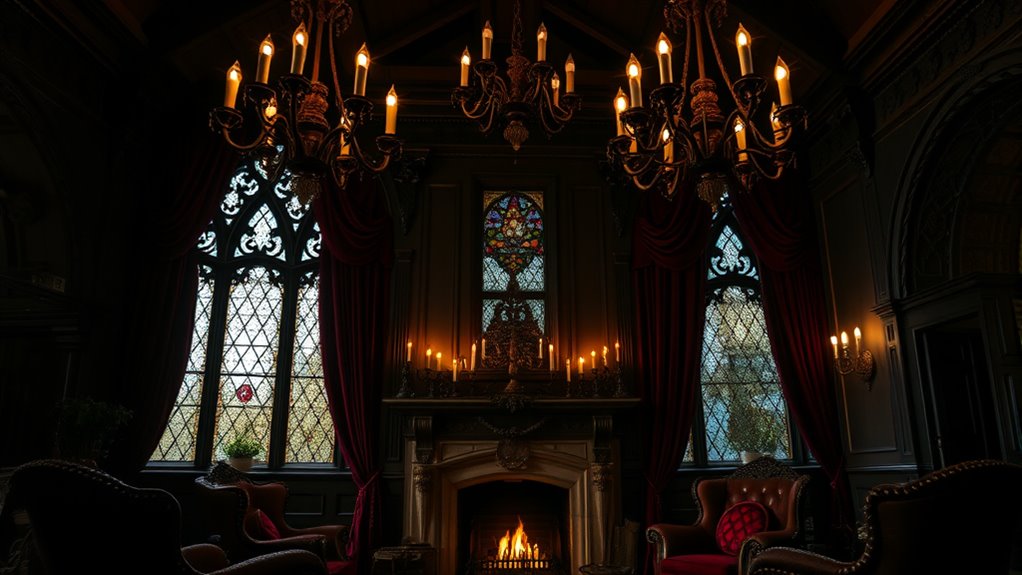

Victorian Gothic Revival brings dark, dramatic 1800s-inspired decor into modern homes, blending ornate architecture with rich, moody colors like burgundy, emerald, and midnight blue. Picture pointed arches, stained glass, and intricate ironwork accentuating your space, creating an ambiance full of history and mystery. You can incorporate Gothic elements through furniture, décor, and color schemes that evoke timeless elegance. Keep exploring to discover ways to infuse your home with authentic Gothic charm and sophistication.

Get furniture and decor delivered free with Prime
- Fast, free delivery on millions of items
- Prime Video, Amazon Music and more included
- Member-only deals all year
Key Takeaways
- Incorporate Gothic architectural elements like pointed arches and stained glass to evoke 1800s dark Victorian Gothic ambiance.
- Use deep, moody colors such as burgundy, emerald, and midnight blue for an authentic Gothic-inspired decor.
- Integrate ornate woodwork, iron fixtures, and intricate detailing to add richness and historical charm.
- Blend Victorian textiles like lace, velvet, and heavy drapes to complement Gothic structural features.
- Create a mysterious, storytelling atmosphere by combining Gothic design with modern spaces for a romantic feel.

The Victorian Gothic Revival is a striking architectural movement that emerged in 19th-century Britain, drawing inspiration from medieval Gothic designs. You’ll notice this style’s defining features—pointed arches, intricate tracery, and ornate details—are a direct nod to Gothic architecture’s grandeur and mystique. This revival wasn’t just limited to buildings; it influenced everything from furniture to fashion, creating a thoroughgoing aesthetic that embodied the era’s fascination with the medieval past. Today, you can incorporate this dark, romantic vibe into your modern home, giving it a timeless yet dramatic character that echoes Victorian fashion’s love for elegance and detail.
Embrace Victorian Gothic Revival’s pointed arches, intricate details, and dark elegance to create a timeless, dramatic home ambiance.
When you explore Gothic architecture, you’ll see how the vertical emphasis and elaborate ornamentation create a sense of height and awe. Think about pointed arches framing doorways, ribbed vaults, and flying buttresses—these elements are visually striking and lend a sense of grandeur. Incorporating such features in your home, whether through archways, decorative trim, or stained glass, instantly evokes that Victorian Gothic feel. It’s about embracing a mood of mystery and sophistication, with a hint of the Gothic aesthetic’s darker side. The style’s intricate designs also align with Victorian fashion, which favored elaborate textiles, lace, and dark, rich colors. You can mirror this in your decor by choosing velvet drapes, dark wood furniture, and decorative ironwork that reflect the ornate details of Gothic architecture.
You’ll find that Victorian fashion’s penchant for dramatic, layered looks pairs perfectly with Gothic architectural elements. Think of combining heavy drapes, carved wood accents, and antique-inspired fixtures to create an immersive Gothic atmosphere. The use of deep, moody colors like burgundy, emerald, and midnight blue can reinforce this dark decor theme, echoing the Victorian love for opulence and mystery. When you mix Gothic architecture’s structural elements with Victorian fashion’s luxurious textures and patterns, you craft a space that feels both historic and intensely personal. This style isn’t just about aesthetics; it’s about creating an environment that invites intrigue and storytelling. Every corner becomes a conversation piece, evoking the Gothic novels of the era and Victorian fashion’s elegance.
Additionally, incorporating Gothic architectural features such as pointed arches and stained glass can enhance the authenticity and depth of your dark decor. In essence, by blending Gothic architecture with Victorian fashion influences, you develop a dark, romantic ambiance that’s rich in detail and history. It’s a style that invites you to step into a different time—one of mystery, elegance, and intricate craftsmanship. Whether you’re aiming for a subtle nod or a full Gothic revival, this approach allows you to enjoy a dark decor that’s both captivating and timeless, transforming your modern space into a Victorian Gothic haven.
Frequently Asked Questions
What Are the Key Architectural Features of Victorian Gothic Revival?
You’ll notice that Victorian Gothic Revival features ornate arches and decorative tracery, which add a dramatic, intricate look to buildings. These structures often include pointed arches, steeply pitched roofs, and elaborate wooden or stone detailing. You may also see tall, narrow windows with stained glass, and decorative elements like finials and buttresses. These features give the style its distinctive, historic charm and a sense of grandeur.
How Do I Incorporate Gothic Elements Into Contemporary Interiors?
Did you know that 60% of interior designers now incorporate gothic elements for a dramatic flair? To add gothic touches to your modern space, focus on medieval motifs like pointed arches, intricate tracery, and dark color palettes. Use modern reinterpretations such as sleek furniture with gothic-inspired details or statement lighting with wrought-iron accents. This blend creates a striking, timeless atmosphere that balances historic charm with contemporary style.
What Are Common Color Schemes for Gothic-Inspired Decor?
You’ll want to focus on dark hues like deep blacks, charcoal, and rich browns to create a Gothic-inspired look. Jewel tones such as emerald green, ruby red, and sapphire blue add luxurious pops of color that elevate the space. Combine these with metallic accents or antique finishes for a dramatic, moody ambiance. These color schemes help evoke the mysterious, opulent feel characteristic of Gothic decor in your modern home.
Can Victorian Gothic Revival Be Adapted for Small Spaces?
Yes, Victorian Gothic revival can suit small spaces, and clever small space ideas make it stunning. Use dark, rich colors on accent walls or furniture to create drama without overwhelming. Incorporate modern gothic adaptations like sleek black fixtures or ornate details scaled down for intimacy. Play with layered textures and moody lighting to evoke that mysterious Gothic vibe, transforming even tiny rooms into enthralling, stylish retreats that hint at history’s grandeur.
What Are the Historical Influences Behind Gothic Revival Design?
You’re curious about the historical influences behind Gothic Revival design. It draws heavily on Gothic symbolism, emphasizing pointed arches, intricate tracery, and stained glass, which evoke a sense of mystery and spirituality. Victorian craftsmanship also plays a key role, showcasing ornate woodwork, detailed carvings, and attention to detail. These elements combine to create a style that’s both romantic and dramatic, reflecting a fascination with medieval architecture and craftsmanship.
Conclusion
Step into the shadows of Victorian Gothic Revival and let its dark allure transform your home into a timeless mystery. Embrace the rich, moody decor that whispers stories of a bygone era, turning every corner into a secret chamber. With each ornate detail and deep hue, you invite history’s echo to breathe life into your modern sanctuary. So, dare to weave darkness into your decor—because in this Gothic revival, your home becomes a midnight tale waiting to be told.
Fall Picks
fall essentials
As an affiliate, we earn on qualifying purchases.