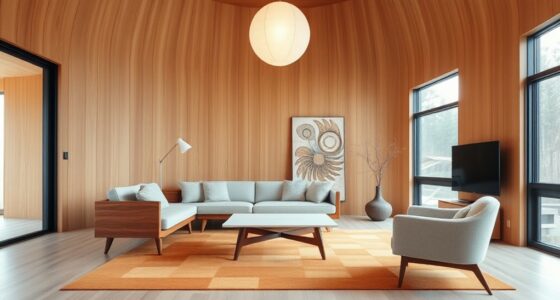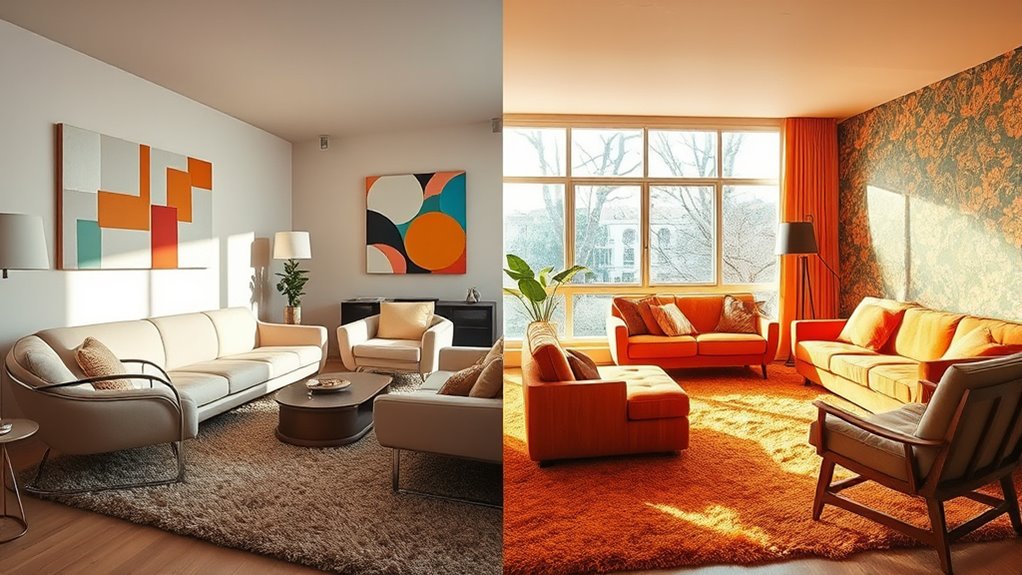

In the 1960s, home decor focused on sleek, minimalist designs with clean lines, neutral tones, and practical furniture, reflecting a sense of calm and sophistication. By the 1970s, styles shifted to bold, vibrant colors, eclectic patterns, and textured textiles that expressed more personality and countercultural energy. You’ll notice a move from simplicity to maximalism, embracing individuality and artistic experimentation—which makes exploring these decade-long transformations fascinating. Keep exploring to discover more about these colorful design evolutions.
Key Takeaways
- The 1960s favored sleek, minimalist designs with clean lines and neutral tones, emphasizing functionality and simplicity.
- The 1970s embraced bold colors, eclectic patterns, and maximalist decor reflecting a lively, expressive cultural mood.
- Furniture shifted from practical, geometric pieces in the 60s to chunky, rounded, textured forms in the 70s.
- Decor patterns moved from uncluttered minimalism in the 60s to psychedelic and floral motifs in the 70s.
- Overall, home styles evolved from calm sophistication to vibrant self-expression across the two decades.
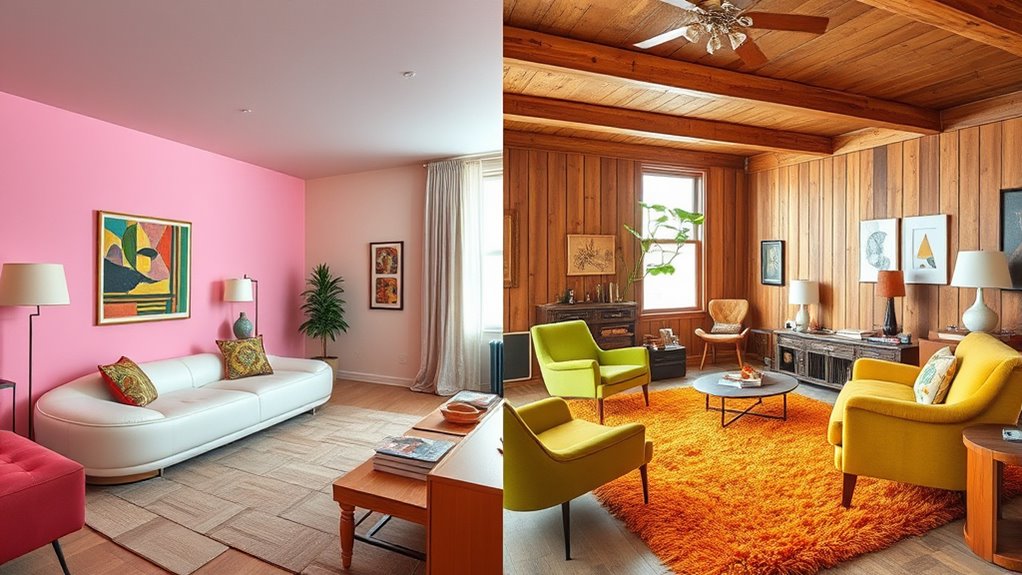
Deciding between 60s and 70s decor can transform your space with distinct styles that reflect different cultural vibes. The 1960s were all about embracing sleek design and minimalism, heavily influenced by the mid-century modern movement. This style champions clean lines, functional furniture, and a sense of openness. Think of your space with streamlined furniture, smooth surfaces, and a focus on form and function. Warm wood tones, simple geometric shapes, and uncluttered layouts create a calming, sophisticated environment. You might incorporate iconic pieces like Eames chairs or minimalist coffee tables, which emphasize practicality without sacrificing style. The overall feel is airy and uncluttered, encouraging a sense of calmness and clarity.
In contrast, the 70s brought a shift toward more expressive and vibrant decor. This era was marked by a love for bold colors, eclectic patterns, and a sense of freedom and experimentation. Psychedelic patterns became a hallmark of 70s decor, filling your space with swirling, kaleidoscopic designs that evoke a sense of movement and energy. Bright oranges, browns, mustard yellows, and avocado greens dominate the palette, creating a warm, inviting atmosphere. Furniture styles in the 70s often feature rounded edges and chunky forms, giving rooms a cozy, laid-back vibe. You’d find shaggy rugs, bean bag chairs, and layered textiles adding texture and comfort. The use of prints and patterns—particularly psychedelic, floral, and geometric motifs—reflects the era’s embrace of counterculture and artistic experimentation. Additionally, the 70s decor often incorporated new materials and textures, emphasizing tactile richness and visual diversity.
While the 60s favored the simplicity of mid-century modern design, the 70s leaned into maximalism, celebrating individuality and bold self-expression. If you’re aiming for a sleek, timeless look, the mid-century modern style of the 60s offers a sense of sophistication rooted in functional design. But if you want a space that feels lively, colorful, and full of personality, the 70s with its psychedelic patterns and rich textures might be more your style. Both decades show how home decor evolved to mirror cultural shifts—moving from the minimalist elegance of the 60s to the expressive, eclectic spirit of the 70s. Whichever you choose, understanding these differences helps you craft a space that truly reflects your personality and the era’s unique vibe.

Belleze Mid-Century Modern Shell Side Accent Tripod Plywood Lounge Chair Walnut Upholstered Faux Leather, White
[Mid-Century Modern Design] Inspired by mid-century design aesthetics, this shell chair displays sophisticated taste and provides pleasurable seating…
As an affiliate, we earn on qualifying purchases.
As an affiliate, we earn on qualifying purchases.
Frequently Asked Questions
How Did Global Events Influence 60S and 70S Interior Design Trends?
You see, global events like economic booms in the 60s and 70s fueled innovative interior design trends. During the 60s, counterculture movements inspired bold, eclectic styles with vibrant colors and unconventional furniture. In the 70s, economic prosperity led to more luxurious, layered decor, emphasizing comfort and modernity. These influences made your living spaces reflect the societal shifts, emphasizing freedom, creativity, and prosperity during those dynamic decades.
What Role Did Technological Advancements Play in Home Decor Evolution?
Technological advancements played a big role in home decor evolution by introducing smart gadgets and automation systems. You can now control lighting, climate, and even furniture settings with a tap or voice command. These innovations make your home more convenient, efficient, and modern. As technology advances, your space becomes smarter, blending style with functionality and transforming how you live and decorate your home every day.
How Did Cultural Shifts Impact Furniture Choices During These Decades?
Imagine your home as a canvas shifting with cultural winds. In the 60s, mid-century modern furniture reflected sleek, functional lines, embracing minimalism. By the 70s, bohemian influences swept in, bringing vibrant colors, eclectic patterns, and relaxed styles. Cultural shifts made you seek comfort and self-expression, transforming furniture choices from streamlined elegance to colorful, layered pieces that mirror a desire for individuality and freedom.
Were There Regional Differences in Decor Styles Within Each Decade?
Yes, you’ll notice regional variations and local influences shaped decor styles in each decade. In the 60s, mid-century modern was popular in California, while more ornate styles persisted in the South. During the 70s, bohemian influences thrived in urban areas, but rustic and folk styles remained in rural regions. These regional differences reflect how local culture, climate, and resources influenced home decor choices throughout each decade.
How Did Sustainability Concerns Start Affecting Decor Preferences in the 70S?
Sustainability started shaping your decor choices in the 70s like a ripple in a pond. Recycling initiatives gained traction, pushing you to select eco-friendly materials for furniture and finishes. This shift made your home a reflection of growing environmental awareness, encouraging smarter, greener decisions. You embraced natural woods, recycled plastics, and organic fabrics, turning your space into a statement of your commitment to the planet—showing that style and sustainability can go hand in hand.
70s shaggy area rug
As an affiliate, we earn on qualifying purchases.
As an affiliate, we earn on qualifying purchases.
Conclusion
In just a decade, home decor shifted dramatically from the vibrant, experimental 60s to the bold, earthy 70s. You can see how styles evolve, reflecting the changing times and tastes. Remember, change is the only constant—what’s trendy today might be outdated tomorrow. Embrace the journey of decorating your space, knowing that each era offers lessons and inspiration. Keep your eyes open, and your home will always tell a story worth hearing.
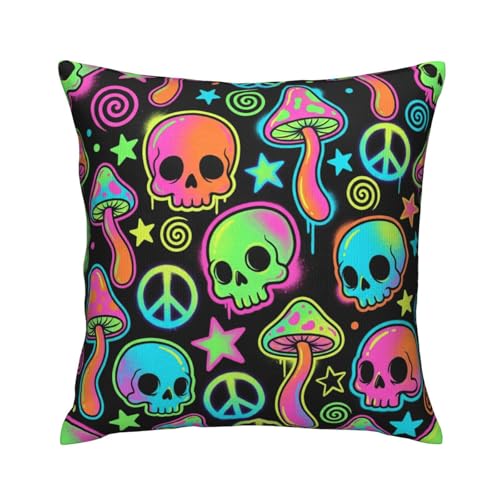
XBFCDN Neon Skull & Mushroom Throw Pillow Cover, 18×18 Inch Psychedelic Gothic Decor, Double-Sided Soft Plush Cushion Case for Couch, Bed, Living Room
Vibrant Psychedelic Design: Featuring a bold, neon-colored pattern of skulls, mushrooms, and peace signs on a black background….
As an affiliate, we earn on qualifying purchases.
As an affiliate, we earn on qualifying purchases.

KEIKI Modern Farmhouse Coffee Table, Natural Wood Living Room Tea Table
【Rustic Solid Wood Design】Crafted from high-quality solid wood, this coffee table showcases clear and visible tree rings, offering…
As an affiliate, we earn on qualifying purchases.
As an affiliate, we earn on qualifying purchases.