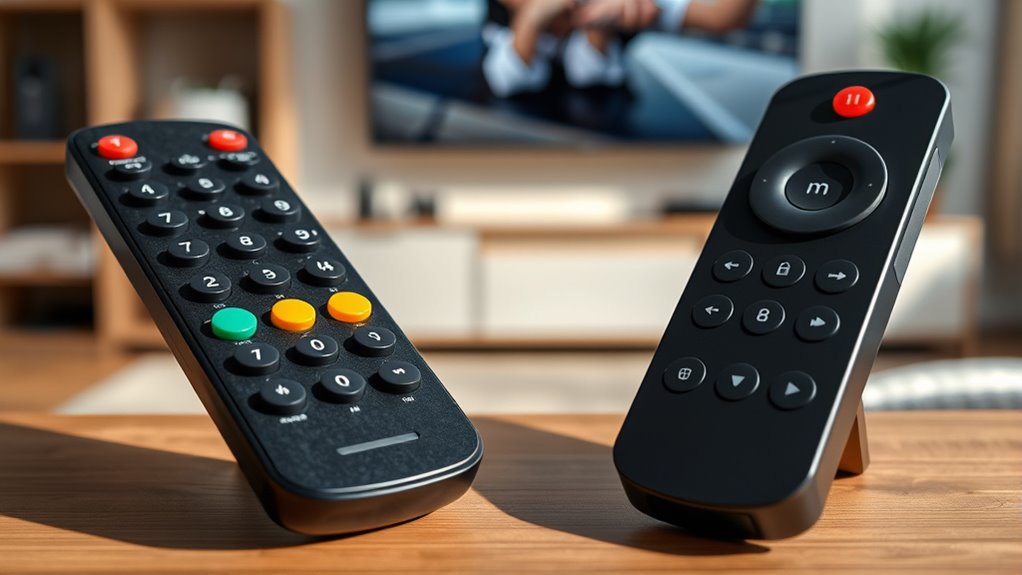

The evolution of your TV remote has gone from bulky, wired devices with basic buttons to sleek, voice-activated controllers that integrate with smart home systems. Early remotes featured limited functions, but today’s models include touch surfaces, motion sensors, and voice commands, making your viewing experience more intuitive. As technology advances, remote controls are becoming smarter and more user-friendly. Want to explore how these changes shape your entertainment and daily routines? Keep exploring to discover more.
Listen free for 30 days with Audible
Thousands of audiobooks and originals — cancel anytime.
As an affiliate, we earn on qualifying purchases.
Key Takeaways
- Remote controls evolved from wired and infrared devices with basic buttons to wireless, sleek, and ergonomic designs.
- Early remotes focused on minimal technology and simple functionality, lacking voice control features.
- The integration of voice commands and natural language processing transformed remote usability and accessibility.
- Technological innovations like touch surfaces, motion sensors, and backlit buttons enhanced user experience over time.
- Modern remotes now emphasize voice recognition, smart home integration, and simplified controls to match evolving lifestyles.

Have you ever wondered how the humble TV remote evolved from simple buttons to the sleek, multifunctional devices we use today? The journey of remote control design is a fascinating one, driven by technological innovation and changing user needs. Early remotes were basic, relying on wired connections or simple infrared signals with limited functions. Over time, designers began to focus on improving remote design to enhance usability and comfort, making controllers more ergonomic and intuitive. This focus paved the way for more advanced features, including the integration of voice commands, which revolutionized how we interact with our TVs. Voice-activated remotes allow you to control your TV with just your voice, eliminating the need for precise button presses. This technology not only simplifies navigation but also provides accessibility for users with disabilities or limited dexterity. Voice commands became even more practical as natural language processing improved, enabling devices to understand more complex commands and respond accurately. The remote design evolved from clunky, button-heavy gadgets to sleek, minimalist controllers that fit comfortably in your hand. Manufacturers started incorporating touch-sensitive surfaces, motion sensors, and customizable buttons to improve user experience. These innovations made controlling your TV more seamless and less cumbersome. Additionally, high refresh rates in projectors contribute to smoother motion handling, which is especially beneficial for fast-paced content. The integration of voice assistants like Alexa or Google Assistant further expanded remote capabilities, allowing you to search for content, change settings, or even control smart home devices through your remote. This convergence of voice commands and remote design means fewer remote controls cluttering your living room and a more streamlined way to manage your entertainment system. As technology advanced, remote controls also gained features like backlit buttons for better visibility in dark rooms, rechargeable batteries for convenience, and even voice feedback to confirm commands. These improvements reflect a continuous effort to make remote control interaction more natural and efficient. Today, remote design emphasizes simplicity, with many devices adopting voice recognition as a standard feature. This shift not only enhances the user experience but also aligns with the broader trend toward smart home integration. You no longer need to juggle multiple remotes or struggle with complicated menus; just speak your commands, and your TV responds. The evolution of remote control design highlights how technology adapts to our lifestyles, making entertainment more accessible and enjoyable. From basic infrared buttons to sophisticated voice-controlled devices, the remote has come a long way, transforming the way you interact with your television.
voice activated TV remote control
As an affiliate, we earn on qualifying purchases.
As an affiliate, we earn on qualifying purchases.
Frequently Asked Questions
How Did Early Remote Controls Operate Without Batteries?
Early remote controls operated without batteries by using mechanical switches and infrared technology. When you pressed a button, it manually made contact with a mechanically linked switch that sent a signal to the TV. Infrared technology used a simple light pulse to communicate with the TV, which didn’t require power from batteries in the remote itself. This design allowed you to control your TV without worrying about batteries running out.
What Were the First Remote Control’s Main Features?
Imagine holding a device that used infrared technology and wireless connectivity to control your TV from across the room. The first remote controls featured simple buttons for power, volume, and channel changes, operating via infrared signals. They lacked batteries initially, relying on mechanical or wired connections. These early features made controlling your TV more convenient, setting the stage for the advanced remotes we use today.
How Did Remote Control Technology Impact TV Design?
You notice that remote control technology notably shaped TV design by emphasizing ergonomic design and intuitive button layout. Manufacturers made remotes easier to hold and navigate, encouraging sleeker, more integrated TV sets. As remotes became more sophisticated, TV designs adapted to accommodate larger screens and minimal bezels, focusing on user comfort and accessibility. This evolution guarantees you can enjoy a seamless viewing experience with a device that’s both functional and comfortable to use.
When Did Remote Controls Become Affordable for Most Households?
Remote controls became affordable for most households in the late 1980s and early 1990s, thanks to advancements in affordable electronics and mass production. You likely noticed that as technology improved, remote prices dropped, making them a standard household technology. This shift allowed more families to enjoy the convenience of remote controls without breaking the bank, transforming how you watch TV and interact with your entertainment setups daily.
What Are the Future Innovations Expected in Remote Controls?
You might think remote controls are already smart, but future innovations will make them even more intuitive. Voice commands will allow you to change channels with a simple “switch to sports,” while gesture control lets you wave for volume or swipe for menus. Ironically, as remotes get smarter, you’ll probably spend less time pressing buttons and more time marveling at how effortlessly they anticipate your needs.
As an affiliate, we earn on qualifying purchases.
Conclusion
As you’ve seen, the remote control’s journey is a story of innovation and ingenuity. From clunky devices to sleek, smart remotes, each step reflects our desire for convenience. Remember, just like a trusty sidekick, your remote has evolved to keep pace with your life’s needs. So next time you pick it up, think of it not just as a gadget, but as a symbol of human creativity—forever shaping how you connect with your world.
As an affiliate, we earn on qualifying purchases.
As an affiliate, we earn on qualifying purchases.
Fall Picks
fall essentials
As an affiliate, we earn on qualifying purchases.