Vintage dinnerware like Pyrex, Corelle, and Fiesta offers timeless charm with their bold patterns, vibrant colors, and durable materials. You’ll find they reflect rich cultural histories and decades of craftsmanship, creating nostalgic moments at every meal. Whether you’re mixing classic pieces into modern settings or collecting for their value, these brands connect past and present beautifully. Keep exploring to discover the stories and styles behind these beloved dishes and how they can enhance your space.
Key Takeaways
- Vintage dinnerware like Pyrex, Corelle, and Fiesta embodies mid-century design, blending nostalgic patterns with durable, functional materials.
- Their distinctive colors, patterns, and shapes create timeless appeal and unique visual interest in contemporary table settings.
- These brands reflect cultural traditions and craftsmanship, preserving regional identities and evoking personal memories.
- Proper care and modern styling enhance their charm, allowing vintage pieces to complement contemporary decor seamlessly.
- Collecting and appreciating vintage dinnerware celebrates history, sustainability, and the enduring beauty of handcrafted, functional design.

Vintage Rare Pyrex Blue Colonial Mist Nesting Bowl Collectible Set of 3
As an affiliate, we earn on qualifying purchases.
As an affiliate, we earn on qualifying purchases.
The History and Origins of Pyrex, Corelle, and Fiesta
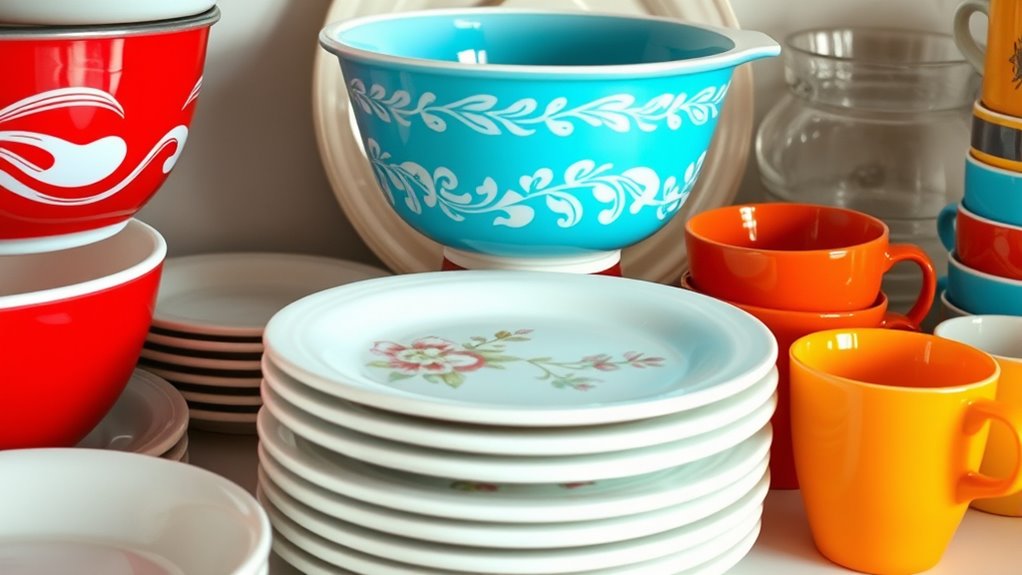
Many people are drawn to vintage dinnerware because of its rich history and timeless appeal. Pyrex, Corelle, and Fiesta each have unique origins rooted in innovation and cultural influence. Pyrex was introduced in the 1910s, revolutionizing kitchenware with its heat-resistant glass, emphasizing sustainable manufacturing by promoting durability and reuse. Corelle, launched in the 1970s, became popular for its lightweight, break-resistant glass, blending tradition with modern technology. Fiesta, dating back to the 1930s, combined Art Deco aesthetics with functional design, embodying American craftsmanship. Today, these brands experience contemporary reinterpretations, blending vintage charm with eco-conscious materials and sustainable manufacturing practices. This evolution helps preserve their legacy while aligning with modern values of sustainability and responsible production. Additionally, the durability of vintage dinnerware has contributed to its enduring popularity, making it a cherished part of many households’ tables across generations. Recognizing the innovative materials used in their manufacturing highlights how these brands have continually evolved to meet changing consumer needs. Furthermore, the timeless appeal of these designs has helped maintain their desirability among collectors and new enthusiasts alike. The ongoing recycling and reuse practices in their production also reflect a commitment to environmental sustainability.

Corelle Vitrelle 10.25" Dinner Plates Set, Triple Layer Glass and Chip Resistant, Lightweight Round Plates, 8-Piece Country Cottage
8 PLATES: This set includes (8) 10-1/4-inch plates. These versatile plates are a household essential and work perfectly…
As an affiliate, we earn on qualifying purchases.
As an affiliate, we earn on qualifying purchases.
Distinctive Designs and Patterns That Define Each Brand
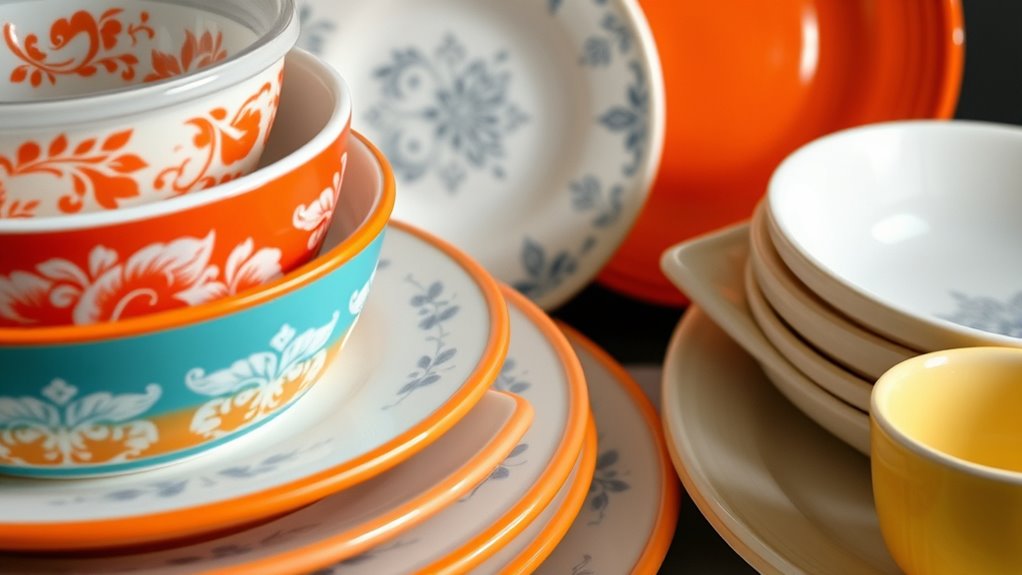
Each brand has its own signature look that makes it instantly recognizable. You’ll notice iconic pattern variations, signature color palettes, and unique shape elements that set them apart. These design details are what give vintage dinnerware its timeless charm and appeal. Additionally, each brand’s distinctive style reflects the era and design philosophies that influenced their creation, making each piece not just functional but also a collectible work of art. The use of design consistency across collections further enhances brand identity and historical significance. Moreover, understanding these unique features can help collectors and enthusiasts appreciate the aesthetic appeal that makes vintage dinnerware highly desirable.
Iconic Pattern Variations
Iconic pattern variations are what make vintage dinnerware instantly recognizable and highly collectible. They reflect each brand’s unique style and history. For example, Pyrex features classic floral and retro geometric designs that echo mid-century modern kitchen innovations. Corelle’s patterns often highlight simple, durable motifs like the iconic Winter Frost or Butterfly Gold, emphasizing sustainable manufacturing practices. Fiesta showcases bold, vibrant patterns such as the Rainbow or Turquoise patterns, which remain timeless. To identify these variations, look for:
- Distinctive motifs that symbolize each brand’s era and style
- Consistent color schemes that evolved with modern kitchen innovations
- Unique pattern arrangements that highlight craftsmanship and brand identity
- Recognizing gold IRA benefits in care routines can enhance the preservation and appearance of vintage dinnerware surfaces. Incorporating pattern recognition techniques can also aid collectors in authenticating and dating pieces more accurately. These variations make each piece a conversation starter and a window into the past, elevating their charm and collectability today. Additionally, paying attention to subtle design details can help distinguish original pieces from reproductions, further increasing their value and appeal. A careful examination of manufacturing marks can reveal the authenticity and production period, adding to the piece’s historical significance.
Signature Color Palettes
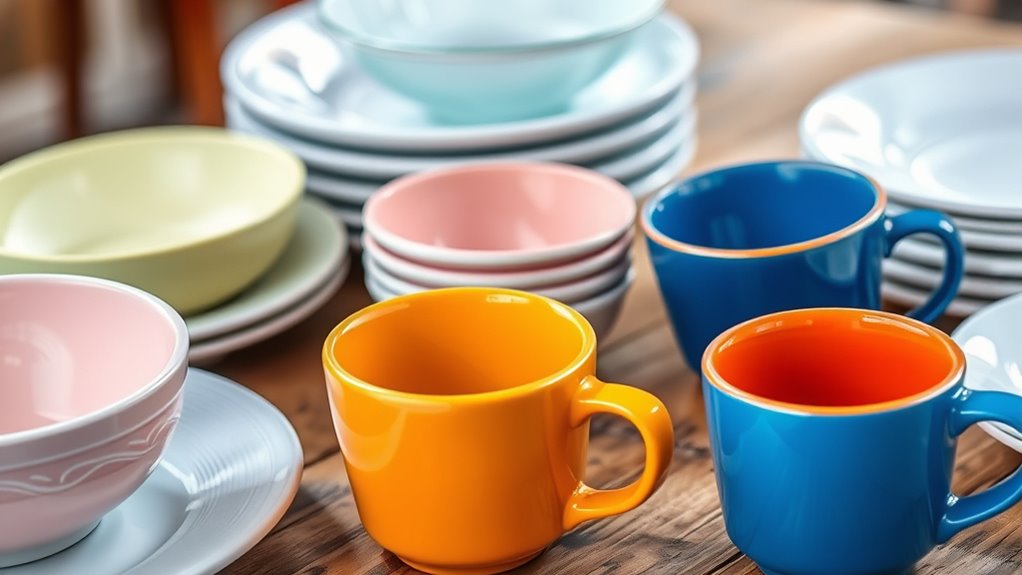
Signature color palettes are the defining feature that instantly identifies vintage dinnerware brands. Pyrex, Corelle, and Fiesta each showcase distinctive hues that reflect their unique identities. Pyrex often features clear, pastel, and vibrant shades that evoke a nostalgic feel, while Fiesta is famous for its bold, saturated colors like deep red, cobalt blue, and bright yellow. Corelle tends to favor subtle, versatile tones that match modern and traditional settings. These palettes also mirror sustainable practices, as durable, long-lasting colors reduce the need for frequent replacement. Additionally, global market trends influence the popularity of certain shades, ensuring these brands stay relevant. Whether you prefer the playful vibrancy of Fiesta or the understated elegance of Corelle, their signature colors continue to define their timeless appeal. Moreover, advancements in color preservation techniques ensure these vibrant hues remain bright and durable over years of use. Proper color retention is essential for maintaining the aesthetic integrity of vintage dinnerware, especially with frequent cleaning and usage. Recognizing color durability helps collectors and enthusiasts preserve the beauty of their pieces for future generations. These durable color schemes also highlight the brands’ commitment to sustainable manufacturing, which minimizes environmental impact.
Unique Shape Elements
Distinctive shape elements and patterns are what make vintage dinnerware instantly recognizable. They reflect each brand’s unique style, even in modern dining settings. For example:
- Pyrex features rounded edges and simple, functional shapes that blend well with minimalist aesthetics. These practical and timeless designs make Pyrex a staple in many households. Their classic design continues to appeal to collectors and enthusiasts alike.
- Corelle’s sleek, flat surfaces with subtle curves emphasize clean lines suited for contemporary tables. Their lightweight construction adds to their versatility and ease of use. Additionally, the durability of Corelle makes it especially popular for everyday use. The design emphasizes practicality without sacrificing style.
- Fiesta showcases bold, geometric forms and vibrant shapes that add a pop of color to any setting. The use of preppy-inspired design elements further enhances their distinct visual identities. These shape elements create a visual identity that’s both timeless and adaptable. Whether you prefer the understated elegance of Pyrex, the streamlined look of Corelle, or the lively patterns of Fiesta, their distinctive shapes elevate your table. They make vintage dinnerware not just functional, but a true style statement in modern dining.
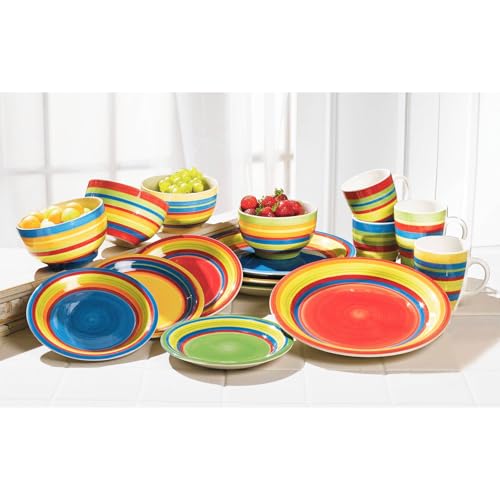
BrylaneHome 16 Piece Santa Fe Dinnerware Set (Service for 4), Includes Dinner & Salad or Dessert Plates, Bowls, Mugs, Colorful Stripe Southwestern Fiesta Pattern – Multi Stripe
The BrylaneHome Santa Fe Hand-Painted Striped 16-piece Stoneware Dinnerware set is a colorful and vibrant option for adding…
As an affiliate, we earn on qualifying purchases.
As an affiliate, we earn on qualifying purchases.
Material and Manufacturing Techniques Behind Vintage Dinnerware
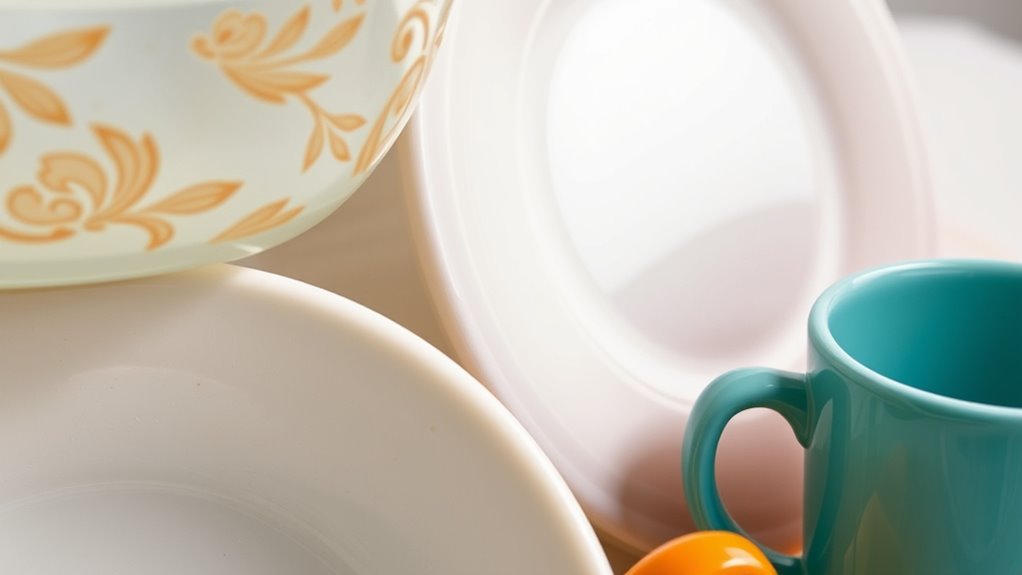
The materials and manufacturing techniques used in vintage dinnerware reveal much about the craftsmanship of the era. You’ll notice that ceramic composition varies, with some pieces made from durable stoneware or fine porcelain, depending on their purpose and style. Manufacturing processes also differ; for example, Pyrex was produced through glass-blowing techniques that create heat-resistant glassware, while Fiesta used vibrant, layered ceramic glazes applied through hand-application and kiln firing. Corelle’s lightweight, break-resistant design resulted from layered lamination and modern glass technology. These techniques not only shape the appearance of vintage dinnerware but also contribute to their durability and unique textures. Understanding these materials and processes helps you appreciate the skill and innovation that went into creating these collectible pieces.

Selamica Ceramic Plates and Bowls Sets,18 Pieces Retro Floral Dinnerware Sets for 6,Dishwasher & Microwave Safe dish set,Family & Holiday Dining, Vintage Blue
Versatile for Everyday & Entertaining – The plate set includes six each of 10'' dinner plates, 24 oz…
As an affiliate, we earn on qualifying purchases.
As an affiliate, we earn on qualifying purchases.
Collecting and Caring for Classic Dinnerware Sets
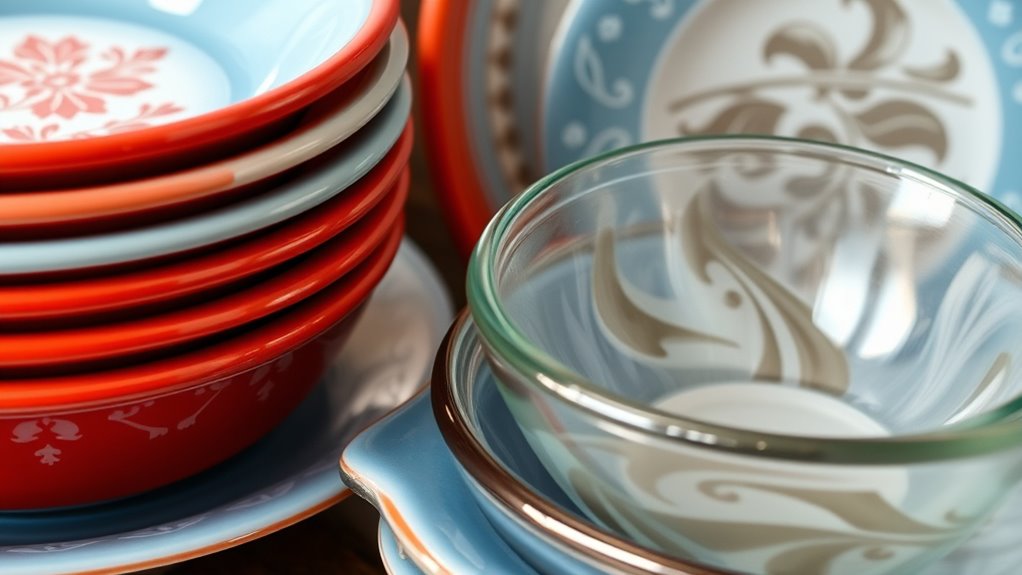
Collecting and caring for vintage dinnerware sets can be a rewarding hobby that preserves a piece of history, but it requires some knowledge to keep your collection in top condition. To do this effectively:
Collect vintage dinnerware with care to preserve history and enhance your table’s charm.
- Handle with care, avoiding harsh scrubbing to preserve patterns and glaze.
- Store items properly in a cool, dry place, away from direct sunlight to prevent fading.
- Incorporate your vintage pieces into modern dining setups, blending classic charm with contemporary trends for a unique table presentation.
How These Brands Influenced Modern Tableware Trends
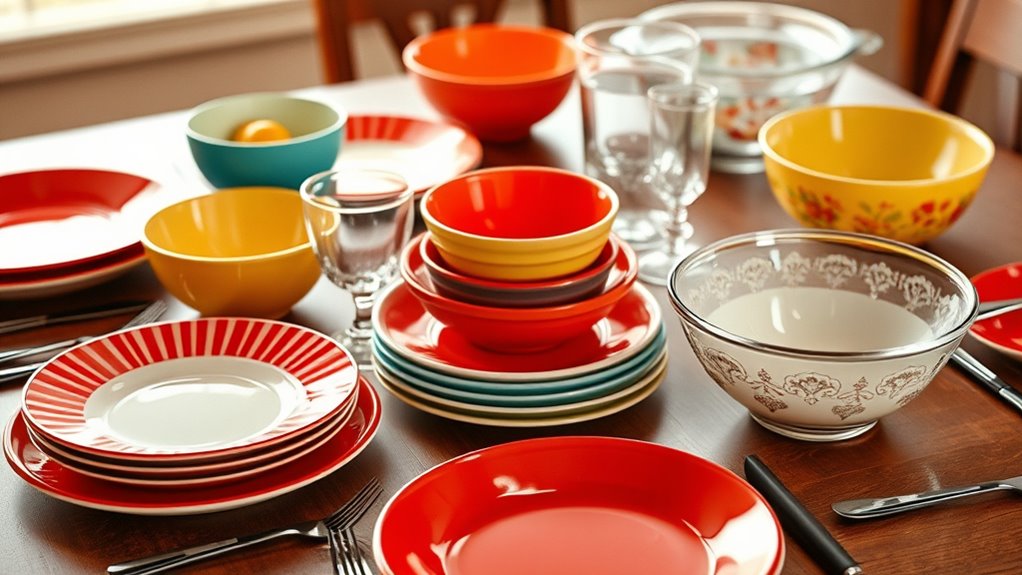
Many vintage dinnerware brands have left a lasting mark on modern tableware trends, shaping how you approach design, function, and presentation today. They introduced bold colors, durable materials, and versatile shapes that still influence today’s styles. These brands championed sustainable materials long before it became a trend, inspiring modern minimalist designs that emphasize simplicity and eco-friendliness. You’ll notice that many contemporary brands adopt their innovative ideas, blending vintage charm with current sustainability efforts. The table below highlights key influences:
| Vintage Brand | Influence on Modern Trends | Sustainability Focus |
|---|---|---|
| Pyrex | Durable, versatile glass | Use of sustainable, heat-resistant glass |
| Corelle | Lightweight, space-saving | Eco-friendly, long-lasting materials |
| Fiesta | Bold colors, craftsmanship | Handcrafted, durable ceramics |
Their legacy shapes how you enjoy stylish, functional, and eco-conscious tableware today.
The Cultural Significance and Nostalgic Appeal of Retro Dishware
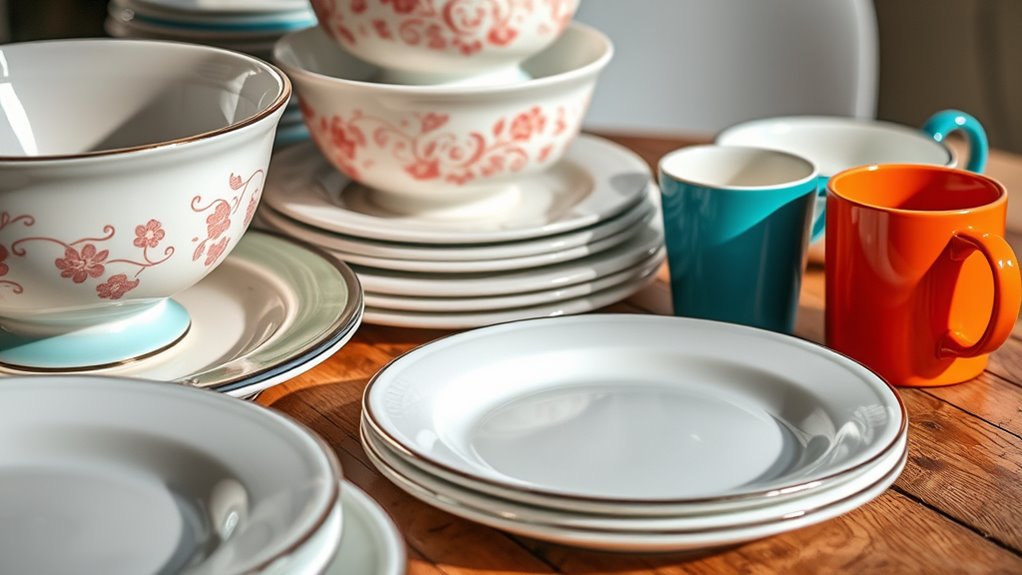
You can see how vintage tableware reflects traditions that connect generations and preserve cultural identity through design. These pieces often evoke personal memories and special moments from the past. Their nostalgic appeal keeps these traditions alive and resonant today.
Vintage Tableware Traditions
Vintage tableware carries more than just aesthetic appeal; it embodies cultural traditions and social customs that have shaped dining experiences for generations. When using retro dishware, you connect with time-honored practices that influence food presentation and table setting etiquette. For example:
- You may follow specific patterns in arranging plates and utensils to honor tradition.
- You often select dishes that reflect seasonal or festive themes, enhancing the visual appeal.
- You embrace the nostalgic charm that sparks conversations and creates a warm, inviting atmosphere. These customs elevate simple meals into meaningful gatherings, preserving a sense of community and history. Vintage dinnerware isn’t just about style; it’s a living reminder of how shared traditions foster connection and appreciation at every meal.
Cultural Identity in Design
Retro dishware goes beyond aesthetic charm; it also serves as a powerful expression of cultural identity. When you choose vintage pieces like Pyrex, Corelle, or Fiesta, you’re embracing more than just their nostalgic appeal—you’re celebrating traditions and regional craftsmanship. These designs often reflect the values and history of their time, reinforcing cultural connections. Today, integrating modern design with these classic styles promotes tableware sustainability by reducing reliance on mass-produced, disposable options. This blend preserves cultural significance while aligning with eco-conscious practices. Your choice of retro dishware becomes a statement of identity, blending tradition with contemporary values. It’s a way to honor history while making thoughtful, sustainable decisions for your table.
Nostalgia and Personal Memories
Nostalgia often fuels the appeal of vintage dishware, evoking personal memories and a sense of connection to the past. When you see retro dinnerware like Pyrex or Fiesta, you might recall family gatherings, holiday dinners, or weekend breakfasts. This emotional link makes vintage pieces more meaningful than modern dinnerware. Here are some reasons why nostalgia resonates with you:
- It reminds you of simpler times and childhood moments.
- It connects you to family traditions and shared experiences.
- It aligns with eco-friendly materials, offering sustainable choices that honor the past and the planet.
Tips for Incorporating Vintage Pieces Into Contemporary Settings
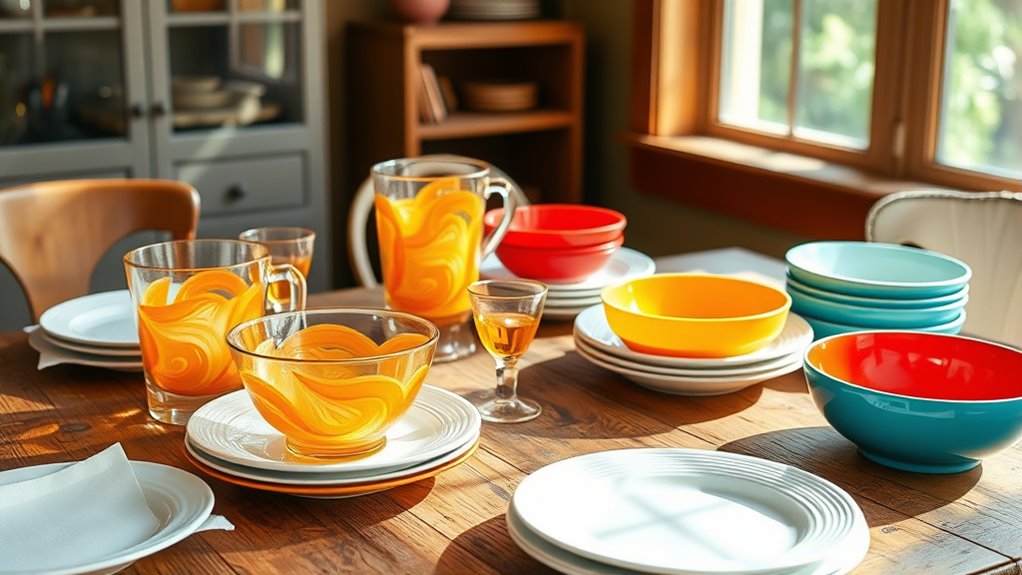
Incorporating vintage dinnerware into modern settings can add a unique charm that elevates your space. To seamlessly blend vintage pieces, consider pairing them with sleek, modern kitchen innovations like minimalist countertops or contemporary lighting. This contrast highlights the character of your vintage items without overwhelming the space. Opt for sustainable dishware choices by selecting pieces made from eco-friendly materials, ensuring both style and environmental consciousness. Use vintage plates or bowls as focal points on a neutral table setting or mix and match patterns for an eclectic look that feels intentional. Keep accessories simple—like modern flatware or glassware—to balance the vintage charm. With thoughtful placement, your vintage dinnerware will stand out beautifully in a contemporary environment.
Frequently Asked Questions
What Are the Most Valuable Pyrex, Corelle, and Fiesta Pieces to Collect?
You should focus on rare patterns and collectible sets when searching for valuable Pyrex, Corelle, and Fiesta pieces. Look for vintage Pyrex with patterns like “Butterprint” or “Autumn Harvest,” which are highly sought after. For Corelle, limited-edition or discontinued patterns such as “Chantilly” or “Black Iris” are prized. Fiesta’s most valuable items include early 1930s pieces and rare color variations like jade or cobalt.
How Do I Identify Authentic Vintage Dinnerware From Fakes or Reproductions?
You want to spot authentic vintage dinnerware and avoid fakes, so pay close attention. First, look for authentic marks—those unique stamps or logos—on the underside or packaging. Then, assess reproduction quality by examining the weight, color consistency, and pattern details. Genuine pieces often have a certain feel and finish that reproductions lack, so scrutinize carefully; a subtle difference could reveal a fake hiding in plain sight.
Are There Specific Cleaning Methods to Preserve Vintage Dinnerware?
To preserve vintage dinnerware, stick to gentle cleaning techniques like hand washing with mild dish soap and avoiding abrasive scrubbers. Use soft sponges or cloths to prevent scratches. Rinse thoroughly and dry immediately with a soft towel to prevent water spots. Follow these preservation tips to maintain its color and integrity, and avoid dishwasher use, which can cause fading or damage over time. Proper care keeps your vintage pieces looking beautiful for years.
Can Vintage Dinnerware Be Safely Used in Modern Microwave and Dishwasher Settings?
Think of vintage dinnerware like a treasured garden; you want it to thrive. Most Pyrex and Corelle pieces are microwave-safe and dishwasher-compatible, but Fiesta may vary. Always check for labels or manufacturer guidance. When you use these dishes, guarantee they’re free of cracks or chips, and use gentle cycles. Proper care keeps your vintage dinnerware safe for modern microwave and dishwasher use, preserving its beauty and history.
How Do I Restore or Repair Damaged Vintage Dinnerware Pieces?
You can restore or repair damaged vintage dinnerware by using specific restoration techniques and repair kits. Carefully clean the piece first, then apply a suitable epoxy or ceramic repair kit to fix chips or cracks. Sand gently once dry, and consider touch-up paints for color matching. Always follow the product instructions and test on a small area first to guarantee safety and a seamless finish.
Conclusion
Embrace the enchanting allure of vintage dinnerware, where history, harmony, and handmade charm meet. By blending bold patterns with beautiful memories, you bring a piece of the past to your present table. Whether you’re collecting or casually incorporating, let these timeless treasures transform your space into a stylish sanctuary. Celebrate the charm, cherish the craftsmanship, and create colorful, mesmerizing culinary experiences with the classic charisma of Pyrex, Corelle, and Fiesta.