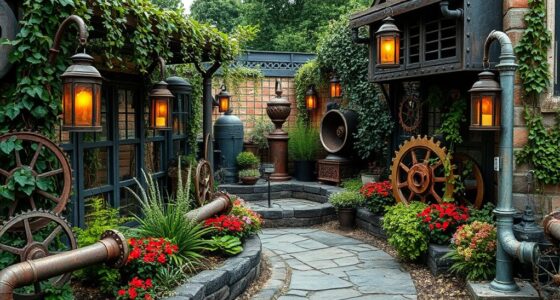
Steampunk and rustic industrial styles both celebrate craftsmanship and history but have distinct aesthetics. Steampunk blends Victorian elegance with vintage machinery, using rich metals, detailed textures, and warm hues to create an adventurous vibe. Rustic industrial emphasizes raw materials like distressed wood and galvanized steel, with neutral tones for a rugged, cozy feel. While they share mechanical elements, their overall mood and decorative details differ. Exploring these differences can help you choose the perfect style for your space.

Get furniture and decor delivered free with Prime
- Fast, free delivery on millions of items
- Prime Video, Amazon Music and more included
- Member-only deals all year
Key Takeaways
- Both styles emphasize raw, durable materials like metal and wood, but steampunk favors polished, ornate finishes while rustic industrial prefers raw, unfinished surfaces.
- Steampunk incorporates Victorian-era motifs, gears, and vintage machinery, whereas rustic industrial draws inspiration from early 20th-century factories and warehouses.
- Color palettes differ: steampunk uses warm, rich tones like brass and deep browns, while rustic industrial favors neutral, earthy shades like greys and weathered wood.
- Decorative elements in steampunk are elaborate and ornate, contrasting with the utilitarian, minimal ornamentation of rustic industrial.
- Both styles prioritize functionality and durability, but steampunk romanticizes craftsmanship and fantasy, whereas rustic industrial emphasizes practicality and raw authenticity.
Products Worth Considering

Levoit Eleva 300X HEPA Air Purifier for Home and Bedroom

Bose TV Speaker Compact Soundbar with Bluetooth and HDMI-ARC, Black

Dyson Cyclone V10 Origin Cordless Vacuum
As an affiliate, we earn on qualifying purchases.
Core Material Choices and Textures

When choosing core materials and textures for steampunk and rustic industrial styles, you’ll find that each emphasizes different materials to create distinct atmospheres. In steampunk design, you’ll notice a focus on metal finishes like brass, copper, and aged bronze, which lend a vintage, mechanical feel. These metals often feature intricate detailing and patinas that evoke the industrial revolution. Fabric textures in steampunk also play a key role, with rich velvets, leather, and brocades adding a sense of luxury and craftsmanship. Conversely, rustic industrial style leans toward raw, unfinished materials, such as distressed wood and galvanized steel, emphasizing ruggedness. Fabric textures tend to be simpler—think burlap, linen, or coarse weaves—that enhance the utilitarian, warm vibe typical of this aesthetic. Additionally, the material selection in each style helps reinforce their unique visual identities. The use of textural contrast further highlights the differences, with steampunk embracing detailed, smooth finishes and rustic industrial favoring rough, tactile surfaces. Incorporating authentic materials can deepen the immersive quality of each style, making the spaces feel more genuine and thoughtfully curated. Moreover, understanding the industry trends in material usage can help in creating more cohesive and trendy designs.
Color Palettes and Atmosphere

Both steampunk and rustic industrial styles use color palettes to establish distinct atmospheres that reflect their unique identities. In steampunk, expect warm, rich hues like brass, deep browns, and muted golds, creating a vintage, adventurous mood through strong color contrast. Rustic industrial, on the other hand, favors neutral, earthy tones like greys, tans, and weathered wood shades, fostering a cozy, grounded vibe. Both styles leverage color contrast to emphasize their themes—steampunk with shiny metals, rustic with textured woods—shaping their unique atmospheres. Additionally, understanding color contrast can help in effectively designing spaces that evoke the intended emotional response. Incorporating texture variation also enhances the depth and authenticity of each style, making the environment more engaging and visually appealing. Exploring material choices can further highlight the differences and similarities between these design aesthetics, enriching the overall ambiance. Moreover, considering lighting techniques can significantly influence the mood, accentuating the contrasting features of each style. Recognizing how cybersecurity vulnerabilities impact design choices can also be essential when integrating technology into these environments.
Key Design Elements and Features

Steampunk and rustic industrial styles each feature distinctive design elements that define their aesthetics. In steampunk, you’ll notice vintage machinery and ornate fixtures that evoke a Victorian-era tech vibe. Rustic industrial emphasizes raw materials like exposed brick, reclaimed wood, and metal accents. To visualize, consider this table:
| Design Element | Description |
|---|---|
| Vintage Machinery | Steampunk incorporates gears, cogs, and brass components. |
| Ornate Fixtures | Detailed, decorative lighting and hardware add Victorian charm. |
| Raw Materials | Rustic industrial highlights distressed wood and metal textures. |
Both styles celebrate history and craftsmanship, but steampunk leans toward elaborate, mechanical ornamentation, while rustic industrial favors rugged simplicity with functional charm. Additionally, design versatility allows both styles to be adapted to various spaces, blending antique elements with modern sensibilities. Their shared appreciation for craftsmanship and vintage aesthetics makes them popular choices for eclectic interior designs. The influence of historical periods is prominent in both styles, providing a sense of nostalgia and timeless appeal. Furthermore, the use of reclaimed materials enhances their environmentally conscious appeal and authentic character.
Influences and Historical Inspirations

Understanding the origins and evolution of these styles reveals how they draw from different periods and technological advances. You’ll notice that their cultural and artistic roots shape their distinct aesthetics and storytelling. Exploring these influences helps you appreciate how history informs modern design choices. Additionally, the use of materials like recycled products in unique planters demonstrates how sustainability principles are integrated into contemporary style expressions. Recognizing how history influences design helps us see how past innovations continue to inspire current trends. For example, the adoption of industrial materials in modern decor reflects a respect for industrial heritage and craftsmanship. This historical context underscores the importance of design evolution in shaping contemporary aesthetic preferences. Moreover, understanding the technological advances behind these styles highlights how innovation has historically driven stylistic changes in interior design.
Origins and Evolution
The origins of Steampunk and Rustic Industrial styles trace back to distinct historical movements that shape their unique aesthetics. Steampunk draws heavily from Victorian innovation, blending 19th-century technology with imaginative design. It’s inspired by the Industrial Revolution, emphasizing gears, brass, and vintage machinery. Rustic Industrial, on the other hand, stems from the utilitarian approach of early factory and warehouse settings, emphasizing raw materials and weathered finishes. Its evolution is rooted in a desire to preserve honest, functional design. The styles share a focus on mechanical elements but differ in mood and execution. Here’s a quick overview:
- Victorian innovation influenced Steampunk’s decorative, fantasy-inspired look.
- The Industrial Revolution provided the technological foundation for both styles.
- Rustic Industrial emphasizes raw, weathered materials rooted in factory history, often incorporating reclaimed wood and metal finishes.
- Both styles are often associated with industrial aesthetics that highlight craftsmanship and rugged beauty. Additionally, the emphasis on mechanical elements underscores their shared fascination with machinery and engineering.
Cultural and Artistic Roots
While both styles draw inspiration from industrial and technological themes, their cultural and artistic roots reflect distinct historical influences. Steampunk originates from a fascination with Victorian-era industrial machinery and science fiction, blending vintage aesthetics with a sense of adventure and innovation. Its roots lie in 19th-century steam-powered technology and speculative fiction, emphasizing craftsmanship and elaborate details. Rustic industrial, however, leans on the utilitarian aspects of early 20th-century factories and workshops, celebrating raw, unfinished materials and vintage aesthetics that highlight rugged durability. It draws from the industrial revolution’s practical design and minimal ornamentation. Both styles honor industrial machinery, but while steampunk romanticizes the past’s imaginative potential, rustic industrial emphasizes functional beauty rooted in history’s working environments.
Functional Aspects and Practicality

When choosing between steampunk and rustic industrial styles, consider how durable the materials are and how well they hold up with regular use. Think about how easy each style’s furniture and fixtures are to maintain and clean over time. Also, assess how effectively each design maximizes space to keep your environment practical and functional.
Material Durability and Use
Steampunk furniture often combines metals like brass and iron, making it highly durable and resistant to everyday wear. This durability comes from sturdy metal framing and resilient wood paneling, which withstands frequent use without damage. You’ll find that the metal components add strength, especially in structural elements like legs and supports. Wood paneling adds warmth and sturdiness while maintaining practicality.
- Metal framing provides excellent load-bearing capacity and longevity.
- Wood paneling offers a sturdy surface with a balanced weight.
- Both materials resist daily wear, ensuring longevity in active spaces.
Together, these materials create furniture that’s not only visually appealing but also highly functional and long-lasting in everyday use.
Maintenance and Upkeep Ease
Both steampunk and rustic industrial furniture are designed for practicality, making maintenance straightforward. Vintage fixtures, often used in steampunk pieces, are durable but may require occasional cleaning to prevent tarnishing. Rustic industrial styles feature raw, rugged materials like metal and reclaimed wood, which are easy to clean with simple solutions like damp cloths. Decorative accents, such as exposed pipes or gear motifs, are built to withstand regular use and are less prone to damage. Both styles favor materials that don’t demand extensive upkeep, so you won’t need specialized cleaning products. Regular dusting and wiping are enough to keep them looking good. Overall, both styles prioritize ease of upkeep, allowing you to enjoy their aesthetic without worrying about complicated maintenance routines.
Space Optimization Strategies
Efficient space use is vital, especially when working with the bold and detailed elements of steampunk or the rugged simplicity of rustic industrial designs. To maximize your space, focus on strategic placement of vintage machinery and reclaimed wood features. Use multi-functional furniture to save room without sacrificing style. Incorporate vertical storage options to keep surfaces clear. Keep pathways unobstructed to enhance flow and accessibility. Here are some key strategies:
- Integrate vintage machinery as wall-mounted decor or storage to save floor space.
- Use reclaimed wood for shelving and partitions, adding character while organizing effectively.
- Opt for compact furniture that combines seating, storage, and work surfaces to optimize utility.
These approaches ensure practicality without compromising the aesthetic integrity of your space.
Ideal Spaces and Usage Contexts
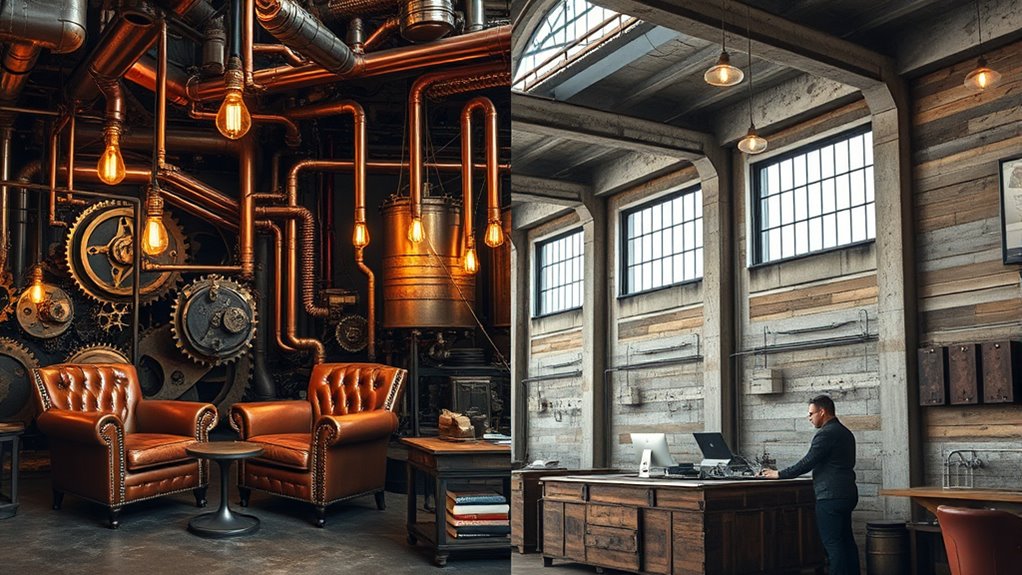
Have you ever wondered which design style suits a particular space best? Steampunk works well in creative workspaces, game rooms, or vintage-inspired cafes, thanks to its themed lighting and industrial furniture styles. Rustic industrial fits cozy living rooms, loft apartments, or rustic restaurants, emphasizing warmth and raw materials.
| Style | Ideal Spaces |
|---|---|
| Steampunk | Creative studios, themed bars, vintage shops |
| Rustic Industrial | Living rooms, open-plan kitchens, rustic cafes |
| Themed lighting | Enhances steampunk’s vintage vibe |
| Furniture styles | Both styles showcase statement pieces, blending old and new |
| Usage contexts | Steampunk for imaginative, playful spaces; Rustic industrial for warm, relaxed environments |
Frequently Asked Questions
How Do Steampunk and Rustic Industrial Styles Impact Property Value?
You’ll find that steampunk and rustic industrial styles can boost your property value by adding vintage appeal and urban charm. These unique designs attract buyers looking for distinctive, trendy spaces. By incorporating vintage elements and raw industrial features, you create a visually appealing environment that stands out. This trendy aesthetic can make your property more desirable, potentially leading to higher offers and quicker sales, especially among style-conscious buyers.
Can These Styles Be Combined in a Single Space?
Yes, you can definitely combine steampunk and rustic industrial styles in a single space. By using mixed materials like exposed brick, metal accents, and vintage wood, you blend the distinct elements seamlessly. Focus on style blending by balancing the ornate, Victorian-inspired details of steampunk with the raw, rugged feel of rustic industrial. This fusion creates a unique, cohesive environment that highlights the best of both aesthetics.
What Maintenance Challenges Are Associated With Each Style?
Think of maintaining these styles like tending a vintage garden. For steampunk, you face corrosion issues on metal fixtures, needing regular cleaning and protective coatings. Rustic industrial spaces demand fixture upkeep to prevent rust and wear on aged metals and woods. Both styles require vigilance—cleaning, sealing, and occasional repairs—to preserve their charm. Staying attentive ensures your space remains mesmerizing, much like nurturing a timeless, weathered masterpiece.
Are There Eco-Friendly Options Within Steampunk and Rustic Industrial Designs?
Yes, you can find eco-friendly options within steampunk and rustic industrial designs. By choosing sustainable materials like reclaimed wood, recycled metal, and eco-conscious decor, you reduce your environmental impact. Incorporating these elements aligns with your desire for stylish, unique spaces while supporting sustainability. Both styles can easily adapt to eco-friendly choices, making it simple for you to create a visually appealing, environmentally responsible atmosphere that reflects your values.
How Do Lighting Choices Differ Between the Two Styles?
You’ll notice that steampunk lighting often features vintage fixtures with intricate metalwork and exposed bulbs, creating a warm, nostalgic glow. Rustic industrial lighting leans toward rugged, functional fixtures with a raw, unfinished look, also favoring exposed bulbs for an authentic feel. Both styles emphasize vintage elements, but steampunk adds more ornate details, while rustic industrial keeps it simple and utilitarian. Your choice depends on whether you prefer elaborate or straightforward lighting designs.
Conclusion
While steampunk and rustic industrial share a love for raw materials and vintage charm, they evoke very different feelings. Steampunk immerses you in a Victorian-inspired fantasy, blending innovative machinery with ornate details, whereas rustic industrial offers a grounded, rugged vibe rooted in practicality and reclaimed wood. Together, they challenge your perceptions of history and modernity—one sparks imagination, the other invites comfort. Both styles remind you that beauty can be found in the imperfect, the aged, and the inventive.