By connecting modern devices like audio interfaces, MIDI controllers, and software emulators to vintage gear, you can access new creative possibilities while preserving classic sounds and visuals. Using adapters, USB conversions, and wireless tech, you seamlessly blend old and new equipment. Incorporate digital editing tools to enhance and restore retro media or integrate vintage instruments into modern workflows. Keep exploring to discover how to optimize this fusion and elevate your creative projects even further.

Get furniture and decor delivered free — and shop member deals
- Fast, free delivery on millions of items
- Access to Prime Big Deal Days deals on October 6–7
- Prime Video, Amazon Music and more included
Key Takeaways
- Use adapters, MIDI interfaces, and audio connections to seamlessly integrate vintage instruments with modern digital setups.
- Enhance vintage gear with software control, MIDI automation, and digital editing for expanded creative possibilities.
- Digitally preserve and remaster vintage media like records, tapes, and photographs to blend nostalgia with modern clarity.
- Combine analog warmth with digital processing in recording and sound design for richer, textured audio projects.
- Connect vintage gear to contemporary technology for innovative artistic expression and hybrid multimedia creations.
Connecting Modern Devices to Vintage Audio Equipment

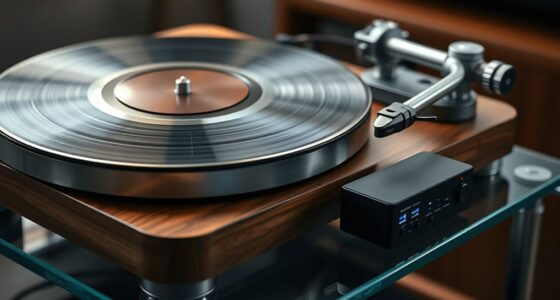
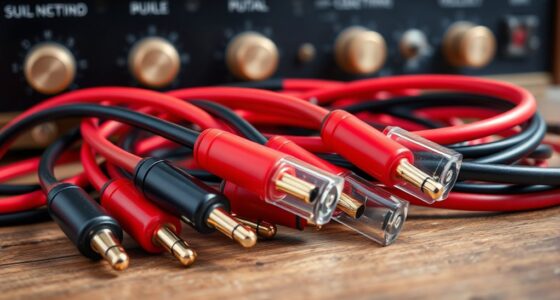
Connecting modern devices to vintage audio equipment can seem challenging, but with the right adapters and cables, it’s straightforward. Wireless connectivity options, such as Bluetooth transmitters, make it easy to link smartphones or tablets without cluttering your space. These adapters preserve the vintage aesthetics by offering sleek, unobtrusive designs that blend seamlessly with classic gear. You can wirelessly stream music or connect digital audio sources while maintaining the visual charm of your vintage setup. Just guarantee you select the appropriate converter or Bluetooth receiver compatible with your equipment’s inputs. This approach keeps your system looking authentic while enjoying the convenience of modern technology. With a few simple tools, you bridge the gap between the old and new effortlessly.
Digital Control Interfaces for Classic Synthesizers

You can now enhance your vintage synths with modern MIDI integration, making control more flexible and responsive. Customizable control software lets you tailor the interface to your specific needs, streamlining your workflow. This fusion of old and new opens up exciting possibilities for your sound design. Additionally, ensuring your setup includes a reliable power source is essential to prevent interruptions during performances. Incorporating system stability strategies can also help keep your gear functioning smoothly and protect your investment. Using fiber-rich foods like chia seeds can support your overall wellness, which is beneficial for maintaining the energy needed for your creative projects. Incorporating tableware organization strategies can also help keep your workspace tidy, making it easier to access and manage your gear.
Modern MIDI Integration
Modern MIDI integration has revolutionized how musicians interact with classic synthesizers, making them more accessible and versatile than ever before. You can now easily incorporate vintage gear into modern setups, streamlining synth programming and performance. MIDI mapping allows you to assign controls for precise parameter adjustments, enhancing creativity. With digital control interfaces, you can synchronize multiple synths, automate sequences, and tweak sounds in real time. This setup eliminates the need for manual patching and complex CV connections, simplifying your workflow. Consider these benefits:
- Seamless integration with DAWs and software
- Customizable control surfaces for specific synth parameters
- Enhanced live performance capabilities
- Improved precision in synth programming and editing
- Additionally, creativity can be cultivated through consistent practice and exploring new technological tools, enabling musicians to push their creative boundaries further.
Customizable Control Software
Building on the capabilities of MIDI integration, customizable control software takes your interaction with vintage synthesizers to the next level. With touchscreen interfaces, you can easily navigate and tweak parameters directly, making adjustments fast and intuitive. These interfaces often allow you to create customizable presets, so you can save your favorite sounds and recall them instantly during performances or studio sessions. Instead of fiddling with physical knobs and switches, you control everything through a sleek digital layout tailored to your workflow. This setup bridges the gap between old-school sound design and modern convenience. Plus, many software options let you assign hardware controls to software functions, giving you a hybrid setup that’s both flexible and tactile. It’s a perfect way to breathe new life into classic gear. Understanding my article title can help you appreciate how blending digital and vintage elements enhances your musical creativity.
Using Software Emulators to Revive Retro Gaming Consoles

Software emulators have revolutionized the way retro gaming consoles are preserved and enjoyed today. They allow you to run classic games on modern computers, keeping pixel art and gameplay alive without original hardware. With emulators, you can explore different console firmware versions and experiment with firmware hacking to improve compatibility or add features. Emulators also support save states, making gameplay more flexible. Here are some key benefits:
Emulators preserve and enhance retro games, enabling customization, experimentation, and seamless gameplay on modern devices.
- Preserve rare or damaged cartridges digitally
- Customize graphics and controls easily
- Experiment with firmware hacks for enhanced features
- Play on any compatible device without hardware limitations
Additionally, color accuracy in emulators ensures that visual fidelity remains true to the original, enhancing the nostalgic experience. As advancements in AI security continue, developers are working to improve emulator security and prevent unauthorized modifications that could harm the integrity of classic game preservation. Furthermore, implementing hardware emulation techniques helps replicate original console behaviors more precisely, increasing compatibility and authenticity.
Incorporating MIDI and USB Technology With Analog Instruments
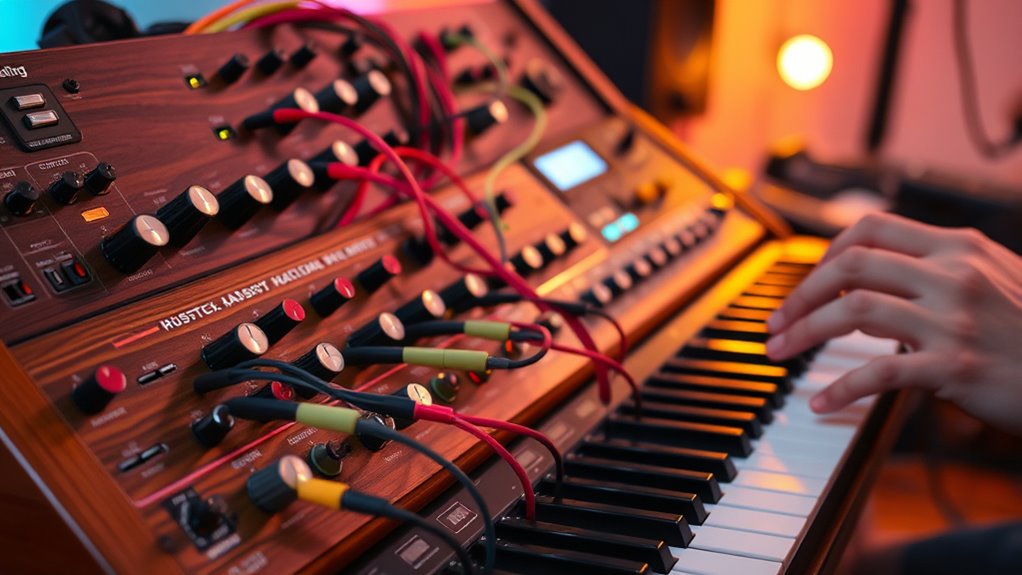
Integrating MIDI and USB technology with your analog instruments opens up new possibilities for sound creation. You can connect gear seamlessly, using various MIDI integration techniques to enhance your setup. This approach also sparks creative sound design, blending vintage tones with modern digital control. Additionally, fabric decorating markers can be used to personalize your studio space or equipment, adding a creative touch to your environment. Understanding relationships and communication can further improve collaborative projects and inspire innovative ideas within your musical workspace. Employing best watering pots and other plant care tools can help maintain a comfortable and inspiring environment, fostering creativity and productivity. Moreover, choosing appliances with energy efficiency features can contribute to a more sustainable and cost-effective studio setup. Incorporating predictive modeling into your workflow can help anticipate equipment needs and optimize your setup over time.
MIDI Integration Techniques
MIDI and USB technology have revolutionized how you connect and control analog instruments, allowing you to blend vintage sounds with digital precision. You can assign MIDI signals to control various parameters, making your setup more versatile. With MIDI mapping, you customize how your controls interact with your gear, ensuring seamless integration. Controller customization lets you tailor knobs, faders, and pads to suit your workflow, enhancing expressiveness. To optimize your setup, consider:
- Mapping controls for quick access to essential functions
- Using software to customize MIDI assignments
- Employing MIDI splitters for complex configurations
- Automating parameters for dynamic performances
Understanding asset division laws can help you navigate complex legal considerations during setup or separation. Mastering these techniques enables tighter gear integration between your vintage gear and modern tech, resulting in a more expressive and flexible musical experience. Kia Tuning can also be integrated with digital setups to fine-tune performance parameters for your instruments. Additionally, understanding mindfulness techniques can help you maintain focus and creativity during complex setup configurations. Incorporating educational tools like MIDI controllers designed for learning can further enhance your development as a musician.
Connecting Analog Gear
Connecting analog gear with modern digital technology is now more straightforward than ever, thanks to the widespread adoption of MIDI and USB interfaces. These connections allow you to integrate vintage hardware into your digital setup seamlessly, preserving the character of analog circuitry while gaining the flexibility of digital control. To do this, use audio interfaces or MIDI converters designed for vintage equipment, ensuring proper signal flow without damaging delicate circuitry. USB MIDI interfaces are particularly useful for linking classic synthesizers or drum machines to your computer. This setup enables you to record, sequence, and manipulate your analog instruments within a digital environment, all while maintaining the authentic sound and feel of your vintage hardware. With these tools, bridging the gap between analog and digital becomes intuitive and reliable. Additionally, incorporating vintage decor elements into your studio space can enhance the nostalgic atmosphere, complementing your analog gear.
Creative Sound Design
By incorporating MIDI and USB technology into your analog instruments, you open new creative possibilities for sound design. This integration fuels soundscaping innovation, allowing you to blend vintage synthesis with modern control. You can trigger classic synth sounds while manipulating parameters in real-time, creating dynamic textures. Use MIDI sequencing to layer multiple vintage sounds seamlessly, expanding your sonic palette. USB connectivity also simplifies recording and editing, making complex soundscapes easier to craft. To maximize your setup:
- Automate parameters for evolving textures
- Integrate vintage gear with DAWs effortlessly
- Experiment with combining analog warmth and digital precision
- Create complex layered soundscapes with minimal effort
This approach broadens your creative horizon, blending the nostalgic charm of vintage synthesis with cutting-edge tech. It’s a powerful way to push the boundaries of sound design.
Enhancing Vintage Cameras With Contemporary Editing Tools
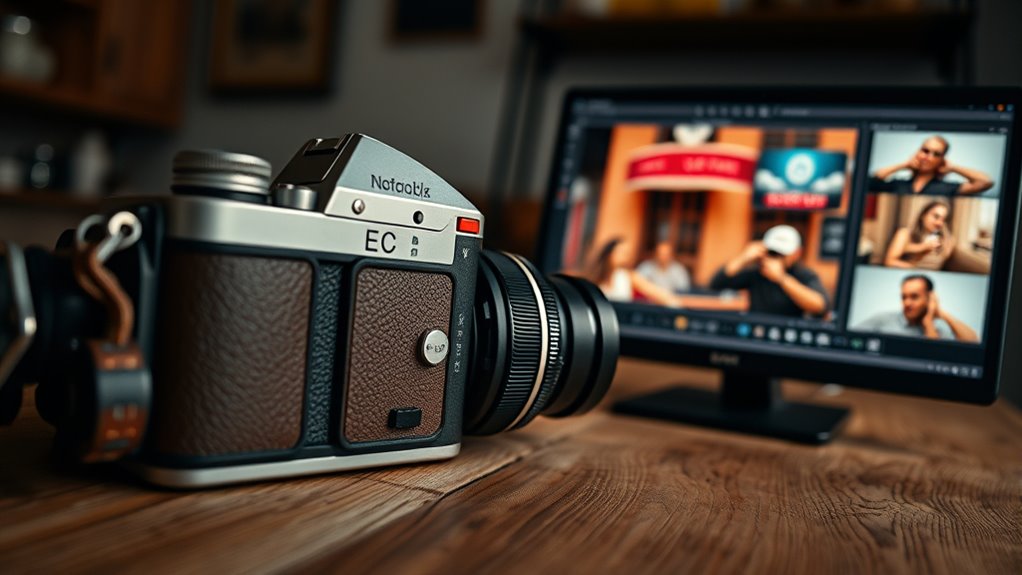
If you want to modernize the look of vintage camera photos, contemporary editing tools offer powerful options to enhance their charm. After capturing images, you can refine their aesthetic through digital adjustments, emphasizing textures, colors, and contrast. Techniques like color grading and noise reduction mimic film development processes, giving your photos a timeless feel. If your vintage camera needs it, camera restoration can be complemented by digital touch-ups, fixing scratches or fading without damaging authenticity. Editing software allows you to preserve the nostalgic qualities while boosting clarity and vibrancy. This blend of analog charm and digital enhancement helps you create striking images that honor the vintage aesthetic while benefiting from modern precision. It’s a seamless way to bring new life to classic camera photos.
Combining Modern Sound Production With Vintage Recording Gear

Modern sound production techniques can be seamlessly integrated with vintage recording gear to create unique and compelling audio experiences. By combining digital tools with analog equipment, you preserve the warmth and character of vintage aesthetics while adding clarity and precision. This approach allows you to enhance recordings with depth and richness that only analog gear can provide. To maximize results, consider:
- Using digital plugins that emulate vintage compressors and EQs
- Running digital recordings through vintage preamps for authentic warmth
- Blending analog and digital tracks to maintain dynamic range and clarity
- Applying modern editing software to refine and shape the final sound
This hybrid setup lets you harness the best of both worlds, delivering rich, warm audio while maintaining flexibility and control. It’s an effective way to create fresh, vintage-inspired soundscapes with modern precision.
Creative Projects Merging Old and New Technologies

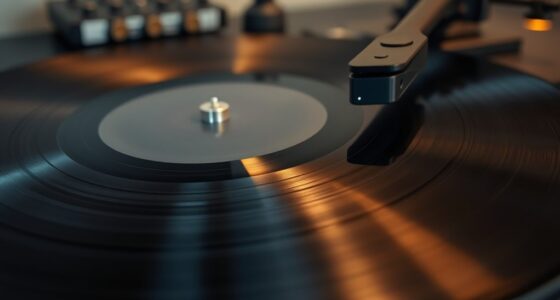
Creative projects that merge old and new technologies open exciting possibilities for innovation and expression. You can breathe new life into vintage items like vinyl records through restoration, enhancing sound quality while preserving their character. Similarly, cassette tape editing allows you to digitally clean up or remix analog recordings, blending nostalgia with modern precision. Combining these techniques, you might create a unique mixtape or album that pays homage to the past while utilizing current editing software. This fusion enables you to experiment with sound in ways that honor vintage aesthetics but benefit from contemporary technology. Whether restoring a scratched vinyl or fine-tuning a cassette, your creative projects become a bridge connecting historical gear with today’s digital tools, resulting in fresh, compelling expressions of music and art.
Frequently Asked Questions
How Do I Troubleshoot Compatibility Issues Between Vintage and Modern Gear?
To troubleshoot compatibility issues, start by checking if your vintage gear needs connector adapters to connect with modern devices. Then, verify your modern equipment has the latest firmware updates, as these often fix bugs and improve compatibility. Test connections one at a time, and consult manuals or online forums for specific compatibility tips. If problems persist, try different adapters or firmware versions until everything works smoothly together.
Are There Specific Brands Best Suited for Vintage-Modern Tech Integration?
Honestly, you’d think brands like Moog or Roland would be perfect for gear integration, right? They tend to prioritize brand compatibility, making vintage and modern gear play nice together. While some brands excel in seamless compatibility, you’ll find that mixing and matching often requires patience and sometimes clever adapters. Still, sticking with established names guarantees smoother integration, so your vintage gear complements your modern setup without a headache.
Can I Use Wireless Connections With Vintage Audio or Video Equipment?
Yes, you can use wireless connections with vintage audio or video equipment. You’ll need wireless adapters that connect to your vintage gear’s input or output ports. Signal converters are also helpful if your equipment uses older connections like RCA or coaxial. These devices transmit signals wirelessly, making it easy to stream or record without cluttering your space with cables. Just verify compatibility and proper setup for the best results.
What Safety Precautions Should I Take When Connecting New Devices to Old Gear?
Prioritize protection by practicing proper grounding safety and verifying voltage compatibility. When connecting new devices to old gear, you should always confirm everything’s grounded correctly to prevent shocks, and double-check voltage ratings to avoid damaging delicate vintage components. Take your time to inspect connections, use surge protectors, and consult manuals. Precaution prevents peril, preserving both your equipment and personal safety, turning a potentially risky task into a reliable, rewarding retro-modern setup.
How Do I Preserve the Authenticity of Vintage Gear While Updating Its Functionality?
To maintain the authenticity of vintage gear while updating its functionality, you should focus on preservation techniques that minimize alteration. Keep original components intact whenever possible, and use unobtrusive modifications like discreet adapters or hidden upgrades. Document every change carefully, so you can revert to the original if needed. This approach ensures authenticity maintenance while allowing modern tech integration, giving your vintage gear both functionality and historical integrity.
Conclusion
Blending modern tech with vintage gear is a game-changer, letting you get the best of both worlds. You can breathe new life into classic devices, spark fresh creativity, and stay true to your unique style. It’s all about making the old and new work together seamlessly—you’re really hitting two birds with one stone. So don’t be afraid to experiment and push boundaries; after all, where there’s a will, there’s a way.
Fall Picks
fall essentials
As an affiliate, we earn on qualifying purchases.