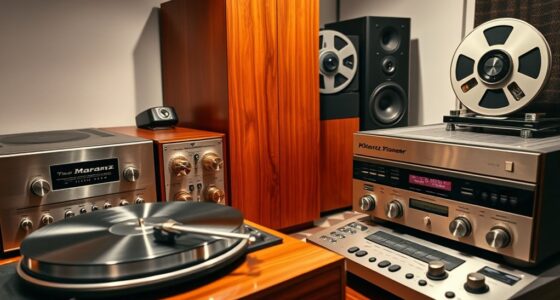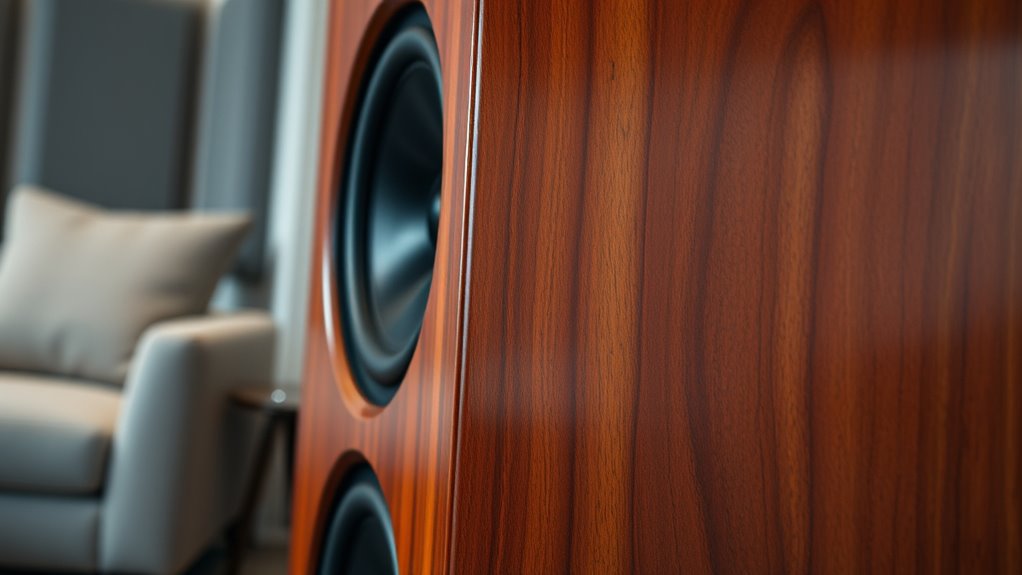

Choosing wood for your speaker cabinets directly impacts sound quality because it helps control resonance and vibrations that can distort audio. The density and stiffness of wood matter, as they help contain internal sound waves and prevent unwanted echoes, leading to clearer, more accurate sound. Wood also adds aesthetic appeal and durability, ensuring your speakers look great and last longer. Keep exploring how different woods can enhance your listening experience even further.
Key Takeaways
- Wood naturally dampens vibrations, reducing distortion and enhancing sound clarity.
- Wooden cabinets improve resonance control, resulting in richer bass and crisper highs.
- The density and stiffness of wood help contain internal sound waves, minimizing unwanted echoes.
- Wood’s aesthetic qualities add visual warmth and appeal, complementing various interior styles.
- Different wood types have unique resonance properties, influencing overall sound quality and dispersion.
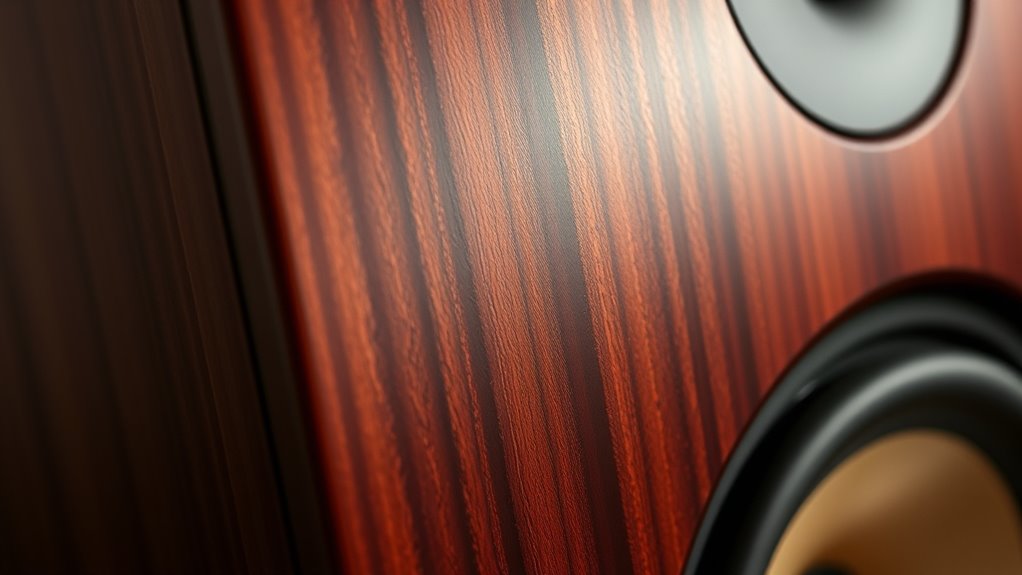
When choosing speakers, many people overlook the importance of cabinet material, but it plays a crucial role in overall sound quality. The material of your speaker cabinets directly influences how sound waves behave inside and outside the enclosure. Wood, in particular, has unique properties that make it an excellent choice for speaker cabinets. It naturally offers resonance control, which helps minimize unwanted vibrations that can distort sound. When vibrations are kept in check, your speakers produce clearer, more accurate audio. This means you’ll enjoy richer bass, crisper highs, and a more balanced overall sound.
Choosing wood cabinets enhances sound clarity and reduces unwanted vibrations for richer, more accurate audio.
Beyond resonance control, wood also contributes considerably to the aesthetic appeal of your speakers. Unlike metal or plastic, wood provides a warm, natural look that can complement any interior décor. Whether you prefer a sleek modern design or a classic vintage style, wood offers versatility and beauty. Its grain patterns, finish options, and textures give each speaker a distinct personality, making it an attractive centerpiece in your space. This visual appeal often influences how much you enjoy your listening experience, as a well-crafted wood cabinet can evoke a sense of quality and craftsmanship.
Choosing the right wood for your speakers also impacts durability and longevity. Solid woods like oak, cherry, or walnut tend to be more resilient and resistant to warping over time. This stability helps maintain the integrity of the resonance control, preserving sound quality for years. Conversely, cheaper or poorly constructed cabinets may resonate excessively or deform, leading to vibrations that muddy sound clarity. By selecting a high-quality wood cabinet, you’re investing in both aesthetic appeal and performance reliability.
Additionally, the way wood interacts with internal components influences how sound disperses. Properly designed wooden enclosures can enhance the natural acoustics of your speakers, providing a warm and inviting sound signature. The density and stiffness of the wood help contain internal sound waves, preventing them from escaping or causing unwanted echoes. This containment results in a cleaner, more precise audio output that captures every detail of your music or movies.
Furthermore, understanding the resonance properties of different wood types can help you choose the best material to optimize sound quality.
In essence, the material of your speaker cabinet is not just about looks; it’s about sound integrity. Wood stands out because it offers an ideal balance of resonance control and visual beauty. When you pay attention to cabinet material, you’re making a conscious choice to improve your listening experience, ensuring every note sounds authentic and immersive.

Audiocrazy Vintage Wooden AM FM Bluetooth Radio with 10 Watts Powerful Sound, Retro Bluetooth Speaker Radio with Softly Glowing Dial, Bass Control, Aux Input, Headphone Jack, for Home, Office, Kitchen
【CLASSIC DESIGN MEETS MODERN PERFORMANCE】 Vintage Wooden Finish AM FM Radio, Precise Rotary Vernier Tuning with a Softly…
As an affiliate, we earn on qualifying purchases.
As an affiliate, we earn on qualifying purchases.
Frequently Asked Questions
How Does Wood Compare to Other Speaker Cabinet Materials in Durability?
Wood generally offers a strong durability comparison to other speaker cabinet materials, thanks to its natural material strength. You’ll find that solid wood is resistant to warping and provides long-lasting sturdiness, making it a reliable choice. While some materials like MDF or plastic may be less durable over time, wood’s resilience guarantees your speaker remains protected and maintains sound quality, especially with proper care.
Can Wood Cabinets Affect the Speaker’s Overall Frequency Response?
Wood cabinets can definitely influence your speaker’s frequency response. Their natural resonance control helps minimize unwanted vibrations, creating clearer sound. Plus, wood offers excellent acoustic transparency, allowing sound waves to pass through more freely. This combination ensures your speaker produces a balanced, vibrant tone. So, selecting wood can enhance overall sound quality by managing resonance and delivering pure, precise audio performance, making your listening experience more immersive and enjoyable.
Are There Specific Wood Types Better for Certain Music Genres?
Yes, certain wood types suit specific music genres better. For example, maple’s bright tone enhances genres like jazz and classical, while mahogany’s warm sound complements blues and rock. The wood grain textures also add aesthetic appeal, making your speakers visually match your style. Choosing the right wood not only improves sound quality suited to your favorite music but also elevates your speaker’s overall look and feel.
How Does the Aging of Wood Impact Speaker Sound Quality Over Time?
Ironically, aging wood can both improve and hinder your sound. Over time, grain expansion due to moisture effects might soften sharp edges, adding warmth to your audio. But, if moisture causes warping, it distorts sound quality, leading to muddiness or loss of clarity. You might find that aged wood offers a richer tone, yet unpredictable moisture effects can compromise your speaker’s precision—so, aging isn’t always your friend.
Is Wood More Environmentally Sustainable Than Synthetic Cabinet Materials?
Yes, wood is generally more environmentally sustainable than synthetic materials. You can choose eco-friendly sourcing and recycled wood options, reducing harm to forests and lowering carbon footprints. Wood’s renewability and biodegradability make it a greener choice. By opting for sustainably harvested or recycled wood, you help promote eco-conscious manufacturing and minimize environmental impact, making your speaker cabinet both high-quality and eco-friendly.

OFFSCH Truck Speaker Box: Portable 4-Inch Wooden Speaker Cabinet – Car Audio Enclosure for Deep Bass – Sound Box Enclosure for Vehicles
Perfect speaker fit: the truck speaker box is precisely made to integrate seamlessly with various car audio setups,…
As an affiliate, we earn on qualifying purchases.
As an affiliate, we earn on qualifying purchases.
Conclusion
You might think all speaker cabinets sound the same, but research suggests otherwise. Wood’s natural resonance and damping qualities truly enhance sound clarity and warmth, making your listening experience richer. While some claim synthetic materials can mimic wood, many audiophiles swear by its authenticity. So, next time you choose speakers, remember that wood isn’t just about looks — it’s about delivering the authentic, immersive sound you crave. Trust the science; your ears will thank you.

Facmogu 4PCS Silver Aluminum Alloy Speaker Isolation Feet, Turntable Isolation Pad for Reduce Vibration & Resonance, Speaker Spike Pads with Non-Slip Rubber Ring for Amplifier HiFi Devices Recorder CD
【Great Isolation solution】– They will increase air flow between components. Using them to stack your components to get…
As an affiliate, we earn on qualifying purchases.
As an affiliate, we earn on qualifying purchases.
OFFSCH Truck Speaker Box: Portable 4-Inch Wooden Speaker Cabinet – Car Audio Enclosure for Deep Bass – Sound Box Enclosure for Vehicles
Perfect speaker fit: the truck speaker box is precisely made to integrate seamlessly with various car audio setups,…
As an affiliate, we earn on qualifying purchases.
As an affiliate, we earn on qualifying purchases.