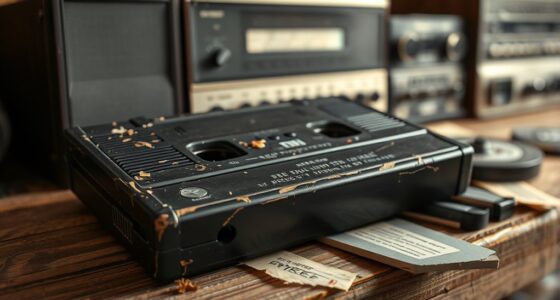
Understanding vintage audio terms helps you get the most out of your hi-fi setup. Key components like turntables, tube amplifiers, receivers, and speakers each have unique features that influence sound quality. Knowing terms such as impedance (ohms), sound signature, and drive types (belt vs. direct) allows you to select and maintain gear more confidently. The more familiar you become with these words, the easier it is to optimize your vintage audio experience and troubleshoot issues along the way.
Key Takeaways
- Understand common terms like turntable, tube amplifier, receiver, and preamp to grasp vintage audio setups.
- Know impedance (ohms) to ensure proper matching between speakers and amplifiers for optimal sound.
- Recognize differences between belt-drive and direct-drive turntables for sound quality and performance.
- Learn about sound signatures, such as warm or natural tones, characteristic of vintage equipment.
- Familiarize with specifications and troubleshooting terms to maintain and optimize vintage hi-fi systems.
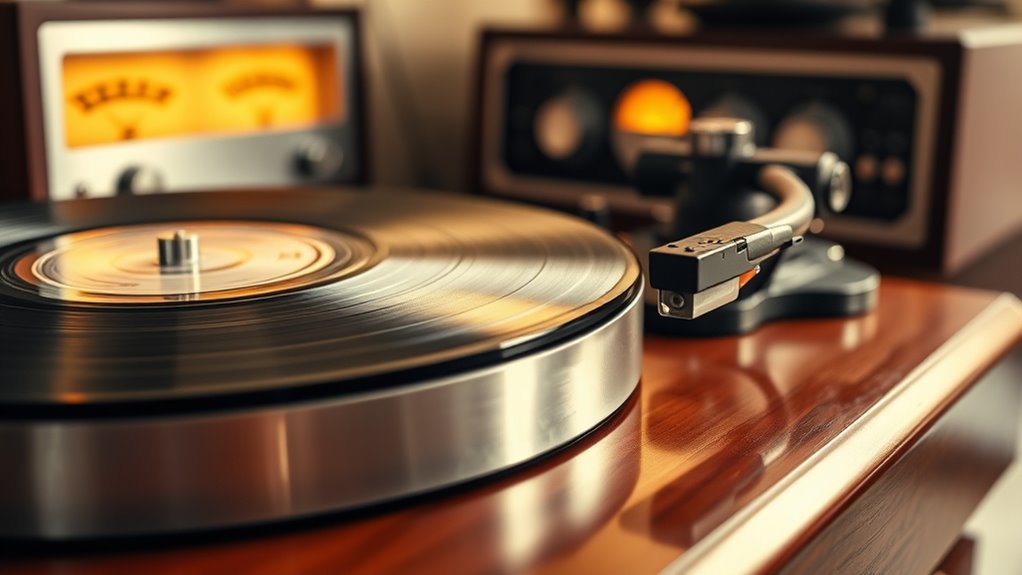
Understanding hi-fi audio can feel overwhelming at first, but familiarizing yourself with key terms makes it much easier to navigate the world of high-fidelity sound. When you start exploring vintage equipment, you’ll quickly notice that many terms pop up repeatedly, and knowing what they mean helps you appreciate the nuances of classic audio gear. Audio terminology is essential, especially since vintage gear often has unique specifications that differ from modern equipment. For instance, you’ll encounter words like “turntable,” “tube amplifier,” and “receiver,” each representing specific components with their own characteristics. Recognizing these terms allows you to identify what makes vintage equipment special and how it contributes to sound quality. Vintage audio gear is often prized for its warm, rich sound, which many audiophiles find superior to digital alternatives. But to truly understand what you’re hearing, you need to understand the language of vintage equipment.
For example, a “turntable” isn’t just a device that plays records; it’s the heart of many vintage setups. Understanding the mechanics and design of turntables, like belt-drive versus direct-drive systems, helps you choose the right one for your preferences. Similarly, knowing about “tube amplifiers” gives you insight into why some audiophiles swear by their warm, natural tone. These amplifiers use vacuum tubes instead of transistors, and their unique sound signature is one of the reasons vintage audio is so sought after. When you see terms like “receiver,” you should recognize that this combines a tuner, amplifier, and preamp into a single unit, often with vintage models offering a distinct aesthetic and sound profile.
Getting familiar with vintage equipment terms also helps you spot quality features and understand potential limitations. For instance, “matching impedance” or “ohms” can affect how well your amplifier and speakers work together, impacting overall sound clarity. Vintage gear often requires a bit more knowledge to operate properly, but understanding these terms makes troubleshooting easier and guarantees you make informed choices. Additionally, understanding audio specifications allows you to compare equipment more effectively and select gear that suits your listening preferences. Overall, learning the core audio terminology related to vintage equipment not only enhances your appreciation of classic sound but also empowers you to build a setup that truly satisfies your audiophile sensibilities. It transforms what might seem like complex jargon into a language that unbars the full potential of vintage hi-fi gear, giving you a richer listening experience.
Top picks for "glossary vintage audio"
Open Amazon search results for this keyword.
As an affiliate, we earn on qualifying purchases.
Frequently Asked Questions
How Do Vintage Audio Components Differ From Modern Equivalents?
Vintage audio components differ from modern ones mainly through their circuit design and use of tube amplification, which often delivers warmer sound. You’ll notice they tend to have more robust build quality and a nostalgic appeal. Unlike sleek, compact modern gear, vintage units emphasize craftsmanship and analog signal flow. This results in a richer, more textured listening experience that many audiophiles cherish, especially those who prefer the distinct character of tube amplification.
What Are Common Maintenance Tips for Vintage Hi-Fi Equipment?
To keep your vintage hi-fi equipment in top shape, regularly dust prevention is key—use a soft, dry cloth and avoid harsh chemicals. Proper cable management prevents tangling and reduces wear on connectors, ensuring better sound quality and longevity. Periodically check for corrosion or worn parts, and consider professional servicing for capacitors or belts. These simple steps help preserve your gear’s performance and extend its lifespan.
Can Vintage Speakers Be Integrated With Digital Audio Systems?
Vintage speakers can be integrated with digital audio systems like a puzzle piece fitting perfectly. You just need to guarantee wireless integration and digital compatibility by adding a suitable receiver or amplifier with modern inputs. This setup allows you to enjoy your favorite digital music through classic speakers, blending old-school charm with new technology seamlessly. With a few adjustments, your vintage speakers become part of your contemporary digital listening experience.
What Are the Most Sought-After Vintage Audio Brands?
You’ll find that collector favorites like Marantz, McIntosh, and Harman Kardon top the list of most sought-after vintage audio brands. These iconic labels are prized for their exceptional build quality and timeless sound. As a vintage enthusiast, you’ll appreciate how these brands hold their value and continue to deliver rich, warm audio. Keep an eye on these brands when hunting for gear to enhance your collection.
How Can I Identify Authentic Vintage Audio Gear?
To identify authentic vintage audio gear, you should examine its condition and markings carefully. Use collector’s guides to verify model numbers and original features. Look for signs of genuine restoration techniques, such as original parts and appropriate finishes, which can indicate authenticity. Avoid gear with mismatched components or excessive modifications. Trust your research and hands-on inspection—these steps help guarantee you’re getting true vintage audio equipment.
Conclusion
Now that you’re equipped with these vintage audio terms, you’re like a seasoned explorer charting the depths of classic sound. Remember, understanding these words is your key to opening a treasure trove of rich, timeless music. Just as pirates sought hidden gems, you can now uncover the true essence of vintage hi-fi. Keep this glossary close, and let your passion for authentic sound guide you to new auditory adventures. The world of vintage audio awaits—dive in!