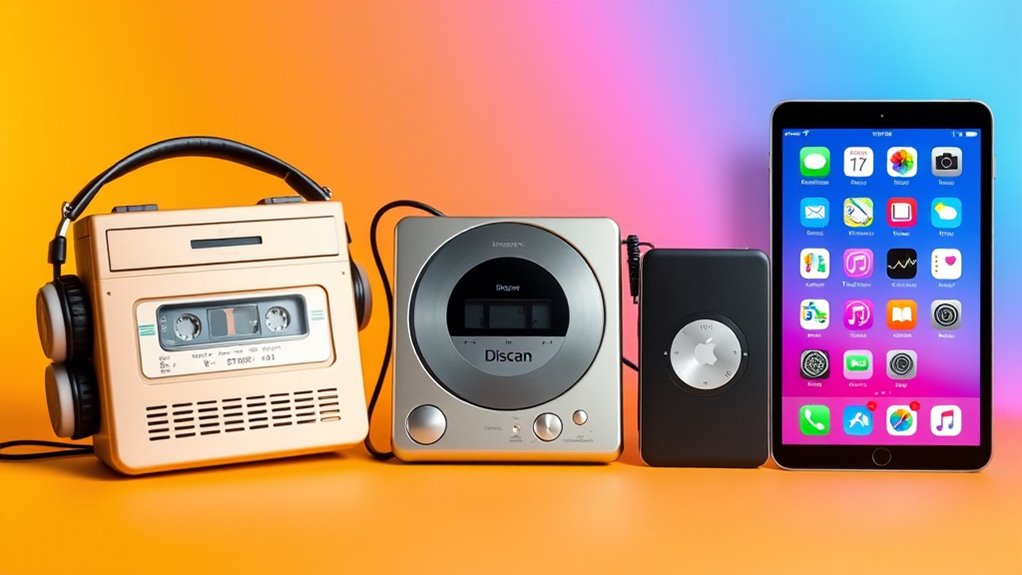

The evolution from Walkman to iPod transformed how you enjoy music on the go. Early devices used bulky tapes and required manual effort, but digital storage made libraries portable and easy to access. User interfaces improved from simple buttons to touchscreens, making navigation effortless. Sound quality advanced with high-resolution audio, enriching your listening experience. If you keep looking into this journey, you’ll discover even more about how technology reshaped your musical world.
Key Takeaways
- Portable music devices evolved from bulky cassette Walkmans to compact digital players like the iPod.
- Digital storage enabled thousands of songs in small devices, replacing tapes and CDs.
- User interfaces transitioned from simple controls to touchscreens with visual menus for easier navigation.
- Features like playlists, shuffle modes, and search functions personalized and enhanced the listening experience.
- Advances in sound quality and high-resolution audio technology improved portability without sacrificing fidelity.

The evolution of portable music players has transformed how you enjoy your favorite tunes on the go. It all began with bulky, cassette-based devices that limited your music choices and required constant manual effort. As technology advanced, digital storage became a game-changer, allowing you to carry thousands of songs in a compact device. This shift meant no more tapes or CDs, just instant access to your entire music library at your fingertips. The *progression* from analog to digital also brought improvements in sound quality, making your listening experience clearer and more enjoyable. With digital storage, you no longer had to worry about running out of space or carrying multiple discs — everything you wanted was stored neatly inside a small device. This convenience was a major step forward, transforming how you curated and accessed your music.
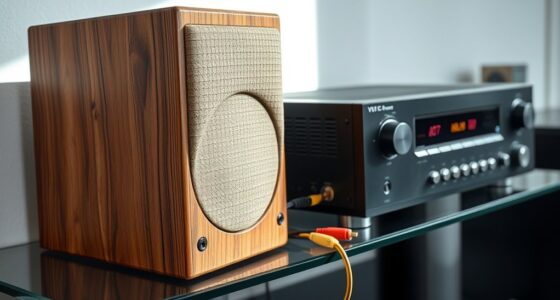
Alongside digital storage, the user interface of portable music players saw significant improvements. Early devices had simple, often clunky controls, making navigation frustrating. But as designs evolved, manufacturers focused on creating intuitive, user-friendly interfaces. Touchscreens replaced physical buttons, giving you an easy way to browse through playlists, albums, or artists. Visual menus and icons made navigation straightforward, even for those who weren’t tech-savvy. This focus on a seamless user interface meant you could find and play your favorite tracks quickly, without wasting time fiddling with complicated controls. The interface also evolved to include features like shuffle modes, playlist management, and search functions, enhancing your overall experience. These enhancements made listening to music more personalized and accessible, encouraging you to explore new genres or rediscover old favorites effortlessly. Additionally, the integration of high-resolution audio technology improved sound fidelity, offering a richer listening experience that rivals traditional home audio systems.
Top picks for "walkman ipod evolution"
Open Amazon search results for this keyword.
As an affiliate, we earn on qualifying purchases.
Frequently Asked Questions
How Did Portable Music Players Impact Social Interactions?
Portable music players transformed social interactions by enabling music sharing and enhancing social connectivity. When you use devices like iPods, you can easily share playlists or songs with friends, fostering conversations and shared experiences. These players allow you to connect with others through music, breaking down barriers and creating new social bonds. As a result, portable music players not only changed how you listen but also how you interact and connect socially.
What Were the Key Technological Innovations in Each Era?
Did you know that the first portable music device, the Walkman, had only a few hours of battery life? In each era, key innovations shaped your experience. The Walkman introduced portable audio with compact design and improved battery longevity. The iPod brought digital storage and sleek interfaces, while later models integrated wireless connectivity, allowing you to stream music effortlessly. These technological advances made your music more accessible and enjoyable over time.
How Did Consumer Preferences Influence Device Design?
Your preferences shaped device design by emphasizing portability, comfort, and ease of use. You wanted lightweight, ergonomic devices that fit comfortably in your hand or pocket, leading manufacturers to prioritize ergonomic design. As your desire for instant access and personalized playlists grew, devices evolved to include touchscreens, shuffle features, and sleek aesthetics. Your feedback directly influenced innovations, making portable music players more intuitive, stylish, and tailored to your lifestyle.
What Environmental Impacts Resulted From Device Manufacturing?
You should know that device manufacturing impacts the environment through resource extraction and battery disposal. Extracting metals like lithium and cobalt harms ecosystems and depletes natural resources. Additionally, disposing of batteries improperly can release toxic chemicals, polluting soil and water. These environmental impacts highlight the importance of responsible sourcing and recycling efforts, so you can help reduce the ecological footprint of portable music players by supporting sustainable practices and proper disposal.
How Do Current Devices Compare in Audio Quality?
Think of today’s devices as the symphony of technology—crisper, clearer, and more immersive than ever. You’ll notice improved audio fidelity, delivering richer sound with nuanced details. Noise cancellation acts like a shield, blocking out distractions so you experience music as intended. Modern gadgets outperform past models, turning every listening session into a concert in your pocket, making you feel like you’re right there with the artist.
Conclusion
As you’ve seen, portable music players have journeyed from clunky Walkmans to sleek iPods, transforming how you experience music. Like a river carving its path through rock, each innovation shapes the flow of technology, making your music more accessible and personal. The evolution continues, and you’re right at the heart of this musical current, riding waves of progress that keep pushing boundaries. So, stay tuned—you’re part of this endless melody of innovation.