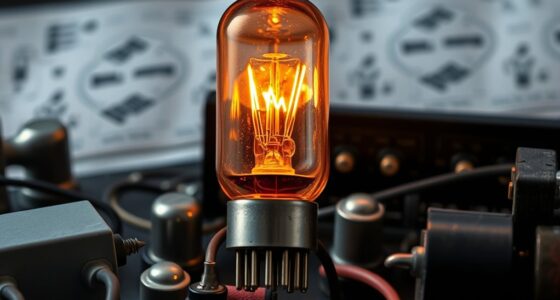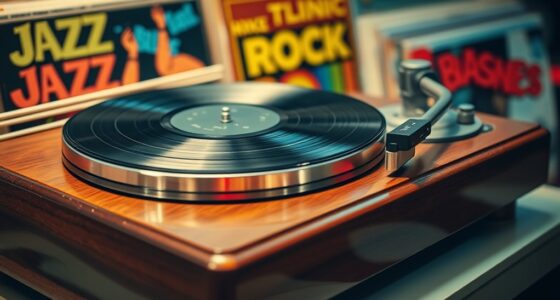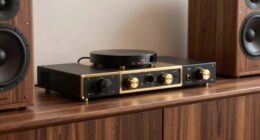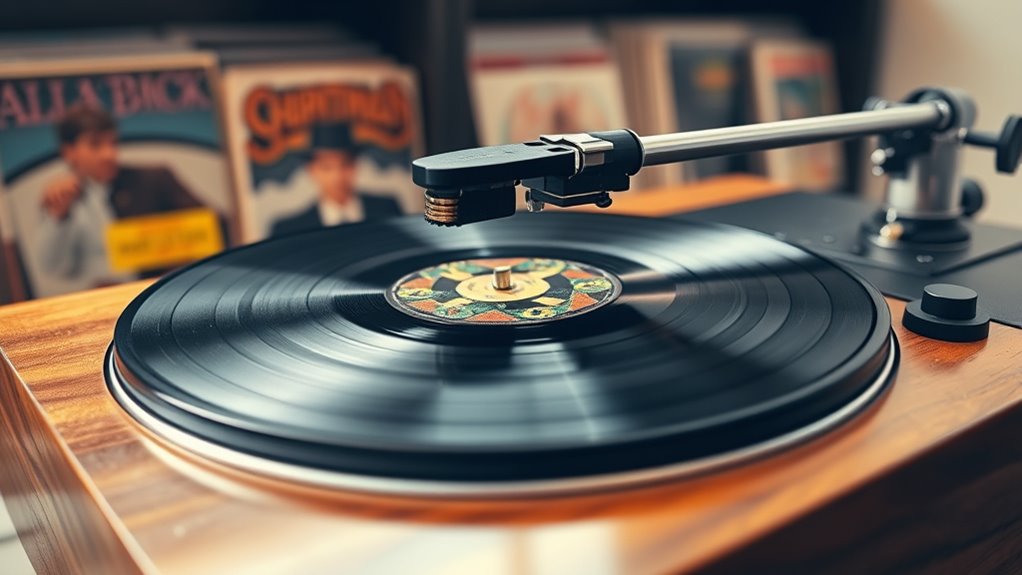

Audiophiles love turntables from the 1970s because they combine vintage design with exceptional analog sound quality, offering a warm, rich listening experience that digital formats can’t match. Their precise craftsmanship, durable components, and tactile operation make each session engaging and nostalgic. These turntables also reflect the style and culture of the era, creating a unique connection to music and history. Keep exploring – you’ll find even more reasons why these vintage devices remain so special.
Key Takeaways
- They offer warm, rich analog sound that digital formats can’t replicate.
- Their mechanical craftsmanship provides a natural, organic listening experience.
- Vintage design adds nostalgic charm and aesthetic appeal to listening spaces.
- The tactile operation creates a more engaging and intentional music experience.
- They embody the cultural and technological spirit of the 1970s, resonating with collectors.

During the 1970s, turntables became a staple of home audio systems, transforming how people listened to music. You might find yourself drawn to these vintage devices because of their distinctive aesthetic and sound. The vintage aesthetics of 1970s turntables evoke a sense of nostalgia, with sleek lines, textured finishes, and iconic designs that stand out in any space. They aren’t just about function; they serve as decorative pieces that add character and charm to your listening area. This retro appeal appeals to both collectors and newcomers who appreciate the timeless style of that era. When you look at these turntables, you see more than just equipment—you see a piece of history that reflects the design sensibilities of a bygone age. Additionally, many of these turntables were engineered with high-quality components and precise craftsmanship to ensure excellent sound reproduction, which further enhances their appeal to audiophiles. But what truly captivates audiophiles about these turntables is their analog sound quality. Unlike digital formats, which often compress audio and sacrifice some fidelity, vinyl records played on vintage turntables deliver a warm, rich sound that many say digital can’t replicate. The analog process captures sound waves in their full complexity, resulting in a fuller, more natural listening experience. When you spin a vinyl record on a 1970s turntable, you notice a depth and texture in the music that feels more alive and immersive. The gentle crackle and pop of the record add to this authenticity, creating a sensory experience that’s both tangible and nostalgic. Many audiophiles prefer this raw, unfiltered sound because it preserves the nuances and subtleties of the original recording. Furthermore, the mechanical design of these vintage turntables often means fewer digital components, which some believe results in purer audio reproduction. The precision engineering and quality materials used back then were aimed at achieving the best possible sound, giving you a listening experience that feels personal and organic. The tactile nature of operating a turntable—from placing the needle to adjusting the tonearm—also enhances your connection to the music, making each listening session more intentional and engaging. It’s not just about hearing music; it’s about experiencing it in a way that digital devices can’t quite match. Overall, these turntables exemplify how analog sound quality and vintage design can create a uniquely satisfying listening experience. In essence, your love for 1970s turntables stems from their vintage aesthetics and the superior analog sound quality they provide. They combine style with substance, offering a nostalgic yet high-fidelity way to enjoy music. Whether you’re a collector, a casual listener, or an audiophile, these turntables bring a unique charm and listening experience that keeps the spirit of that era alive in your home.
Top picks for "audiophil love turntabl"
Open Amazon search results for this keyword.
As an affiliate, we earn on qualifying purchases.
Frequently Asked Questions
How Do 1970S Turntables Compare in Sound Quality to Modern Models?
You’ll notice that 1970s turntables often deliver a warmer, richer sound compared to modern models. Their analog cartridge technology and less digital remastering preserve the authenticity of the vinyl records, offering a unique listening experience. While modern turntables may feature advanced tech, these vintage units excel in producing a natural, nostalgic sound that many audiophiles find more engaging and true to the original recording.
Are Vintage 1970S Turntables Compatible With Current Audio Equipment?
You’ll find that vintage 1970s turntables can be compatible with modern audio equipment, but some tweaks might be needed. Their vintage aesthetics add charm, but check for compatible connections like RCA or grounding wires. Many models work well with current setups, and adapters can bridge any gaps. Don’t throw the baby out with the bathwater — with a little effort, you can enjoy your favorite records on today’s gear.
What Maintenance Is Required for 1970S Turntables to Ensure Optimal Performance?
You should regularly maintain your 1970s turntable by replacing the stylus when it shows signs of wear to guarantee clear sound. Additionally, inspect the belt for cracks or slack, replacing it if needed to keep the platter spinning smoothly. Keep the turntable clean and free of dust, and check the tonearm alignment periodically. Proper maintenance guarantees your vintage turntable performs at its best, providing high-quality sound.
How Collectible Are 1970S Turntables Among Audiophiles Today?
Like rare gems, 1970s turntables are highly collectible among audiophiles today. Their vintage appeal, combined with classic craftsmanship, boosts their collectibility trends. Rarity plays a big role, especially for models in excellent condition, which can notably increase their value. If you’re into nostalgia and high-quality sound, these turntables are prized possessions, often sought after for both their historical significance and enduring performance.
What Are the Most Popular Brands of 1970S Turntables?
You’ll find that Technics, Thorens, and Marantz are some of the most popular brands of 1970s turntables. These brands evoke strong brand nostalgia, thanks to their timeless design aesthetics and reliable performance. Audiophiles love their craftsmanship and vintage appeal, which combine to create a warm, rich sound. If you value heritage and classic style, these brands stand out, making them highly sought-after among collectors and enthusiasts alike.
Conclusion
You see, those 1970s turntables aren’t just vintage gear—they’re the heart and soul of true sound. When you spin one, you’re reconnecting with a time when craftsmanship and warmth ruled the airwaves. Owning a piece from that era means you’re holding onto a treasure that can’t be replaced. It’s like they say, sometimes you’ve got to go back to move forward—these turntables remind you why music feels so real.