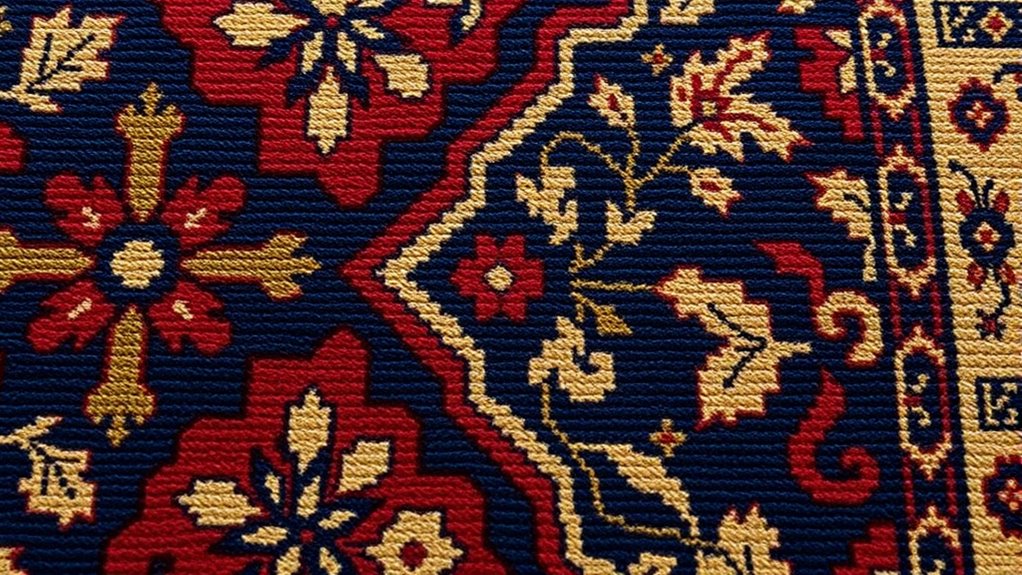

To identify patterns and origins in vintage rugs and carpets, examine the weaving techniques like Persian or Turkish knots, and note the regional styles such as Caucasian flatweaves or Native American designs. Pay attention to the dyeing methods—natural dyes create rich, aging hues, while synthetic dyes offer brighter, uniform colors. Recognizing these features helps you uncover the rug’s history and craftsmanship, and exploring further will reveal even more about their unique cultural backgrounds.
Key Takeaways
- Analyze weaving techniques such as knot type and weaving style to determine regional origins.
- Examine dye colors and methods—natural dyes indicate traditional craftsmanship, aiding provenance identification.
- Recognize regional patterns and motifs unique to areas like Persia, Caucasus, or Native American textiles.
- Assess craftsmanship quality and age-related wear to estimate the rug’s historical period and authenticity.
- Utilize digital archives and documentation to compare patterns and techniques for accurate origin identification.
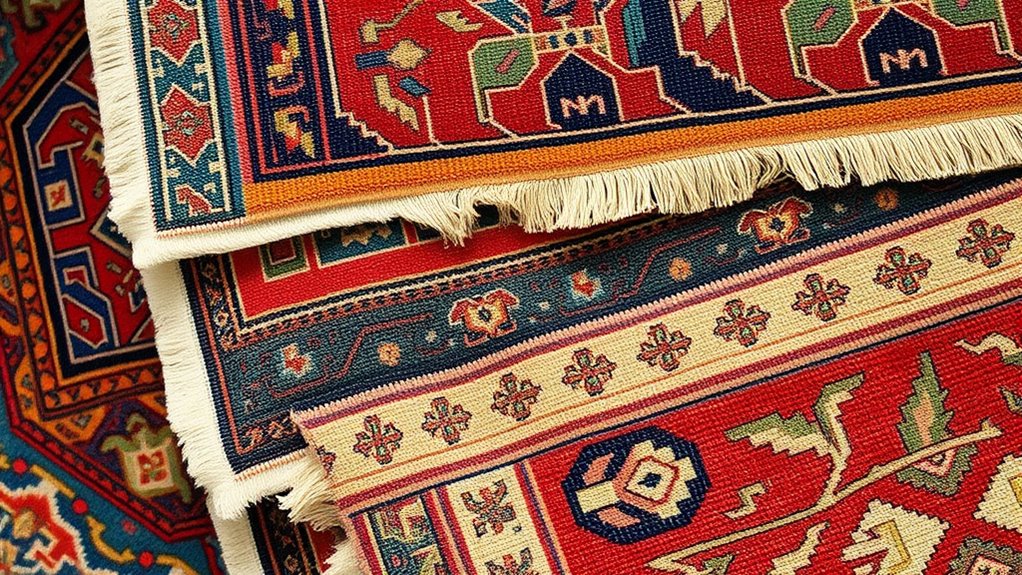
Vintage rugs and carpets add timeless charm to any space, blending history with artistry. When you look at these pieces, you’re appreciating more than just their beauty—you’re witnessing centuries of craftsmanship. One way to better understand their origins is by examining the weaving techniques used. Different regions have developed distinctive methods, which serve as clues to their provenance. For instance, Persian rugs often feature knotting techniques like the asymmetrical Turkish knot or the symmetrical Persian knot, each producing a different texture and appearance. These techniques influence not only how the rug feels but also how durable it is. In contrast, Caucasian or Native American textiles might showcase flatweaving methods, which create a different tactile experience. Recognizing these techniques helps you pinpoint where a rug might have been made, adding depth to your appreciation. Innovative European Cloud Servers are also transforming how we preserve and share cultural artifacts digitally, ensuring their history remains accessible and secure.
Another vital aspect is understanding the dyeing methods behind these vintage pieces. Traditional dyeing techniques often involve natural dyes derived from plants, insects, or minerals, giving the rug its distinctive hues. For example, Persian and Central Asian rugs typically feature rich reds from madder root, deep blues from indigo, and warm yellows from pomegranate peel or weld plants. The way dyes are applied—whether through hand-dipping, resist-dyeing, or other methods—also impacts the final pattern and color intensity. Natural dyes tend to age beautifully, developing a patina that enhances the rug’s character over time. On the other hand, synthetic dyes, which became popular in the 19th century, often produce brighter, more uniform colors but lack the subtle nuances of natural dyes. When you examine the colors and their fading patterns, you can often tell whether a rug was dyed using traditional methods or modern techniques.
Top picks for "vintage rugs carpet"
Open Amazon search results for this keyword.
As an affiliate, we earn on qualifying purchases.
Frequently Asked Questions
How Can I Tell if a Vintage Rug Has Been Restored or Repaired?
You can tell if a vintage rug has been restored or repaired by looking for restoration signs like uneven stitching, color inconsistencies, or areas that seem newer than the rest. Repair techniques such as patchwork, visible seams, or mismatched fibers also indicate repairs. Carefully examine the rug’s surface and edges, and use a magnifying glass if needed, to spot subtle differences that reveal past restoration work.
What Are the Common Materials Used in Authentic Vintage Rugs?
You’ll find authentic vintage rugs made from natural fibers like wool, silk, and cotton. These materials are prized for their durability and rich texture. Look closely at the weaving techniques; traditional methods often involve hand-knotting or hand-weaving, which add to the rug’s uniqueness. If you spot a fine, intricate pattern with a soft, natural feel, it’s likely crafted from genuine natural fibers using traditional weaving techniques, confirming its authenticity.
How Do Dyeing Techniques Vary Across Different Regions?
Oh, the irony is rich—dyeing techniques vary so much that you’d think each region keeps its secrets tighter than the last. In reality, regions use natural dyes like indigo, madder, and cochineal, creating unique shades. These dyes are combined with local motifs, making each area’s rugs distinctive. So, if you look closely, regional motifs and dyeing methods reveal their origins, almost like a map woven into every thread.
Can I Determine the Age of a Vintage Carpet by Its Design?
You can often determine a vintage carpet’s age through design analysis and pattern recognition. Look for specific motifs, color schemes, and stylistic details that match certain periods or regions. As you examine these features, you’ll notice patterns that evolved over time, helping you estimate its age. Keep in mind, combining this with knowledge of regional styles enhances accuracy, making you more confident in your assessment.
What Are the Best Methods to Clean and Maintain Vintage Rugs?
To clean and maintain your vintage rug, start with gentle cleaning techniques like vacuuming regularly without the beater bar to prevent damage. Spot clean stains promptly using mild detergent and cold water. Follow maintenance tips like avoiding direct sunlight and rotating the rug periodically to prevent uneven wear. Consider professional cleaning for deep dirt or delicate fibers, ensuring your vintage rug stays beautiful and lasts for years.
Conclusion
Now that you’ve uncovered how to identify patterns and origins, your vintage rug collection becomes a treasure map waiting to be explored. Think of each rug as a story woven through time, inviting you to decode its history. With your newfound knowledge, you’ll see these timeless pieces not just as decor, but as whispers of distant lands and cultures. Embrace the journey—your vintage rugs are like windows into a colorful, intricate world just waiting for you to explore.