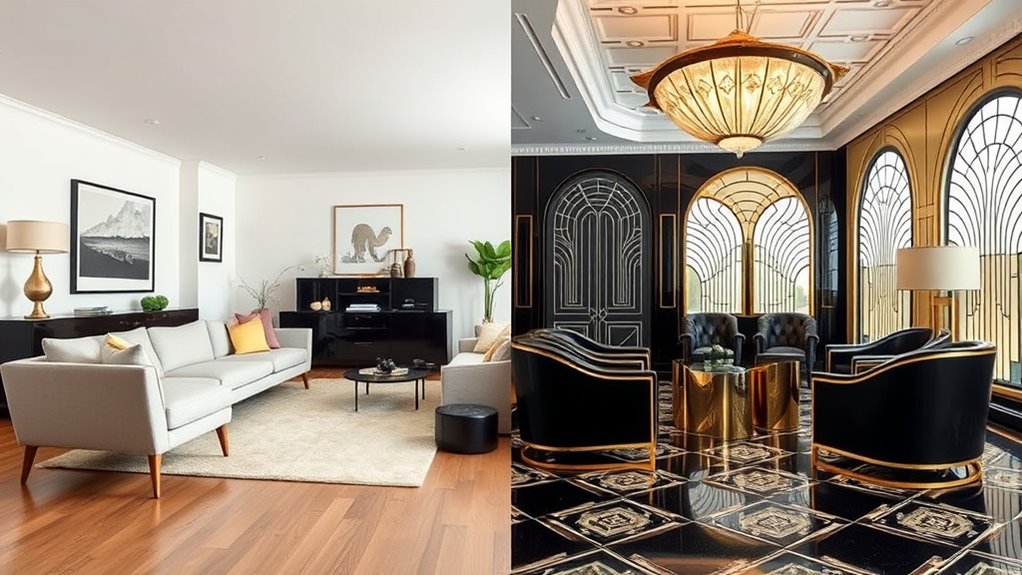

Mid-Century Modern and Art Deco differ in style and origin. Art Deco, from the 1920s, emphasizes luxury, geometric patterns, and shiny materials like chrome and glass, reflecting glamour and societal optimism. Mid-Century, from post-WWII, favors simplicity, organic forms, and natural finishes like wood and leather, showcasing practicality and progress. Understanding their distinct visuals and cultural significance helps you see how each style shapes modern design—exploring more reveals even deeper inspirations.
Key Takeaways
- Art Deco emphasizes luxury, ornate patterns, metallic finishes, and bold geometric motifs, while Mid-Century focuses on simplicity, natural materials, and clean lines.
- Art Deco architecture features decorative motifs and stepped forms; Mid-Century architecture emphasizes flat roofs, large windows, and functional shapes.
- Color palettes: Art Deco uses vivid, contrasting hues and metallics; Mid-Century favors muted, earthy tones.
- Material choice: Art Deco employs polished stone, chrome, and luxurious surfaces; Mid-Century utilizes plywood, plastics, and natural finishes.
- Design philosophy: Art Deco celebrates opulence and ornamentation; Mid-Century prioritizes practicality, minimalism, and modern innovation.
Top picks for "century deco compar"
Open Amazon search results for this keyword.
As an affiliate, we earn on qualifying purchases.
Origins and Historical Contexts

Mid-Century Modern and Art Deco styles each emerged during distinct periods, reflecting the cultural and social shifts of their times. The evolution of fashion during the Art Deco era was marked by luxury, glamour, and bold geometric patterns, influenced heavily by technological advances like streamlined machines and new materials such as stainless steel and glass. These innovations inspired designers to create sleek, decorative designs that symbolized progress and modernity. In addition, the development of drainage systems in architecture allowed for more ambitious building designs, further emphasizing the era’s technological optimism. Furthermore, advancements in building technology enabled taller and more complex structures, shaping the urban landscape of the period. In contrast, Mid-Century Modern developed in the post-World War II era, emphasizing simplicity, functionality, and organic forms. Technological influences, including new manufacturing techniques and materials like plastics and plywood, allowed for innovative furniture and architectural designs. Both styles, shaped by technological progress, mirror their respective eras’ cultural values and societal aspirations, with design techniques playing a key role in their distinctive aesthetics. Additionally, the use of innovative materials was a hallmark of both movements, enabling the creation of iconic and enduring designs. Moreover, environmental considerations in design have become increasingly important in contemporary adaptations of these styles.
Key Visual Characteristics
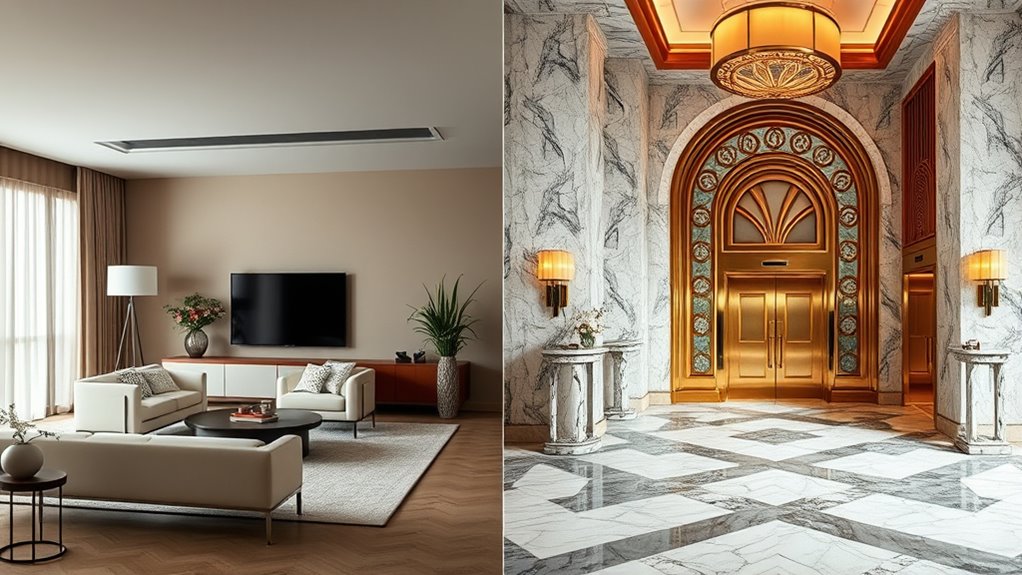
You’ll notice that both styles use bold geometric motifs and lines, but each interprets them differently. Mid-century design favors clean, simple shapes, while Art Deco often features intricate, decorative patterns. Additionally, their material and texture choices reflect their eras—mid-century emphasizes natural finishes, whereas Art Deco tends to showcase luxurious, reflective surfaces. The use of design motifs in each style further highlights their distinctive aesthetic identities. Moreover, the choice of materials and textures plays a crucial role in conveying the visual and tactile qualities unique to each style. For instance, mid-century designs often incorporate natural materials like wood and leather, while Art Deco emphasizes opulent finishes such as chrome and glass. Understanding these stylistic differences helps in appreciating the historical context and artistic goals of each movement.
Geometric Motifs and Lines
Geometric motifs and lines are defining features that distinguish these design styles, with each emphasizing different approaches to shapes and structure. In Art Deco, ornamental patterns often feature bold, symmetrical shapes with intricate line symmetry, creating a sense of luxury and harmony. You’ll notice sharp angles, zigzags, and stepped forms that highlight precise, decorative line work. The use of ornamental patterns is characterized by elaborate and ornate designs that capture opulence. The incorporation of luxurious details further enhances the richness of this style. Mid-Century style, on the other hand, favors cleaner, simpler lines and more restrained geometric forms. The focus is on minimalism, with subtle, understated motifs that emphasize function over decoration. Both styles use geometry to create visual interest, but Art Deco’s ornamental patterns are more elaborate and ornate, while Mid-Century motifs lean toward streamlined, abstract shapes that convey modernity and simplicity. Incorporating design principles like balance and proportion is essential to achieve harmony within each style.
Material and Texture Choices
While both styles employ geometric motifs to create visual interest, their material and texture choices set them apart. Mid-Century design favors natural materials like wood, leather, and wool, emphasizing warmth and tactile comfort. You’ll notice a focus on textural contrast, such as smooth surfaces paired with rougher finishes, enhancing visual depth. Material durability is a key consideration in Mid-Century interiors, ensuring longevity and practicality. Additionally, the use of organic textures contributes to the inviting and comfortable atmosphere characteristic of the style. The selection of authentic materials further defines the genuine quality of Mid-Century decor. Incorporating sustainable materials aligns with contemporary trends toward eco-friendly design, enhancing both aesthetic and environmental value. Art Deco, on the other hand, uses luxurious materials like chrome, glass, and polished stone, often with metallic or glossy surfaces that evoke opulence. Material symbolism is key here, as these choices reflect wealth and glamour, characteristic of the era. The textures in Art Deco evoke sophistication, while Mid-Century textures emphasize simplicity and organic feel. Furthermore, contemporary concerns about AI vulnerabilities highlight the importance of material and surface choices in design, emphasizing durability and safety. Together, these choices shape each style’s distinctive visual and tactile identity.
Material Choices and Construction Techniques
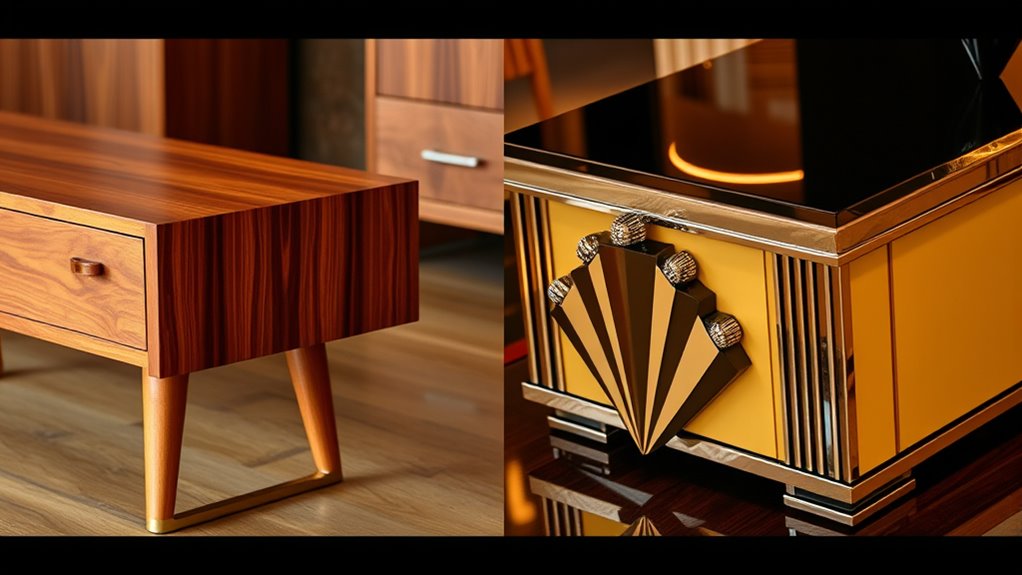
Mid-Century and Art Deco styles differ markedly in their material choices and construction techniques, reflecting their distinct aesthetic philosophies. Art Deco often uses luxurious materials like chrome, glass, and inlaid wood, emphasizing craftsmanship techniques that highlight opulence. Conversely, Mid-Century design favors practical, durable materials such as plywood, aluminum, and plastics, prioritizing material durability and simplicity. Your focus should be on how these choices impact longevity and visual appeal. Consider these points:
- Art Deco’s intricate craftsmanship techniques
- Use of rich, decorative materials
- Emphasis on material durability in Mid-Century
- Simplified construction methods
- Functional, modern materials in Mid-Century furniture
- Construction techniques in each style greatly influence their overall aesthetic and durability. Understanding material selection helps to appreciate the true craftsmanship behind these designs and their lasting appeal.
Popular Applications in Architecture and Design

When exploring how these styles appear in real-world settings, you’ll notice distinct architectural features and design elements that define each. Mid-century design often emphasizes clean lines and functional forms, while Art Deco showcases bold geometric shapes and luxurious details. Pay attention to how interior aesthetics reflect these styles, creating unique atmospheres in various spaces. Additionally, decorative motifs frequently illustrate the ornate and stylized nature of Art Deco, contrasting with the minimalist approach of mid-century design.
Architectural Features and Elements
Have you ever noticed how Mid-Century and Art Deco styles each bring distinct architectural features to life? Mid-Century architecture emphasizes clean lines, functional forms, and minimal ornamentation. In contrast, Art Deco incorporates bold geometric shapes, decorative details, and lavish ornamentation. When examining their ornamental details, you’ll see that Art Deco often features intricate motifs, stylized sunbursts, and zigzags. The color palettes also differ: Mid-Century favors muted, earthy tones, while Art Deco boasts metallics, vivid hues, and contrasting shades. Key architectural elements include:
- Flat roofs versus stepped or ziggurat structures
- Use of decorative motifs and ornamentation
- Emphasis on symmetry and geometric shapes
- Large windows with minimal framing
- Incorporation of luxurious materials and finishes
Interior Design Aesthetics
Interior design aesthetics in Mid-Century and Art Deco styles showcase striking contrasts that reflect their unique origins. In Mid-Century design, you’ll find a focus on simplicity and functionality, with muted, earthy color palettes that emphasize natural tones. Furniture styles are characterized by clean lines, organic shapes, and minimal ornamentation, creating a sense of effortless elegance. Conversely, Art Deco embraces boldness and glamour, featuring rich, vibrant color palettes like gold, black, and jewel tones. The furniture styles often include geometric patterns, luxurious materials, and decorative details that exude opulence. These contrasting approaches influence how you perceive space, with Mid-Century favoring understated warmth and Art Deco delivering dramatic sophistication. Your choice between these aesthetics shapes the overall mood and character of your interior.
Influence on Modern Trends and Interiors

Mid-century and Art Deco styles continue to shape modern trends and interiors by inspiring bold design choices and streamlined aesthetics. You notice how contemporary spaces often incorporate their distinctive color palettes and symbolic motifs to create striking visuals. These styles influence:
- Use of vibrant, contrasting colors to evoke energy
- Incorporation of geometric patterns and shapes
- Emphasis on sleek, minimalist furniture with clean lines
- Integration of decorative motifs with symbolic meaning
- Focus on luxury and glamour through reflective surfaces and bold accents
Notable Examples and Iconic Designs
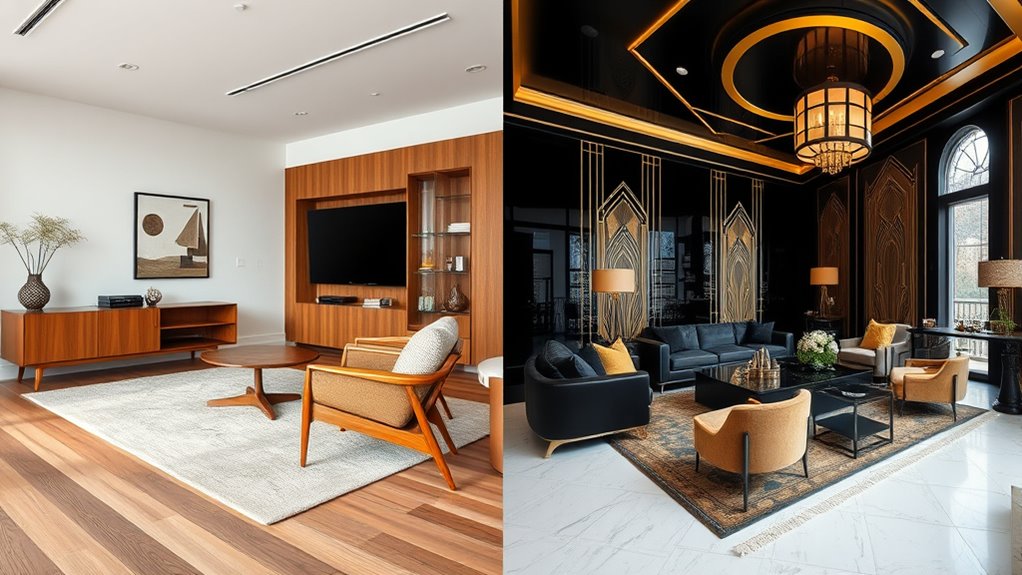
Iconic designs from the mid-century and Art Deco movements continue to captivate designers and enthusiasts alike, showcasing their timeless appeal through unmistakable features. Famous designers like Charles and Ray Eames created signature pieces such as the Eames Lounge Chair, exemplifying mid-century modern innovation with clean lines and organic shapes. Meanwhile, Art Deco’s signature pieces include the Chrysler Building’s spire and the luxurious jewelry of Cartier, highlighting glamour and geometric ornamentation. These designs stand out for their distinctive aesthetics—mid-century’s minimalism and functionality contrast with Art Deco’s opulence and decorative richness. Their lasting influence is evident in everything from furniture to architecture, inspiring contemporary reinterpretations. Recognizing these iconic examples helps you appreciate each style’s unique contribution to design history.
Comparing Cultural Impact and Legacy

While both Mid-Century and Art Deco styles have left indelible marks on design history, their cultural impacts differ considerably. Art Deco embodies luxury, glamour, and modern optimism, influencing societal values of elegance and progress. Its cultural symbolism reflects wealth and sophistication, often associated with the Roaring Twenties and the Jazz Age. Conversely, Mid-Century design emphasizes simplicity, functionality, and a forward-looking societal influence rooted in post-war optimism. It symbolizes innovation and a desire for progress, shaping modern lifestyles.
- Art Deco’s association with luxury and grandeur
- Mid-Century’s focus on minimalism and practicality
- Art Deco’s influence on fashion and architecture
- Mid-Century’s role in shaping contemporary design ethics
- Both styles reflecting their respective societal aspirations and values
Frequently Asked Questions
How Do Mid-Century and Art Deco Styles Influence Contemporary Interior Design?
You influence contemporary interior design by blending mid-century and art deco styles through furniture placement and color palette choices. You use sleek, minimalist furniture from mid-century design to create functional spaces, while adding art deco accents like geometric patterns and bold colors for glamour. Combining these styles results in dynamic, stylish rooms where your furniture placement highlights each era’s distinctive features, making your space both timeless and modern.
What Are Common Misconceptions About Mid-Century and Art Deco Aesthetics?
You might think mid-century and art deco styles are solely about luxury connotations, but that’s a misconception. Only 25% of enthusiasts believe these styles require strict historical accuracy, yet many assume they’re outdated or overly ornate. In reality, mid-century emphasizes simplicity, while art deco combines elegance with geometric patterns. Recognizing these nuances helps you appreciate their timeless appeal beyond stereotypes, creating a more authentic and stylish interior.
How Do These Styles Vary Across Different Geographic Regions?
You’ll notice that regional design and cultural influences shape how Mid-Century and Art Deco styles differ worldwide. In the U.S., Mid-Century feels sleek and functional, while in Scandinavia, it emphasizes simplicity and natural materials. Art Deco in France showcases luxury and geometric patterns, whereas in India, it incorporates vibrant colors and ornate details. These styles adapt to local tastes, reflecting each region’s unique cultural identity.
Can Elements of Both Styles Be Seamlessly Integrated in a Single Space?
Yes, you can seamlessly integrate elements of both styles in a single space. Focus on color harmony to create a cohesive look, blending Art Deco’s bold, luxe hues with Mid-Century’s earthy tones. Choose furniture that balances the sleek, geometric lines of Art Deco with the clean, functional forms of Mid-Century. By thoughtfully combining these elements, you’ll craft a space that feels both timeless and uniquely personalized.
What Are the Typical Price Ranges for Authentic Mid-Century Versus Art Deco Furniture?
You’ll find authentic mid-century furniture typically ranges from $1,000 to $10,000, depending on antique valuation and condition, while art deco pieces often cost between $2,000 and $20,000. Restoration costs can impact your budget considerably, especially for rare or high-quality items. Expect to pay more for well-preserved or designer pieces, so always consider antique valuation and potential restoration when budgeting for these timeless styles.
Conclusion
You see, mid-century and Art Deco each tell a different story—one rooted in sleek minimalism, the other in bold ornamentation. While mid-century’s simplicity offers timeless versatility, Art Deco’s glamour commands attention. Both styles leave lasting legacies, yet their contrasting origins highlight how design reflects our evolving tastes. Embrace either, but remember: sometimes, it’s the stark contrast between the two that truly defines their enduring appeal.