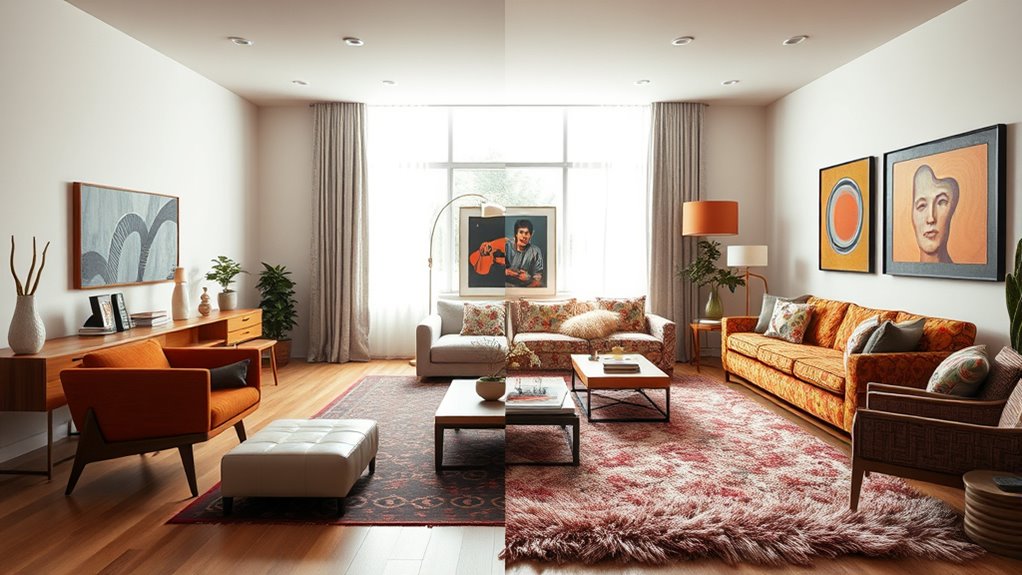
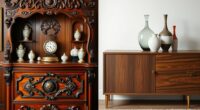
If you’re exploring living room styles, you’ll notice that mid-century modern offers a calm, sophisticated vibe with clean lines, muted tones, and simple furniture like tapered legs and organic shapes. In contrast, 1970s maximalism brings vibrant colors, bold patterns, and chunky furniture that create an energetic, expressive space. Your choice depends on whether you prefer a serene or lively atmosphere. Keep going to discover more about how these styles can transform your living room.
Key Takeaways
- Mid-century modern emphasizes clean lines, neutral palettes, and minimal ornamentation, creating a calm, organized space.
- 1970s maximalism features bold colors, eclectic patterns, and larger furniture, fostering a lively, expressive atmosphere.
- Trends show a shift from restrained, timeless designs to vibrant, statement-making interiors over recent decades.
- Modern living rooms often blend elements of both styles for personalized, transitional aesthetics.
- Evolving preferences reflect changing lifestyles, with contemporary spaces balancing simplicity and bold visual interest.

When it comes to decorating your living room, choosing between the sleek simplicity of mid-century design and the bold exuberance of 1970s maximalism can substantially impact your space’s vibe. Each style offers a distinct approach to color palettes and furniture styles, shaping the atmosphere and overall aesthetic you want to create. Mid-century modern emphasizes clean lines, functional forms, and a restrained palette. Think of warm neutrals, soft pastels, and occasional pops of muted hues like olive green, mustard yellow, or dusty pink. These colors work harmoniously to keep the space feeling calm and inviting. The furniture styles reflect this simplicity—think tapered legs, organic shapes, and minimal ornamentation. You’ll find iconic pieces like the Eames lounge chair or a streamlined teak sideboard, which focus on form and function without unnecessary embellishments. This style champions a less-is-more philosophy, making your living room look uncluttered and sophisticated. Additionally, the rise of energy-efficient designs highlights a growing emphasis on sustainability and eco-friendly materials in interior decor. In stark contrast, 1970s maximalism embraces a riot of colors and bold furniture choices. The color palettes are vibrant and eclectic, often combining jewel tones like emerald green, ruby red, and sapphire blue with earthy shades such as burnt orange, avocado green, and chocolate brown. This creates a lively, energetic atmosphere that encourages self-expression. Furniture styles tend to be larger, chunkier, and more ornate—think oversized sofas, deeply tufted armchairs, and intricately designed coffee tables. Materials like shaggy fabrics, plush velvets, and patterned woods are common, adding texture and visual interest. Patterns—geometric, floral, or psychedelic—are frequently incorporated into rugs, wallpaper, and upholstery, heightening the maximalist aesthetic. Unlike the streamlined simplicity of mid-century pieces, 1970s furniture often features exaggerated proportions and decorative details, making each piece a statement. Ultimately, your choice depends on the mood you want to set. If you prefer a space that feels calm, organized, and timeless, mid-century modern’s subdued color palettes and minimalist furniture styles will serve you well. But if you crave a lively, expressive environment filled with bold hues and ornate, comfortable furniture, then 1970s maximalism might be more your style. Both approaches have their charm and can transform your living room into a reflection of your personality. Whichever route you choose, understanding their core differences in color palettes and furniture styles helps you curate a space that aligns with your vision.
Frequently Asked Questions
How Do Color Palettes Differ Between Mid-Century and 1970S Maximalist Living Rooms?
You notice that mid-century living rooms favor bold, yet restrained color schemes with earthy tones and subtle accents, creating a sleek, minimalist vibe. In contrast, 1970s maximalist spaces burst with vibrant, bold color schemes, often featuring rich hues like oranges, browns, and reds, complemented by pastel accents for a playful touch. This shift reflects a move from simplicity to exuberance, making your space more lively and expressive.
What Are the Key Furniture Styles Unique to Each Era?
You’ll notice that mid-century living rooms feature iconic furniture pieces like sleek, minimalist chairs and wooden credenzas that emphasize clean lines. In contrast, 1970s maximalist spaces showcase bold, statement furniture with plush upholstery and vibrant colors. This design evolution reflects each era’s distinct style—mid-century’s simplicity versus the 1970s’ expressive, layered approach—making each era’s furniture truly unique and memorable.
How Do Lighting Choices Influence the Ambiance in Both Styles?
Lighting choices greatly influence the ambiance in both styles by setting mood and highlighting key features. In mid-century design, you’ll opt for softer lighting with fixture styles like sputnik or arc lamps to create a warm, inviting atmosphere with moderate lighting intensity. For 1970s maximalism, bolder fixture styles and brighter lighting enhance the energetic vibe, with high lighting intensity emphasizing vibrant colors and layered illumination to make the space lively and dynamic.
Which Materials Are Most Commonly Used in Each Design Trend?
You might think materials are boring, but they’re the soul of each style. In mid-century, you’ll find sleek wood, smooth leather, and subtle textiles, creating a minimalist vibe. Conversely, 1970s maximalism bursts with bold textiles, textured fabrics, and vibrant wall finishes like wallpaper and paint. These materials evoke emotion, making your space feel warm and lively. Choosing the right textures and finishes transforms your living room into a true reflection of your style.
How Can Homeowners Blend Elements From Both Styles Effectively?
You can blend elements from both styles by mixing vintage pieces with sleek, modern furniture. Balance bold patterns from the 1970s with minimalist mid-century accents to create visual harmony. Use neutral tones to ground the space, while adding statement accessories for interest. Combining these approaches lets you achieve a cohesive look that celebrates both the simplicity of mid-century and the vibrant energy of 1970s maximalism.
Conclusion
So, after exploring these two distinct yet oddly similar styles, it’s amusing how you can’t escape the cycle of trends. Mid-century minimalism quietly ushered in the era of less, only for the 1970s to shout for more—louder, bolder, busier. Ironically, no matter how much things change, we still chase the same elusive comfort, just with a bit more flair. Perhaps, in the end, your living room’s true style is simply an ongoing dialogue between simplicity and excess.