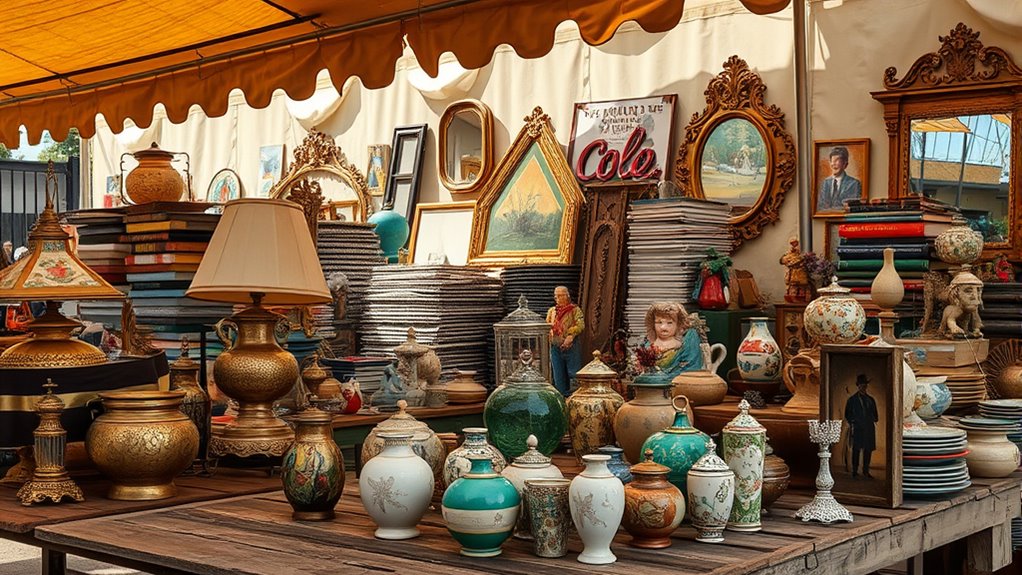

To identify valuable vintage decor at flea markets, examine the materials, craftsmanship, and style for authenticity, like genuine wood or glass and era-specific details. Look for signs of age, such as patina, wear, or natural aging that signals originality. Check labels, markings, or signatures for provenance, and compare pieces to market trends and rarity. Continuing your exploration will reveal even more tips to spot truly valuable vintage treasures.
Key Takeaways
- Examine signs of age like patina, wear, and discoloration to confirm authenticity.
- Look for maker’s marks, labels, or signatures indicating origin and period.
- Assess construction techniques and materials consistent with the claimed era.
- Inspect for damage, repairs, or restoration that may impact value and authenticity.
- Verify provenance, consult experts, and compare with reference guides to confirm market value.
Recognizing Authentic Materials and Craftsmanship
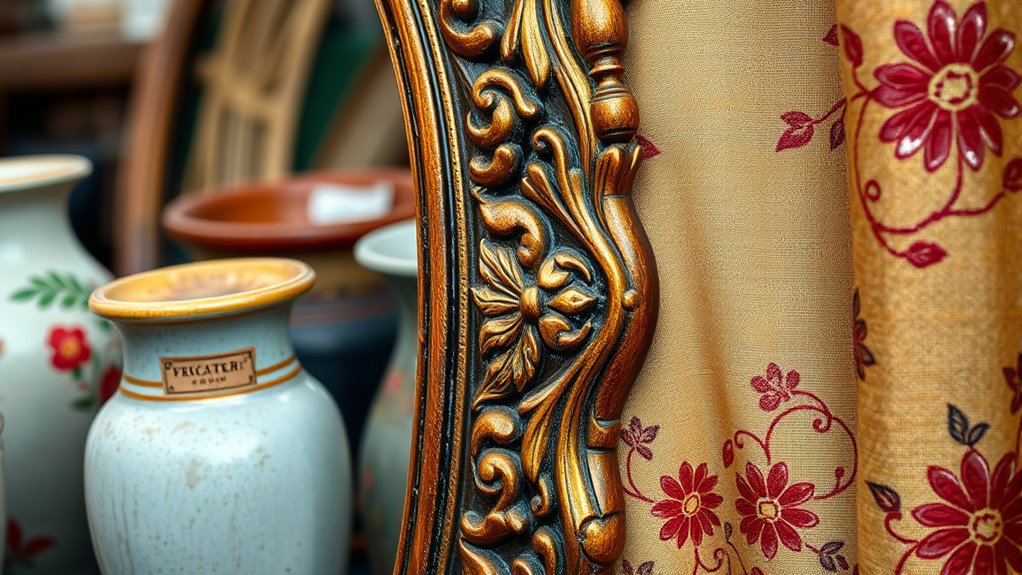
When evaluating vintage decor, paying close attention to the materials and craftsmanship is essential, as these details reveal a piece’s true age and quality. With antique furniture, look for solid wood construction, dovetail joints, and hand-carved details that indicate skilled craftsmanship. Authenticity often shows through the weight and feel of the piece—heavier and well-made items tend to be genuine. When examining textiles, rare textile patterns can signal a piece’s uniqueness and period. These patterns, often woven or printed with meticulous detail, can’t be easily replicated. Authentic vintage textiles may show slight irregularities or fading, which add to their charm. Recognizing these signs helps you distinguish genuine antique furniture and rare textiles from reproductions, ensuring your vintage finds are truly valuable. Additionally, understanding craftsmanship indicators can further assist in verifying the authenticity and quality of vintage decor items.
Spotting Signs of Age and Wear That Indicate Value

Authentic vintage pieces often bear marks of their history through subtle signs of age and wear that newer reproductions can’t replicate. Look for minor scratches, patina, or slight fading that indicate genuine use over time. These signs suggest high restoration potential, allowing you to enhance the piece without compromising its character. Be mindful of consistent wear patterns, such as worn edges or softened details, which align with the item’s original stylistic trends. Avoid items with excessive damage or repairs that seem out of place, as they can diminish value. Recognizing authentic signs of age helps you gauge whether a piece can be restored to its former glory or if it’s better left untouched. Additionally, understanding the angel numbers associated with vintage decor can provide spiritual insights into the item’s significance or energy. Recognizing these numbers can also help you connect with the energy and symbolism tied to certain vintage pieces, adding a layer of personal meaning to your collection. Being familiar with authenticity indicators can further assist in identifying truly valuable vintage finds, ensuring you make informed decisions, and evaluating restoration potential can help you decide whether a piece is worth investing in or better left as is. Moreover, paying attention to the material quality of vintage items can offer clues about their provenance and durability, helping you make more confident purchases.
Understanding Vintage Markings, Labels, and Signatures

Vintage markings, labels, and signatures reveal important clues about a piece’s origin, age, and authenticity. Pay close attention to vintage branding, which often includes logos, stamps, or etched marks that identify the manufacturer or artist. These details help verify a piece’s provenance and can indicate its period of production. Collectible signatures, such as artist initials or handwritten marks, add to a item’s value and uniqueness. Carefully examine the back or underside of decor items for these markings—many vintage pieces feature subtle labels or engraved signatures that aren’t immediately visible. Researching these markings online or through vintage reference guides can confirm genuineness and provide context about the maker. Recognizing authentic vintage branding and signatures ensures you’re investing in authentic, valuable pieces. Additionally, understanding vintage market trends can help you determine the current desirability and value of particular items. Being familiar with authenticity indicators can also help you distinguish genuine vintage decor from reproductions or fakes. Learning to identify vintage markings enhances your ability to spot true treasures, especially when brand logos are clearly visible on the pieces. Incorporating air quality considerations when evaluating vintage items can also help preserve their condition and longevity.
Comparing Pieces for Rarity and Market Demand

After identifying markings and signatures, the next step is to compare different pieces to assess their rarity and market demand. Look at antique furniture and collectible ceramics to gauge their uniqueness. Rarer items often feature limited production runs, distinctive designs, or historical significance, making them more valuable. Check how often similar pieces appear in current markets or auctions—scarcity boosts value. Consider the condition and originality, as well-maintained, authentic items tend to fetch higher prices. Research current trends to see what buyers are seeking, whether it’s mid-century modern furniture or vintage ceramics from specific periods. Additionally, understanding textile art techniques can help you recognize authentic craftsmanship that adds to a piece’s value. By analyzing these factors, you’ll better understand which pieces stand out as truly valuable and which might be more common, helping you make smarter buying decisions.
Tips for Verifying Provenance and Authenticity
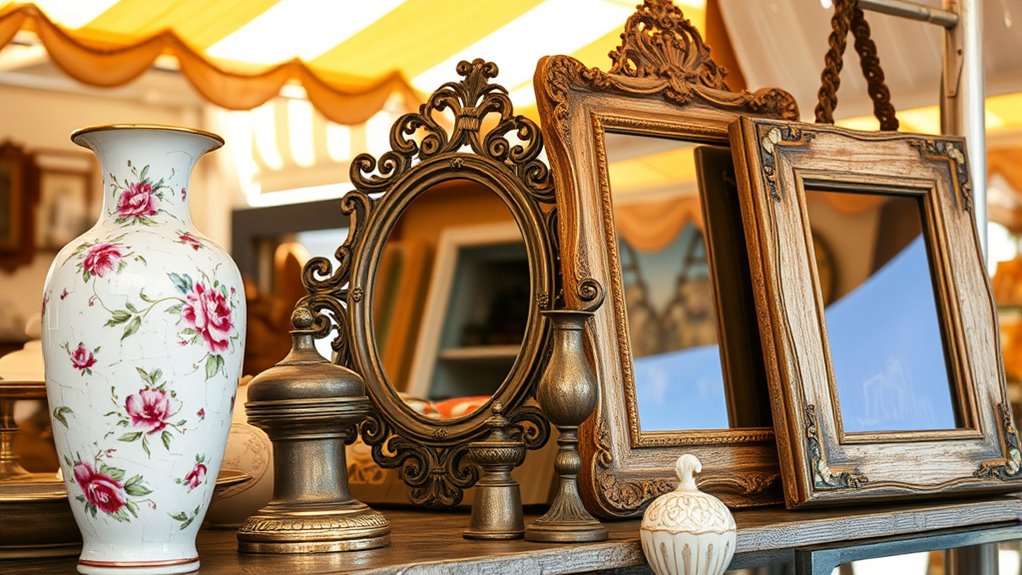
To confidently verify a piece’s provenance and authenticity, start by thoroughly examining any documentation, such as certificates, receipts, or appraisals, that accompany the item. Authenticity is key to understanding decor pricing and ensuring you’re investing wisely. Be cautious of vague or inconsistent details, and research the vendor’s reputation before purchasing. A reputable vendor often provides verifiable provenance and transparent information. Use the following table to assess key indicators:
| Indicator | What to Look For |
|---|---|
| Documentation | Certificates of authenticity or provenance |
| Vendor Reputation | Positive reviews and verifiable history |
| Material Quality | Original materials or signs of modern reproduction |
| Craftsmanship | Authentic techniques typical of the era |
| Pricing Consistency | Fair decor pricing aligned with market values |
Verifying these aspects helps protect your investment and confirms authenticity. Additionally, understanding electric dirt bike horsepower can provide insights into the value and performance of vintage electric decor items that may incorporate similar technological elements. Recognizing authentic craftsmanship can also help distinguish genuine pieces from modern reproductions, ensuring your vintage find maintains its true value. Moreover, researching water-related features can reveal how certain vintage decor pieces might incorporate water-inspired designs or themes that add to their uniqueness and appeal. Paying attention to material composition can also help identify whether a piece is made from original or modern materials, further confirming its authenticity. Being familiar with provenance documentation can assist in tracing the history and ownership of valuable vintage pieces, further ensuring their authenticity.
Frequently Asked Questions
How Can I Differentiate Between Vintage and Reproduction Items?
To differentiate vintage from reproduction items, you need to authenticate craftsmanship by examining details like joinery, materials, and signs of wear. Look for imperfections or patina that develop over time. Spot modern imitations by inspecting for machine-made marks, bright finishes, or uniformity. Trust your instincts and compare with known authentic pieces. With practice, you’ll become skilled at spotting the subtle signs that reveal genuine vintage decor versus reproductions.
What Are Common Fake Markings or Signatures to Watch Out For?
A wise person once said, “Look before you leap.” When spotting fake markings or signatures, watch out for faux signatures that seem inconsistent with the item’s style or era. Counterfeit marks are often overly perfect or poorly executed. Check for irregularities, smudges, or mismatched fonts. Authentic vintage pieces usually have subtle, well-placed signatures, while fakes tend to have obvious, generic, or duplicated markings. Stay vigilant to avoid falling for counterfeit marks.
Which Types of Vintage Decor Are Most Likely to Appreciate in Value?
You’ll find that antique furniture and mid-century lighting are most likely to appreciate in value over time. Focus on well-crafted pieces with original finishes and authentic marks. Look for unique designs, quality materials, and brands known for durability. Avoid overly restored or imitation items. By honing in on these categories, you increase your chances of making valuable vintage decor finds that could appreciate as collectibles.
How Do Local Flea Markets Compare to Estate Sales for Finding Valuable Pieces?
Think of flea markets as a bustling marketplace of opportunity, while estate sales are like hidden treasure chests waiting to be opened. You’ll often find that local flea markets offer more current market trends and a wide variety of vendors, but their reliability varies. Estate sales tend to feature carefully curated, valuable pieces from trusted sources, making them a better bet for high-quality vintage decor. Your success depends on knowing where to look and trusting your instincts.
What Are the Best Tools or Apps for Researching Vintage Decor Pieces?
You should use digital archives and online marketplaces to research vintage decor pieces. Digital archives provide detailed histories and images of pieces, helping you verify authenticity. Online marketplaces like eBay or Etsy let you compare prices and see current listings. These tools give you valuable insights, making it easier to identify genuine, valuable vintage decor and avoid overpaying for reproductions or less desirable items.
Conclusion
Now that you know what to look for, vintage decor becomes less about guessing and more about discovery. It’s like a treasure hunt—sometimes the most worn piece holds the greatest story, while a pristine item might lack character. Trust your eye, but don’t forget to verify authenticity. With a keen eye and a bit of curiosity, you’ll turn flea market finds into timeless treasures, blending history with your unique style.