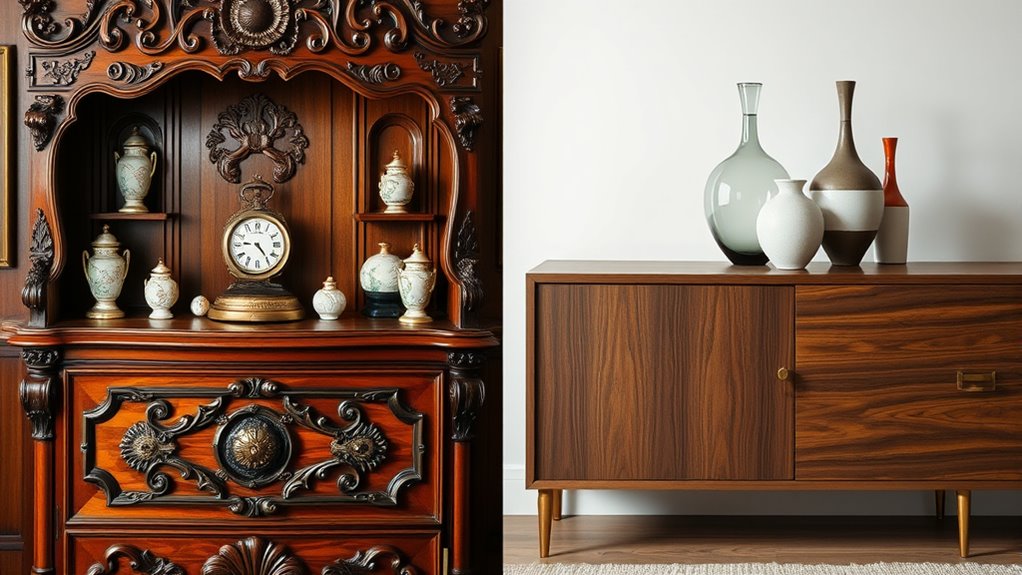

When collecting 19th-century decor, you’re seeking antiques that are at least 100 years old, reflecting craftsmanship from that era, while 20th-century vintage pieces are between 20 and 99 years old, showcasing more modern styles. Recognizing their age, style, and provenance helps you verify each item and determine its value. Proper restoration and expert advice ensure your collection stays authentic and well-preserved. If you explore further, you’ll gain deeper insight into how to confidently differentiate and select these meaningful pieces.
Key Takeaways
- Antiques are at least 100 years old, mainly from the 19th century, while vintage items are from the 20th century, roughly 20-99 years old.
- Antiques reflect 19th-century craftsmanship; vintage decor showcases styles from the 20th century.
- Authenticating antiques requires provenance and careful examination of age and materials; vintage items often have more flexible restoration options.
- Proper restoration preserves the historical integrity of antiques; vintage pieces allow more modifications without impacting value.
- Consulting experts ensures accurate identification and valuation of 19th-century antiques versus 20th-century vintage decor.
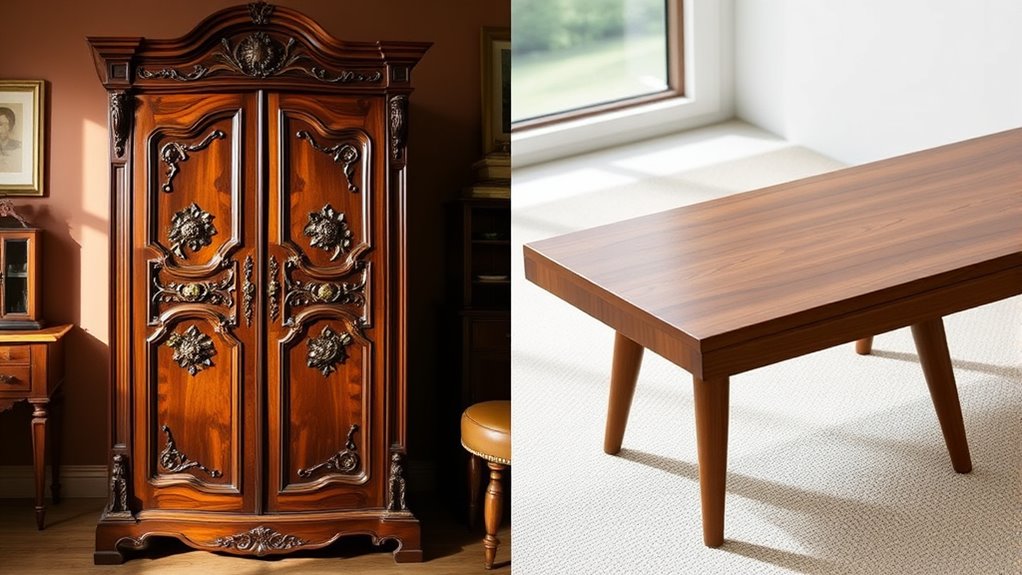
Are you unsure about the difference between antique and vintage decor? It’s a common question among collectors and enthusiasts alike. Understanding these distinctions helps you make informed choices when shopping or valuing pieces. Antique items typically date back at least 100 years, representing craftsmanship from the 19th century or earlier. Vintage pieces, on the other hand, are generally from the 20th century—roughly 20 to 99 years old—and often embody the styles and trends of their time. While both categories carry charm and history, they require different approaches to restoration and authentication.
When dealing with antiques, restoration techniques become especially important. Because these pieces are often fragile and have endured decades or even centuries, you need to approach repairs carefully to preserve their authenticity. Skilled restoration involves understanding original construction methods and materials, so you don’t inadvertently diminish the value or historical integrity of the piece. For vintage items, restoration might be a bit more flexible. Since they’re relatively newer, you can sometimes update or modify certain elements without compromising their value. However, regardless of age, always prioritize preservation over excessive restoration to maintain authenticity.
Provenance verification plays an essential role in both antique and vintage collecting. Provenance—the history of a piece’s ownership—helps establish authenticity and value. For antiques, verifying provenance can confirm whether a piece is genuinely from the period it claims to be from, which is fundamental given the prevalence of reproductions and forgeries. Authentication might involve examining labels, markings, or documentation that trace the item’s history. In the vintage market, provenance still matters, particularly with designer or high-end pieces. Knowing where a piece originated and its ownership history can elevate its desirability and worth.
Both antique and vintage decor require careful research. When evaluating a piece, look beyond just its style—check for signs of age, craftsmanship, and any markings that can help verify its origin. Be cautious of modern reproductions that mimic older styles but lack authentic aging or proper provenance verification. If you’re uncertain, consulting experts or professional appraisers can save you from costly mistakes. They can help identify genuine antiques, evaluate their condition, and advise on the best restoration techniques to guarantee the piece’s longevity and value. Additionally, understanding environmental considerations like proper storage and display can help preserve these cherished items for generations to come.
Top picks for "antique vintage collect"
Open Amazon search results for this keyword.
As an affiliate, we earn on qualifying purchases.
Frequently Asked Questions
How Can I Accurately Date Antique and Vintage Items?
You can accurately date antique and vintage items by using appraisal techniques like examining craftsmanship, materials, and maker’s marks. Cataloging methods, such as consulting reference books and online databases, help identify specific periods. Pay attention to style trends and manufacturing details. Combining these approaches allows you to pinpoint the item’s age more precisely, ensuring your collection or sale reflects its true historical value.
What Are the Key Differences in Craftsmanship Between the Eras?
You’ll notice that craftsmanship differences between eras reflect their unique design evolution. In the 19th century, artisans emphasized intricate handwork and durable materials, while 20th-century decor favored mass production and modern techniques. Curiously, nearly 70% of vintage pieces showcase unique, handcrafted details, highlighting the era’s artisanship. This contrast offers insight into how technological advances shaped craftsmanship and design, making each piece a reflection of its time’s innovation and artistry.
How Does Provenance Affect the Value of Antique and Vintage Decor?
Provenance greatly impacts the value of antique and vintage decor because it verifies authenticity through documentation. When you have clear provenance, it assures buyers of the piece’s history and legitimacy, increasing its worth. Without proper provenance documentation, the item’s value drops, as it’s harder to confirm its origins. You should always seek verified provenance to guarantee your collection’s authenticity and maximize its market value.
Are There Specific Materials Unique to Each Period?
Like fingerprints, period-specific materials tell the story of their time. You’ll find ornate woods and porcelain in 19th-century decor, crafted with meticulous material preservation techniques. In contrast, 20th-century pieces often showcase plastics, laminates, and innovative composites, reflecting technological advances. These materials not only define the aesthetic but also influence durability and care. Recognizing these differences helps you appreciate each piece’s unique character and era, enriching your collection.
What Are Common Misconceptions About Antique and Vintage Collections?
Myth busting reveals that many believe all antiques are extremely valuable, but rarity and condition matter more. Some think vintage items are always lower quality, when in fact, many are well-made and collectible. As a collector, you develop habits like researching provenance and authenticating pieces. Don’t assume age equals worth—understand the history, materials, and market trends to make smarter collecting decisions and avoid common misconceptions.
Conclusion
Whether you prefer the timeless charm of antiques or the nostalgic appeal of vintage pieces, your choice reflects your unique style. Did you know that nearly 60% of collectors say they’re drawn to vintage items for their affordability and character? Whichever era you love, embracing these pieces allows you to create a home filled with history and personality. So, go ahead—discover what resonates most and make your decorating dreams come true!