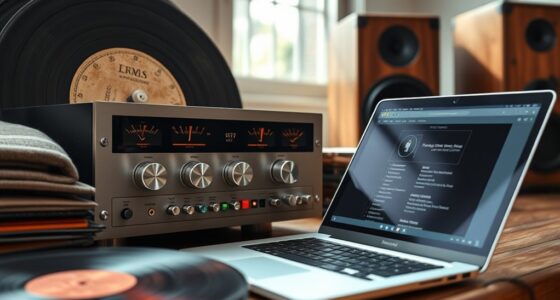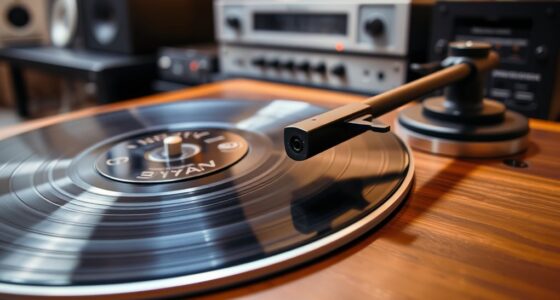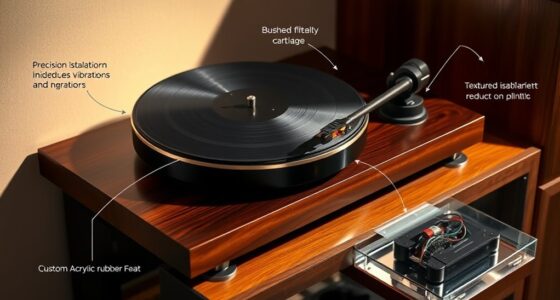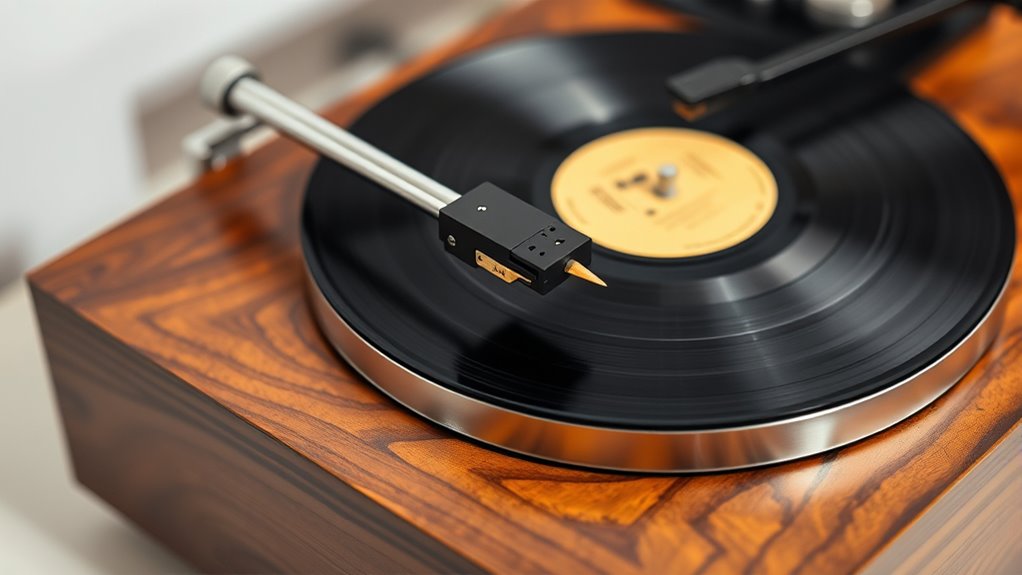

To understand turntable jargon, start with the plinth, which is the base that affects vibration and stability—materials like wood or acrylic matter. The cartridge, attached to the tonearm, converts record grooves into sound and needs proper alignment for best performance. The tonearm guides the stylus and influences sound clarity; its design impacts tracking and resonance. Knowing how these parts work together helps you optimize your setup—keep exploring to uncover even more details.
Key Takeaways
- The plinth serves as the turntable’s foundation, affecting vibration damping and overall stability.
- Cartridges convert record grooves into sound; choosing the right type impacts sound quality and record care.
- Tonearms guide the stylus across records, influencing tracking accuracy and audio clarity.
- Proper alignment and calibration of components ensure optimal sound reproduction and reduce distortion.
- Compatibility and quality of parts like plinth, cartridge, and tonearm are essential for the best listening experience.

Turntable Platter Mat Black Rubber Silicone Design for Universal to All LP Vinyl Record Players
✔Turntable Mat—Has any audiophile ever encountered such annoyance when playing a turntable: there are balance issues when playing…
As an affiliate, we earn on qualifying purchases.
As an affiliate, we earn on qualifying purchases.
Understanding the Role of the Plinth in Your Turntable
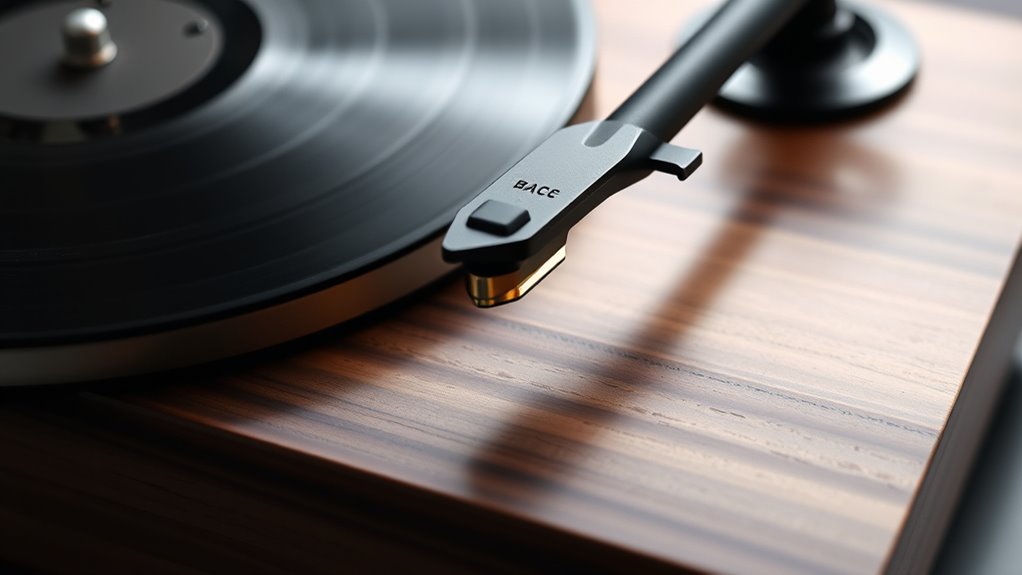
The plinth is the foundation of your turntable, playing an essential role in its overall performance. The materials used for the plinth, such as wood, acrylic, or metal, directly influence its ability to absorb vibrations and maintain stability. A sturdy, well-designed plinth ensures better turntable stability, preventing unwanted movement that can distort sound quality. Heavier materials often provide more damping, reducing external interference. Conversely, lighter materials might offer less vibration absorption but can enhance portability. Your choice of plinth material affects how well the turntable isolates the tonearm and platter from external vibrations. Additionally, selecting a plinth with effective vibration damping properties can significantly improve sound clarity. Incorporating noise reduction techniques into the plinth design can further enhance playback quality by minimizing ambient noise. Ultimately, a high-quality plinth provides a solid base, indispensable for delivering clear, detailed sound and preserving the integrity of your vinyl playback.

Hudson Hi-Fi Turntable Cartridge Alignment Kit – The Audiophile Purists Perfected 3-Piece LP Cartridge Setup Set. Accuracy Optimized Digital Scale, Azimuth Ruler, Protractor – Rich Pure Sonic Sound
All-Inclusive Kit: Each kit comes with a turntable stylus digital scale and Premium PE Case. With our alignment…
As an affiliate, we earn on qualifying purchases.
As an affiliate, we earn on qualifying purchases.
Exploring the Function and Types of Cartridges
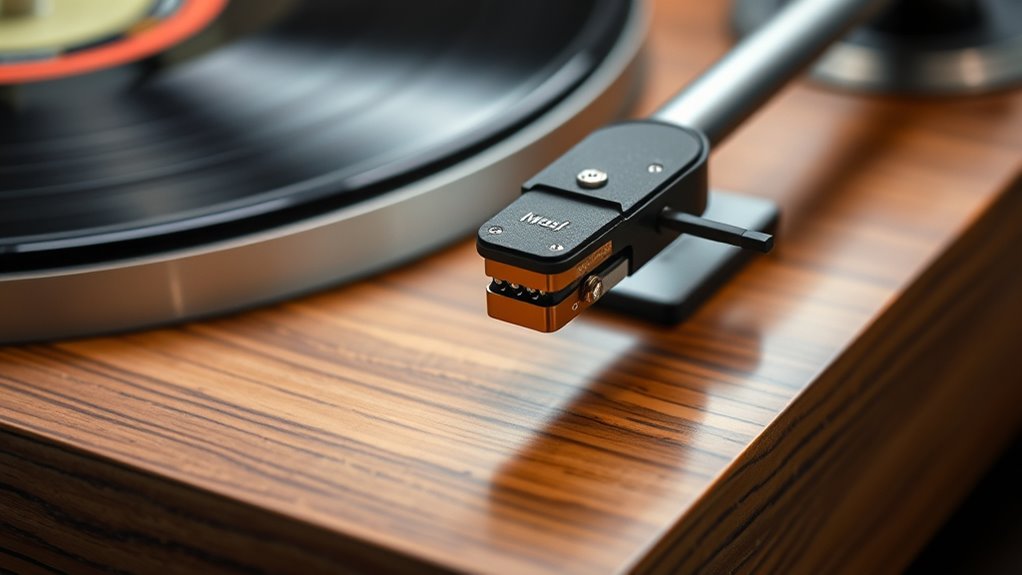
Have you ever wondered how your turntable translates the grooves on a record into sound? It all starts with the cartridge, which holds the stylus that tracks the grooves. The stylus alignment is vital; if it’s off, sound quality drops, and record wear increases. Cartridges come in various types, like moving magnet and moving coil, each with distinct characteristics. Ensuring cartridge compatibility with your tonearm and turntable is essential; an incompatible cartridge can cause improper tracking or damage. The right cartridge matches your listening preferences and setup, providing clear, detailed sound. By understanding the function and types of cartridges, you can make informed choices to optimize your turntable’s performance and enjoy your vinyl collection to its fullest. Proper cartridge setup and maintenance also play crucial roles in preserving sound quality over time. Additionally, selecting the appropriate cartridge type can significantly influence your overall listening experience and sound fidelity.

Universal for Marantz Record Player Main Tonearm Main Counterweight Weight Record Player with Output and Input
For For tonearm main counterweight
As an affiliate, we earn on qualifying purchases.
As an affiliate, we earn on qualifying purchases.
The Importance of Tonearms and Their Design

Since the tonearm directly guides the stylus across the record grooves, its design considerably influences sound quality and tracking accuracy. Proper counterweight balancing ensures the stylus applies the right pressure, preventing record damage and improving sound clarity. A well-designed tonearm maintains stability, reducing vibrations that can distort audio. Dynamic tracking, enabled by precise counterweight adjustments, allows the stylus to follow record grooves smoothly, especially on complex or warped records. The arm’s length and material impact resonance and tracking force, so choosing a tonearm with ideal design features is essential. Additionally, sound design techniques can be employed to enhance the audio output further. A balanced, well-constructed tonearm enhances overall playback, delivering clearer sound and longer-lasting records. The material composition of the tonearm also influences its vibration absorption and durability, impacting overall sound quality. Proper counterweight adjustment is crucial for optimal tracking and sound fidelity. Selecting a tonearm with the appropriate bearing technology can further improve tracking precision and minimize unwanted vibrations. Your turntable’s performance hinges on the quality of its tonearm design and how effectively you set it up, making attention to tonearm geometry vital for audiophiles seeking optimal sound.

Big Fudge Vinyl Record Cleaning Kit – 4-in-1 Vinyl Record Cleaner Kit for Records Includes Ultra-Soft Velvet Brush Cleaning Liquid Stylus Brush and Storage Pouch – Pro Records Care
Vinyl Cleaning Kit: Eliminate dust, dirt, and fingerprints with our ultra-soft velvet brush and XL cleaning solution in…
As an affiliate, we earn on qualifying purchases.
As an affiliate, we earn on qualifying purchases.
How Turntable Components Work Together for Better Sound

When all the turntable components work in harmony, your vinyl playback reaches its full potential. A well-aligned cartridge and properly set tonearm ensure accurate sound reproduction. Regular record cleaning removes dust and debris that can cause skipping or distortion, helping your setup perform at its best. Proper speaker placement is equally essential; positioning speakers to optimize soundstage and minimize vibrations enhances overall clarity. The plinth provides stability, reducing unwanted vibrations that can muddy sound quality. Vintage design elements can also complement your setup, creating a cohesive aesthetic that enhances the listening environment. When these elements work together, you get cleaner, clearer audio with richer detail. Keep everything calibrated and maintained—your turntable’s synergy directly impacts how well you experience your favorite records. This holistic approach ensures you enjoy a balanced, immersive listening experience every time.
Tips for Choosing the Right Parts for Your Vinyl Setup

Choosing the right parts for your vinyl setup starts with understanding what each component does and how it influences sound quality. When considering diy turntable upgrades or budget component selection, focus on compatibility and quality within your price range. Think about how your plinth, cartridge, and tonearm work together to produce clear, detailed sound. Incorporating Glycolic Acid benefits into your skincare routine can improve skin texture and appearance, much like selecting quality components enhances your turntable’s performance. Additionally, paying attention to component synergy can significantly impact overall sound fidelity and listening satisfaction.
Frequently Asked Questions
How Does Turntable Isolation Affect Sound Quality?
Turntable isolation considerably improves sound quality by reducing turntable vibration, which can cause unwanted noise and distortions. When you use isolation platforms, they absorb and minimize vibrations, allowing your stylus to track the record more accurately. This results in clearer, more detailed sound. By preventing external vibrations from reaching the turntable, you get a more precise playback, making your listening experience richer and more enjoyable.
Can Upgrading a Cartridge Significantly Improve Audio Performance?
Upgrading your cartridge can greatly boost your audio performance, much like upgrading a lens sharpens a photograph. Proper cartridge alignment ensures you get the best sound, while a high-quality stylus reduces wear and preserves performance. A better cartridge captures more detail and dynamic range, transforming your listening experience. So, investing in a superior cartridge can make your vinyl sound richer, clearer, and more vibrant, truly elevating your music enjoyment.
What Are the Signs of a Worn or Damaged Tonearm?
You’ll notice a worn or damaged tonearm if it feels loose or wobbly, or if it produces skipping or distortion during playback. Check for issues like uneven tonearm movement, which could be caused by lack of tonearm lubrication. Damaged wiring may lead to loss of sound or intermittent audio. If you see or hear these signs, inspect the wiring and lubrication, and consider professional repair to prevent further damage.
How Does Platter Material Influence Playback Stability?
Think of your turntable as a ship, where the platter’s material acts as its hull. Heavier platters with substantial weight reduce vibrations, providing more stability and smoother playback. The material’s resonance dampens unwanted vibrations, preventing sound distortions. A dense, well-crafted platter minimizes movement, ensuring consistent speed and sound clarity, so your records sound their best without skipping or warping, keeping your listening experience steady and true.
Are There Compatibility Issues Between Different Cartridges and Tonearms?
Yes, compatibility issues can occur between different cartridges and tonearms. You need to check cartridge alignment to guarantee it fits properly and maintains accurate tracking. Also, make sure the tonearm balance is correct, as improper balance can affect sound quality and cause wear. Always verify that the cartridge’s mounting and electrical connections match your tonearm’s specifications for peak performance and to prevent damage.
Conclusion
Now that you understand the essentials—plinths, cartridges, and tonearms—you’re better equipped to choose the right parts for your turntable. Think of it like assembling a vintage radio; each component must work harmoniously for ideal sound. Don’t get bogged down by the jargon—just trust your ears and instincts. With a little patience, you’ll enjoy your vinyl setup more than a knight reveling in a well-tuned lute at a royal ball.