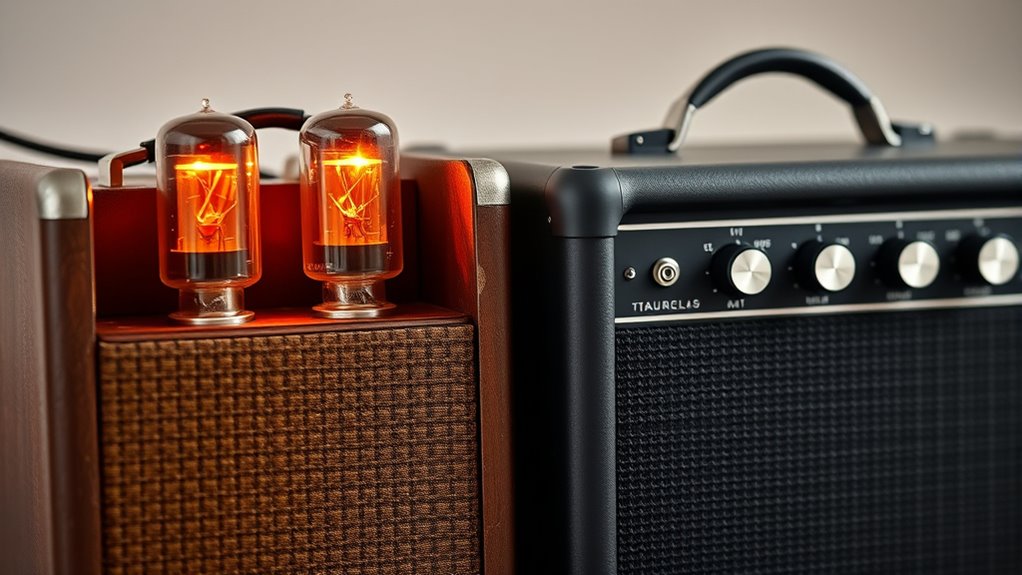

Tube amps give your sound a warm, organic quality with harmonic richness and smooth overdrive, making your tone feel more natural and expressive. Solid-state amps offer a cleaner, more precise sound with reliable performance and tighter control, especially at high volumes. If you want a rich, vintage vibe, tube amps might suit you best, but for consistent, sharp tones, solid-state amps excel. Explore further to discover how each type shapes your musical experience.
Key Takeaways
- Tube amps produce warm, harmonic-rich tones with natural compression, while solid-state amps offer cleaner, more transparent sound.
- Overdrive in tube amps is smooth and musical, whereas solid-state distortion tends to be harsher and more abrupt.
- Tube amps respond dynamically to playing nuances, adding warmth and sustain, unlike the more rigid response of solid-state amps.
- Solid-state amps deliver consistent, high-volume output with minimal maintenance, whereas tube amps have a unique tonal character but require upkeep.
- The tonal difference is rooted in the harmonic distortion and circuit design, creating distinct sound profiles for each amp type.

Bugera V5 INFINIUM 5-Watt Class-A Tube Amplifier Combo with INFINIUM Tube Life Multiplier, Original Turbosound Speaker, Reverb and Power Attenuator
Hand-built 5-Watt Class-A amplifier driven by 1 x EL84 tube
As an affiliate, we earn on qualifying purchases.
As an affiliate, we earn on qualifying purchases.
The Basic Technologies Behind Tube and Solid-State Amps
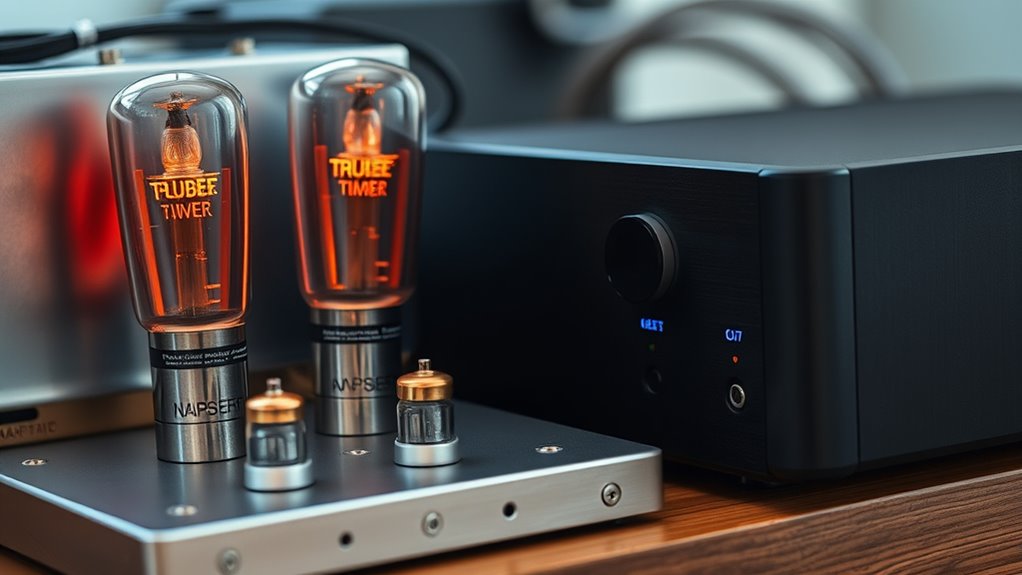
Understanding the fundamental technologies behind tube and solid-state amps helps you appreciate how each one shapes your sound. When comparing tubes vs solid state, you’re looking at two different approaches to amplifier circuitry. Tube amps use vacuum tubes to amplify your signal, which creates a warm, organic tone and natural compression. Solid-state amps rely on transistors and integrated circuits, offering a more precise, consistent sound with higher reliability and lower maintenance. The circuitry in each type directly influences how your guitar’s tone is processed and projected. Tubes generate harmonic distortion that many players find musically pleasing, while solid-state designs emphasize clarity and punch. Additionally, amplifier durability is often greater in solid-state models due to the robustness of transistors, making them suitable for demanding playing environments. Knowing these technological differences gives you a clearer understanding of how each amp type contributes to your overall sound.

Fender Mustang LT25 Guitar Amp, 25-Watt Combo Amp, with 2-Year Warranty, 30 Preset Effects with USB Audio Interface for Recording
The Fender Mustang LT25 Guitar Amplifier features 25 watts, 12.75Hx14.5Wx8.25D inches
As an affiliate, we earn on qualifying purchases.
As an affiliate, we earn on qualifying purchases.
How Each Amplifier Type Shapes Your Tone

Each amplifier type uniquely influences your tone, shaping the way your guitar sounds and feels. With tube amps, the warm, natural compression enhances your sound, especially when speaker placement allows the tubes’ natural harmonics to resonate. They tend to produce a richer, more organic response that’s affected by ambient noise, giving your tone a lively, dynamic quality. Solid-state amps, on the other hand, deliver a more consistent and transparent sound. They’re less sensitive to speaker placement and ambient noise, which means your tone remains steady regardless of environment. This makes solid-state amps ideal for controlled settings. Understanding how each amplifier type interacts with your environment helps you shape your tone intentionally—whether you seek the warmth and character of tube amps or the reliability of solid-state. Additionally, environmental factors play a significant role in how amplifier types influence your overall sound. For example, personality traits such as a preference for reliability or a desire for a particular tone can guide your choice of amplifier type, especially considering how ambient noise and space affect tone quality. Recognizing the impact of room acoustics can further help you select the appropriate amplifier to suit your playing environment. Moreover, circuit design influences how your tone reacts to these environmental variables, adding another layer to your tone-shaping possibilities.

PCB Board DIY kit Vacuum Electron Tube DIY Tube Amplifier kit Tube Amplifier kit Valve Preamp Amplifier Board Tube Headphone Amplifier Kit Headphone Amp Parts Musical Fidelity Kit DC12V
【Eight 470uf Capacitor Filter】:Eight 470UF capacitor filter is very clean, excellent power system to no hum, filaments are…
As an affiliate, we earn on qualifying purchases.
As an affiliate, we earn on qualifying purchases.
Dynamic Response and Playing Feel
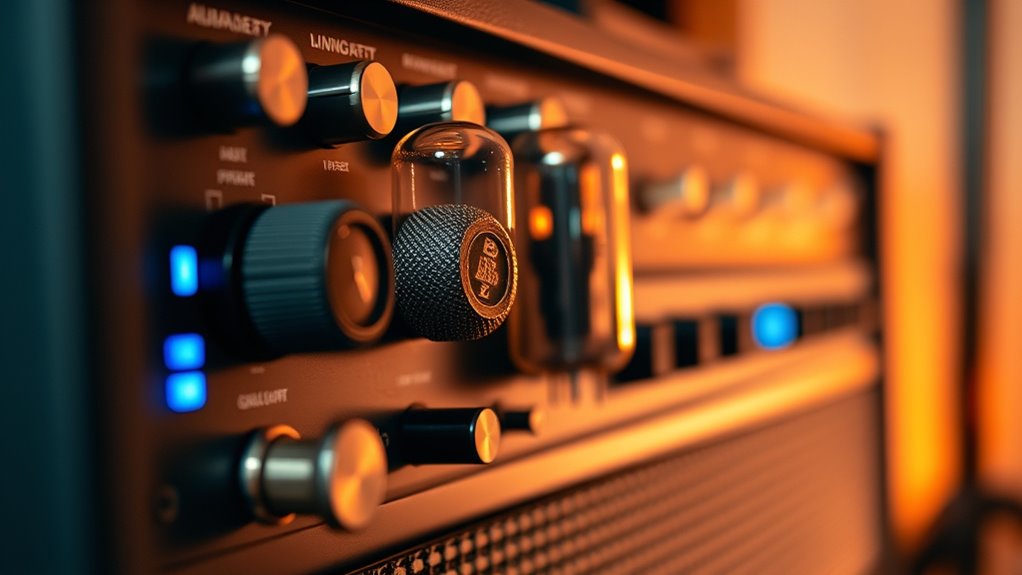
You’ll notice that tube amps often respond more naturally to your playing dynamics, making it easier to express subtle nuances. Their attack and decay characteristics give each note a lively, organic feel, while natural compression adds sustain without losing clarity. Solid-state amps tend to be more immediate and consistent, but they may lack the dynamic responsiveness that makes your playing feel more alive. Additionally, the sound quality of tube amps is often described as warmer and richer, contributing to a more expressive playing experience. The inherent amplifier design also influences how well the amp reacts to your playing style, enhancing the overall expressiveness. This responsiveness is closely linked to dynamic response techniques, which are essential for capturing a nuanced and lively performance. Moreover, understanding voice characteristics can help musicians select equipment that best matches their desired tone and playing style. Recognizing these personality traits can also inform how players connect emotionally with their instrument, further enriching their expressive capacity.
Responsiveness to Playing Dynamics
When it comes to playing dynamics, tube amps often respond more naturally and intuitively than solid-state counterparts. You’ll notice this in how your guitar tone varies smoothly with your touch, allowing for more expressive playing. Tube amps tend to amplify subtle nuances, giving you a more responsive playing feel that reacts immediately to your dynamics. Popular amplifier brands like Fender and Marshall excel in providing this responsiveness, making it easier to craft nuanced performances. Solid-state amps, on the other hand, can feel more rigid, often lacking the same sense of touch sensitivity. With a tube amp, your playing dynamics translate directly into your guitar tone, making your performances feel more alive and organic. This responsiveness is a key reason many players prefer tube amps for expressive playing. Additionally, the Best Beaches scene often highlights the importance of authentic experiences, much like the authentic response of tube amps enhances musical expression. Understanding amplifier response helps players choose gear that complements their style and touch, as the natural response of tube amps fosters a more dynamic interaction between the player and the instrument.
Attack and Decay Characteristics
The attack and decay characteristics of an amplifier profoundly influence how your guitar responds to your playing, shaping the overall feel and expressiveness. Attack nuances determine how quickly the amp reacts to your pick attack, affecting punch and articulation. Solid-state amps often deliver a sharper, more immediate attack, giving your playing a precise, clean feel. In contrast, tube amps tend to have a more gradual attack, adding warmth and a natural response that encourages expressive playing. Decay behavior also impacts your sound; tube amps usually exhibit a smoother, more natural decay, enhancing sustain and musicality. Solid-state amps may have a quicker, more controlled decay, which can feel tighter but less organic. Understanding these attack and decay differences helps you choose an amp that complements your playing style and desired sound.
Natural Compression and Sustain
Attack and decay characteristics set the stage for your amp’s responsiveness, but the way an amp handles compression and sustain truly shapes your playing feel. Tube amps naturally provide compression that adds tube warmth and harmonic richness, allowing notes to bloom and sustain smoothly. As you play harder, the amp compresses the signal subtly, creating a dynamic response that feels alive and expressive. This natural compression makes your playing more musical, giving you a sense of control without sacrificing tone. Solid state amps, on the other hand, often lack this organic compression, resulting in a more consistent but less responsive feel. If you value a warm, rich tone with organic sustain that responds to your touch, tube amps deliver a more natural playing experience. Additionally, the dynamic response offered by tube amps can enhance your expressive playing by responding more sensitively to your attack and touch. Furthermore, the natural compression inherent in tube amplification can help smooth out your tone, making it more pleasing to the ear and easier to blend with other instruments. Exploring the perceived musicality of tube amps reveals how their natural compression enhances emotional expressiveness during performances. The organic nature of tube harmonic distortion also contributes significantly to their characteristic sound, enriching your overall playing experience. Moreover, the amplifier circuitry design plays a crucial role in how these tonal qualities are achieved and perceived.

Flatsons FBA-10 Guitar Amp, 10W Mini Electric Guitar Amplifier with Clean/Drive Channel, 6H Working, USB-C Rechargeable, 3.5mm Headphone/AUX Jack, Wireless Portable Amp for Indoor Practice, Traveling
Pure Analog Technology for Crystal-Clear Sound: Featuring full analog technology with a precise frequency response of 100Hz-20kHz @…
As an affiliate, we earn on qualifying purchases.
As an affiliate, we earn on qualifying purchases.
Distortion and Overdrive Characteristics
Distortion and overdrive are key factors that distinguish tube amps from solid-state amplifiers. With tube amps, you’ll notice a warm, natural distortion that occurs gradually as you push the amp into overdrive, creating a musical, harmonic richness. This characteristic results from a feedback loop within the tubes, which adds a pleasing complexity to the sound. In contrast, solid-state amps tend to produce a more abrupt, harsh distortion when driven hard, often sacrificing signal clarity. Tube amps respond smoothly to increased gain, offering subtle nuances and musical overdrive. Solid-state devices can sound more sterile or brittle at high volumes, lacking the organic compression that makes tube distortion so appealing. Your choice depends on whether you value the smooth, musical overdrive or the sharp, precise response.
Reliability and Maintenance Differences

While tube amps are prized for their tonal qualities, they generally require more maintenance and can be less reliable over time. The maintenance costs tend to be higher because tubes need regular replacement, and other components, like capacitors, may wear out faster. This can lead to reliability concerns, especially if you play frequently or gig regularly. High divorce rates and the associated stress can further impact your focus on equipment maintenance and decision-making. Solid state amps, on the other hand, are more durable and require less upkeep. They typically need fewer repairs and have a longer lifespan with minimal maintenance. If you’re looking for an amp that demands less attention and offers consistent performance, a solid state model might be the better choice. However, if you’re willing to invest in upkeep for superior tone, tube amps could still be appealing.
Volume and Power Handling
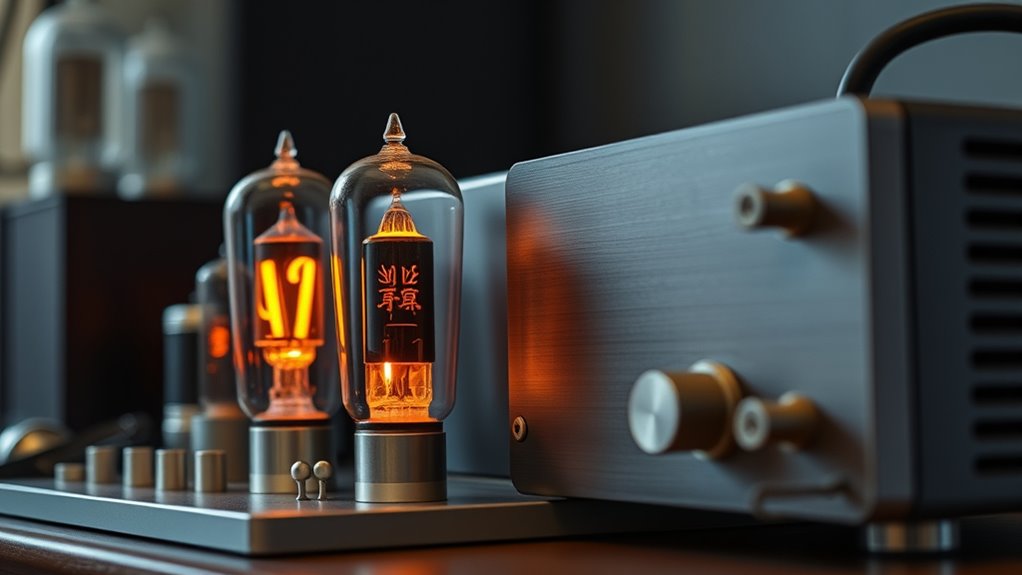
When it comes to volume and power handling, solid state amps typically deliver higher wattage and cleaner output at louder volumes compared to tube amps. Their power output is more consistent, allowing you to push the volume without significant distortion. With solid state amps, your volume control feels precise, making it easier to dial in the perfect level for any situation. They handle high volumes without breaking a sweat, providing a clear, undistorted sound even at maximum settings. In contrast, tube amps often produce a more compressed, warmer sound at lower volumes, but their power output can become less predictable as volume increases. If you need loud, clean sound with tight control over volume, solid state amps are usually the better choice.
Cost and Value Considerations
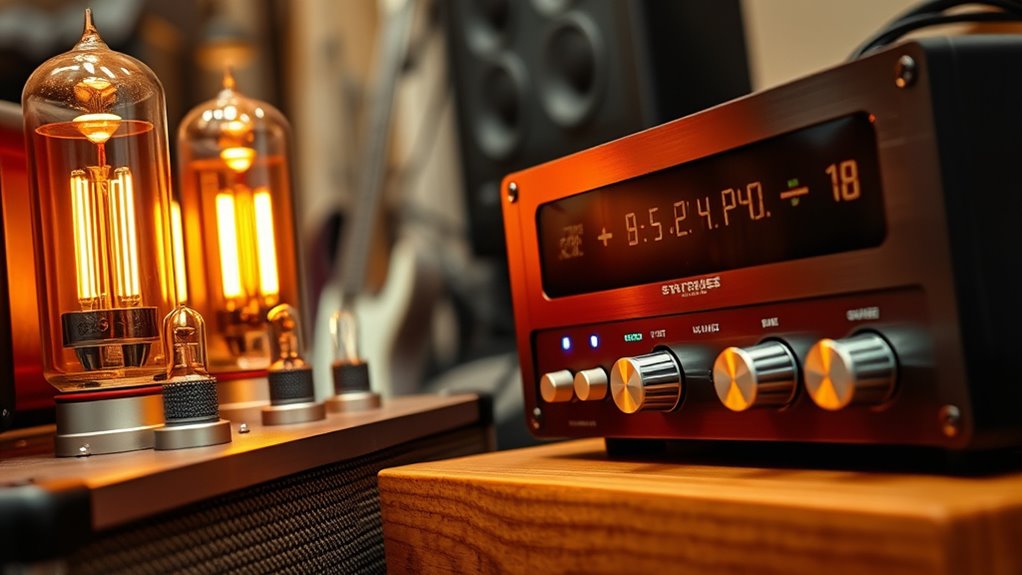
Cost is a significant factor when choosing between tube and solid state amps, as their prices can vary widely. A thorough cost comparison helps you understand the initial investment and ongoing expenses. Tube amps tend to be more expensive upfront, often due to the cost of tubes and maintenance. Solid state amps usually cost less initially and require less upkeep, making them more budget-friendly. When doing a value assessment, consider not just the purchase price but also longevity, reliability, and performance. Tube amps may deliver superior sound quality that justifies the higher cost for many musicians, while solid state amps offer affordability and convenience. Ultimately, balancing your budget with your sound preferences will guide you toward the best choice for your needs.
Suitability for Different Music Styles and Settings
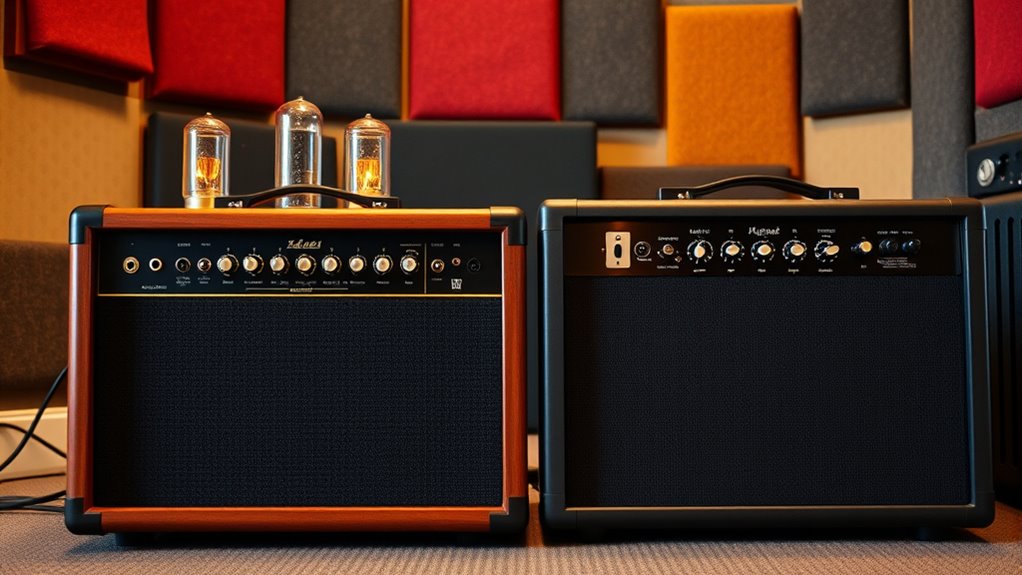
Your choice between tube and solid-state amps depends heavily on the music styles you play and where you perform. Tube amps often deliver warm tones preferred for genres like blues or jazz, while solid-state amps can handle high-gain styles and loud live settings more reliably. Consider how each amp’s tone and performance suit your studio recordings and stage presence to make the best decision.
Genre Compatibility and Tone
Different music styles often call for specific tonal qualities, and the choice between tube amps and solid-state amps can considerably influence your sound’s suitability for those genres. If you prioritize genre matching, tube amps excel with genres like blues, jazz, and classic rock, offering warm, organic tones that enhance expressive playing. On the other hand, solid-state amps provide greater tonal versatility, making them ideal for genres like metal, pop, and electronic music, where clean, consistent sounds are essential. Your choice depends on the tonal character you seek and how well the amp complements your style. Tube amps may require more adjustments for different genres, but they deliver a rich, dynamic response. Solid-state amps offer quick, reliable tonal shifts, ensuring flexibility across diverse musical settings.
Live Performance Dynamics
When performing live, the choice between tube and solid-state amps can considerably impact your setup’s responsiveness and overall sound projection. Tube amps often deliver warm, dynamic tones that enhance your stage presence, making your performance more engaging and emotionally resonant. This can markedly boost audience impact, especially in genres that benefit from expressive solos and natural compression. Solid-state amps, however, excel in providing consistent, high-volume output with minimal maintenance, making them ideal for genres that prioritize punch and clarity, such as metal or electronic music. They also handle high gain without becoming muddy, which can improve your stage dynamics. Ultimately, your choice influences how well your sound cuts through the mix and how confidently you connect with the audience.
Studio Recording Preferences
Is choosing between tube and solid-state amps essential for achieving the desired sound in the studio? Absolutely. Your choice affects how well your gear fits different music styles and recording setups. Tube amps often deliver warm, rich tones ideal for genres like jazz, blues, and classic rock, but they require careful cabinet matching to optimize sound quality. Solid-state amps offer cleaner, more consistent tones, making them suitable for genres like pop and electronic music. When recording, microphone placement plays a pivotal role—placing mics closer to a tube amp can emphasize its natural character, while a solid-state might need different positioning to capture its transparent sound. Matching your amp type with your style and setup ensures the best possible studio recordings.
Frequently Asked Questions
How Does Amplifier Size Affect Sound Quality and Portability?
Amp size directly influences sound quality and portability. Larger amps usually produce richer, fuller tones because they have more space for components and better heat dissipation. However, their size makes them less portable, so you might struggle to carry them around. Smaller amps are lightweight and easy to move, but they may compromise sound quality, especially at higher volumes. Choose based on your need for portability versus sound performance.
Can Solid-State Amps Emulate Tube Amp Overdrive Accurately?
Solid-state amps can emulate tube amp overdrive quite well through digital modeling, but they often lack the harmonic complexity of true tube distortion. You’ll notice that while digital modeling captures the overall tone and response, it sometimes falls short in replicating the warm, dynamic nuances of real tubes. For most players, modern solid-state amps offer a convincing approximation, but purists might still prefer the authentic character of tube overdrive.
What Are the Environmental Impacts of Maintaining Tube vs. Solid-State Amps?
You might notice that maintaining tube amps has a higher environmental impact due to greater energy consumption and the need for frequent component replacements, which can be less recyclable. Solid-state amps are more energy-efficient and generally easier to recycle, making them a better choice if you’re concerned about sustainability. By choosing solid-state, you reduce energy use and contribute less waste, supporting a more eco-friendly approach to your musical gear.
How Do Different Speaker Cabinets Influence the Overall Tone?
Your choice of speaker cabinet considerably influences your tone through cabinet resonance and speaker efficiency. A cabinet with strong resonance can add warmth and depth, enriching your sound. Meanwhile, higher-efficiency speakers produce louder output with less power, giving you more punch and clarity. Experimenting with different cabinets allows you to find the perfect balance of resonance and efficiency, shaping your overall tone to match your style and preferences.
Are There Specific Genres That Benefit More From Each Amplifier Type?
You might think certain genres only suit specific amps, but that’s not always true. While genre-specific tones often favor tube amps for their warmth and natural compression in blues or rock, solid state amps excel in genres like metal or pop, where amplifier versatility and clean sound are essential. Ultimately, your choice depends on your style and desired tone, not just genre stereotypes—experiment to find what fits best.
Conclusion
Whether you prefer the warm richness of tube amps or the reliability of solid-state, your choice shapes your sound and playing experience. While tubes offer soulful overdrive and dynamic feel, solid-state amps deliver consistent, maintenance-free performance. Both have their place—one’s nostalgic charm versus modern convenience. Ultimately, it’s about what inspires you most. Embrace the contrast, find your tone, and let your music speak through the amplifier that best fits your style.