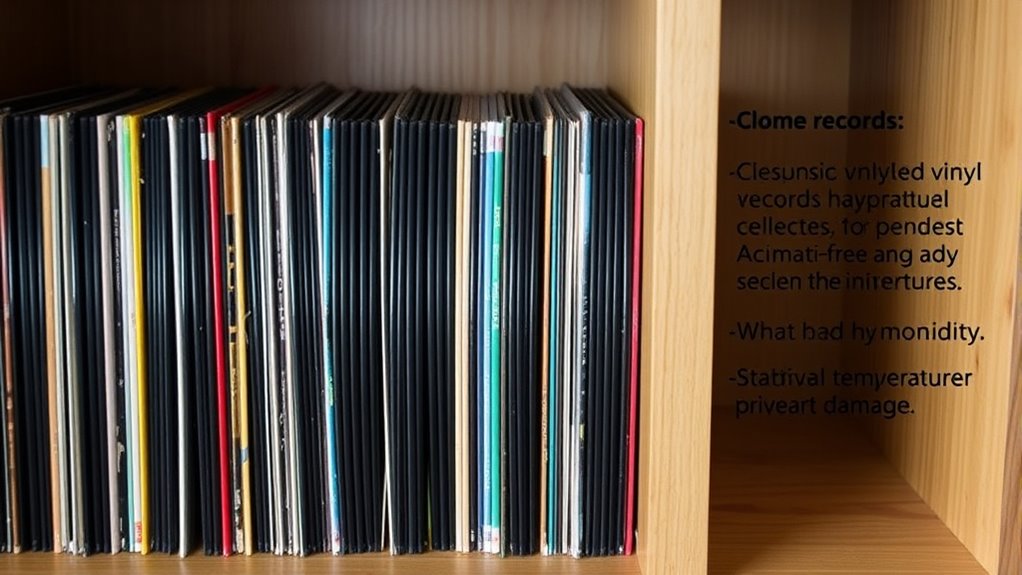

To prevent warping and damage, store your vinyl records upright on a sturdy shelf, avoiding stacking or leaning. Use anti-static inner sleeves and sturdy outer sleeves to protect each record. Keep your collection in a cool, dry place away from sunlight and heat sources. Handle records by their edges and labels to avoid scratches. Regularly clean your records and sleeves to maintain sound quality. For more tips on preserving your vinyls long-term, continue exploring the best storage practices.
Key Takeaways
- Store records upright on sturdy shelves, similar to books, to prevent warping and bending.
- Use snug-fitting, anti-static inner sleeves and protective outer sleeves to shield from dust and static.
- Keep records away from direct sunlight, heat sources, and maintain a consistent temperature of 65-70°F.
- Handle records by edges and labels, placing them carefully into sleeves before storage.
- Maintain proper humidity levels (45-50%) and regularly clean records to preserve sound quality and condition.
Storing vinyl records properly is essential to preserving their sound quality and longevity. One of the most important steps you can take is to confirm each record is protected with a quality record sleeve. These sleeves act as a barrier against dust, dirt, and physical damage that can occur when records are exposed to the environment. Opt for inner sleeves made of anti-static material to prevent static buildup that can attract dust, which can scratch the surface of your records. Outer sleeves are also beneficial for added protection during handling and storage, especially if you frequently browse your collection. Using sleeves that fit snugly without forcing them onto the record helps prevent warping and bending.
Proper record sleeves protect against dust, dirt, and damage, ensuring your vinyl sounds great for years.
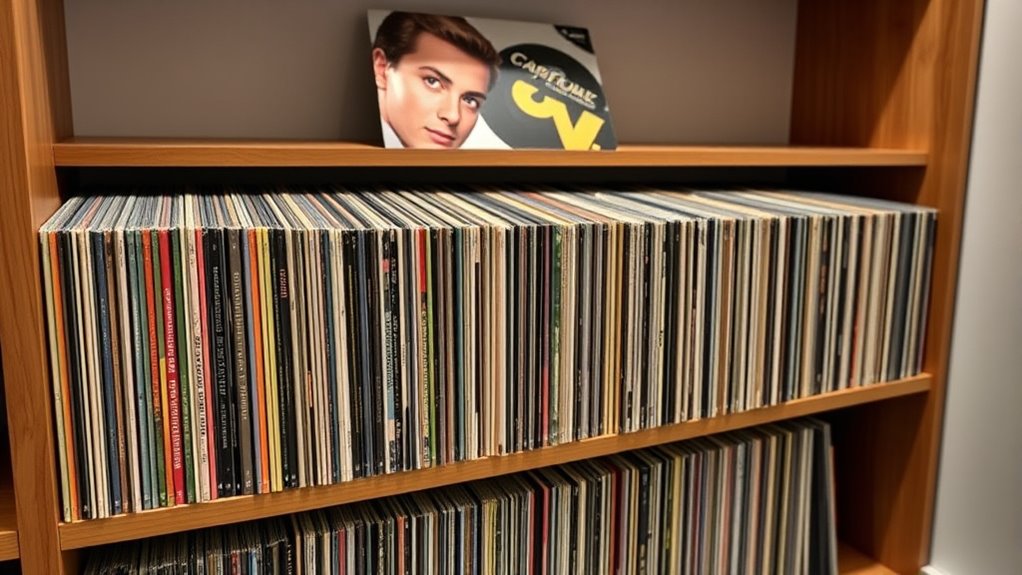
Equally important is how you store your records. You should avoid stacking them horizontally or leaning them at an angle, as this can cause warping over time. Instead, keep your vinyl records upright, similar to books on a shelf, to maintain their shape. When choosing storage furniture, look for sturdy, purpose-built record shelves or cabinets designed specifically for vinyl. These are constructed to hold the weight of multiple records without bowing or collapsing. Avoid placing your collection in direct sunlight or near sources of heat, such as radiators or windows, because heat can cause records to warp. Consistent temperature and humidity levels are key—ideally, keep your space between 65 and 70 degrees Fahrenheit with 45-50% humidity. Proper storage environment is crucial for maintaining the integrity of your records over time.
Handling your records with clean hands is another critical aspect of preserving their condition. Always hold your records by the edges and the label, avoiding touching the grooves, which are essential for sound quality. When storing, make sure each record is placed carefully into its sleeve, then stand it upright on your storage furniture. This method minimizes pressure on the grooves and prevents warping. If you have a large collection, consider dividing it into smaller sections or using dividers within your storage furniture to keep everything organized and prevent records from leaning or falling over.
Regularly clean both your records and sleeves to remove dust and static, which can accumulate over time and damage the grooves. Using a dedicated record cleaning brush or a microfiber cloth can make a significant difference. By combining proper record sleeves, suitable storage furniture, and good handling habits, you’ll ensure your vinyl collection remains in excellent condition for years to come. Proper storage isn’t just about keeping your records safe; it’s about preserving the rich, warm sound that makes vinyl so special.
Top picks for "store vinyl record"
Open Amazon search results for this keyword.
As an affiliate, we earn on qualifying purchases.
Frequently Asked Questions
How Often Should I Clean My Vinyl Records?
You should clean your vinyl records every 3 to 6 plays or whenever they appear dusty or visibly dirty. Regular cleaning is essential for proper record maintenance and to guarantee the best sound quality. Use a gentle, anti-static record brush or a cleaning solution specifically designed for vinyl. Avoid over-cleaning, as it can damage the grooves. Staying consistent with cleaning frequency helps preserve your records and keeps your listening experience enjoyable.
What Temperature Is Ideal for Vinyl Storage?
You should keep your vinyl records in a temperature-controlled environment, ideally between 65-70°F (18-21°C). Proper temperature control helps prevent warping and damage. Avoid storing your records in places with fluctuating temperatures or high humidity, like attics or basements. Consistent storage conditions ensure your records stay in good shape, preserving sound quality and longevity. Maintain a stable climate for ideal vinyl record preservation.
Can Sunlight Damage Vinyl Records?
Yes, sunlight exposure can damage vinyl records. Direct sunlight heats the record, causing expansion and increasing the risk of record warping. Over time, this exposure can also degrade the vinyl’s surface, leading to potential scratches and sound quality loss. To protect your records, store them in a cool, dark place away from windows and sunlight. Keeping them shaded prevents warping and preserves both their condition and sound integrity.
Are There Specific Materials Best for Record Sleeves?
Think of record sleeves as the armor protecting your vinyl treasure. You should choose sleeves made from high-quality, acid-free materials like polyethylene or polypropylene, which guarantee material compatibility and prevent chemical reactions that could harm your records. These durable sleeves shield against dust and scratches, maintaining your collection’s integrity over time. Investing in sturdy, archival-grade sleeves keeps your vinyl safe and sound, preserving sound quality and extending the life of your treasured records.
How Do I Fix a Warped Vinyl Record?
If your vinyl record is warped, start by trying record flattening techniques at home, like placing the record between two heavy, flat objects with a layer of cloth and applying gentle, even pressure for a few days. For severe warping, consider professional restoration services that use specialized equipment. Avoid using heat or the oven, as these can damage your record further. Professional help is safest for serious warping.
Conclusion
By taking care of your vinyl collection, you guarantee it stays in perfect harmony for years to come. Gentle handling, proper storage, and a little extra attention are like whispers of kindness that keep your records singing. Remember, a little love goes a long way—treat your vinyl with care, and it’ll reward you with timeless tunes and memories. After all, in the world of records, a little tenderness can make all the difference.