
To make a mixtape like it’s 1985, start by choosing your favorite songs and gather blank cassette tapes and a cassette recorder. Play each song on your stereo, then press record and play simultaneously to capture the music. Adjust levels beforehand to avoid distortion and leave a little space at the start and end for smooth progressions. Add personal touches like handwritten labels. Keep going to discover more tips for crafting authentic vintage mixtapes.
Key Takeaways
- Gather blank cassette tapes, a cassette recorder, and your selected songs for authentic recording.
- Adjust recording levels and leave space at track starts for smooth transitions.
- Play the songs on a stereo or digital device and record in real-time using the cassette recorder.
- Label the cassette with handwritten titles and track list for a personalized touch.
- Play the finished mixtape on a vintage cassette player to experience nostalgic sound quality.

Creating a mixtape is a personal journey that lets you craft a soundtrack for a specific mood, memory, or person. Back in the day, cassette technology made it easy to record and share your favorite tunes, turning a simple tape into a meaningful gift or keepsake. Understanding the roots of mixtape history helps you appreciate how far this art form has come, but the core idea remains the same: curating a collection of songs that tell a story or evoke emotion. Today, you can submerge yourself in that nostalgic feeling by making your own cassette-style mixtape, blending past techniques with modern tools.
Creating a mixtape is a personal craft that evokes emotion and preserves memories.
Cassette technology, introduced in the 1960s, revolutionized how people listened to and shared music. Its portability and ease of use made it a popular choice for recording personal playlists. Mixtape history shows how these tapes became more than just a way to listen; they became a form of expression. People would spend hours selecting tracks, matching their mood or message, and carefully recording them onto a tape using a cassette recorder. This process was both creative and intimate, often involving meticulous editing to get the perfect flow. When you plunge into making your own mixtape, you’re participating in a tradition that’s been around for decades, connecting you with those who crafted tapes before you.
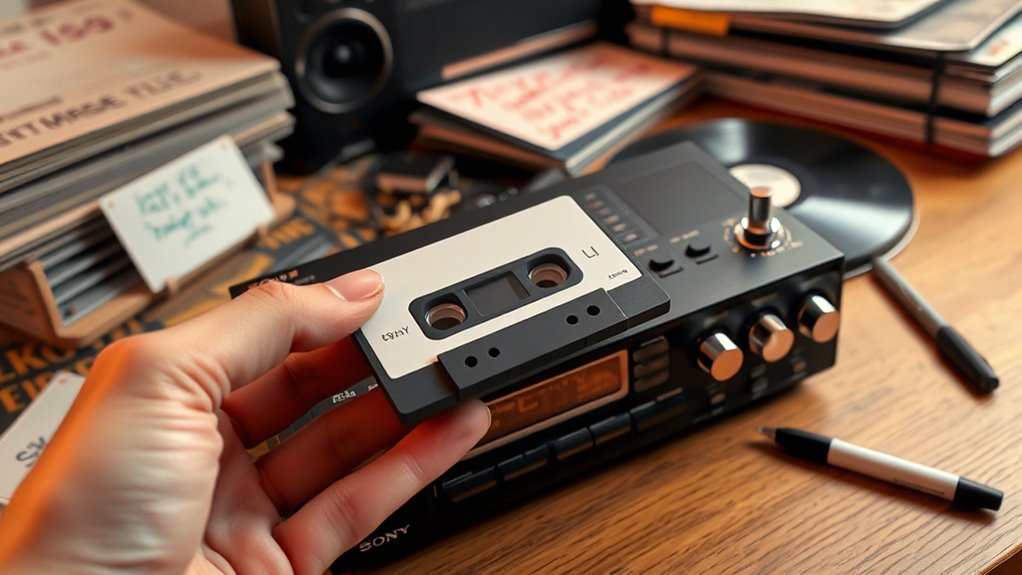
To start, you’ll need a few essentials: a blank cassette tape, a cassette recorder or a device capable of recording audio onto tapes, and a collection of songs you want to include. If you’re aiming for authenticity, consider using a vintage cassette player for playback or recording. Modern digital tools can help you compile your playlist and even create a custom cover, but the key is in the recording process. When recording, it’s best to do it in real-time, pressing record and play at the right moments to preserve the organic feel of a true mixtape. Adjust the recording levels beforehand to avoid distortion, and leave some space at the beginning and end of each track to prevent abrupt starts or cuts. Proper recording techniques are essential to capturing a high-quality sound and maintaining the nostalgic charm.
Once you’ve recorded all your chosen songs, label the tape with a handwritten title and track list, just like in the mixtape history of old. This personal touch adds character and makes your creation special. Playing your tape on a cassette player allows you to experience the nostalgia firsthand, hearing the slight hiss and imperfections that digital formats can’t replicate. Making a mixtape today isn’t just about copying songs; it’s about curating a story, a mood, or a memory with intentionality and care. It’s a creative act rooted in cassette technology’s rich history, and by doing it yourself, you revive that classic art form with your own modern twist.
Top picks for "mixtape record cassette"
Open Amazon search results for this keyword.
As an affiliate, we earn on qualifying purchases.
Frequently Asked Questions
Can I Use Digital Songs for My Cassette Mixtape?
Yes, you can use digital songs for your cassette mixtape. First, you need to handle digital integration by converting your audio files into a suitable format, like WAV or MP3. Then, use a computer to connect to your cassette recorder, and play the converted files through a cable. This process allows you to seamlessly transfer digital music onto your cassette, blending modern files with vintage recording techniques.
What Safety Precautions Should I Take When Handling Cassette Tapes?
When handling cassette tapes, you should take safety precautions seriously. Avoid handling chemicals or cleaning solutions near tapes to prevent damage. Always handle tapes by the edges to avoid fingerprints or dirt. Store them properly in a cool, dry place away from direct sunlight and magnetic fields. Keep tapes in their cases when not in use to prevent warping or tangling. These steps help preserve your tapes and guarantee safe handling.
How Long Can a Standard Cassette Tape Record?
Sure, because everyone loves endless recordings, right? A standard cassette tape offers about 30 to 60 minutes of recording duration, depending on tape length. Typically, a 60-minute tape gives you 30 minutes per side, perfect for your epic mixtape. Keep in mind, longer tapes might sacrifice sound quality, but hey, who cares about clarity when you’re creating a nostalgic masterpiece?
Are There Different Types of Cassette Tapes for Specific Sound Qualities?
Yes, there are different types of cassette tapes designed for specific sound qualities. You should consider tape materials like ferric, chrome, or metal, which affect sound clarity and noise reduction. Additionally, recording formats such as Type I, II, or IV cater to different audio needs, with Type II and IV offering higher fidelity. Selecting the right tape material and format guarantees your recordings sound the way you want, whether for casual listening or professional quality.
How Do I Troubleshoot if My Cassette Player Isn’t Playing Properly?
Troubleshooting playback means checking your cassette player connections, cleaning the tape heads, and ensuring the tape isn’t damaged. If your player isn’t working, start by inspecting the power source and making sure all cables are secure. Clean the heads with a cotton swab and isopropyl alcohol. If issues persist, test with a different cassette or consider replacing worn parts. Proper connections and maintenance keep your cassette player running smoothly.
Conclusion
Now that you’ve crafted your own cassette, you’ve captured more than just songs—you’ve preserved a moment in time, like a secret message waiting to be uncovered. Just as a mixtape’s carefully chosen tracks reveal a story, your creation becomes a timeless artifact, reminding you that sometimes, the most meaningful connections are made through small, deliberate acts. Like a whispered promise in a forgotten song, your tape is a reminder that true expression never goes out of style.