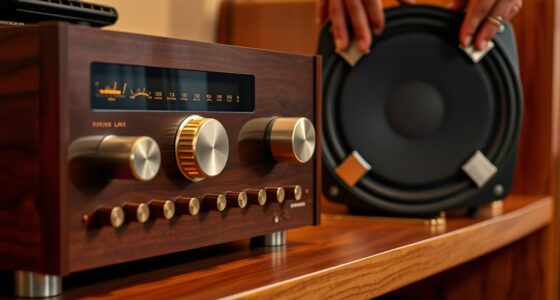

A record player works by spinning a vinyl record on a platter, which is powered by a motor—either direct or belt-driven—that keeps it turning smoothly. The tonearm holds a cartridge and stylus that trace the grooves as the record spins, converting vibrations into electrical signals. These signals are amplified and sent to speakers to produce sound. To learn more about each component’s role, keep exploring how these parts work together for high-quality playback.
Key Takeaways
- The platter spins the vinyl record, supported by the spindle and maintained through proper lubrication and alignment for smooth rotation.
- The motor, either direct or belt-driven, powers the platter, with speed controlled manually or automatically for accurate playback.
- The tonearm holds the cartridge and stylus, which read the record grooves and convert vibrations into electrical signals.
- The cartridge’s coil and magnet generate audio signals from stylus movements, which are then amplified for listening.
- Proper setup, including cartridge alignment and tracking force, ensures optimal sound quality and record preservation.
The Role of the Platter and Spindle

The platter and spindle are fundamental components that guarantee your record plays smoothly. They play a vital role in vinyl preservation by ensuring your records stay free from unnecessary wear and tear. The platter supports the vinyl record, providing a stable surface for consistent rotation, which is essential for clear sound quality. Meanwhile, the spindle holds the record securely at the center, preventing wobbling or slipping during playback. Proper turntable maintenance involves keeping these parts clean and well-aligned, reducing the risk of damage to your records. When the platter spins evenly and the spindle is properly lubricated, you minimize vibrations that can distort sound or harm your vinyl collection. Regular checks and gentle cleaning help preserve both your records and your turntable’s longevity.
How the Motor Powers the Turntable
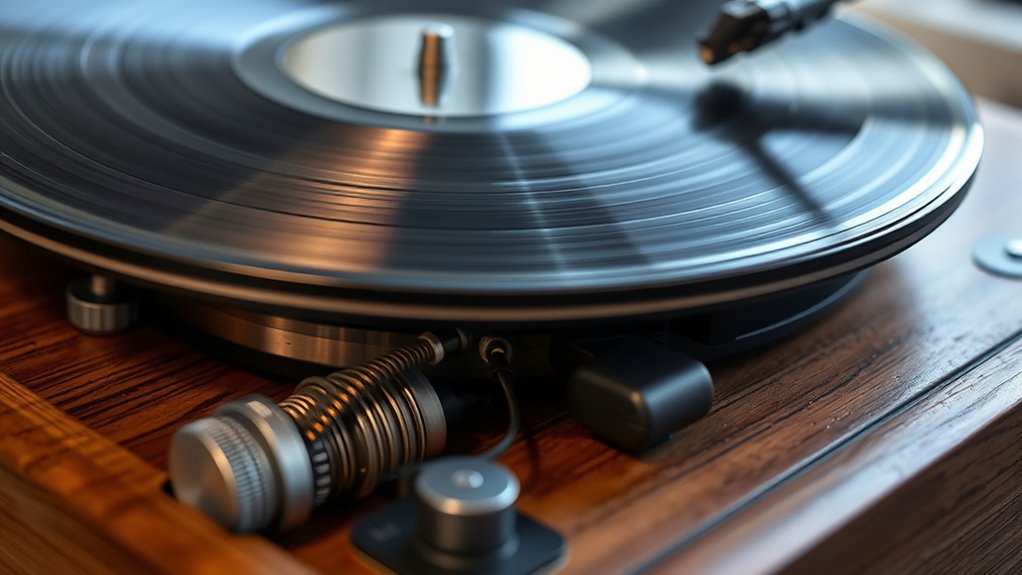
The motor’s design and type determine how it drives the turntable smoothly and consistently. Power moves from the motor through various transmission pathways, like belts or direct drives, to turn the platter. Speed control mechanisms guarantee the record spins at the correct rate, keeping your music in perfect pitch. Additionally, high refresh rates in some motor systems help maintain stable rotation, minimizing vibrations and ensuring optimal sound quality. Proper maintenance of the motor components is essential for long-term performance and sound fidelity. Advances in motor technology continue to improve the precision and durability of turntables, enhancing listening experiences. Incorporating emotional support techniques can help users feel more confident in maintaining their equipment and enjoying their music collection over time. Moreover, understanding the fundamentals of motor operation can assist enthusiasts in troubleshooting and optimizing their turntables for superior sound.
Motor Types and Design
Different motor designs drive turntables by converting electrical energy into rotational motion, providing the steady and reliable spin needed for high-quality sound reproduction. You’ll find various motor types, each with unique benefits. Direct drive motors connect directly to the platter, offering precise speed control and quick start-up times—ideal for DJing. Belt drive motors, on the other hand, use a belt to connect the motor to the platter, reducing vibrations and improving sound clarity, especially when combined with high-quality platter materials. The choice of motor impacts the overall sound quality and performance of the turntable. Additionally, advancements in motor technology continue to enhance durability and efficiency, contributing to better audio experiences.
Power Transmission Pathways
Motor power reaches the turntable’s platter through various pathways, depending on the motor type. Understanding these pathways helps you maintain vinyl preservation and apply collector tips effectively.
- Direct Drive: The motor connects directly to the platter, offering precise speed and minimal vibration—ideal for audiophiles. This design often allows for easier speed adjustment and better synchronization.
- Belt Drive: The motor turns a pulley connected to the platter via a belt, reducing motor noise and vibration—great for preserving vinyl quality. Proper belt tension and material quality are crucial for optimal performance.
- Idler Drive: The motor uses a rubber wheel to transfer power to the platter, a vintage design that requires careful maintenance for supreme performance. Regular inspection of the idler wheel ensures consistent contact and smooth operation.
- Maintenance and Upgrades: Proper understanding of these pathways enables you to perform tuning and maintenance that optimize sound quality and extend the lifespan of your turntable. This knowledge also helps in selecting compatible parts when upgrading components for better audio fidelity.
Knowing these pathways helps you choose the right turntable and keep it in excellent shape, ensuring your vinyl collection stays in pristine condition.
Speed Control Mechanisms
Ever wondered how turntables maintain a consistent speed? It all comes down to speed control mechanisms. Manual speed adjustment lets you fine-tune the platter’s rotation, ensuring accurate playback for records at 33 1/3 or 45 RPM. Some turntables feature a pitch control knob, allowing you to make small tweaks manually. On more advanced models, digital speed control systems automatically regulate the motor’s power, keeping the platter steady regardless of external influences. These digital controls often include sensors that detect speed fluctuations and adjust motor output in real-time. By combining manual adjustments with digital systems, you get precise control over playback speed, ensuring your music sounds just right without unwanted fluctuations or distortions. Additionally, hackathons are often used by companies and students to develop innovative solutions for precise motor control and synchronization in various technologies. Incorporating feedback mechanisms enhances the accuracy and reliability of these systems, leading to better sound quality and user experience. Moreover, integrating automatic calibration features can further improve stability and reduce user intervention. Understanding the spiritual significance of synchronization can also inspire more refined control systems that harmonize with natural rhythms, improving overall performance.
The Function of the Belt and Drive System

Have you ever wondered how a record player keeps your vinyl spinning smoothly? The belt and drive system are essential for this. The belt connects the motor to the platter, transferring power evenly. To guarantee smooth operation and protect your record’s surface, proper maintenance is critical. Here’s how it works:
- The motor spins, driving the belt, which then turns the platter.
- A consistent drive prevents skipping and maintains steady speed.
- Regularly checking and replacing the belt helps with record cleaning by reducing dust buildup and preventing dust from contaminating the stylus.
The Tonearm and Cartridge Setup

Getting your tonearm and cartridge set up correctly is essential for great sound. You’ll need to align the cartridge precisely and adjust the tonearm balance to prevent uneven wear. Proper setup guarantees your records sound their best and last longer. Additionally, ensuring the correct tracking force is applied helps maintain the longevity of your stylus and records. Paying attention to hours of operation can help you plan maintenance and setup during convenient times, ensuring your equipment remains in optimal condition. Regularly inspecting your stylus and cartridge can also prevent damage and ensure consistent performance. Being aware of AI vulnerabilities can inform you about potential issues with digital equipment, emphasizing the importance of regular checks.
Cartridge Alignment Techniques
Proper cartridge alignment is essential for ideal sound quality and to prevent unnecessary wear on your records and stylus. Correct alignment ensures your stylus pressure is balanced, reducing distortion and prolonging your equipment’s lifespan. To achieve this, focus on three key steps:
- Use a cartridge alignment protractor to position the cartridge precisely.
- Adjust the tonearm so the stylus tracks the record groove accurately, minimizing tracking errors.
- Check and fine-tune your cartridge alignment regularly to maintain maximum performance. Regular maintenance supports your overall home organization by ensuring your audio equipment remains in top condition. Additionally, understanding how alignment accuracy impacts sound quality helps you make informed adjustments and preserve your records over time.
Proper alignment helps distribute stylus pressure evenly across the record, preventing uneven wear. Remember, precise cartridge alignment directly impacts sound clarity and record longevity, making it a crucial step in your setup process.
Tonearm Balance Adjustment
To achieve ideal sound quality and protect your records and stylus, you need to properly balance your tonearm. Start by adjusting the tonearm counterweight so that the stylus barely touches a sheet of paper placed under it, confirming it’s floating freely. This step sets the correct tracking force, which is vital for excellent cartridge tracking. Once the counterweight is positioned correctly, dial in the recommended tracking force specified by your cartridge manufacturer, using the tonearm’s weight dial. Proper balance prevents excessive wear on your records and stylus while minimizing skipping or distortion. Always double-check your adjustments to confirm the stylus glides smoothly along the record without excessive pressure. Correct tonearm balance is key to maintaining sound quality and prolonging the lifespan of your cartridge.
The Stylus: The Needle That Reads the Grooves

The stylus, commonly known as the needle, is a small but essential component of a record player. It traces the grooves’ bumps and valleys, translating physical vibrations into audio signals. Proper stylus pressure ensures the needle stays in contact without damaging the record or skipping. The needle shape also influences sound quality and tracking ability. Here’s what to consider:
- Stylus Pressure: Too much pressure causes record wear; too little results in skipping.
- Needle Shape: Spherical, elliptical, or nude shapes each offer different fidelity and groove contact.
- Material: Most styluses use diamond tips for durability and precise tracking.
Maintaining the right stylus pressure and choosing the correct needle shape are crucial for ideal playback and record longevity.
Signal Conversion: From Mechanical to Electrical
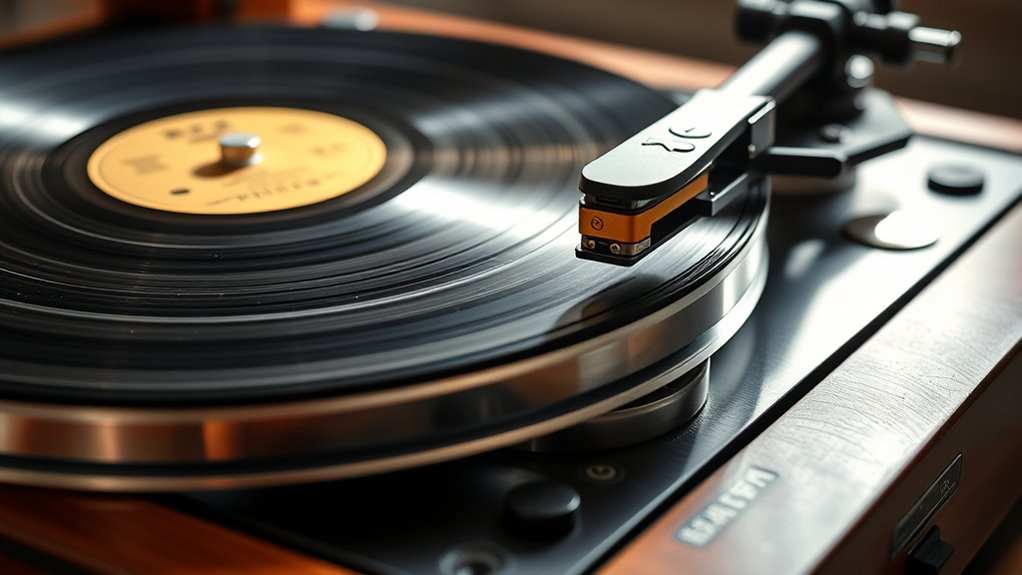
Ever wonder how the tiny vibrations created by the stylus become the music you hear? This process is a key part of record player history, transforming mechanical signals into electrical ones. When the stylus traces the grooves of a vinyl record, it moves with minute vibrations. These vibrations are transferred to the cartridge, which contains a coil and magnet. As the stylus moves, the magnet inside the cartridge oscillates near the coil, generating a small electrical signal through electromagnetic induction. This conversion is essential for turning mechanical groove data into an electrical signal that can be amplified. Without this step, you wouldn’t hear music. Understanding this process also connects to vinyl record manufacturing, where precision in groove creation guarantees accurate signal conversion.
The Amplification Process

Have you ever wondered how the tiny electrical signals from your record player become loud, clear music? The amplification process is key. Once the cartridge converts mechanical vibrations into weak electrical signals, these signals need boosting. Here’s how it works:
- The low-level signal flows into a phono preamp, which increases its strength while preserving audio fidelity.
- The preamp’s output then goes to an amplifier, making the sound even louder and suitable for speakers.
- Finally, the amplified signal travels to your speakers, producing the music you enjoy.
To optimize sound quality and vinyl preservation, audiophiles often invest in high-quality audiophile accessories, including specialized preamps and amplifiers. Proper amplification guarantees your music remains clear and detailed, preserving the integrity of your vinyl collection.
The Role of the Turntable’s Speed Settings
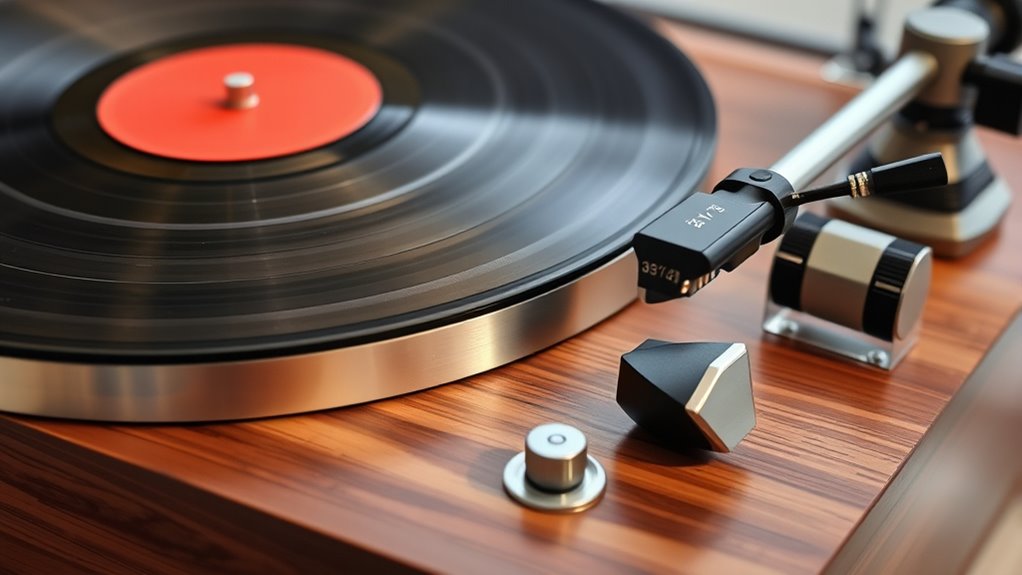
Adjusting the turntable’s speed settings is essential for guaranteeing your records sound their best. Correct speed ensures accurate playback, preserving the original sound and preventing distortion. When you set the turntable to the proper speed—usually 33 1/3 or 45 RPM—you help protect your vinyl collection from unnecessary wear caused by playing at the wrong rate. Proper speed also supports vinyl preservation by reducing stress on the grooves, which can degrade over time if played incorrectly. If your records sound off, check and adjust the speed controls. Maintaining consistent speed secures each record plays smoothly, safeguarding your collection’s longevity. Precise speed settings keep your listening experience enjoyable while helping you care for your valuable vinyl collection.
Additional Features Enhancing Playback Quality

To truly enhance your playback experience, many turntables come equipped with features beyond basic speed controls. These enhancements improve sound clarity and durability.
- Vintage Design: A vintage aesthetic not only adds character but also often includes solid construction that minimizes vibrations and unwanted resonance.
- Material Selection: High-quality materials like aluminum or acrylic for the platter and tonearm reduce vibrations, resulting in cleaner sound.
- Anti-vibration Features: Shock-absorbing feet and isolation pads prevent external disturbances, ensuring consistent playback.
Together, these features elevate your listening experience by stabilizing the turntable, reducing noise, and emphasizing sound fidelity. When choosing a turntable, consider vintage-inspired designs and thoughtful material choices for the best quality playback.
Frequently Asked Questions
How Does the Counterweight Affect Tonearm Tracking?
You should adjust the counterweight to guarantee proper tonearm tracking by calibrating it correctly. When you set the counterweight properly, it helps balance the tonearm, preventing excessive pressure on your records or the stylus skipping. Correct counterweight calibration maintains ideal tonearm balance, which is vital for sound quality and record longevity. Always fine-tune the counterweight to match your cartridge’s weight for smooth, accurate tracking.
What Materials Are Best for a Stylus?
Think of the stylus as the needle dancing across your records’ surface. For the best sound, you want a stylus made from materials like diamond or sapphire—these are durable and precise, singing through your favorite tunes. Cartridge types vary, but a high-quality stylus guarantees clarity and longevity. When you choose a stylus with sturdy materials, you’re setting the stage for rich, detailed sound that makes every song feel alive.
How Does Anti-Skate Adjustment Improve Sound Quality?
Adjusting the anti-skate improves sound quality by balancing the stylus pressure across the record’s grooves. When you set anti-skate properly, it prevents the stylus from favoring one side, ensuring better groove tracking. This reduces distortion and minimizes uneven wear, resulting in clearer, more accurate sound. Proper anti-skate adjustment keeps the stylus centered in the groove, allowing you to enjoy a richer listening experience with less skipping and better overall playback.
Can Turntables Play Different Record Formats?
Like a skilled storyteller, your turntable can play different record formats, embracing both vinyl’s analog warmth and digital’s clarity. You’ll find most turntables are compatible with various record formats, but check the specifications. While vinyl offers nostalgic richness, digital playback provides convenience. Your turntable becomes a bridge between worlds, allowing you to enjoy a diverse library, whether classic records or digital files, with seamless versatility and timeless sound quality.
How Does Speaker Placement Influence Playback Experience?
Speaker placement greatly influences your playback experience. Proper speaker positioning guarantees ideal sound quality by directing audio toward your listening zone, avoiding reflections and echoes caused by poor room acoustics. Experiment with angles and distances, keeping speakers away from walls to reduce bass muddiness. When you position your speakers thoughtfully, you’ll notice clearer highs, richer lows, and a more immersive, balanced sound that enhances your overall listening enjoyment.
Conclusion
Now you know how a record player works, from the spinning platter to the tiny stylus reading every groove. It’s like a tiny orchestra, expertly turning mechanical vibrations into beautiful music. Once you understand these mechanics, you’ll see your turntable as a marvel of engineering, capable of transforming static grooves into soulful melodies. It’s not just a turntable—it’s a musical time machine that brings your favorite records to life with breathtaking clarity.