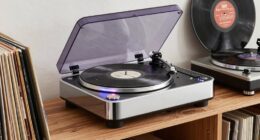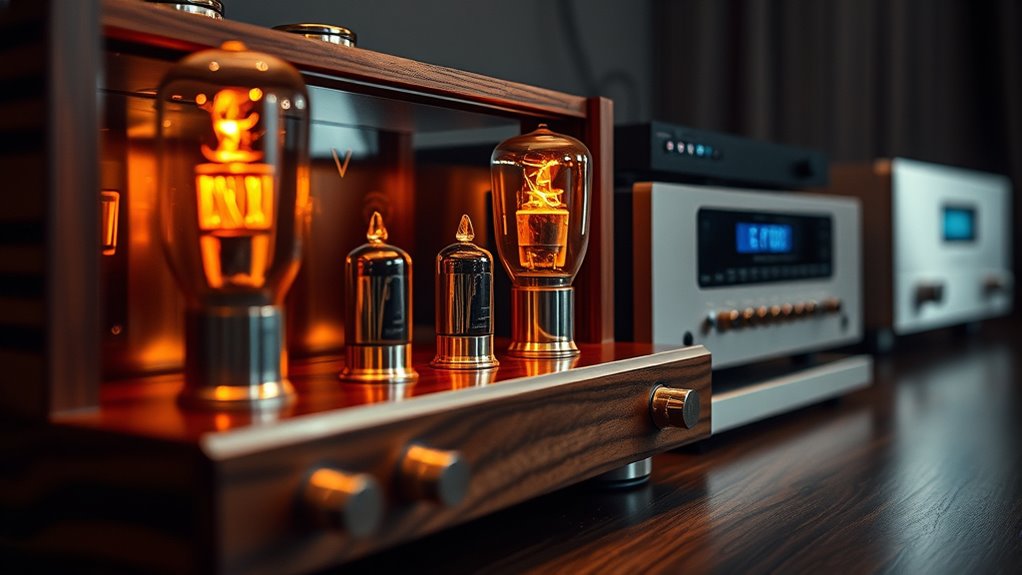
Vintage tube amps can sometimes handle high-resolution digital music well, but their performance depends on their condition, design, and your digital setup. If properly maintained and paired with a quality DAC, these amps can reproduce plenty of detail and warmth from high-def files. However, older gear might struggle with the ultra-fine nuances of modern digital signals. Keep exploring to discover how to optimize your system for the best high-res experience.
Key Takeaways
- Well-maintained vintage tube amps can reproduce high-res digital signals if properly upgraded or paired with modern DACs.
- High-res audio requires precise digital-to-analog conversion, which can be enhanced with modern digital equipment in vintage systems.
- The condition and design of old amps influence their ability to handle the subtle details of high-definition music.
- Hybrid setups combining vintage gear with digital components can deliver both warmth and high clarity.
- Proper system setup and maintenance are essential for vintage amps to effectively handle high-resolution digital audio.
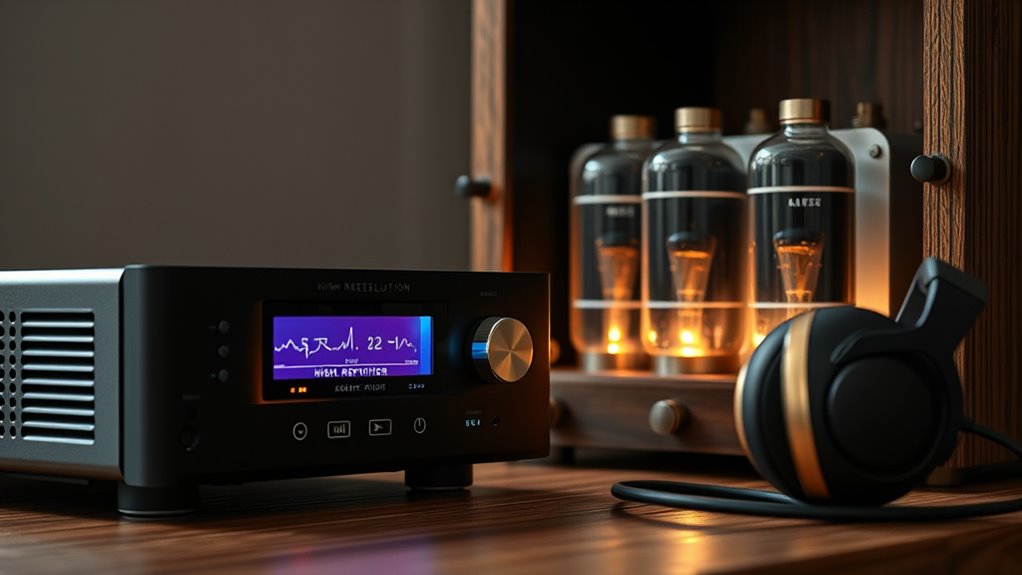
In the world of audio enthusiasts, choosing between hi-res audio and vintage gear often sparks lively debate. You might wonder if your beloved old amplification equipment can truly handle the demands of high-definition music streamed through modern digital platforms. When it comes to digital streaming, you’re accessing music files that are often encoded at exceptionally high bit depths and sampling rates. These files capture more detail, more nuance, and a broader soundstage than standard formats. Your vintage tube amplifier, with its warm, rich character, was designed in an era when music was primarily delivered via analog means. But can it keep up with the crisp, high-resolution signals of today’s digital streaming services?
Many vintage gear aficionados argue that tube amplification offers a sonic signature that digital formats can’t replicate. Tube amps provide a natural warmth, harmonic richness, and a smoothness that often appeals to those seeking an authentic listening experience. However, some worry that older tube amps might struggle with the precise demands of high-res audio, which requires a clean, accurate transfer of complex digital signals. The question becomes whether these old amps can faithfully reproduce the subtle details and dynamic range that hi-res audio offers. The answer depends largely on the condition and design of your vintage gear. Some classic tube amps, especially well-maintained or recently recapped ones, can handle high-definition audio quite well, delivering a sound that’s both warm and detailed.
But it’s not just about the amp; the entire signal chain matters. Digital streaming can introduce jitter or that slight digital noise, which your vintage amp might highlight or mask, depending on its quality. Many audiophiles prefer to pair vintage gear with modern digital-to-analog converters (DACs) that optimize the digital signal before amplification. This way, you get the best of both worlds: the clarity and detail from hi-res files, and the character and musicality of vintage tube amplification. Some also incorporate modern output stages or hybrid setups to bridge the gap between old and new technologies. Moreover, advancements in digital audio technology have made it increasingly feasible for vintage systems to handle high-res audio effectively.
Ultimately, whether vintage gear can handle high-res audio depends on how you set up your system. With the right DACs, proper maintenance, and an understanding of your equipment’s limitations, your old amps can still shine in today’s digital landscape. You don’t have to sacrifice the warmth of vintage tube amplification just because you’re streaming high-definition music. Instead, you can create a hybrid system that captures the best qualities of both worlds—rich, musical sound with the detail and depth that digital streaming provides.

PROZOR 192KHz Digital to Analog Audio Converter DAC Digital SPDIF Optical to Analog L/R RCA Converter, Toslink Optical to 3.5mm Jack Adapter for PS3 HD DVD PS4 Amp Apple TV Home Cinema -Aluminum Alloy
PROZOR 192KHz Digital to Analog Audio Converter: Converts coaxial or toslink digital PCM audio signals to analog L/R…
As an affiliate, we earn on qualifying purchases.
As an affiliate, we earn on qualifying purchases.
Frequently Asked Questions
Do Vintage Amplifiers Require Special Maintenance for High-Resolution Audio?
Vintage amplifiers do require special maintenance for high-resolution audio. You should regularly check tube maintenance to guarantee optimal performance and prevent distortion. Additionally, capacitor aging can affect sound quality, so replacing old capacitors helps maintain clarity. Proper maintenance keeps your vintage amp in top shape, ensuring it handles high-def music without issues. Regular servicing and upgrades are essential for preserving the integrity of your vintage gear with modern high-resolution formats.
Can Vintage Gear Reproduce the Full Dynamic Range of Hi-Res Audio?
Vintage gear can reproduce much of the dynamic range of hi-res audio, especially with tube warmth that adds richness and depth. Thanks to vintage durability, many old amps still perform well, but you might need to verify they’re properly maintained. While some vintage equipment may not perfectly match modern high-definition standards, they can deliver a compelling listening experience, blending classic character with high-res sound.
Are There Compatibility Issues Between Modern High-Res Formats and Vintage Equipment?
Compatibility issues between modern high-res formats and vintage equipment are like fitting a square peg into a round hole. You might face format compatibility problems because many vintage amps lack the necessary digital inputs or support for high-res files. Equipment limitations, such as outdated DACs and analog-only circuits, can hinder playback quality. To enjoy high-res audio, you may need an external digital-to-analog converter or upgrade your gear.
How Does the Noise Floor of Old Amps Compare to Digital High-Res Playback?
Old amps generally have a higher noise floor compared to digital high-res playback, which means you might notice more hiss or hum when listening. Digital clarity allows for cleaner sound with less background noise, highlighting high-frequency details. When using vintage gear, you may need to upgrade components or add noise reduction techniques to get the most out of high-res formats, ensuring your listening experience remains clear and immersive.
What Modifications Can Optimize Vintage Gear for High-Definition Sound?
You can optimize vintage gear for high-definition sound by upgrading capacitors to high-quality, low-ESR types, which reduce distortion and improve clarity. Tube rolling allows you to experiment with different tubes to enhance warmth, detail, and soundstage. These modifications help vintage amps better handle high-res music, providing a clearer, more accurate listening experience while preserving their classic character. Just guarantee you choose compatible components for the best results.

Dayton Audio HTA100 Integrated Stereo Hybrid Tube Amplifier 100 Watts
BEAUTIFUL: You will love this amplifier: Classic front panel VU meters, sleek modernized vintage aesthetic and the warm…
As an affiliate, we earn on qualifying purchases.
As an affiliate, we earn on qualifying purchases.
Conclusion
Ultimately, whether you choose hi-res audio or vintage gear depends on your taste. While modern high-definition music offers clarity, vintage amps bring warmth and character that digital can’t quite match. Remember, “old is gold,” and sometimes, the classics still reign supreme. Trust your ears and enjoy the sound that moves you most. After all, the best gear is the one that makes your heart sing, no matter its age.

Pyle Bluetooth Hybrid Home Amplifier – 6-Channel 2000W Rack Mount Power Amplifier Receiver w/ Radio – Dual 10 Band EQ, Karaoke Microphone x2, USB, RCA, COAX, OPT, DVD Inputs, HiDef Input and Output
2000-WATT POWER: The Pyle 6-Channel Hybrid Home Theater Amplifier is perfect for your karaoke & home entertainment system….
As an affiliate, we earn on qualifying purchases.
As an affiliate, we earn on qualifying purchases.

Focusrite Scarlett Solo 3rd Gen USB Audio Interface for Guitarists, Vocalists, Podcasters or Producers to record and playback studio quality sound
Pro performance with great pre-amps – Achieve a brighter recording thanks to the high performing mic pre-amps of…
As an affiliate, we earn on qualifying purchases.
As an affiliate, we earn on qualifying purchases.