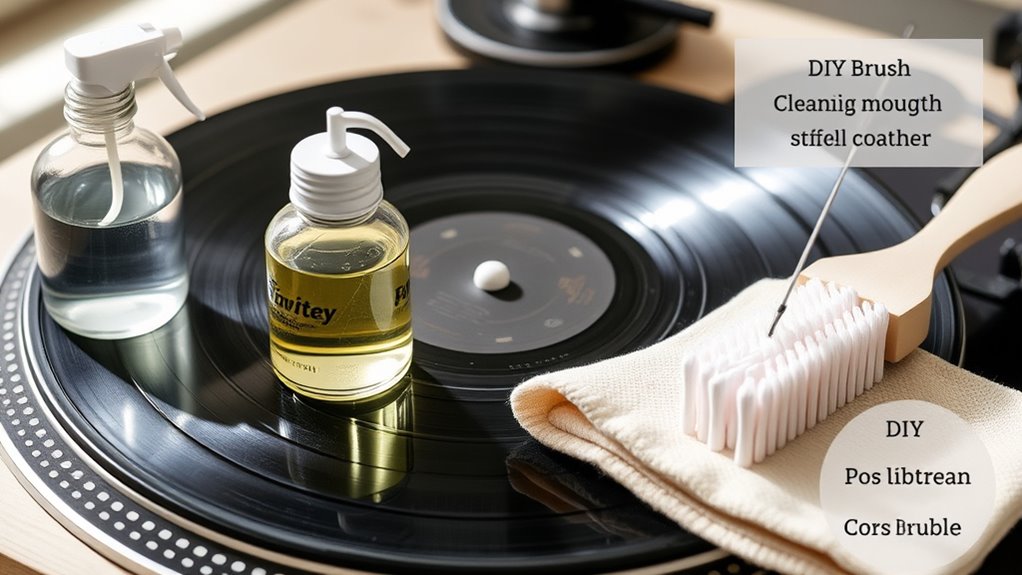

Using homemade record cleaning solutions can save you money and give you control over ingredients, like distilled water, alcohol, and dish soap. However, DIY methods might leave residues or damage your vinyl if not used carefully, risking warping or scratches. While suitable for light maintenance, they aren’t ideal for deep cleaning or heavily soiled records. To protect your collection and ensure the best results, it’s helpful to explore more trusted cleaning practices.
Key Takeaways
- DIY solutions are cost-effective and allow control over ingredients but may risk residue buildup and potential damage.
- Common household items like distilled water, soap, and alcohol are gentle but may be less effective than professional products.
- Excessive use of alcohol or soap can harm vinyl coatings, increasing the risk of warping or surface damage.
- Proper handling and drying are essential to prevent mold, mildew, or warping when using homemade cleaners.
- For heavily soiled records, professional cleaning solutions are more effective than simple household remedies.

Keeping your vinyl records clean is vital for preserving sound quality and extending their lifespan. When it comes to DIY record cleaning solutions, many enthusiasts turn to homemade methods, but it’s important to understand the pros and cons of these home techniques. Using record cleaning chemicals designed specifically for vinyl can be effective, but some DIY approaches rely on household items that might not be suitable for proper vinyl preservation techniques.
One of the biggest advantages of homemade cleaning solutions is their affordability. You can often create a cleaning mixture with common household items like distilled water, a small amount of isopropyl alcohol, and a gentle dish soap. These ingredients can help break down dirt and grime without spending a lot of money. Additionally, making your own cleaning solution allows you to control the ingredients, avoiding harsh chemicals that could damage your records over time. When you’re mindful about the vinyl preservation techniques you use, you minimize the risk of warping or scratches caused by abrasive substances.
Homemade solutions are affordable and allow controlled, gentle cleaning of your vinyl records.
However, there are notable downsides to DIY cleaning methods. Many household items aren’t formulated for vinyl and could leave behind residues that attract more dirt or cause deterioration. For instance, using too much alcohol or soap may strip away the protective coating or leave a film that impacts playback quality. Even simple solutions like water can introduce mold or mildew if not thoroughly dried, which can permanently damage the record surface. Furthermore, these home methods often lack the precision and effectiveness of professional or dedicated record cleaning chemicals, which are designed specifically to dissolve stubborn dirt and remove static without harming the vinyl.
Vinyl preservation techniques are vital here — using the right cleaning solutions and methods helps guarantee your records stay in prime condition. Proper cleaning involves gentle handling, using soft brushes or microfiber cloths, and avoiding excessive moisture. While homemade solutions can be useful for light cleaning or maintenance, they shouldn’t replace specialized record cleaning chemicals for deep cleaning or restoring heavily soiled records. It is also essential to consider the collaborative efforts of the vinyl community and trusted sources that develop safe and effective cleaning practices. If you’re serious about preserving your collection’s sound quality, investing in the right cleaning products and following recommended vinyl preservation techniques will serve you better than relying solely on household solutions.
Top picks for "record clean solution"
Open Amazon search results for this keyword.
As an affiliate, we earn on qualifying purchases.
Frequently Asked Questions
How Often Should I Clean My Vinyl Records at Home?
You should clean your vinyl records every 3 to 6 plays or whenever they appear dusty or dirty. Regular cleaning maintains sound quality and helps extend your records’ lifespan. Over-cleaning can damage the grooves, so use gentle methods. Keep an eye on how often you listen and the condition of your records, adjusting cleaning frequency accordingly. Proper care guarantees your vinyl collection stays in excellent shape longer.
Can Homemade Cleaners Damage My Record’s Grooves?
A stitch in time saves nine, so you want to keep your records safe. Homemade cleaners can damage your record’s grooves if they contain harsh chemicals or leave residue, risking record groove safety. Always rinse thoroughly to remove cleaning solution residue, and test your mixture on a small area first. Properly formulated solutions protect your vinyl and preserve sound quality, avoiding long-term damage.
Are There Any Safety Concerns With DIY Cleaning Solutions?
Yes, there are safety concerns with DIY cleaning solutions. You might encounter chemical hazards from ingredients like alcohol or household cleaners, which can cause skin or eye irritation. Always use proper ventilation to avoid inhaling fumes, and handle chemicals carefully. Wearing gloves and eye protection helps prevent accidents. If you’re unsure about ingredients, consider safer, commercially available options or thoroughly research each component to minimize risks.
What’s the Best Method to Dry Records After Cleaning?
You should gently air dry your records using a clean, lint-free microfiber cloth or soft, absorbent towels. Avoid using heat sources like blow dryers, which can damage the vinyl. Proper drying techniques involve patting the surface carefully without rubbing, ensuring no moisture remains that could cause warping or mold. Use clean cleaning tools and let the record dry in a dust-free environment for the best results.
How Do I Prevent Scratches During Home Cleaning?
To prevent scratches during home cleaning, always handle records gently and use soft, lint-free cloths or microfiber towels. Avoid abrasive cleaning tools that can cause record surface damage. Instead of traditional brushes, consider cleaning tool alternatives like carbon fiber brushes or sponge-based cleaners. Be sure to move in the direction of the grooves and avoid applying too much pressure, which helps maintain your record’s integrity and sound quality.
Conclusion
While DIY record cleaning methods can be a helpful tool in your vinyl journey, they’re like a delicate dance—requiring patience and care. Think of each cleaned record as a shining star, clearing the darkness of dust and grime. But remember, rushing or shortcuts can cloud your sky. Embrace the process, nurture your collection, and let your records sing true. Ultimately, your careful hands will turn each spin into a symphony of clarity.