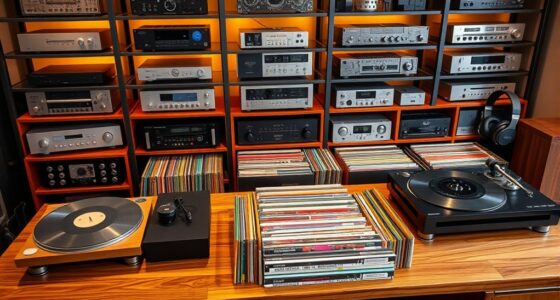
To clean and maintain your vinyl records like a pro, use high-quality, vinyl-specific cleaning solutions and gentle brushes or microfiber cloths to remove dust and dirt. Handle records by their edges, store them upright in protective sleeves, and keep your environment dust-free. Regularly deep clean with distilled water, inspect for damage, and maintain your turntable setup. Keep up with consistent care, and you’ll preserve sound quality—discover more tips to optimize your records’ longevity.
Key Takeaways
- Use high-quality, vinyl-specific cleaning solutions and microfiber cloths to gently remove dust and dirt without damaging the record surface.
- Handle records by edges and labels to prevent oils and dirt transfer, and store them vertically in protective sleeves.
- Regularly clean with anti-static brushes and cloths to reduce static buildup that attracts dust.
- Deep clean periodically with dedicated record cleaning solutions and consider record cleaning machines for thorough maintenance.
- Maintain a clean listening environment, properly calibrate equipment, and clean the stylus to preserve sound quality over time.
Gathering the Right Tools and Supplies
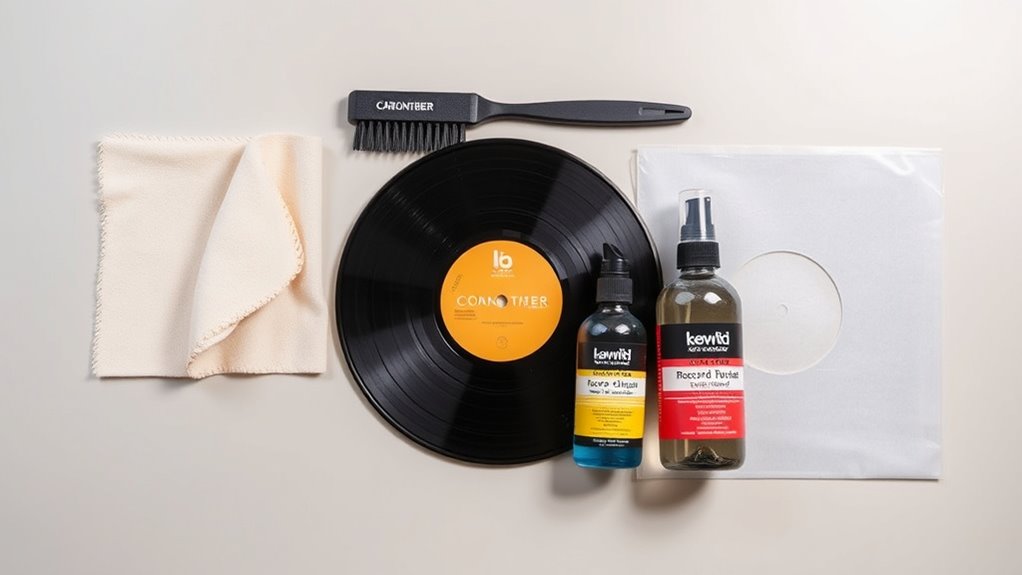
Before you begin cleaning your vinyl records, it is vital to gather the right tools and supplies. Start with high-quality record cleaning solutions designed specifically for vinyl, as they effectively remove dust and dirt without damaging the record’s surface. You’ll also need soft, lint-free cloths or microfiber pads to apply the solutions gently. Protect your records with sturdy, anti-static protective sleeves to prevent further dust accumulation after cleaning. These sleeves are indispensable for maintaining your vinyl’s condition over time. Avoid using household cleaners or abrasive materials that could scratch or degrade the vinyl. Having the proper cleaning solutions and protective sleeves on hand guarantees you can keep your records in top shape and enjoy maximum sound quality.
Proper Techniques for Removing Dust and Dirt
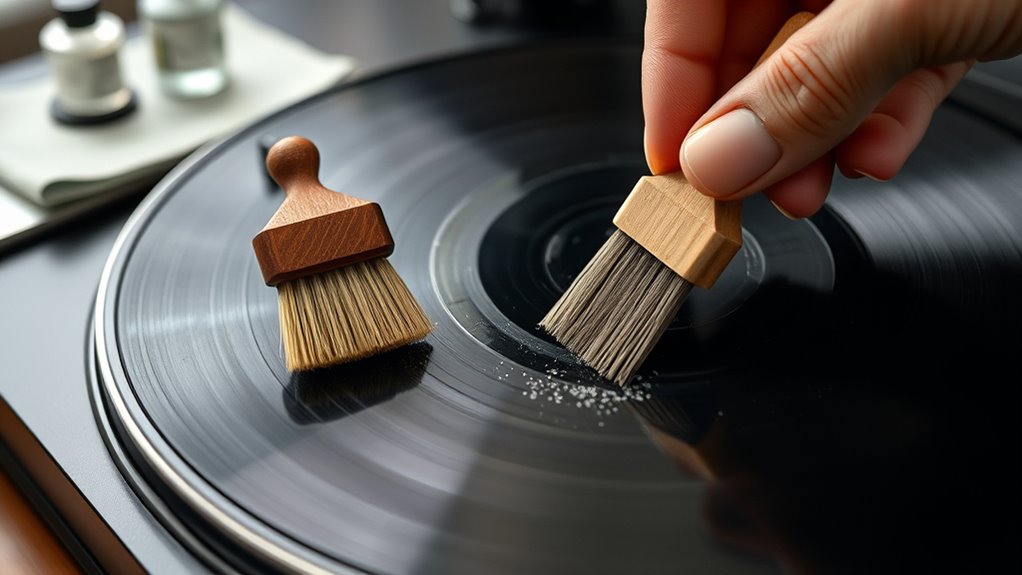
To effectively remove dust and dirt from your vinyl records, you need to use gentle, deliberate techniques that won’t damage the surface. Start with proper dust removal techniques, like using a carbon fiber brush or anti-static cloth. These tools help lift dust without scratching. When applying record cleaning solutions, spray lightly and wipe with a microfiber cloth, always moving in a circular motion. Avoid pressing too hard or using harsh chemicals. Here’s a quick guide:
| Tool | Technique | Tip |
|---|---|---|
| Carbon fiber brush | Lightly sweep in circular motions | Remove loose dust first |
| Microfiber cloth | Gently wipe with record cleaning solutions | Use minimal pressure |
| Anti-static cloth | Use to eliminate static buildup | Keep surface dust-free |
Regularly removing static from your records can help prevent dust accumulation and keep your playback quality high. Incorporating proper cleaning techniques is essential for maintaining the integrity of your records over time. Using an air purifier in your cleaning area can also reduce airborne dust that might settle on your records, enhancing their longevity. Maintaining a dust-free environment is also beneficial for preventing static buildup, which can attract more dust to your records and impact sound quality. Additionally, ensuring proper storage in anti-static sleeves further protects your records from dust and static, prolonging their lifespan. Consistent, careful dust removal preserves your records’ sound quality.
Deep Cleaning Your Vinyl Records Effectively

Deep cleaning your vinyl records is essential for restoring sound quality and prolonging their lifespan. To do this effectively, use specialized record cleaning solutions designed to break down stubborn dirt and grime without damaging the record label preservation. Apply the solution sparingly with a microfiber cloth or a dedicated cleaning brush, working gently in circular motions. Avoid harsh chemicals or excessive moisture that could seep into the label area and cause damage. For thorough cleaning, consider using a record cleaning machine if you have one, as it provides deep, even coverage. After cleaning, rinse with distilled water and dry with a clean, lint-free cloth. Regular deep cleaning keeps your records sounding clear and prevents buildup that can affect playback. Additionally, maintaining a consistent lifestyle can help prevent dust and debris from settling on your records, ensuring they stay in optimal condition. Proper storage practices, such as keeping records upright and in protective sleeves, are also crucial for preventing warping and dust accumulation, further preserving their quality and lifespan. Incorporating proper handling techniques can also reduce the risk of scratches and fingerprints, maintaining the pristine condition of your vinyl. Ensuring your environment stays clean and dust-free is a vital part of record maintenance for long-term preservation.
Handling and Storage Tips to Prevent Damage
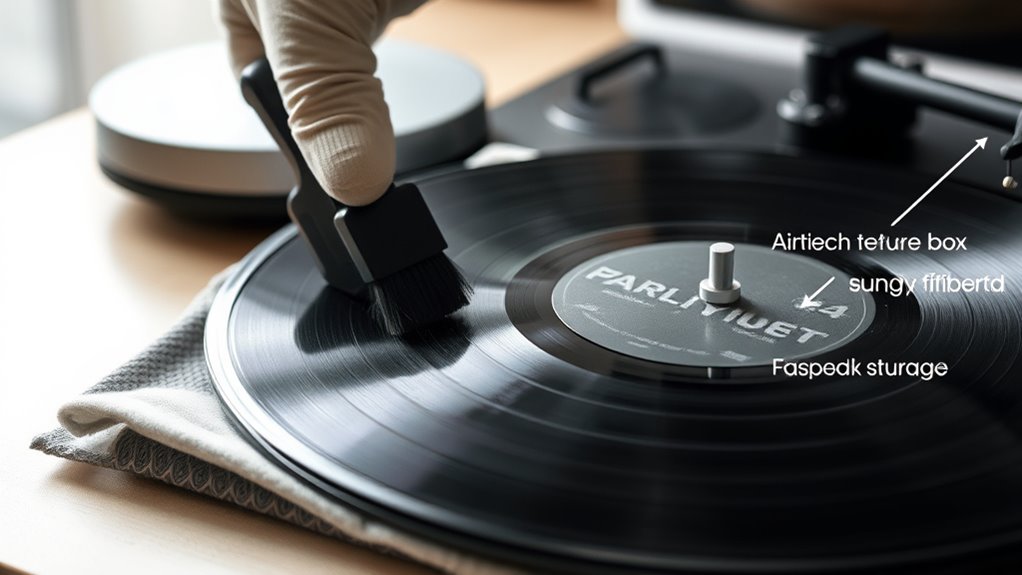
Handling and storage tips to prevent damage
Proper handling and storage are key to keeping your vinyl records in top condition after cleaning. Handling hazards, like touching the grooves with your fingers, can transfer oils and dirt that cause long-term damage. Always hold records by the edges and label to avoid unnecessary contact with the playing surface. When storing, use sturdy, anti-static inner sleeves and keep records upright in a well-ventilated, cool, and dry environment. Avoid stacking records flat or exposing them to direct sunlight, extreme temperatures, or humidity, which can warp or degrade the vinyl. Implementing proper storage solutions, like dedicated record racks or shelves, minimizes the risk of warping or scratches. Regularly inspect your collection to identify and address any potential handling hazards or storage issues before they cause harm. Using best modern toilet storage techniques can also help prevent moisture buildup and other environmental damage. Additionally, choosing appropriate storage materials that are acid-free and non-abrasive further protects your collection over time. For added protection, consider applying anti-static record sleeves that help reduce dust and static buildup, prolonging the life of your records. Incorporating climate control measures in your storage space can help maintain optimal conditions for your vinyl collection. Proper environmental monitoring can further ensure that temperature and humidity levels remain within safe ranges for long-term preservation.
Regular Maintenance to Keep Your Records in Prime Condition

Regular maintenance is essential for keeping your vinyl records sounding their best over time. Consistently using quality record cleaning solutions helps remove dust and static, preventing unwanted noise during playback. Make it a habit to lightly clean your records after every few listens, ensuring dirt doesn’t settle into the grooves. Proper record sleeve preservation is also crucial; store your records in protective sleeves to shield them from dust and scratches. Avoid exposing them to direct sunlight or temperature fluctuations, which can warp or degrade the vinyl. Regularly inspect your collection for signs of wear or damage, addressing issues early. Additionally, understanding the importance of static reduction techniques can help minimize crackling noises during playback. Using a grounding method can also help reduce static buildup, further enhancing sound quality. Keeping your records in a clean environment prolongs the life of your records and keeps your listening experience crisp and clear. Incorporating air purifiers into your listening space can help maintain a dust-free environment, ensuring your records stay cleaner longer. Implementing these practices aligns with AI safety principles of maintaining reliable and high-quality systems, ensuring your listening setup remains effective over time.
Frequently Asked Questions
How Often Should I Professionally Restore Vintage Vinyl Records?
You should consider professional restoration services for vintage vinyl records every 10 to 15 years, depending on usage and storage conditions. Restoration frequency varies based on how often you play or handle your records, but regular inspections can help identify damage early. If your records show significant scratches, warping, or persistent noise, it’s time to seek professional help to preserve their sound quality and value.
What Are Eco-Friendly Cleaning Options for Vinyl Records?
You can choose eco-friendly solutions like biodegradable cleaners for your vinyl records. These products are gentle on the environment and safe for your records, reducing chemical buildup. Use a soft, lint-free cloth with a small amount of biodegradable cleaner to wipe the surface carefully. Avoid harsh chemicals, and consider natural options like distilled water or vinegar mixed with water for a safe, effective clean.
Can Cleaning Damage the Record’s Sound Quality?
Cleaning can cause complications if you aren’t careful. If you use improper cleaning tools or harsh chemicals, you risk damaging the record surface, which can negatively impact sound quality. Gentle handling and proper tools—such as soft brushes and record-specific cleaners—are key. When you’re cautious, cleaning enhances sound clarity rather than causing harm, helping you preserve pristine playback and prolong your vinyl’s life without risking damage.
How Do I Identify and Repair Minor Scratches?
You can identify minor scratches through careful record surface inspection, looking for visible marks or lines. To repair them, try gentle scratch repair techniques like applying a small amount of specialized vinyl polish or using a scratch repair kit designed for records. Always clean the record beforehand, and test any repair method on a small area first to prevent further damage. This helps restore sound quality and prolongs your record’s lifespan.
What Are the Signs of a Record Needing Replacement?
Think of your record as a storybook; when pages start to tear or fade, it’s time for a replacement. Signs of record deterioration include persistent playback issues like skips, crackles, or loss of clarity. If cleaning doesn’t fix these issues and the sound quality remains compromised, your vinyl has likely reached its end. Don’t hold onto a worn record; replacing it preserves your listening experience and keeps your collection vibrant.
Conclusion
By regularly caring for your vinyl records, you keep them sounding fresh and looking pristine. Think of your collection as a delicate garden—gentle hands and consistent attention nurture its beauty. Neglect, on the other hand, is like letting weeds take over, causing damage and loss of quality. With the right tools and techniques, you’ll transform your records from dusty relics into vibrant, timeless treasures that bring your music to life, record after record.