Yes, cable quality really matters when it comes to audio. Poor-quality cables can cause signal interference, static, and reduced clarity, while high-quality ones have better shielding and insulation to protect against external noise. Durability also varies with material strength, reducing the need for replacements over time. While expensive isn’t always necessary, selecting cables with proper shielding and length guarantees better sound. To uncover some common myths and what truly affects your audio, keep exploring further.
Key Takeaways
- High-quality cables provide better shielding, reducing interference and static, thus improving audio clarity.
- Durable materials and reinforced connectors extend cable lifespan and maintain consistent signal transmission over time.
- Proper cable length and shielding balance optimize signal integrity, especially for longer runs.
- Not all expensive cables are necessary; effective shielding and construction matter more than price.
- Well-made cables deliver cleaner, more accurate sound, debunking the myth that cost equals quality.
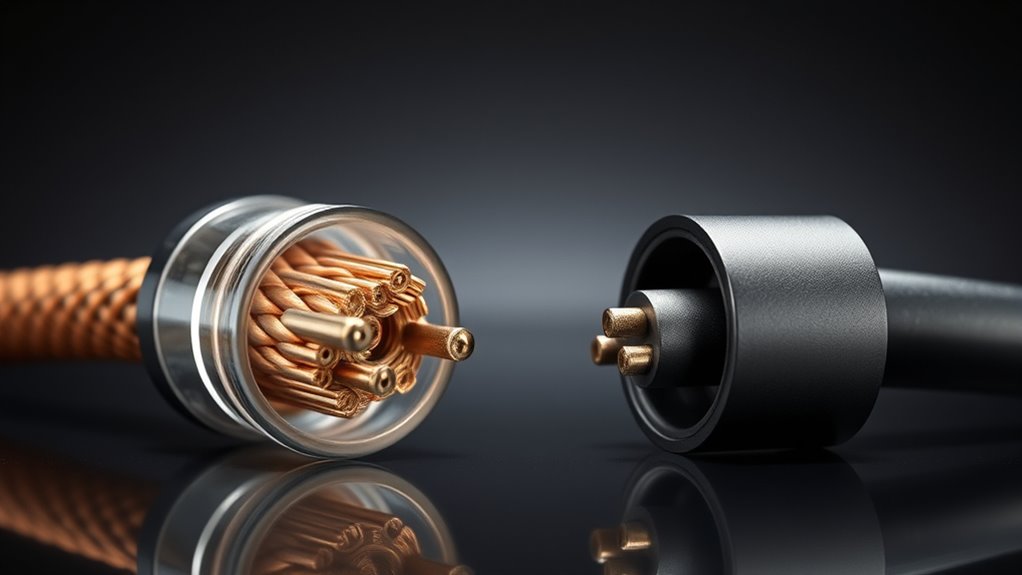
In today’s connected world, the quality of your cables can make a significant difference in performance and reliability. When it comes to audio cables, many believe that spending extra money guarantees better sound. But before you invest in the most expensive options, it’s essential to understand why cable quality matters. Poor-quality cables often lead to signal interference, which can distort audio and reduce clarity. Cheap cables tend to have inferior shielding, making them more vulnerable to external electromagnetic interference. This interference introduces noise and static into your audio signals, diminishing sound quality. High-quality cables, on the other hand, incorporate better shielding and insulation, protecting your audio from these disruptions. The result is a cleaner, more accurate sound reproduction that enhances your listening experience. Additionally, choosing cables with innovative shielding technologies can further reduce susceptibility to external interference, ensuring consistently clear audio. Durability concerns are another vital factor when choosing cables. Low-grade cables are usually made with cheaper materials that wear out quickly, especially with frequent use or movement. They might develop internal breaks, cause intermittent connections, or become completely unusable after some time. This lack of durability can lead to frustrating troubleshooting and additional replacement costs. Conversely, well-made cables use sturdier connectors and reinforced jackets that withstand bending, twisting, and daily wear and tear. Investing in quality cables means fewer replacements and less worry about sudden failures during critical moments, like live performances or important recordings.
You might wonder if all cables are created equal, and the truth is, not necessarily. While premium cables often boast better shielding and construction, it doesn’t mean you need to buy the most expensive option for everyday use. The key is to find a good balance—select cables that offer sufficient protection against signal interference and are built to last without overpaying. It’s also worth noting that the length of the cable can influence signal quality; longer cables are more prone to interference and signal loss, so choosing the right length and quality is essential for ideal performance.

Primeda Auidophile 2RCA Male to 2RCA Male Stereo Audio Cable,Gold Plated | 4N Oxgen-Free Copper Core (3 Feet (1M))
Heavy Duty, Strong and Rugged Cable, Low-frequency vigorous and thick, IF is sweet, high-frequency resolution of first-class.
As an affiliate, we earn on qualifying purchases.
As an affiliate, we earn on qualifying purchases.
Frequently Asked Questions
Can Cheap Cables Damage My Audio Equipment?
Cheap cables generally won’t damage your audio equipment because their cable durability usually isn’t enough to cause harm. However, poor quality cables may lead to connection issues or signal loss over time. Remember, branding influence can sometimes make cheap cables seem better than they are, but sticking to reputable brands guarantees your gear stays safe and performs well. Investing in quality cables provides peace of mind and reliable performance.
Do Expensive Cables Improve Sound in a Home Theater System?
Expensive cables often promise a richer, more immersive sound experience, but the truth is, the difference is subtle. You might notice slight nuances, yet the gap between cost vs. quality isn’t always clear-cut. Trusted brand reputation can guarantee consistent performance, but it doesn’t guarantee a dramatic upgrade. Ultimately, focus on well-made, properly rated cables within your budget to enjoy your home theater without overspending.
Are There Specific Materials That Genuinely Enhance Audio Quality?
Yes, specific materials can genuinely improve audio quality. You’ll want cables with excellent cable shielding, which reduces interference and noise, and high conductor purity, like oxygen-free copper or silver, to guarantee clearer sound transmission. These materials minimize signal loss and distortion. While premium materials help, remember that proper shielding and conductor quality are more impactful than just expensive price tags, so choose cables designed with these features for better audio performance.
How Do I Choose the Right Cable for My Setup?
To select the right cable, focus on connector durability and cable shielding. You want connectors that withstand frequent plugging and unplugging without damage, guaranteeing longevity. Good cable shielding minimizes interference, giving you clearer sound. Match the cable type to your setup—like balanced or coaxial—and consider the quality of materials. Prioritize durability and shielding to ensure reliable performance and great audio quality in your system.
Is There a Difference Between Digital and Analog Cable Quality?
Yes, there’s a difference between digital and analog cable quality. Digital signals rely on precise data transmission, so good cable shielding minimizes interference, ensuring clear sound or picture. Poor shielding can cause data loss or errors. Analog cables, on the other hand, are more susceptible to noise and signal degradation. Investing in well-shielded digital cables helps maintain peak performance, while quality analog cables reduce unwanted hum or static.

DUKABEL Top Series Audio Cable 8 Feet (2.4 Meters) – Shielded Aux Cable Cord 3.5mm Male to Male Stereo Auxiliary Cable Cord/Crystal-Nylon Braided / 24K Gold Plated / 99.99% 4N OFC Conductor
DUKABEL 3.5mm stereo cord.
As an affiliate, we earn on qualifying purchases.
As an affiliate, we earn on qualifying purchases.
Conclusion
So, next time you pick out an audio cable, remember it’s not a magic wand transforming sound but a trusty bridge connecting you to your music. Don’t get caught in the web of myths—your ears and wallet will thank you. Think of cable quality as the steady heartbeat behind every note, not a secret spell. When you choose wisely, you’re tuning into clarity and connection, turning your listening experience into a symphony worth savoring.

Syncwire 3.5mm Nylon Braided Aux Cable (3.3ft/1m,Hi-Fi Sound), Audio Auxiliary Input Adapter Male to Male Cord for Headphones, Car, Home Stereos, Speaker, iPhone, iPad, iPod, Echo & More – Black
Universal Compatibility: Perfectly compatible with any devices with a 3. 5mm aux port. Such as Apple iPhone, iPod,…
As an affiliate, we earn on qualifying purchases.
As an affiliate, we earn on qualifying purchases.
![VIOY Headphone Extension Cable 20 FT,[Copper Shell, Hi-Fi Sound] 3.5 mm Male to Female Stereo Audio Cable Nylon Braided Aux Cord for Smartphones, Tablets, Media Player](https://m.media-amazon.com/images/I/51eIYs9RT6L._SL500_.jpg)
VIOY Headphone Extension Cable 20 FT,[Copper Shell, Hi-Fi Sound] 3.5 mm Male to Female Stereo Audio Cable Nylon Braided Aux Cord for Smartphones, Tablets, Media Player
[Widely Usages:] VIOY headphone extension cable can be easily extends the use area because of the short of…
As an affiliate, we earn on qualifying purchases.
As an affiliate, we earn on qualifying purchases.