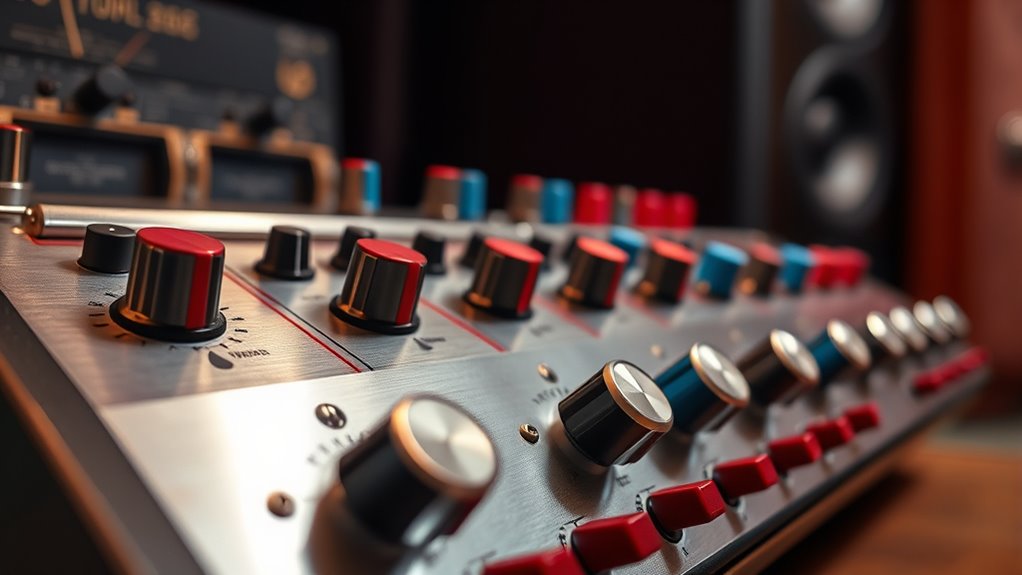

If you’re working with audio, analog equalizers and tone controls still offer a unique tactile experience and sonic character that digital models often can’t match. They give you immediate, hands-on control and add warmth, character, and subtle nonlinearities that can enhance your sound. While digital tools are versatile and precise, mixing with analog gear can inspire creativity and evoke a distinct tone. Keep exploring to discover how these tools can fit into your setup.
Key Takeaways
- Analog equalizers provide unique tonal character and tactile control valued in critical sound shaping.
- Digital models offer precision and flexibility but lack the immediate physical feedback of hardware.
- Combining both allows leveraging the warmth of analog and the versatility of digital tools.
- Analog gear still excels in adding warmth, subtle nonlinearities, and sonic signature.
- Choice depends on workflow preferences, sonic goals, and whether tactile control or digital precision is prioritized.
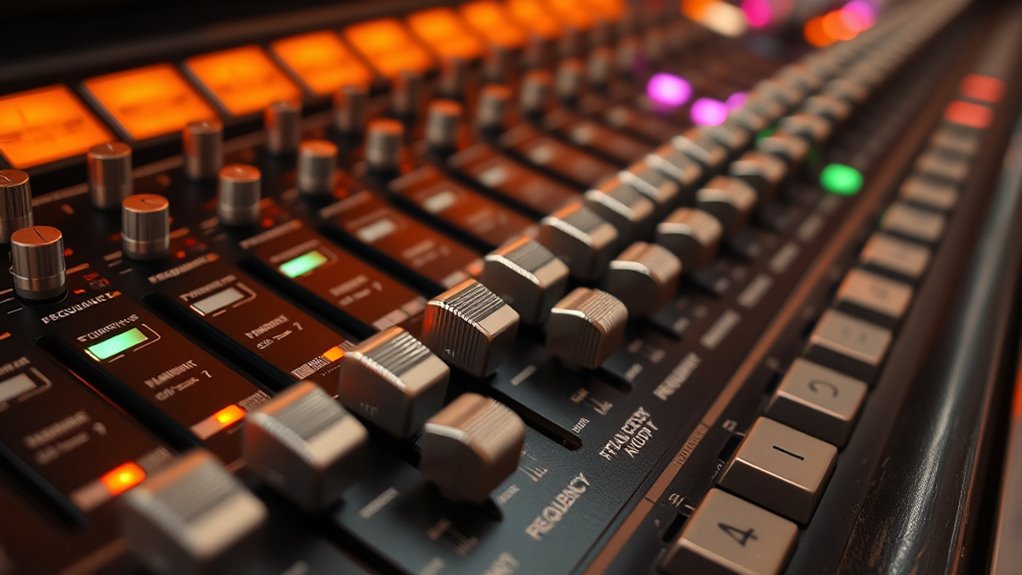
Analog equalizers and tone controls are essential tools for shaping sound and tailoring audio signals to your preferences or specific environments. They’ve been a staple in music production, live sound, and recording for decades, offering a hands-on, tactile way to sculpt your audio. But in today’s digital age, many wonder if they’re still necessary, especially with the rise of digital modeling and software plugins. The truth is, they each serve unique purposes, and understanding their roles can help you decide what’s best for your setup.
Digital modeling has revolutionized the way we approach sound design. Software plugins now emulate the behavior of classic analog equalizers and tone controls with impressive accuracy. These plugins allow you to tweak your sound digitally, often with more precision and flexibility than traditional hardware. They’re convenient, cost-effective, and easy to integrate into digital audio workstations. However, despite their sophistication, they lack the tactile experience of adjusting physical controls. Many engineers and musicians still prefer the direct, immediate feedback of analog gear, especially during live performances or when making nuanced adjustments. The physical movement of knobs can also provide a more intuitive sense of how your changes impact the sound, which isn’t always as perceptible with virtual controls.
Digital plugins emulate analog tone controls but lack tactile feedback and physical intuition.
While software plugins excel in versatility and accessibility, analog equalizers offer qualities that digital models can’t fully replicate. The warmth, character, and subtle nonlinearities of analog circuitry impart a unique sonic signature that many audio professionals find irreplaceable. For example, the gentle saturation and natural compression that come from analog components can add a richness to your sound that’s difficult to achieve with digital emulations. Furthermore, some producers and artists value the hands-on experience of working with hardware, finding it more inspiring or creatively engaging than clicking through endless plugin parameters. Additionally, high-quality analog gear often has a distinct tonal coloration that many find desirable in their recordings.
That said, there’s no need to choose one over the other. Many studios and live setups incorporate both, leveraging the strengths of each. You might use digital modeling and software plugins during mixing for convenience and recallability, while relying on analog equipment during recording or critical sound shaping moments. Ultimately, it’s about your workflow, preferences, and the sonic qualities you desire. Both analog equalizers and modern digital tools have their place, and understanding their interplay can help you craft a more versatile and inspiring audio environment. Whether you lean toward the tactile feel of hardware or the flexibility of digital models, the goal remains the same: creating the best possible sound.
Frequently Asked Questions
Can Digital Equalizers Completely Replace Analog Ones?
Digital equalizers can come close, but they often lack the vintage warmth and sonic character unique to analog ones. You might find that analog gear adds a pleasing, organic feel to your sound, which digital tools sometimes miss. While digital options are more versatile and precise, if you value that classic, warm tone and rich character, you’ll still appreciate the subtle nuances that only analog equalizers provide.
Are Analog Tone Controls More Durable Than Digital Ones?
Analog tone controls are generally more durable than digital ones because they offer vintage warmth and tactile control that withstands wear and tear. You can rely on their sturdy build, their simple mechanics, and their ability to handle continuous use without losing quality. They provide lasting performance, resist digital glitches, and give you a hands-on experience that’s both reliable and satisfying—making them a durable choice for your audio setup.
How Do Analog Equalizers Impact Audio Latency?
Analog equalizers have minimal impact on audio latency because they process signals in real time through physical circuitry, unlike digital systems that rely on audio signal processing which can introduce slight delays. This means you experience faster, more immediate control, making them ideal for live performances or situations where latency reduction is vital. Their direct signal path ensures your audio remains responsive and accurate without noticeable lag.
Can I Use Analog Tone Controls With Digital Audio Interfaces?
Yes, you can use analog tone controls with digital audio interfaces. You simply connect your interface to a vintage-style equalizer or tone control unit, allowing you to add warmth, character, and user-preferred tonal adjustments. This setup combines digital clarity with analog richness, giving you a versatile sound. Whether you seek vintage warmth or modern precision, integrating analog tone controls enhances your audio experience, making your sound more expressive and personalized.
Do Analog Equalizers Require Regular Maintenance or Calibration?
Yes, analog equalizers do require regular maintenance and calibration. You should perform routine maintenance routines like cleaning contacts and checking for dust buildup to guarantee peak performance. Additionally, calibration procedures help keep the circuitry accurate, maintaining the desired sound quality. Regular upkeep is essential, especially if you notice changes in tone or signal levels, so you’ll want to stay on top of these tasks to keep your equipment functioning properly.
Conclusion
Even in this digital age, analog equalizers and tone controls are like trusted old friends guiding your sound journey. They add character and warmth, painting your music with a painter’s touch. While technology evolves, these timeless tools remain your emotional palette, allowing you to craft a sonic masterpiece. Embrace them, and let your music be a vibrant, heartfelt expression—an echo of your soul’s true tone that digital alone can’t quite capture.