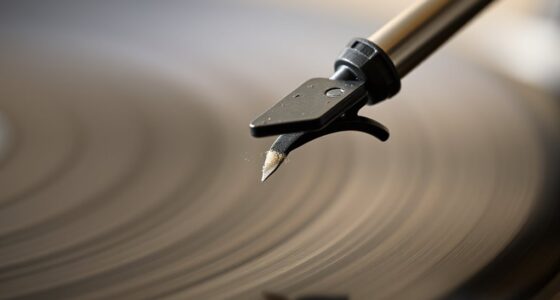
While 180-gram vinyl records are marketed as offering better sound quality, weight alone doesn’t guarantee improved audio. The key factors are manufacturing quality and pressing standards. Heavier records can be more durable and resist warping, but poorly pressed heavier vinyl may produce surface noise or tracking issues. To truly find better sound, focus on the quality of the pressing, materials, and overall craftsmanship. Exploring these aspects reveals what truly influences your listening experience.
Key Takeaways
- Heavier 180-gram vinyl is often more durable and less prone to warping, which can improve playback stability.
- Sound quality depends more on manufacturing quality and pressing standards than just the record’s weight.
- Well-made lighter records can outperform poorly pressed heavier ones in audio fidelity.
- Weight alone is not a reliable indicator of better sound; materials and pressing precision are crucial.
- Prioritize records from reputable manufacturers and check for adherence to quality standards for optimal listening.
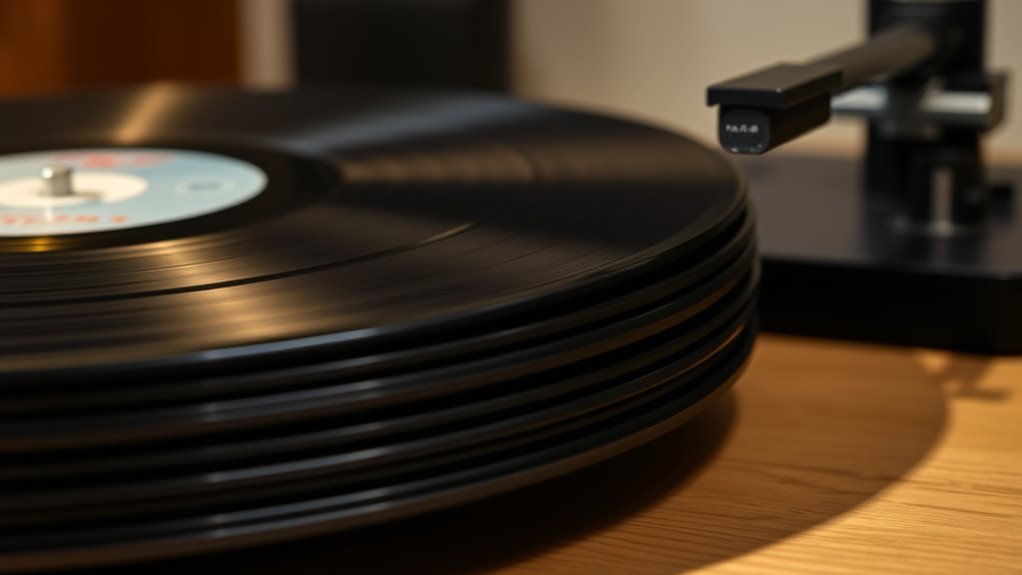
180-gram vinyl records have become a favorite among audiophiles for their durability and superior sound quality. Many believe that the heavier weight provides a richer listening experience, but there’s more to the story than just the number on the package. The vinyl weight controversy has sparked debates about whether heavier records truly deliver better sound, or if the difference is more about perception than reality. Some enthusiasts argue that a denser record minimizes vibrations and reduces warping over time, leading to a more consistent playback. However, others point out that weight alone isn’t a reliable indicator of quality, and that manufacturing quality standards play a pivotal role in the final product.
When considering heavier vinyl, you’re often told that thicker records resist warping and improve sound fidelity. This makes sense in theory, but it can be misleading if the manufacturing process isn’t up to par. Not all 180-gram records are created equal; some are pressed with high standards, ensuring smooth, clean surfaces that enhance audio clarity. Others might be heavier simply because of subpar pressing techniques or inconsistent materials, which can introduce surface noise or tracking issues. This is where manufacturing quality standards come into play. A well-made, heavier record that adheres to strict standards will outperform a thinner, poorly pressed one in terms of durability and sound quality.
It’s tempting to think that more weight automatically equals better sound, but what really matters is the precision of the pressing and the quality of the vinyl used. Records made with high-quality raw materials and strict manufacturing protocols will deliver a cleaner, more detailed sound regardless of weight. Conversely, if the production process is rushed or substandard, even a 180-gram record might sound mediocre. So, while the heavier vinyl can offer benefits, it’s not a guarantee of sonic excellence.
Ultimately, your choice should focus on the reputation of the pressing plant and its adherence to manufacturing quality standards. Don’t be swayed solely by the weight label. Instead, listen for clarity, minimal surface noise, and overall fidelity. Remember, a lighter record pressed with care can outperform a heavier one pressed poorly. Comparing different records from reputable sources will give you a better sense of what truly affects sound quality. In the end, weight is just one piece of the puzzle—quality pressing, materials, and your personal listening experience matter far more than the number on the sleeve. Recognizing the importance of manufacturing quality standards can help you make more informed choices.
Top picks for "vinyl gram record"
Open Amazon search results for this keyword.
As an affiliate, we earn on qualifying purchases.
Frequently Asked Questions
Do 180-Gram Records Last Longer Than Standard Vinyl?
Yes, 180-gram records tend to last longer than standard vinyl because their increased weight enhances vinyl durability and record longevity. You’ll find they’re less prone to warping and surface wear, making them a better investment for frequent listening. Keep in mind, proper storage and handling are also essential, but overall, heavier vinyl offers improved durability, ensuring your records stay in great shape for years to come.
Are Heavier Vinyl Records More Prone to Warping?
Heavier vinyl records can be more prone to warping because the increased weight impacts how they respond to heat and pressure. While the added weight might seem beneficial for stability, it can actually make vinyl warping more likely if not stored properly. To prevent warping, handle heavier records carefully, keep them away from heat sources, and store them upright. Proper maintenance helps make sure your heavier vinyl stays in great shape.
Is There a Significant Cost Difference Between 180-Gram and Lighter Records?
You’ll notice that 180-gram vinyl records tend to cost more due to higher manufacturing costs. The increased weight requires more material and often more durable pressing processes, which drive up pricing differences. While the premium might be worth it for better durability or sound quality, be prepared for a higher price tag compared to lighter records. So, if budget is a concern, lighter vinyl could be a more economical choice.
How Much Does Weight Influence Playback Fidelity?
You’ll find that weight influences playback fidelity, with heavier vinyl often offering better sound quality. Studies show that 180-gram records reduce vibrations and minimize warping, leading to clearer audio. This is because production methods for heavier vinyl involve more precise pressing techniques, ensuring consistent quality. So, the extra weight isn’t just about durability; it enhances vinyl quality by providing a stable platform for accurate sound reproduction.
Can 180-Gram Vinyl Records Be Played on Any Turntable?
Yes, you can play 180-gram vinyl records on most turntables, but you should verify turntable compatibility and weight limitations first. Many modern turntables support heavier records, but some older models might struggle with the extra weight. Make certain your turntable’s tonearm and platter can handle the increased mass without affecting playback quality. When in doubt, consult your turntable’s manual or manufacturer to avoid potential damage.
Conclusion
So, does heavier vinyl truly deliver better sound? The truth isn’t clear-cut, and you might find yourself questioning if those extra grams are worth it. As you explore, remember that quality isn’t just about weight—it’s about the entire listening experience. But one thing’s certain: as you dive deeper, you’ll discover there’s more to vinyl than meets the ear. And sometimes, the real magic lies just beneath the surface, waiting to be uncovered.