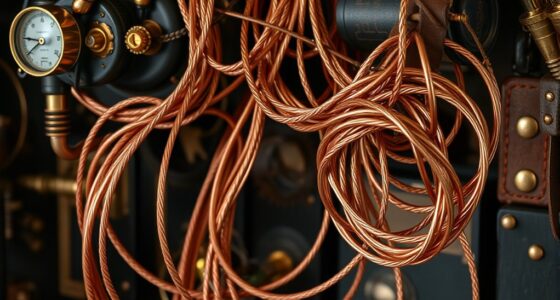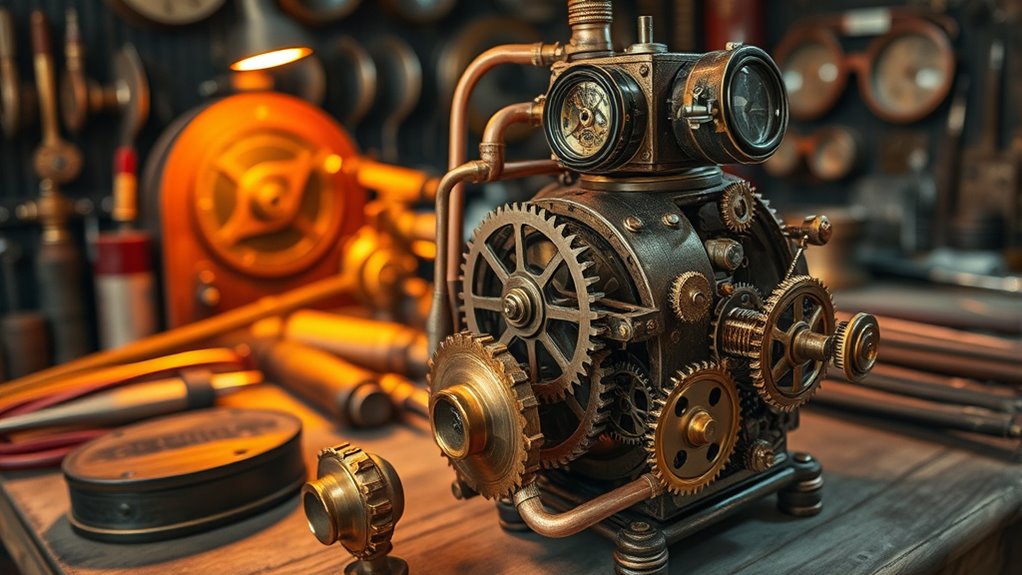

Steampunk plays a key role in DIY maker culture by inspiring you to blend Victorian aesthetics with craft skills. It encourages resourcefulness through scavenging vintage parts and repurposing everyday objects into unique art and functional items. With an emphasis on craftsmanship, innovation, and experimentation, steampunk fosters a hands-on, creative spirit. If you keep exploring, you’ll discover how this fusion of nostalgia and ingenuity can fuel your own projects and passions.
Key Takeaways
- Steampunk fosters a DIY ethos by encouraging reimagining vintage parts into functional and artistic creations.
- It inspires resourcefulness through scavenging and repurposing materials from thrift stores and hardware shops.
- The aesthetic emphasizes craftsmanship, allowing makers to showcase skill in blending Victorian design with modern innovation.
- Steampunk promotes experimentation with diverse mechanisms and materials, driving creative boundaries in maker projects.
- It strengthens community bonds by sharing techniques, fostering a culture of innovation, nostalgia, and hands-on craftsmanship.

Have you ever wondered how a vintage aesthetic and creative craftsmanship come together to form a vibrant subculture? Steampunk does exactly that by blending Victorian aesthetics with inventive craftsmanship, creating a unique world where the old meets the new. This movement draws heavily on the elegance and intricate details of 19th-century design, emphasizing ornate gears, brass fittings, and vintage textiles. As a DIY maker, you’re encouraged to embrace these elements, transforming everyday objects into extraordinary works of art that evoke a bygone era. The Victorian influence doesn’t just add visual appeal; it imbues your projects with a sense of history and craftsmanship that’s both nostalgic and innovative. Additionally, steampunk often employs free-floating design principles, allowing for more creative freedom and innovation in your projects.
What makes steampunk particularly enthralling for DIY enthusiasts is its emphasis on inventive craftsmanship. You’re encouraged to tinker, repurpose, and customize your creations, blending technology with artistry. Whether you’re building steampunk jewelry, costume accessories, or functional gadgets, the focus is on craftsmanship that showcases your skill and imagination. You’ll often find yourself scavenging thrift stores, hardware shops, and online markets for vintage parts—gears, cogs, clock faces—that serve as the foundation for your projects. This process isn’t just about aesthetics; it’s about reimagining how objects can be used and how they can tell stories from a different era.
Steampunk’s DIY ethos champions resourcefulness and innovation. You might start with a simple idea—a brass clock or a leather-bound journal—and, through inventive craftsmanship, turn it into something truly unique. The movement encourages experimentation, pushing you to combine different materials, mechanisms, and decorative elements to craft items that are both functional and visually enthralling. This hands-on approach fosters a deep sense of satisfaction when you see your ideas come to life, reflecting your creativity and technical skill.
Frequently Asked Questions
How Does Steampunk Influence Modern DIY Technology Projects?
Steampunk influences your modern DIY technology projects by providing a rich history influence and artistic inspiration. You often incorporate vintage aesthetics, intricate gears, and retro-futuristic designs that reflect steampunk’s unique style. This inspiration encourages you to experiment creatively, blending old-fashioned craftsmanship with new tech. As a result, your projects stand out, showcasing innovation infused with historical charm, making your DIY creations both functional and visually enthralling.
What Materials Are Commonly Used in Steampunk-Inspired DIY Creations?
Think of your steampunk project as a treasure chest, overflowing with antique brass fittings and vintage clockwork gears. You often use these materials to craft intricate gadgets and accessories, giving your creations that authentic, retro-futuristic vibe. Besides brass and clockwork, you might include leather, copper pipes, and glass, all working together like a well-oiled machine, transforming everyday items into extraordinary steampunk-inspired masterpieces.
How Can Beginners Start Creating Steampunk Accessories or Gadgets?
To start creating steampunk accessories or gadgets, you should focus on vintage design elements and recycling techniques. Gather materials like old clock parts, gears, and metal scraps, then repurpose them creatively. Follow tutorials online to learn basic assembly and embellishing skills. Experiment with different textures and finishes, and don’t be afraid to mix new with vintage items. With patience and creativity, you’ll craft unique steampunk pieces that reflect your style.
Are There Specific Safety Considerations in Steampunk DIY Projects?
When working on steampunk DIY projects, you should prioritize safety by avoiding hazardous chemicals and ensuring electrical safety. Always read labels and use protective gear when handling chemicals, and work in well-ventilated areas. For electrical components, double-check connections, use insulated tools, and follow proper wiring procedures. These precautions help prevent accidents, making your steampunk creations safe and enjoyable to build.
How Does Steampunk Aesthetics Impact Sustainable Maker Practices?
Steampunk aesthetics encourage sustainable maker practices by promoting upcycling fashion and repurposing vintage technology. You’re inspired to reuse old materials, giving them new life instead of buying new. This approach reduces waste and minimizes environmental impact. By blending Victorian-inspired design with innovative reuse, you create unique pieces that reflect your creativity while supporting eco-friendly habits within the maker community.
Conclusion
As you embrace steampunk within the DIY maker culture, remember you’re channeling a spirit reminiscent of Da Vinci’s inventive genius and the rebellious passion of Victorian pioneers. Like them, you blend imagination with craftsmanship, forging a future rooted in the past. Your creations become more than objects—they’re stories, echoes of an era that dared to dream beyond convention. Keep forging ahead, for in your hands, history and innovation intertwine, shaping a world of boundless possibilities.