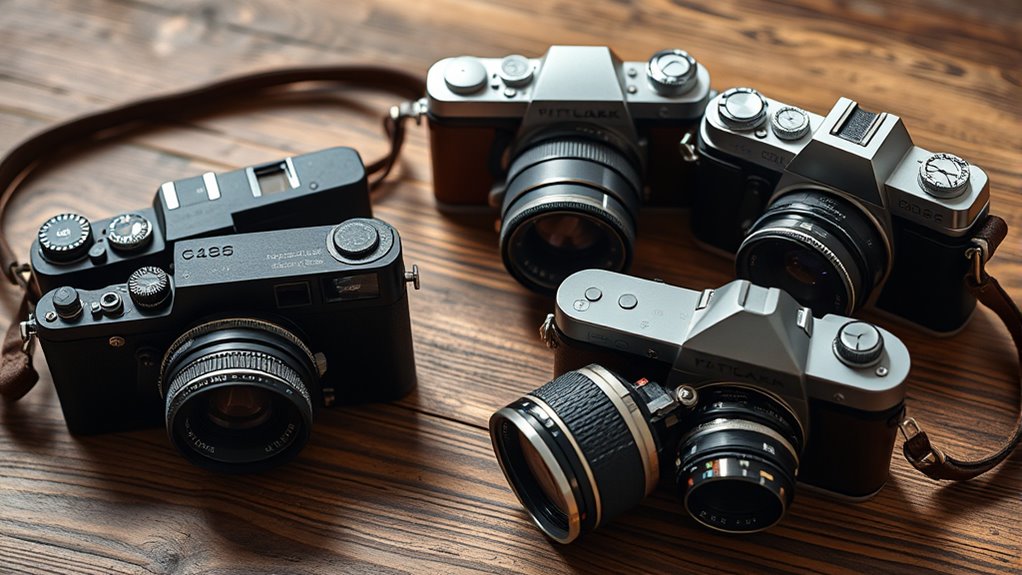

Vintage cameras come in several classic types, each offering a unique look and feel to your photos. Rangefinders like Leica are compact and quick to focus, perfect for street shots. SLRs such as Nikon F provide versatility with interchangeable lenses, ideal for varied scenes. TLRs like Rolleiflex feature waist-level viewing and produce rich detail. Choosing the right camera depends on your style and the mood you want to create—exploring these options reveal more creative possibilities.
Key Takeaways
- Classic cameras include rangefinders, SLRs, and TLRs, each with unique features and shooting styles.
- Rangefinders (e.g., Leica) are compact, fast, and ideal for street and candid photography.
- SLRs (e.g., Nikon F, Canon AE-1) offer interchangeable lenses and through-the-lens viewing for versatility.
- TLRs (e.g., Rolleiflex) feature waist-level viewfinders and produce distinctive square-format images.
- Choosing the right camera depends on your style, preferred scenes, and desired aesthetic results.
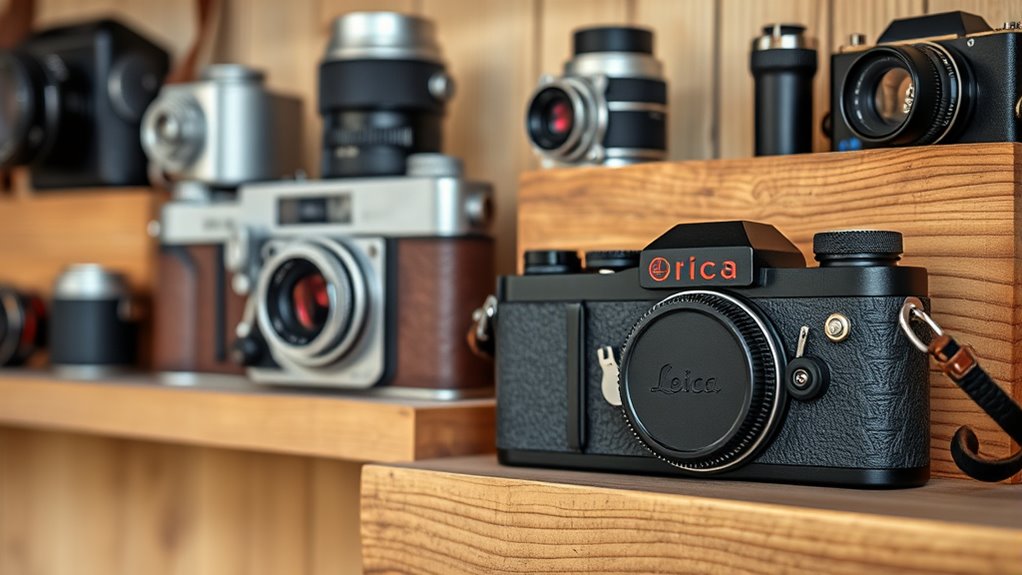
Are you curious about capturing timeless photos with classic equipment? Vintage cameras have a unique charm that modern gear can’t replicate, and understanding the different types can help you find the perfect one for your style. When diving into the world of vintage photography, the choice of film stock and camera lenses plays a vital role in achieving that authentic, nostalgic look. Each camera type offers distinct features, and knowing their strengths will help you make informed decisions.
Film stock, for example, influences the mood and tone of your images. Different types of film evoke various colors, contrasts, and grain patterns. For instance, Kodak Portra is known for its natural skin tones and subtle color palette, making it ideal for portraits, while Fuji Velvia offers vibrant colors and high contrast, perfect for landscape shots. The film stock you select interacts with the camera’s design and the lenses to produce a specific aesthetic. When combined with the right camera lenses, your vintage camera can deliver stunning results that reflect the timeless qualities you seek.
Choosing the right film stock shapes your photos’ mood, tone, and timeless appeal.
Classic cameras come in several main types, each with its own charm and functionality. Rangefinders, like the Leica M series, are compact, fast to operate, and renowned for sharp, precise focusing thanks to their optical viewfinders. You’ll want to consider which camera lenses are compatible, as this affects your ability to capture different scenes. SLRs, such as the Nikon F or Canon AE-1, provide a more versatile viewing system through the lens, allowing you to see exactly what your film will record. They often feature interchangeable lenses, giving you flexibility to shoot wide-angle landscapes or telephoto details. TLRs (twin-lens reflex cameras), like the Rolleiflex, have a distinctive waist-level viewfinder and produce a characteristic square aspect ratio, perfect for those aiming for a classic square format with rich, detailed images.
Additionally, understanding film stock and how it interacts with your camera setup can significantly influence the mood and authenticity of your photographs. When choosing a vintage camera, you should also think about lens options. Camera lenses influence your depth of field, sharpness, and overall image character. Some lenses are prized for their unique rendering and bokeh, adding a special touch to your photos. Pairing these lenses with the right film stock can enhance the mood and timeless appeal of your images. Whether you’re shooting with a Leica, Nikon, or a TLR, the combination of film stock and camera lenses will define your style and help you capture those iconic, classic photographs that stand the test of time.
Frequently Asked Questions
What Are the Best Vintage Cameras for Beginners?
If you’re new to film photography, start with a vintage camera like the Canon AE-1 or Pentax K1000. These models are user-friendly, have straightforward camera mechanics, and produce great results. They’re reliable choices for beginners, offering manual controls that help you learn the basics of focusing and exposure. Plus, their availability makes them affordable options to explore the art of classic film photography without feeling overwhelmed.
How Do I Restore an Old Vintage Camera?
To restore an old vintage camera, start with gentle camera cleaning using a soft brush and microfiber cloth to remove dust. Then, explore restoration techniques like lubricating moving parts carefully and replacing worn-out seals or batteries. You might also need to disassemble certain components, but guarantee you follow detailed guides or seek professional help if you’re unsure. Regular maintenance keeps your camera in excellent condition for capturing timeless shots.
Are Vintage Cameras Compatible With Modern Lenses?
Vintage cameras often aren’t compatible with modern lenses directly due to differing camera lens compatibility standards. However, you can use vintage camera adapters to bridge this gap, allowing you to attach modern lenses to your classic camera. Just verify the adapters are suitable for your camera’s mount type. Keep in mind, some functionality like autofocus might not work, but you’ll still be able to experiment with different lenses and achieve unique shots.
What’s the Average Price Range for Collectible Vintage Cameras?
The price range for collectible vintage cameras varies widely, acting like a rollercoaster in the collector’s market. You can expect to pay anywhere from $50 for basic models to over $2,000 for rare, highly sought-after pieces. Price fluctuations depend on rarity, brand, and condition. If you’re diving into the collector’s market, be prepared for prices to shift as demand and rarity change over time.
How to Differentiate Genuine Vintage Cameras From Replicas?
To differentiate genuine vintage cameras from replicas, start by examining authenticity verification details like serial numbers, maker’s marks, and build quality. Look for signs of counterfeit detection, such as inconsistent logos, cheap materials, or poor craftsmanship. Research the model’s typical features and compare them to the camera in question. Trust your instincts and consult expert appraisal if needed, ensuring you’re investing in authentic vintage gear.
Conclusion
Now that you’ve explored the world of vintage cameras, you’re like a treasure hunter ready to discover hidden gems. Each camera type has its own story, waiting for you to capture timeless moments. Whether you prefer the charm of film or the simplicity of a classic point-and-shoot, these cameras bring history to life through your lens. Embrace the nostalgia and let your photography journey unfold like a beautiful, well-worn book full of unforgettable images.