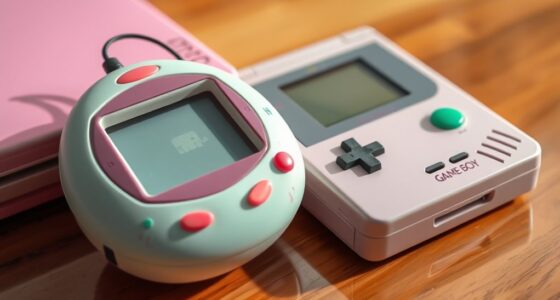
You’ve probably heard about some retro tech flops like the Atari Jaguar, Palm Pre, or Windows Phone, which failed because they missed market needs or launched too late. These inventions lacked strong ecosystems or unique features that consumers wanted, leading to poor sales. Timing, support, and user experience played huge roles in their failure. Curious how these setbacks shaped future innovations? Keep exploring to discover the stories behind these tech missteps.
Key Takeaways
- Many failed retro inventions lacked unique features or strong ecosystems, making them less appealing compared to established competitors.
- Poor timing, such as launching outdated or poorly timed products, contributed significantly to their flop.
- Technical shortcomings or limited functionality failed to meet consumer expectations for innovative gadgets.
- Insufficient market research led to products that didn’t align with user needs or preferences.
- Rushed development and inadequate testing caused reliability issues, undermining consumer trust and adoption.

Throughout history, many innovative tech inventions promised to revolutionize our lives but ultimately failed to catch on. You’ve probably heard about some of these failures, especially in the domain of smartphones and gaming consoles. Smartphone failures, for instance, often stemmed from poor design, limited features, or high costs that didn’t match consumer expectations. Remember the Palm Pre or the Windows Phone? They showed promise but couldn’t compete with the giants like Apple and Android. These attempts to innovate in the mobile space sometimes fell flat because they lacked a unique selling point or a robust app ecosystem. Consumers quickly moved on to more reliable or familiar options, leaving these devices to fade into obscurity. The lesson here is that even with cutting-edge technology, if the user experience isn’t seamless or the device doesn’t meet market needs, it’s doomed to fail.
Gaming console flops offer another glimpse into how even big ambitions can backfire. You might recall consoles like the Atari Jaguar or the Sega Saturn. These systems were launched with high hopes but couldn’t capture enough market share or offer enough compelling games to justify their costs. Often, poor timing, lack of third-party support, or confusing marketing strategies hampered their success. In some cases, these consoles arrived too late or failed to differentiate themselves from competitors, leading gamers to stick with more established options like PlayStation or Nintendo. The failure wasn’t just about technical shortcomings; it was about understanding what gamers truly wanted and delivering it effectively. When a gaming console flops, it usually signals a disconnect between what the company thought consumers wanted and what they actually valued. Additionally, the rapid pace of technological change meant that some inventions became obsolete before they even reached consumers, emphasizing the importance of timing in innovation.
Both smartphone failures and gaming console flops teach us that innovation alone isn’t enough. You need to grasp the market’s needs, deliver a polished product, and build a strong ecosystem around it. Sometimes, even the most promising concepts can fall apart if they don’t align with consumer expectations or are poorly timed. Companies that rush products to market without proper testing or fail to anticipate user preferences often see their efforts backfire. These failures serve as cautionary tales, reminding you that technology must be paired with strategic marketing and user-centric design to succeed. Ultimately, the tech world’s history of flop inventions shows that even the most exciting ideas can stumble if they don’t connect with what people truly want or need.
Frequently Asked Questions
Which Retro Tech Invention Had the Most Significant Market Failure?
You probably remember the LaserDisc, which had the most significant market failure among retro tech inventions. Its market impact was limited because of high costs and bulky players, creating innovation barriers for consumers. Despite offering better picture quality, it couldn’t compete with VHS and later DVDs. This failure shows how even promising tech can falter if it doesn’t meet market needs or overcome barriers to adoption effectively.
How Did Consumer Preferences Influence These Tech Flops?
Consumer preferences greatly influenced these tech flops because companies often misread market trends or relied on outdated assumptions. You might have noticed that marketing missteps failed to highlight the real benefits, causing disinterest. When consumer trends shifted away from these inventions, demand plummeted. If companies had better understood what people truly wanted or adapted their marketing strategies, these retro tech innovations might have gained more traction instead of becoming failures.
Were Any of These Inventions Ahead of Their Time?
You might find it surprising, but some of these inventions were actually ahead of their time. Around 50 years ago, futuristic concepts like early tablets and wearable tech sparked technological optimism, yet they failed commercially. These devices showcased innovative ideas that anticipated future trends, proving that being ahead of your time doesn’t always guarantee success. Their advanced designs highlighted how visionary thinking can sometimes outpace current consumer expectations.
Did Any of These Flopped Inventions Eventually Succeed Later?
Some of these flopped inventions did eventually succeed later through retro revival and tech comeback trends. You might notice how vinyl records, once considered outdated, made a strong comeback, and cassette tapes experienced a similar revival. By embracing nostalgic appeal, companies tapped into a retro revival that sparked renewed interest. So, while they initially failed, these inventions found success later, proving that vintage tech can often find its place again.
What Lessons Can Modern Inventors Learn From These Failures?
You can learn valuable lessons from these failures by understanding common innovation pitfalls. Recognize that not every idea will succeed immediately, and persistence is key. Embrace feedback, adapt your approach, and avoid rushing to market. These lessons learned highlight the importance of thorough research and user needs. By understanding why past inventions failed, you’ll improve your chances of creating successful, innovative products that truly resonate with users.
Conclusion
Despite their promises, many retro tech inventions failed to take off, leaving behind a trail of unmet expectations. Did you know that over 60% of these gadgets never made it past the prototype stage? It’s a reminder that innovation isn’t just about new ideas—it’s about understanding what people truly want. So next time you see a flashy gadget, remember, even the coolest ideas can fall flat if they miss the mark.