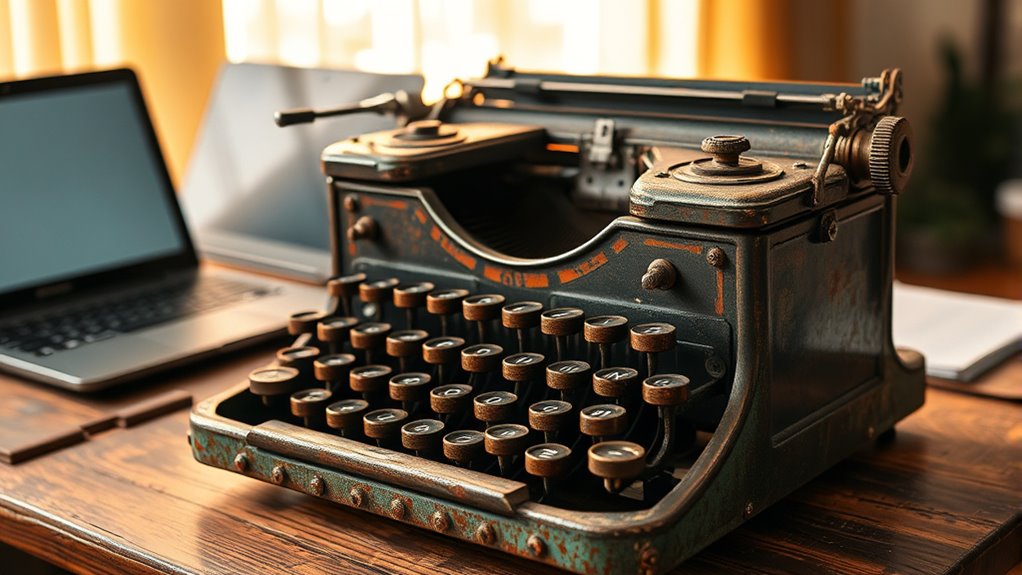

The history of the typewriter begins with its invention in the 19th century, transforming communication with mechanical innovations that emphasized speed and clarity. It became a symbol of progress during its peak, but digital tools eventually replaced it, making classic models seem outdated. Today, vintage typewriters are making a comeback, blending nostalgia with modern features and craftsmanship. If you keep exploring, you’ll discover how this timeless device continues to inspire and evolve in contemporary culture.
Key Takeaways
- The typewriter was invented in the 19th century to improve writing speed and legibility, revolutionizing communication and professional work.
- During its peak, it symbolized progress, craftsmanship, and societal advancement, influencing design and cultural aesthetics.
- The rise of digital technology led to decline and obsolescence of mechanical typewriters in favor of computers and smartphones.
- A modern resurgence occurs as enthusiasts preserve vintage models, blending nostalgia with innovative features like digital integration and customizable options.
- Contemporary typewriters combine vintage charm with modern technology, maintaining their appeal as functional devices and artistic collectibles.
The Origins and Early Innovations of the Typewriter
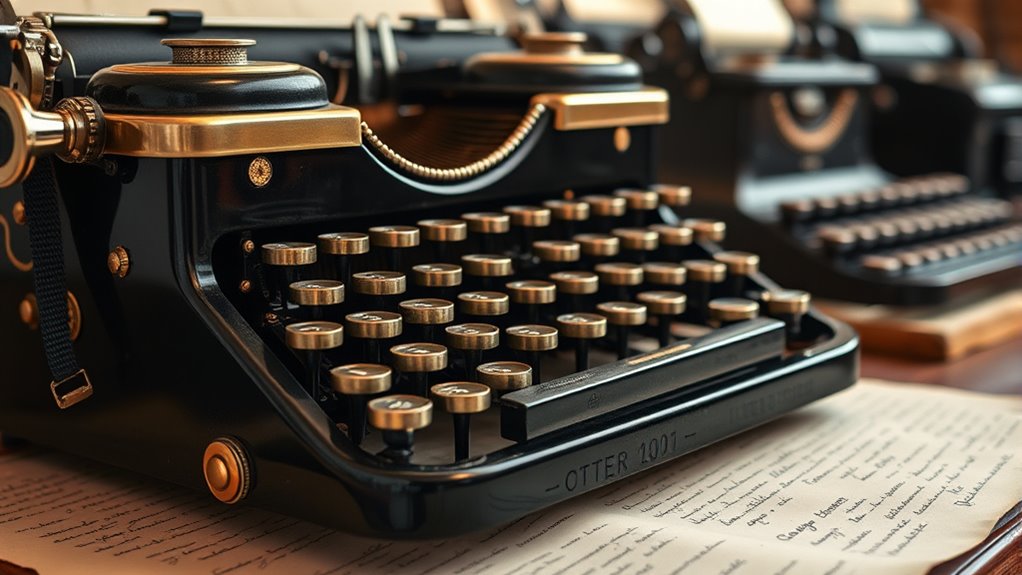
The origins of the typewriter date back to the 19th century, when inventors sought to create a device that could produce written text more quickly and legibly than handwriting. Early designs emphasized mechanical craftsmanship, ensuring each part worked smoothly and reliably. As inventors refined these machines, they also focused on typist ergonomics, making keys easier to press and reducing fatigue during extended use. The development of the typewriter involved inventive solutions to improve speed, accuracy, and comfort. These innovations laid the foundation for modern keyboards, blending precise mechanical engineering with user-centered design. While early models were bulky and mechanical, they represented a significant leap in communication technology, transforming how people created and shared written information.
The Golden Age: How the Typewriter Changed Communication
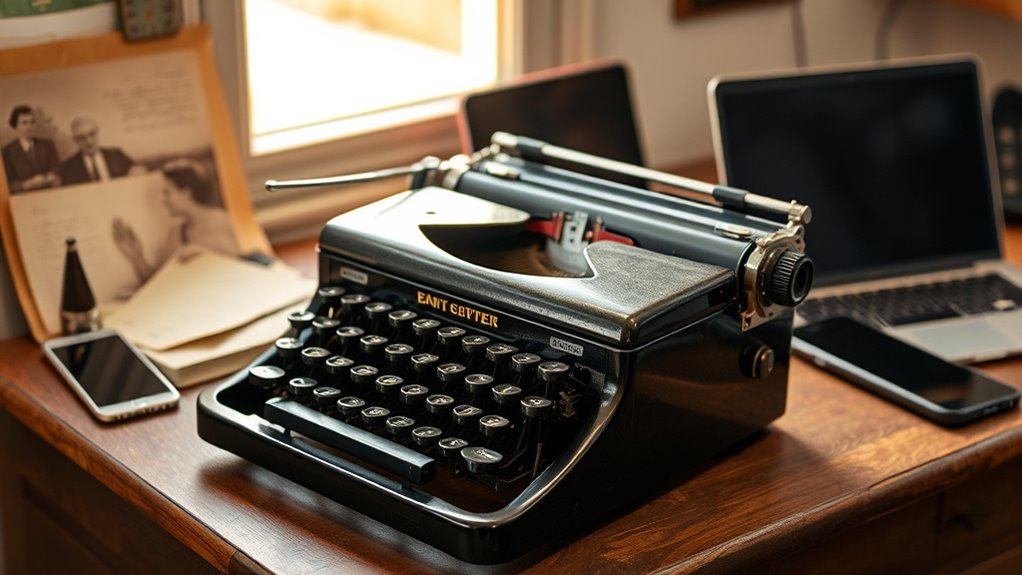
As typewriters became more widespread and refined, they revolutionized communication by enabling faster, more legible writing than handwritten documents. This era showcased exceptional typewriter craftsmanship, with machines designed for efficiency and durability. They allowed writers, journalists, and businesspeople to produce clear, professional texts quickly, transforming how information was shared. The typewriter also gained historical symbolism, representing progress, modernization, and the power of the written word. Its tactile keys and rhythmic sounds became iconic, shaping the cultural landscape. People viewed the typewriter as a tool of empowerment and societal advancement. By standardizing communication, it bridged gaps across industries and social classes, making written communication more accessible and influential than ever before. Additionally, the advancements in typewriter technology contributed to its widespread adoption and durability, highlighting the importance of reliable mechanical design in ensuring long-term usability. The development of standard keyboard layouts and ergonomic features further enhanced user comfort, promoting prolonged use and efficiency, which supported its status as a dependable office equipment of the time. Moreover, innovations in material quality helped improve the lifespan and performance of typewriters, cementing their role in modern history.
Decline and Obsolescence in the Digital Era
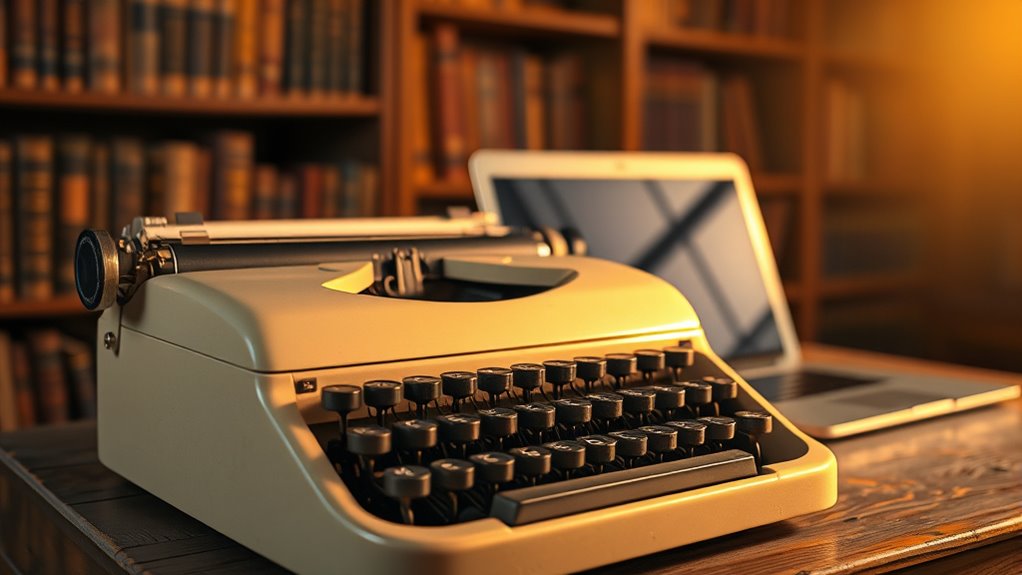
As digital technologies took over, your reliance on typewriters rapidly decreased. Writing habits shifted toward computers and smartphones, making mechanical devices feel outdated. This shift led to the decline of traditional typewriters as new tools transformed communication. Today, some enthusiasts and collectors are cultivating digital creativity and innovation skills, which include exploring vintage typing equipment and integrating modern technology into their work. Many are also preserving vintage devices, recognizing their cultural and historical significance. The resurgence of interest in retro technology reflects a broader appreciation for the craftsmanship and nostalgia associated with typewriters. Additionally, advancements in portable devices have contributed to the renewed fascination with mechanical typing tools. Moreover, the integration of mindfulness techniques in creative practices helps enthusiasts appreciate the tactile experience of vintage typing in a digital world.
Rise of Digital Technologies
With the rapid advancement of digital technologies, traditional typewriters gradually lost their relevance in everyday life. As computers and word processors became standard, many experienced digital detachment from manual typing devices. You no longer needed to worry about ink ribbons or mechanical jams; instead, you embraced sleek keyboards and instant editing. Yet, amid this shift, keyboard nostalgia grew among enthusiasts who appreciated the tactile feedback and physical connection that typewriters offered. This longing for a more authentic, deliberate writing experience sparked a renewed interest in vintage machines. However, for most people, digital tools proved more efficient and versatile, rendering the typewriter largely obsolete. Still, the digital era’s dominance reshaped how you communicate, making the typewriter’s decline inevitable in the face of technological progress.
Shift in Writing Habits
The rise of digital technology transformed writing habits by making typing faster, editing easier, and sharing seamless. As a result, many rely on computers and smartphones, which has led to a decline in traditional writing practices. Your digital literacy now influences how effectively you communicate, often replacing handwritten or typewritten notes. Keyboard ergonomics has become essential for preventing strain during long typing sessions. You might notice fewer people using typewriters as primary tools, but their influence persists in designing comfortable keyboards. Popular apps for tracking writing practices and keyboard ergonomics are increasingly integrated into modern devices. This shift impacts how you write daily, emphasizing speed, convenience, and comfort over traditional skills. Additionally, the design considerations for home furnishings like ergonomic keyboards and supportive furniture have gained importance to promote healthier and more comfortable work environments. Awareness of ergonomic design principles can help prevent repetitive strain injuries and improve overall productivity. Incorporating space-saving solutions into workspaces can further enhance comfort and organization, making long hours of typing more manageable.
Decline of Mechanical Devices
Digital technology has rapidly rendered many mechanical devices obsolete, including the iconic typewriter. As computers and smartphones dominate, mechanical nostalgia wanes, and vintage craftsmanship feels like a relic of the past. You might have seen old typewriters gathering dust, replaced by sleek keyboards and digital word processors. This decline reflects a broader shift toward efficiency and convenience, leaving mechanical devices behind. Yet, some enthusiasts still cherish their tactile feel and enduring build quality, appreciating the craftsmanship that went into these machines. The move away from mechanical devices marks a significant change in how we create and communicate, but it also fuels a desire to preserve that vintage charm. In addition, the rustic design elements often associated with typewriters continue to influence modern aesthetic trends. Despite their decline, the legacy of these mechanical devices continues to inspire a new appreciation for their artistry, especially among those interested in sound vibrations and their impact on health and well-being.
The Resurgence: Why Vintage Typewriters Are Making a Comeback

You might notice that vintage typewriters are gaining attention again because they evoke a sense of nostalgia and have a distinct aesthetic appeal. Using one offers a tangible writing experience that digital devices can’t match, making each keystroke feel special. This also allows for a unique form of creative expression that stands out in today’s digital world. Moreover, the resurgence of vintage typewriters highlights a broader appreciation for architecture and design solutions that combines functionality with style.
Nostalgia and Aesthetics
As vintage typewriters reemerge, their enduring charm appeals to those seeking a tactile and visually appealing writing experience. Their vintage design evokes nostalgia, transporting you to a different era. The tactile feedback from the keys offers a satisfying response, unlike modern keyboards, enhancing your connection to each word. These typewriters serve as beautiful decor pieces, adding a timeless aesthetic to any space. The craftsmanship and nostalgic appeal make them more than just machines—they’re conversation starters and artistic statements. Additionally, their spiritual energy can inspire a mindful and creative atmosphere, making them even more valuable as aesthetic and emotional treasures. This connection to historical craftsmanship deepens the appreciation for their enduring appeal. Recognizing the tactile feedback present in vintage typewriters can also enhance your overall writing experience by fostering a more deliberate and engaged process.
Tangible Writing Experience
The tactile sensation of typing on a vintage typewriter offers a satisfying connection that modern keyboards often lack. When you press each key, you feel tangible feedback, making your writing experience more deliberate and engaging. Unlike digital typing, which can feel sterile, vintage typewriters provide a physical response that enhances your focus. This tactile feedback encourages careful thought, transforming your thoughts into handwritten letters with a personal touch. The sound of the keys striking the paper creates a rhythmic rhythm, making the process more intentional. Using a typewriter reconnects you with a time when writing was a mindful act, fostering a deeper appreciation for the craft. It’s not just about producing text; it’s about experiencing the joy of tangible, authentic communication.
Unique Creative Expression
In an era dominated by digital screens and instant connectivity, vintage typewriters offer a distinctive avenue for creative expression that’s hard to replicate with modern technology. They let you tap into digital nostalgia and engage in tactile creativity, making every word feel more intentional. Using a typewriter encourages you to slow down, think carefully, and craft your message with care. The physical act of pressing keys and hearing the click-clack fosters a unique connection to your work. This hands-on process sparks inspiration and helps you break free from digital distractions. Whether writing poetry, journaling, or sketching ideas, a vintage typewriter transforms writing into a mindful, artistic experience.
- Embracing imperfect, authentic text
- Connecting emotionally through tactile feedback
- Creating one-of-a-kind, vintage-style documents
- Inspiring deliberate and thoughtful writing
Modern Features and Collectible Value of Newer Models
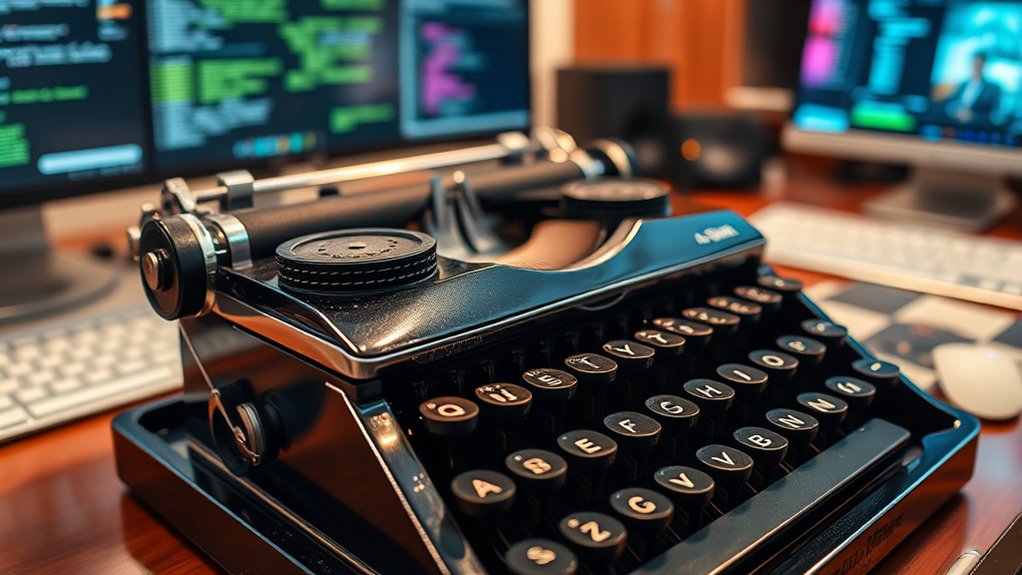
Modern typewriters incorporate advanced features that appeal to both enthusiasts and collectors. These newer models showcase exceptional typewriter craftsmanship, blending vintage charm with modern innovations. Features like electronic memory, customizable key sounds, and LED indicators enhance usability without sacrificing the classic feel. Some models even include Bluetooth connectivity, allowing seamless integration with digital devices. The combination of modern typewriter features and traditional design elevates their collectible value, making them sought after by collectors who appreciate craftsmanship and unique functionality. Limited editions and collaborations with artists or designers further boost their desirability. Whether for display or active use, these models embody a perfect fusion of past and present, ensuring their place in contemporary collections while honoring the timeless appeal of the typewriter.
Embracing the Analog: the Cultural Appeal of Writing With a Typewriter
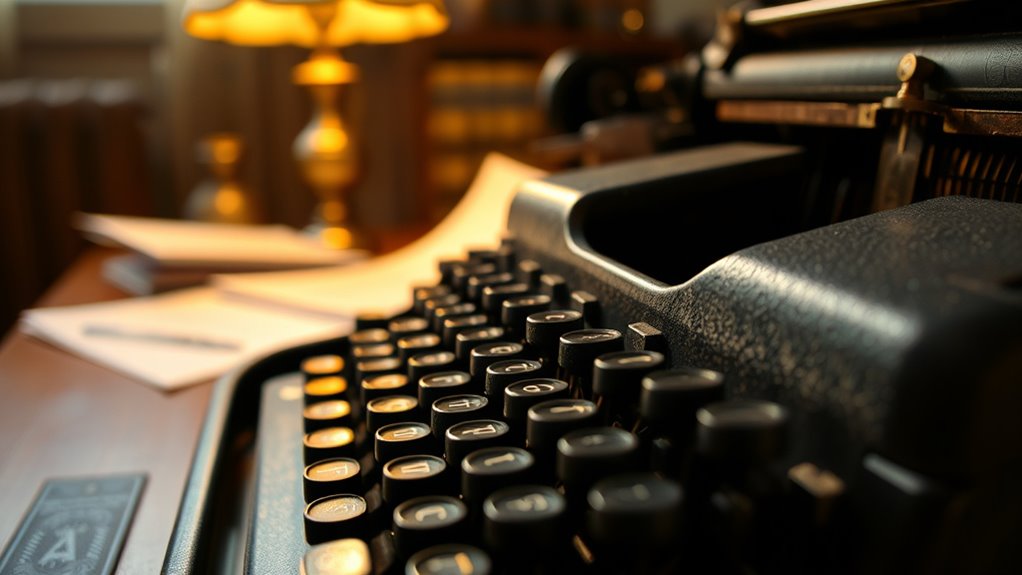
Amid the digital age, many people find that writing with a typewriter offers a unique sense of authenticity and intentionality that screens can’t replicate. Using a typewriter transforms writing into a tactile experience, fostering a deeper connection to your words. It’s perfect for handwritten correspondence or capturing vintage aesthetics. This nostalgic appeal invites you to slow down and appreciate the craft of writing, making each letter or note special. The deliberate process encourages mindfulness and creativity, standing apart from the instant gratification of digital tools. Embracing the analog, you join a community that values tangible, meaningful communication. Whether for personal reflection or artistic expression, the typewriter’s charm lies in its ability to evoke emotion and authenticity.
- Creating handwritten correspondence with character
- Appreciating retro vintage aesthetics
- Slowing down to focus on your writing
- Connecting with a cultural tradition
Frequently Asked Questions
How Did Typewriters Influence Gender Roles in the Workplace?
Typewriters transformed workplace dynamics by opening doors for female empowerment, allowing women to enter clerical roles traditionally reserved for men. You see, as women mastered typing, they gained new skills and independence, challenging gender norms. This shift helped reshape societal views on women’s capabilities, fostering greater equality in the workplace. The typewriter became a symbol of progress, paving the way for increased female participation and influence in various professional fields.
What Materials Are Used in Restoring Vintage Typewriters?
When restoring vintage typewriters, you’ll want to use carefully selected vintage materials like original steel, brass, and quality rubber for parts. Restoration techniques often involve cleaning, replacing worn components, and lubricating moving parts. It’s a labor of love that’s worth every effort, because you’re bringing new life into a piece of history. You’ll find that patience and attention to detail are your best friends in this process—don’t let it get the better of you.
Are There Any Health Risks Associated With Typewriter Use?
Using a typewriter can pose health risks if you’re not careful. Poor typing posture may lead to discomfort or repetitive strain injuries, especially in your hands, wrists, or shoulders. To minimize these risks, sit properly, take breaks, and adjust your position regularly. Being mindful of your posture and avoiding prolonged typing sessions helps prevent strain and keeps your typing experience safe and enjoyable.
How Do Typewriters Compare to Modern Keyboards in Terms of Ergonomics?
Typewriters generally have less ergonomic design compared to modern keyboards, which can affect your typing posture. Modern keyboards often feature adjustable angles, cushioned keys, and ergonomic layouts that promote better comfort and reduce strain. In contrast, typewriters‘ rigid design may cause you to adopt awkward postures over time. If you prioritize ergonomics, a modern keyboard can help you maintain a healthier typing posture and prevent discomfort.
Can Typewriters Be Integrated With Digital Technology Today?
Think of your typewriter as a vintage bridge waiting to connect worlds. You can retrofit technology to enable digital integration, transforming it into a hybrid device. By adding modern components like USB interfaces or Bluetooth modules, you keep its nostalgic charm while syncing with apps and computers. This blend of old and new lets you enjoy tactile writing while seamlessly sharing your work, making your typewriter a timeless yet tech-savvy tool.
Conclusion
Now, isn’t it ironic how the very machine once seen as outdated is now prized for its flaws and imperfections? You might think we’ve moved on to sleek, flawless digital screens, yet many crave the tactile clack of typewriter keys and the charm of imperfect ink. Sometimes, stepping back into the past reminds us that true beauty lies in flaws, and that maybe, just maybe, analog has a timeless appeal we never really left behind.