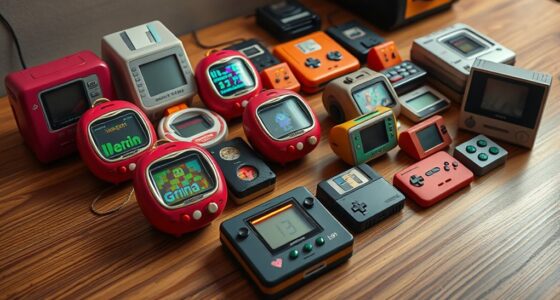
Early video game consoles set the foundation for today’s gaming industry. You’ll see how the Magnavox Odyssey in 1972 introduced dedicated hardware with simple graphics, while Atari’s innovations, like the 2600, popularized cartridge-based games in 1977. Over time, technology advanced, bringing more immersive experiences and inspiring industry growth. Understanding this timeline reveals how these first-generation systems sparked a multi-billion-dollar entertainment revolution—keep exploring to discover the fascinating details behind these pioneers.
Key Takeaways
- The Magnavox Odyssey (1972) was the first major home console, introducing dedicated hardware for gaming.
- Atari’s Home Pong (1975) popularized arcade-style gameplay in the home environment.
- The Atari 2600 (1977) was the first to use interchangeable cartridges, shaping future console design.
- Early systems evolved from simple graphics to more immersive experiences, boosting consumer interest.
- First-generation consoles established foundational concepts and industry standards for subsequent generations.

Early video game consoles laid the foundation for the gaming industry as we are familiar with today. These pioneering gaming devices marked the beginning of a new form of entertainment that would grow into a multi-billion-dollar industry. When you look back at the earliest systems, you see how they set the stage for the game console evolution, shaping the technology and design that would influence future generations. These first-generation systems weren’t just simple machines; they were groundbreaking in their time, offering a glimpse into the interactive entertainment of the future.
The very first major milestone was the Magnavox Odyssey, released in 1972. It was a straightforward device featuring basic black-and-white graphics and simple games like Pong. Despite its limited capabilities, it introduced the concept of playing video games on a dedicated console, paving the way for more advanced systems. The Odyssey was a pioneering gaming device, showing that consumers would embrace dedicated hardware for entertainment. Its success inspired other companies to enter the market, sparking a wave of innovation.
Soon after, Atari entered the scene with its Atari Home Pong console in 1975, which brought arcade-style gameplay into the home. The Atari 2600, launched in 1977, became a household name and a defining system of the first generation. It was the first to feature interchangeable cartridges, allowing players to choose from a library of games rather than being limited to a single built-in program. This flexibility was revolutionary and helped establish the standard for future consoles. You might not realize it, but the Atari 2600’s design and game library set the template for many systems that followed, making it one of the most influential pioneering gaming devices of its era.
Throughout this early period, game console evolution was driven by the desire to improve graphics, sound, and gameplay complexity. These innovations came through iterative improvements in hardware and game design, transforming simple pixelated images into more immersive experiences. While the first consoles had limited capabilities, they sparked a growing fascination with interactive entertainment. The success of these systems proved that there was a substantial market for dedicated gaming devices, encouraging other manufacturers to develop their own systems and expand the possibilities of what consoles could do. Additionally, Free Floating technology contributed to the development of more dynamic and engaging gameplay experiences.
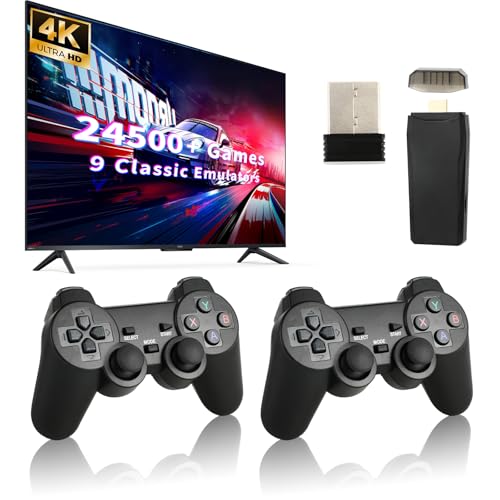
Retro Game Console, Wireless Retro Game Console, Built-in 9 Emulators, 4K HDMI Output, Dual 2.4GHz, Built-in 24500 Games, Plug and Play Video Games, Black
24500+ Rich Game Experience: This wireless TV game console has 24500+ classic games built in, no need to…
As an affiliate, we earn on qualifying purchases.
As an affiliate, we earn on qualifying purchases.
Frequently Asked Questions
Which Early Console Had the Best Graphics for Its Time?
You’ll find that the Atari 2600 had the best graphics for its time, showcasing notable graphics innovation despite hardware limitations. Its ability to produce simple but recognizable visuals stood out among early consoles. While other systems struggled with limited hardware capabilities, the Atari 2600 made the most of its hardware, offering engaging gameplay and visuals that set a standard for future consoles.
How Did Early Consoles Influence Modern Gaming Technology?
You’re really on the ball to ask how early consoles shaped modern gaming tech. They laid the groundwork for hardware evolution and sparked technological innovations that continue today. These systems introduced concepts like cartridge-based storage, basic graphics, and simple controls, which evolved into high-definition graphics and immersive gameplay. Without those first steps, today’s gaming experience wouldn’t be nearly as advanced, proving that every big leap starts with small beginnings.
Were There Any Early Consoles That Failed Commercially?
Yes, some early consoles failed commercially due to hardware limitations and production challenges. For example, the Fairchild Channel F struggled with limited game library and high costs, making it less appealing. The Philips CD-i faced technical issues and a lack of popular titles, which hurt sales. These setbacks show how hardware constraints and production hurdles can doom even innovative systems, preventing them from gaining widespread success in the competitive market.
What Were the Most Popular Early Video Game Titles?
You probably feel the gaming nostalgia when thinking of early popular titles like Pong, Pac-Man, and Space Invaders. These classics from the arcade era shifted onto early consoles, capturing players’ imaginations. You might recall spending hours playing these iconic games, which helped define the gaming landscape. Their simple yet addictive gameplay made them timeless favorites, inspiring future generations of gamers and establishing a foundation for modern video gaming.
How Did Early Consoles Impact Gaming Culture Worldwide?
Imagine a spark igniting a global fire—early consoles symbolized innovation, shaping gaming culture worldwide. You feel the thrill of gaming nostalgia as these systems broke barriers, making play accessible everywhere. They transformed entertainment into a shared experience, fostering communities and inspiring future innovations. By doing so, they laid the foundation for a vibrant, interconnected gaming world, forever changing how you connect, compete, and create through interactive stories.

GALAGA (compatible with Atari 2600+, Atari 7800+ and Atari 7800 video game systems)
Power-Ups Through Capture – Letting enemies capture your ship creates opportunities to reclaim it and gain extra firepower.
As an affiliate, we earn on qualifying purchases.
As an affiliate, we earn on qualifying purchases.
Conclusion
As you explore the first generation of video game consoles, you’ll see how they laid the foundation for today’s gaming world. Did you know that by 1972, over 1.5 million Magnavox Odyssey units had been sold? That’s a huge milestone for such an early system. Understanding these pioneering consoles helps you appreciate how gaming evolved from simple graphics to the immersive experiences you enjoy now. The journey from those early days is truly fascinating!

2026 Newest Retro Game Console, 20000+Games Wireless Home Video Game Console with 2 Wireless Handles, 64G HDMI TV Plug and Play PSP Arcade Stick, Support Dual TV Output, Gift for Kids & Adults
【Relive Memories with Everyday Fun】Dive into nostalgia with our retro gaming console, pre-loaded with 2000+ classic and modern…
As an affiliate, we earn on qualifying purchases.
As an affiliate, we earn on qualifying purchases.

YRPRSODF TV Game Console Built in 100+ Gam ES, Video Game Machine with 2.4G Wireless Gamepad Somatosensory Control, USB Plug and Play, Kid & Adult Interactive& Puzzle Games,Grey
[Interactive Game Console] Unlike normal TV game console, YRPRSODF double player game machine is somatosensory control, just move…
As an affiliate, we earn on qualifying purchases.
As an affiliate, we earn on qualifying purchases.