
If you’re starting to collect vintage computers, you’ll want to understand their appeal, like their historical value and nostalgic charm. Focus on iconic models such as the Apple II or Commodore 64, and learn how to evaluate their condition and authenticity. Budget wisely and explore sources like online marketplaces and local fairs. Proper restoration and display help preserve these machines, and connecting with hobbyist communities can boost your collection. Stay curious—you’ll uncover even more tips and tricks as you explore further.
Key Takeaways
- Understand the appeal of vintage computers for nostalgia, history, and appreciating technological evolution.
- Identify key models and authentic features to build a valuable, genuine collection.
- Set a budget, prioritize rare or iconic models, and plan your purchases strategically.
- Source machines through online platforms and events, then assess condition and authenticity carefully.
- Connect with communities, expand your collection, and learn restoration and display techniques.
Understanding the Appeal of Vintage Computers
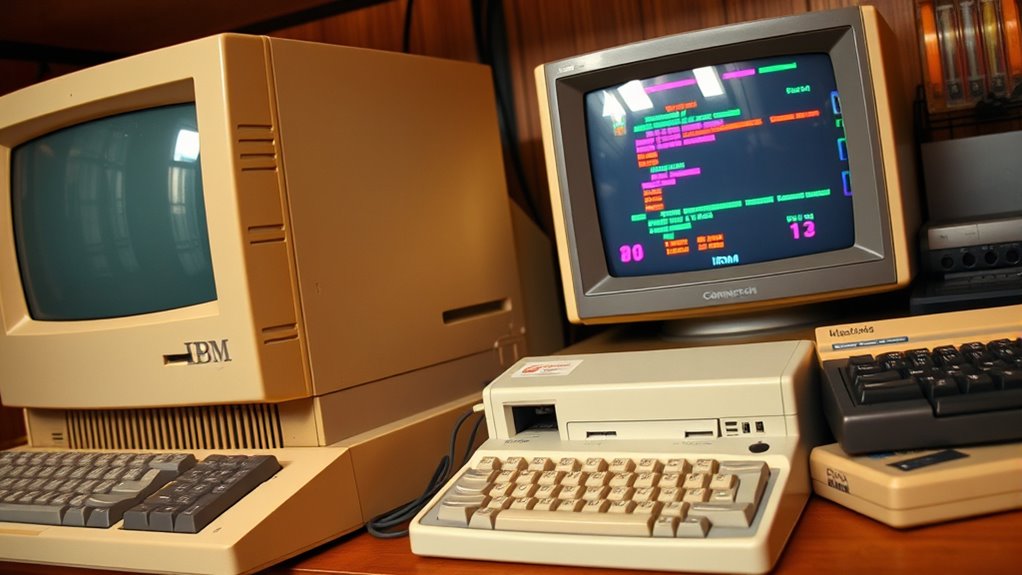
Vintage computers attract enthusiasts because they offer a tangible connection to the history of technology and computing. These machines are nostalgia triggers, bringing back memories of early experiences with technology and inspiring curiosity about how far we’ve come. You’ll find that collecting vintage computers allows you to witness the technological evolution firsthand, from bulky, slow machines to sleek, powerful devices. The charm lies in their design, quirks, and limitations, which highlight the progress made over decades. Engaging with these relics helps you appreciate the ingenuity of early developers and the foundations of modern computing. Additionally, understanding the history of computing enhances your appreciation for the advancements that have shaped modern digital life. Recognizing the design differences between models can also provide insights into the engineering practices of different eras. Exploring the symptoms of obsolescence can help collectors identify when a vintage computer might need restoration or special care.
Identifying Key Types of Retro PCs to Collect

Knowing how to identify the different types of retro PCs is key to building a meaningful collection. Start by recognizing early computer models, such as the Apple II, IBM PC, or Commodore 64, which laid the foundation for modern computing. These machines often feature distinctive designs and hardware characteristics that set them apart. Familiarize yourself with iconic vintage brands like Atari, Tandy, and Texas Instruments, as their models reflect specific eras and technological advancements. Collecting these key types helps you understand the evolution of personal computers and preserves significant milestones in tech history. Understanding computer hardware characteristics can help you differentiate authentic vintage models from reproductions or modified units. Paying attention to original components ensures the integrity and authenticity of your vintage machines. Recognizing authenticity factors can prevent costly mistakes and enhance the value of your collection. Focusing on early models from well-known brands also guarantees your collection holds both historical and nostalgic value, making it more engaging and meaningful over time. Additionally, understanding Online Income Strategies can help you monetize your collection by sharing your knowledge or selling rare items to interested collectors. Being aware of market trends can also guide you in acquiring pieces that are more likely to appreciate in value over time.
Setting a Budget and Planning Your Collection
Setting a budget helps you manage your spending and avoid overspending on rare or valuable models. Consider how much you’re willing to invest in different types of computers, balancing affordability with your collection goals. Prioritizing rare models can add excitement, but make sure your budget aligns with acquiring those unique pieces. Additionally, understanding the top projectors for gaming enthusiasts can guide you in making informed decisions when expanding your collection. Planning your collection with tax implications for IRA withdrawals in mind can help optimize your finances in retirement. Being aware of popular anime movies can also inspire themed displays or themed collections within your vintage PC setup. Incorporating Glycolic Acid benefits into your skincare routine can help maintain healthy skin, which is essential when handling and restoring delicate vintage hardware. Knowing about essential oils for respiratory health can also be beneficial if you need to create a comfortable environment while working on your collection.
Budget Allocation Strategies
Before diving into collecting vintage computers, it’s essential to establish a clear budget and plan your priorities. To maximize your resources, focus on budget conscious shopping by researching prices and setting spending limits for each item. Determine your investment prioritization—decide whether you want to focus on rare models, iconic brands, or functional everyday machines. Allocating funds wisely helps you avoid overspending on less critical items and ensures you can pursue must-have pieces within your means. Keep track of your expenses and adjust your plan as your collection grows. Remember, a well-planned budget keeps your collecting enjoyable and sustainable, allowing you to build a balanced and satisfying vintage computer collection without financial stress. Additionally, understanding the diverse designs found in unique and wicked planters can inspire you to display your collection creatively and enhance your overall collecting environment. Incorporating AI-powered tools can also help you analyze market trends and pricing data, making your budgeting process more precise and informed. Moreover, considering the holistic approach to understanding different models’ historical and functional significance can deepen your appreciation and guide smarter purchasing decisions. Recognizing the importance of emotional support can be beneficial if you encounter challenges or setbacks during your collecting journey, helping you stay motivated and positive.
Prioritizing Rare Models
When prioritizing rare models for your vintage computer collection, it’s essential to establish a realistic budget that reflects their value and your financial limits. Rare models, especially those with limited production runs, command higher prices and often require careful planning to acquire. Focus on identifying which exclusive editions or rare models truly excite you, then set a budget accordingly. Remember, chasing every rare piece can lead to overspending and frustration. Instead, prioritize quality over quantity, and be patient for the right opportunity. Doing thorough research on market prices helps you avoid overpaying. Additionally, understanding the vintage computer market can provide valuable insights into current trends and valuations. Cultivating a growth mindset can help maintain enthusiasm and adaptability as you navigate fluctuating prices and availability. By balancing your enthusiasm with financial discipline, you can build a meaningful collection of rare models without stretching yourself too thin.
Finding and Purchasing Vintage Machines

Finding vintage computers can be an exciting but challenging process, as these machines are often rare and sought after by collectors. To navigate the vintage market successfully, you need patience and a keen eye for deals. Online platforms like eBay, vintage computer forums, and specialized auction sites are great places to start. Always practice good collector etiquette—be respectful and transparent when negotiating, and avoid lowball offers. Attend local swap meets or vintage computer fairs to find hidden gems and build connections with other enthusiasts. When purchasing, ask for detailed photos and history of the machine. Keep your budget in mind, and don’t rush; finding authentic, well-maintained vintage computers takes time and persistence.
Assessing Condition and Authenticity
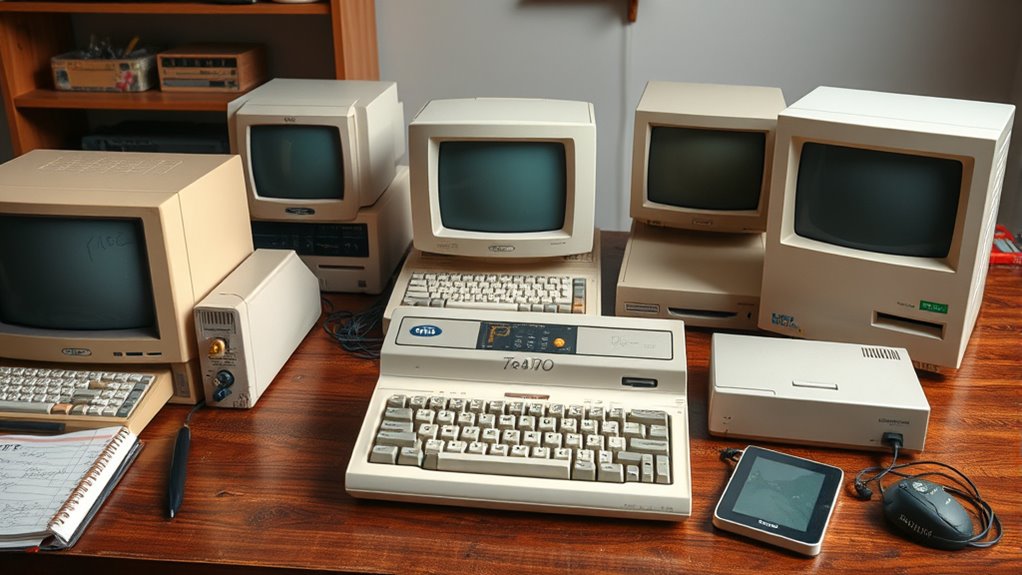
Evaluating the condition and authenticity of a vintage computer is essential to guarantee you’re making a worthwhile investment. First, check for matching serial numbers on the machine and its documentation to confirm origin and originality. Second, inspect the overall condition, noting any physical damage, corrosion, or missing parts that could affect functionality and value. Third, verify the original packaging, including boxes, manuals, and accessories, to ensure authenticity. Authentic packaging and matching serial numbers indicate the computer has been well-preserved and likely genuine. These steps help you avoid counterfeit or heavily restored items, ensuring your collection remains authentic. Remember, thorough assessment upfront saves time and money in the long run, and helps maintain the integrity of your vintage computer collection.
Restoring and Maintaining Your Retro PCs
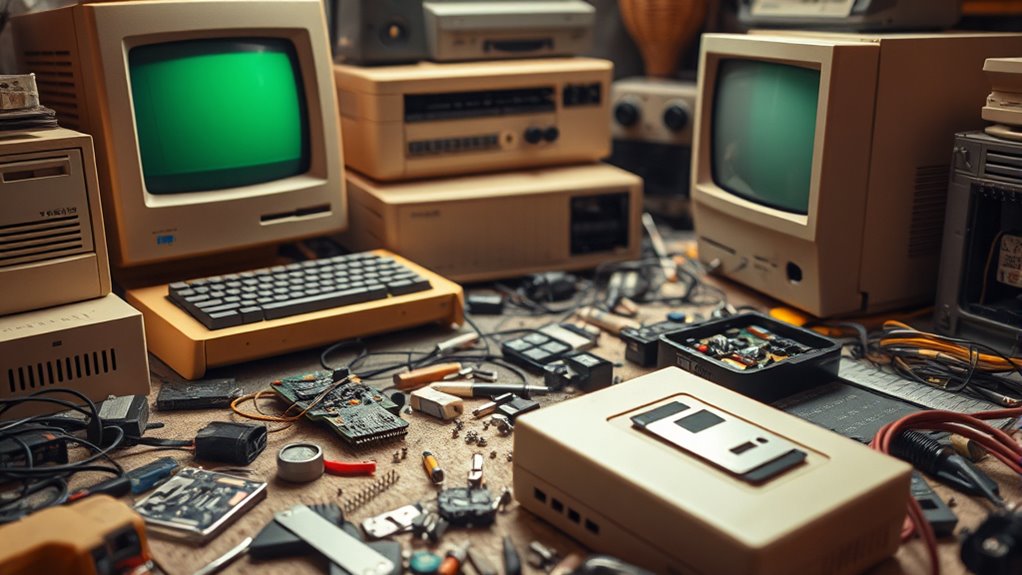
To keep your vintage computers running smoothly, you need to focus on cleaning and preservation techniques that prevent damage over time. Repairing common components can restore functionality and extend their lifespan, while backing up software and data guarantees you don’t lose valuable information. With these steps, you’ll maintain your retro PCs effectively and enjoy them for years to come.
Cleaning and Preservation Techniques
Keeping your vintage computer in top shape requires careful cleaning and preservation. First, use anti static cleaning methods to safely remove dust and dirt without damaging sensitive components. This involves using an anti-static brush or compressed air to prevent static buildup. Second, focus on preservation storage; keep your PC in a cool, dry environment, ideally in an anti-static bag or sealed container to prevent corrosion and dust accumulation. Third, regularly inspect and clean the exterior and internal parts to catch potential issues early. Properly maintaining your equipment ensures longevity and preserves its value. Remember, gentle handling and appropriate storage are key for long-term preservation, helping your vintage computer stay functional and visually appealing.
Repairing Common Components
When repairing common components in your vintage computer, understanding how to identify and replace faulty parts is essential for restoring functionality. Start by inspecting capacitors for bulging tops or leaks, as capacitor replacement often resolves stability issues. When you notice power problems, focus on power supply repair; test the power supply with a multimeter, and replace any faulty units or components. Carefully disconnect and remove damaged capacitors, then solder in new ones matching the original specifications. For power supply issues, ensure all connections are secure, and consider rebuilding or replacing the entire unit if necessary. Staying vigilant in these areas helps prevent future failures and prolongs your retro PC’s life. Properly repairing these components ensures your vintage machine remains reliable and functional.
Software and Data Backup
Since data loss can happen unexpectedly, regularly backing up your vintage computer’s software and files is essential for preserving your digital history. To guarantee effective digital preservation, consider these steps:
- Create multiple backups using external drives or cloud storage, safeguarding against hardware failure.
- Use software emulation to run and test backups, ensuring compatibility and integrity.
- Maintain organized archives with clear labels for easy restoration and ongoing maintenance.
Displaying and Protecting Your Collection
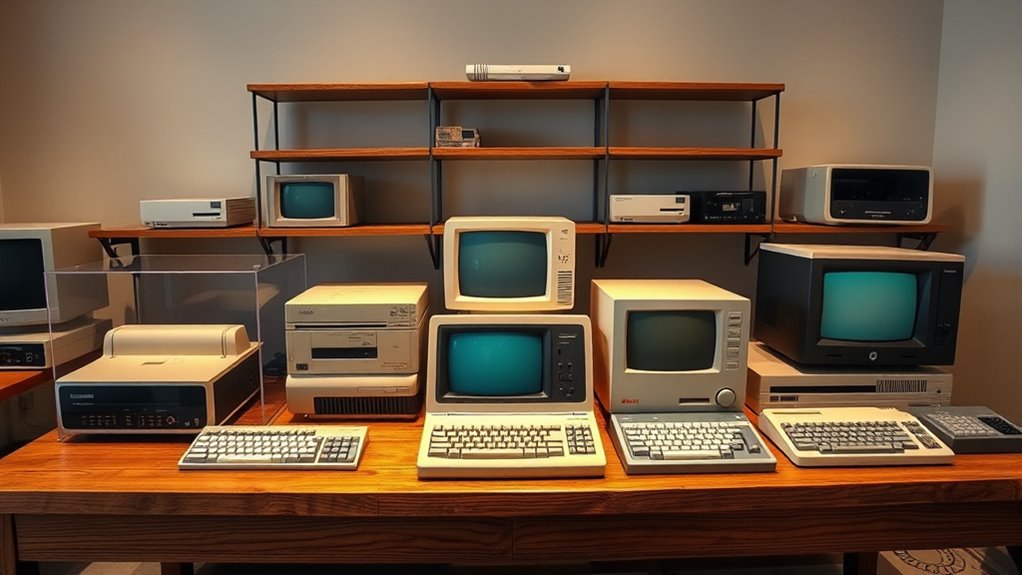
Displaying and protecting your vintage computers is essential to preserve their condition and showcase your collection effectively. Using display cases helps shield your computers from dust, dirt, and accidental damage while allowing clear visibility. Choose cases made of glass or acrylic for a sleek look and easy cleaning. Wall mounting is another great option, especially for limited space; securely affix your units to the wall using proper hardware to prevent falls or damage. Position your computers away from direct sunlight, humidity, and temperature fluctuations to avoid deterioration. Regularly clean and inspect your collection to catch any issues early. Proper display and protection not only maintain your vintage computers’ value but also create an impressive visual display for your collection.
Connecting With the Vintage Computing Community
Connecting with the vintage computing community can greatly enhance your experience and knowledge. Engaging with others who share your passion opens up new opportunities and insights. You can do this through various avenues:
Connecting with fellow vintage computing enthusiasts enriches your journey and broadens your insights.
- Online forums: Join popular sites like Vintage Computer Forum or Reddit’s r/retrobattlestations to ask questions, share finds, and learn from seasoned collectors.
- Local meetups: Attend events in your area where enthusiasts gather to swap parts, demonstrate projects, or discuss restoration techniques.
- Social media groups: Follow dedicated pages on Facebook or Twitter to stay updated on upcoming events and connect with a broader community.
Building relationships within these channels can inspire you, troubleshoot issues, and deepen your appreciation for vintage computers.
Expanding and Diversifying Your Collection
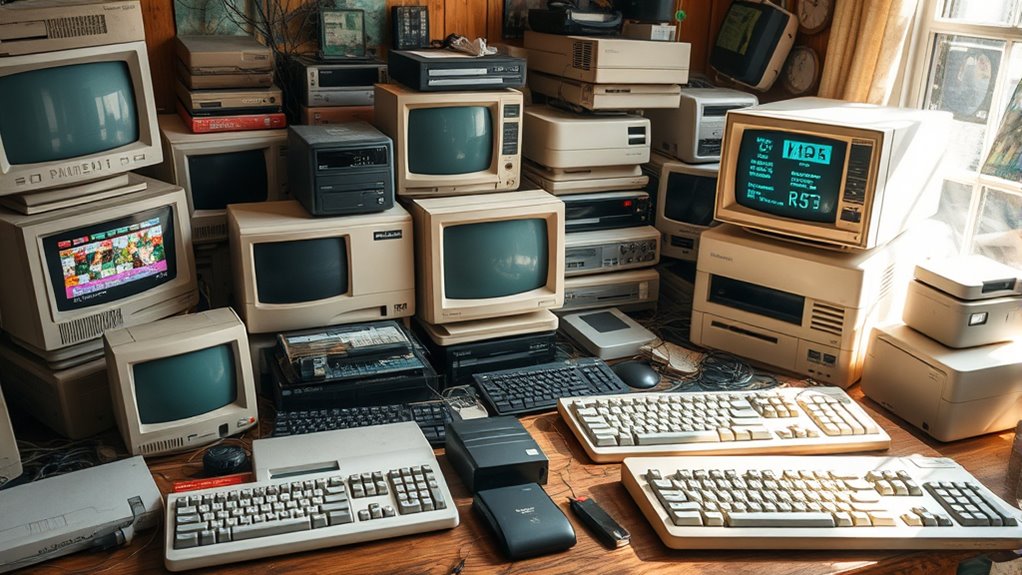
Expanding and diversifying your collection allows you to explore different types of vintage computers and uncover unique systems you might not have considered initially. By seeking out various models, you can discover rare machines that add depth to your collection. Modding and customizing these systems not only enhances their performance or appearance but also gives you a hands-on connection to their history. Additionally, diversifying your collection supports digital preservation by keeping older hardware and software alive. This effort ensures that these vintage computers remain functional and accessible for future generations. Broaden your scope by exploring different eras, manufacturers, and system types. The more diverse your collection, the richer your understanding and appreciation of retro computing become.
Frequently Asked Questions
What Are the Most Valuable Vintage Computers to Seek Out?
You should seek out rare hardware like the Apple I, Commodore PET, and early IBM PCs, as these are highly valuable to collectors. Focus on well-preserved models with original parts, and research their history for added value. Collector tips include verifying authenticity, avoiding damaged units, and understanding market trends. These vintage computers often fetch top dollar, making them excellent investments for enthusiasts.
How Do I Verify the Authenticity of a Retro PC?
You’ll want to verify the authenticity of a retro PC like it’s your life’s mission; it’s that significant. Start with hardware authentication by examining serial numbers, stickers, and internal components against trusted records. Provenance verification is essential—ask for original purchase receipts or documentation. Research the model’s unique features, and compare photos online. Trust your instincts, and don’t hesitate to consult experts—this guarantees your vintage treasure is genuinely historic.
Are There Recommended Tools for Restoring Vintage Machines?
You should start with essential restoration tools like screwdrivers, anti-static brushes, and precision tweezers, along with cleaning supplies such as isopropyl alcohol, microfiber cloths, and compressed air. These help you safely disassemble, clean, and restore your vintage machine. Investing in a multimeter can also assist in diagnosing electrical issues. Always handle components carefully and work in a static-free environment to prevent damage during your restoration process.
How Can I Troubleshoot Common Issues in Old Computers?
Imagine turning on your vintage computer, only to find it won’t boot. You should start with software diagnostics to identify issues. If software checks out, then consider hardware replacement—like swapping out a failing RAM module. Regularly clean connections and inspect for corrosion. Troubleshooting becomes easier when you systematically test components, ensuring your retro PC runs smoothly again and preserves its nostalgic charm.
What Are the Best Online Platforms for Rare Vintage Computer Parts?
You should explore collector communities and online marketplaces like eBay, Reddit, and specialized forums to find rare vintage computer parts. These platforms connect you with passionate collectors and sellers who often list hard-to-find components. Engaging with these communities helps you get insider tips, verify authenticity, and discover unique parts. Regularly checking these sites boosts your chances of sourcing rare vintage computer parts and building your retro PC collection.
Conclusion
Starting your vintage computer collection is a rewarding journey. Did you know that the retro computing market has grown by over 25% in the last five years? As you explore, remember to stay patient and passionate. With proper care and community support, your collection can become a fascinating window into tech history. Embrace the nostalgia, and enjoy preserving these incredible machines for generations to come.