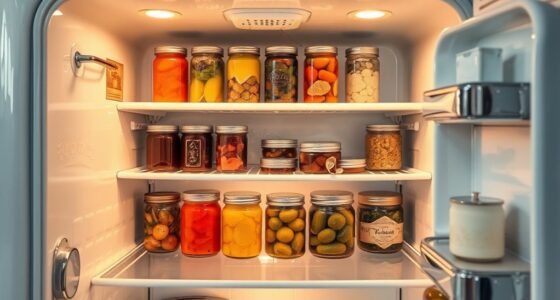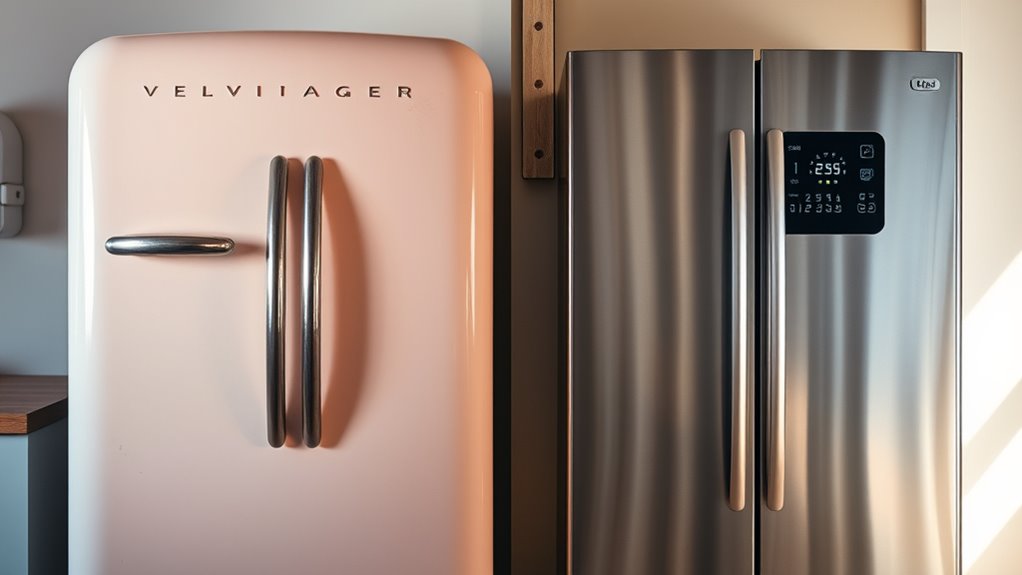

Modern appliances have advanced energy-saving features like smart sensors and variable speed motors, making them more efficient than vintage models. Vintage appliances, built with older technology, tend to consume more energy, leading to higher utility bills. While they’re often more durable and easier to repair, their higher energy use can offset those benefits. To understand which option might save you more long-term, explore the details behind each type’s technology and performance.
Key Takeaways
- Modern appliances incorporate energy-saving features like smart sensors and variable speed motors, improving efficiency over vintage models.
- Vintage appliances tend to consume more energy due to older, less efficient technology.
- Technological advances in modern units reduce utility bills despite potentially higher repair costs.
- Energy efficiency improvements in modern appliances can offset their shorter lifespans and repair expenses.
- Choosing between vintage and modern depends on balancing energy savings, repair costs, and appliance longevity.

When comparing vintage and modern appliances, it’s clear that advancements in technology have considerably improved energy efficiency over the years. This progress directly impacts your daily life, especially when considering how long an appliance lasts and how much you’ll spend on repairs. Vintage appliances often have a reputation for durability, with many models boasting a long appliance lifespan that can span decades. However, their older design means they tend to consume more energy, which can lead to higher utility bills over time. On the other hand, modern appliances are engineered with energy-saving features, but they sometimes come with a shorter lifespan due to the rapid pace of technological innovation and cheaper manufacturing materials. This can result in more frequent replacements or repairs, which might offset some of the energy savings if you factor in repair costs.
When you look at repair costs, vintage appliances usually demand less expensive repairs because their components are simpler and more accessible. Many repairs can be DIY projects, and parts are often readily available because these appliances were built to last. Conversely, modern appliances incorporate complex electronics and specialized parts, making repairs more costly and sometimes requiring professional service. If you’re someone who prefers low-maintenance appliances that are easy to fix yourself, vintage models might seem appealing despite their higher energy consumption. But if you’re prioritizing energy efficiency and lower utility bills, modern appliances, although potentially more expensive to repair, often offer features that reduce energy use substantially, such as smart sensors, variable speed motors, and advanced insulation.
Furthermore, the appliance lifespan plays a crucial role in your decision-making process. Vintage appliances, while generally robust, might outlast many modern units in terms of durability, but they also tend to be less efficient. Modern appliances, although they might need replacing sooner, often include upgrades that help you save energy during their operational life—saving you money on electricity in the long run. The choice depends on your priorities: if you value longevity and simplicity, vintage appliances could be more appealing, but if you want to cut energy costs and embrace new technology, modern appliances are likely the better option. Remember, the trade-off is often between initial repair costs, energy savings, and appliance lifespan, so weigh these factors carefully to determine what best fits your household needs. Additionally, staying informed about energy-efficient features can help you make better choices when selecting appliances.
Top picks for "energy efficiency vintage"
Open Amazon search results for this keyword.
As an affiliate, we earn on qualifying purchases.
Frequently Asked Questions
How Do Vintage Appliances Impact Overall Energy Consumption?
Vintage appliances tend to consume more energy, increasing your overall energy bills. They often lack modern efficiency features, which means higher manufacturing energy and a lower recycling potential. By using them, you extend their lifespan, reducing waste, but you also miss out on energy savings modern appliances offer. To balance sustainability and cost, consider upgrading or recycling vintage appliances when possible, and always look for energy-efficient options to reduce your environmental impact.
Are Vintage Appliances More Environmentally Friendly Than Modern Ones?
Vintage appliances aren’t inherently more environmentally friendly than modern ones. While they offer aesthetic appeal and recycling benefits by reducing waste, they often lack energy-efficient features, leading to higher energy consumption. If you value sustainability, consider repairing or upgrading vintage pieces with modern technology. This way, you enjoy their charm while benefiting from energy savings and supporting recycling efforts, making your choices more eco-conscious overall.
What Maintenance Improves Efficiency in Vintage Appliances?
You can improve your vintage appliance’s efficiency by establishing regular cleaning routines to remove dust and debris that hinder performance. Additionally, consider component replacements like seals, belts, or gaskets, which often wear out over time. These simple steps help make sure your vintage appliance operates smoothly, conserving energy and extending its lifespan. Keep up with maintenance, and you’ll enjoy better efficiency and reliability from your beloved vintage piece.
Can Vintage Appliances Be Upgraded for Better Energy Performance?
Yes, you can upgrade vintage appliances with retro upgrades to improve their energy performance. Replacing old parts, adding modern insulation, or installing energy-efficient components can boost their efficiency. These improvements help reduce energy consumption while preserving the vintage look and charm. By focusing on efficiency improvements through retro upgrades, you enjoy a more sustainable appliance that performs better without sacrificing its nostalgic appeal.
How Do Energy-Saving Features in Modern Appliances Compare to Vintage Models?
Think of modern appliances as the knights of energy saving, equipped with smart features that outperform vintage models. You’ll find better energy-saving features, which improve appliance longevity and are backed by trusted brand reputation. These innovations make modern appliances more efficient, helping you save money and reduce your carbon footprint. Unlike vintage models, they adapt to your needs, ensuring you get the most out of every watt and extend appliance life.
Conclusion
You might be surprised to learn that modern appliances can be up to 50% more energy-efficient than vintage ones. Switching to newer models not only saves you money on your energy bills but also helps reduce your carbon footprint. So, if you’re still using an old fridge or washer, consider upgrading. It’s a simple step that makes a big difference for your wallet and the environment—plus, you’ll enjoy the convenience of smarter technology.