
Vintage kitchen linens like aprons and towels add charm and character to your space, creating a warm, nostalgic atmosphere. These pieces showcase craftsmanship and vibrant patterns that stand out in any decor. Incorporating them thoughtfully brings a timeless style, whether draped casually or used as accents. Proper care and smart placement help preserve their beauty for years. Keep exploring to discover how to incorporate these lovely textiles into your home effortlessly.
Key Takeaways
- Vintage kitchen linens like aprons and towels add nostalgic charm and character to both traditional and modern decor.
- Selecting pieces with vibrant patterns, embroidery, or nostalgic motifs enhances their visual appeal and style impact.
- Incorporate vintage linens as decorative accents, such as draped aprons or hanging towels, to create a cozy, curated look.
- Proper care, including gentle washing and storage, preserves the quality and vividness of vintage textiles.
- Mixing vintage linens with contemporary elements introduces a unique, timeless aesthetic to your kitchen space.
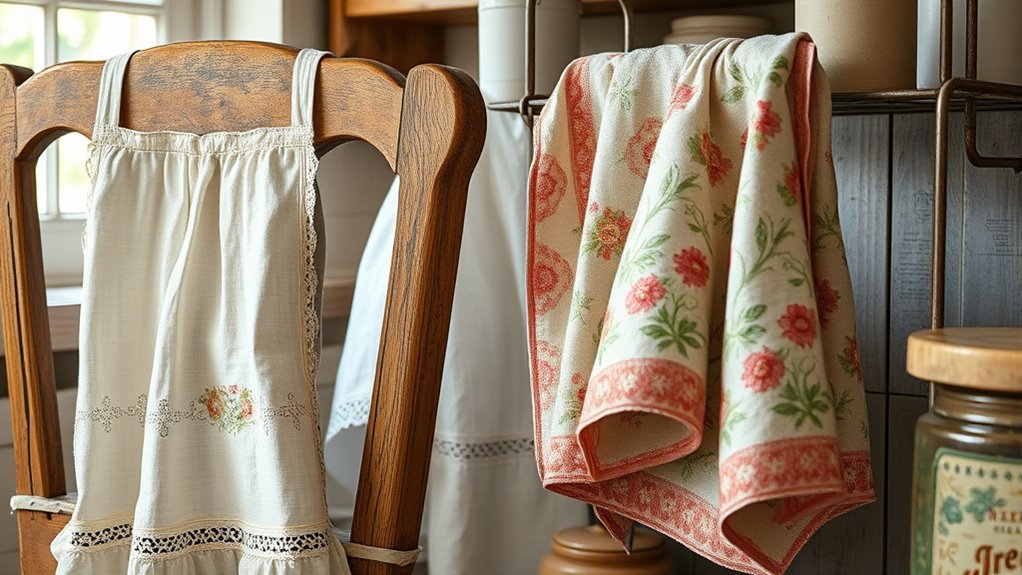
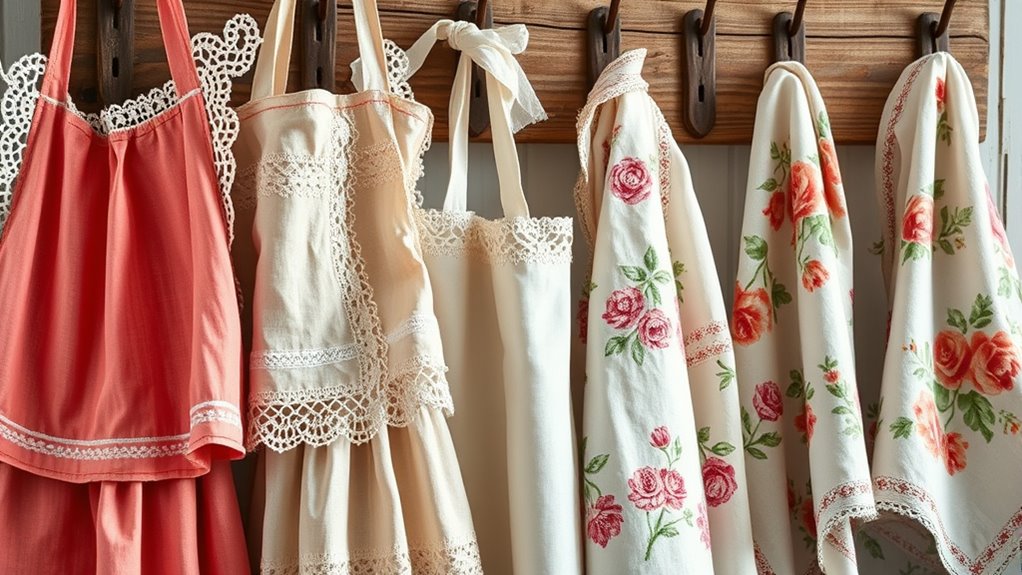
Have you ever wondered how vintage kitchen linens can add charm and character to your home? These pieces, from delicate aprons to colorful towels, carry stories and craftsmanship that new textiles simply can’t replicate. When you incorporate vintage linens into your decor, you’re not just adding style—you’re creating a warm, nostalgic atmosphere that invites conversation and admiration. To keep these treasures looking their best, caring for antique fabrics becomes essential. You should handle them gently, avoiding harsh detergents or bleach that can weaken fibers. Instead, opt for mild soaps and cold water, and always wash vintage linens separately from newer fabrics to prevent color bleeding. Air drying is preferable, as machine drying can cause delicate fibers to weaken or shrink. Storing them properly in acid-free tissue paper and avoiding direct sunlight will help preserve their vibrant colors and intricate patterns for years to come. Regularly inspecting for signs of deterioration allows you to address issues early, maintaining their beauty and integrity. Additionally, understanding the vintage textile market can help you identify authentic pieces and ensure proper valuation and care. Incorporating vintage linens into modern decor offers a delightful contrast that enhances your home’s aesthetic. Imagine a sleek, contemporary kitchen with a splash of vintage character—an antique apron casually draped over a modern chair or a colorful, embroidered towel hanging from a minimalist rack. These touches add personality without overwhelming your space. Mixing old and new can create a curated, layered look that feels both fresh and timeless. You can frame vintage fabric snippets as wall art, turning them into conversation pieces, or use antique linens as tablecloths or placemats for special occasions. When selecting pieces, focus on those with vibrant patterns, delicate embroidery, or nostalgic motifs that complement your existing decor. The key is to strike a balance—let vintage linens stand out as focal points or subtle accents, depending on your style. Incorporate them thoughtfully, and they’ll bring a sense of history and warmth that modern materials often lack.
Frequently Asked Questions
How Can I Identify Authentic Vintage Kitchen Linens?
To identify authentic vintage kitchen linens, look for signs of age like faded fabric dyes and natural wear. Check sewing techniques; vintage items often feature hand-stitched hems or intricate embroidery, not machine-produced finishes. Feel the fabric—authentic pieces tend to be made from natural fibers like linen or cotton, with a slightly coarse texture. Avoid linens with overly vibrant dyes or modern stitching, which may indicate reproduction.
What Are the Best Ways to Care for Vintage Linens?
Did you know that proper care can extend vintage linens’ life by up to 50%? To preserve fabric quality, always hand wash with gentle detergent and cold water. Use stain removal techniques like soaking in a mixture of baking soda and water for stubborn spots. Avoid harsh chemicals, and air dry to prevent damage. This guarantees your cherished linens stay vibrant and intact for years to come.
Where Can I Find Rare Vintage Apron Designs?
You can find rare vintage apron designs by exploring online marketplaces like eBay and Etsy, where collectors often list unique apron styles and rare finds. Thrift stores and vintage fairs are also great for uncovering one-of-a-kind pieces. Additionally, join vintage linen groups on social media to connect with collectors who might share or sell rare apron styles. Be patient and ready to act quickly when you spot that special piece!
How Do Vintage Towels Differ From Modern Ones?
Think back to the age of fabric dyeing, and you’ll see vintage towels differ from modern ones in quality and character. You notice the richer, often more intricate patterns, and the textiles are usually softer due to better textile preservation. Vintage towels typically use natural dyes, giving them a unique hue, whereas modern towels often rely on synthetic dyes. This results in a more authentic, timeless feel that can’t be replicated today.
Can Vintage Linens Be Used in Everyday Cooking?
Yes, you can use vintage linens in everyday cooking, but keep in mind that their modern fabric and daily durability might not match today’s standards. Vintage towels and aprons add charm and style, but they may require gentle washing and careful handling to prevent wear. If you’re comfortable with extra care, incorporating vintage linens into your daily routine can bring nostalgic elegance to your kitchen.
Conclusion
Embracing vintage kitchen linens lets you add timeless charm to your space, whether it’s a classic apron or a beautifully embroidered towel. Think of it like discovering a hidden record in your grandma’s attic—full of history and character. By incorporating these linens, you’ll create a cozy, nostalgic vibe that’s both stylish and functional. So, go ahead and channel your inner vintage vixen—your kitchen’s about to become a retro haven!