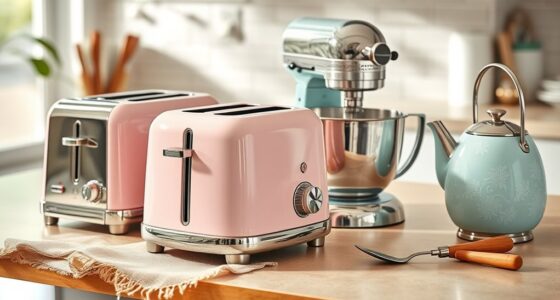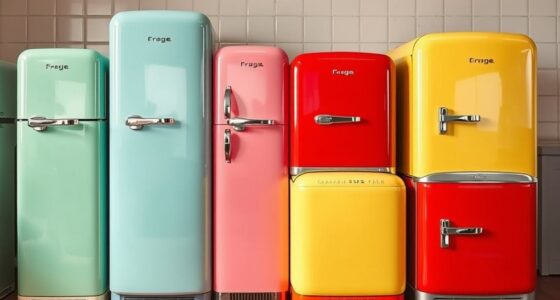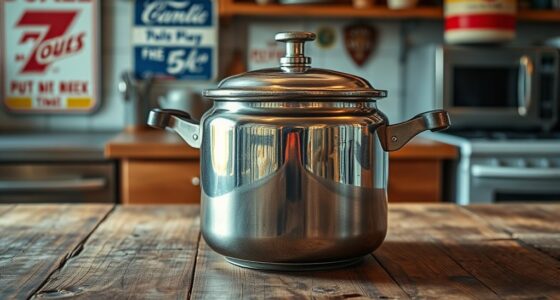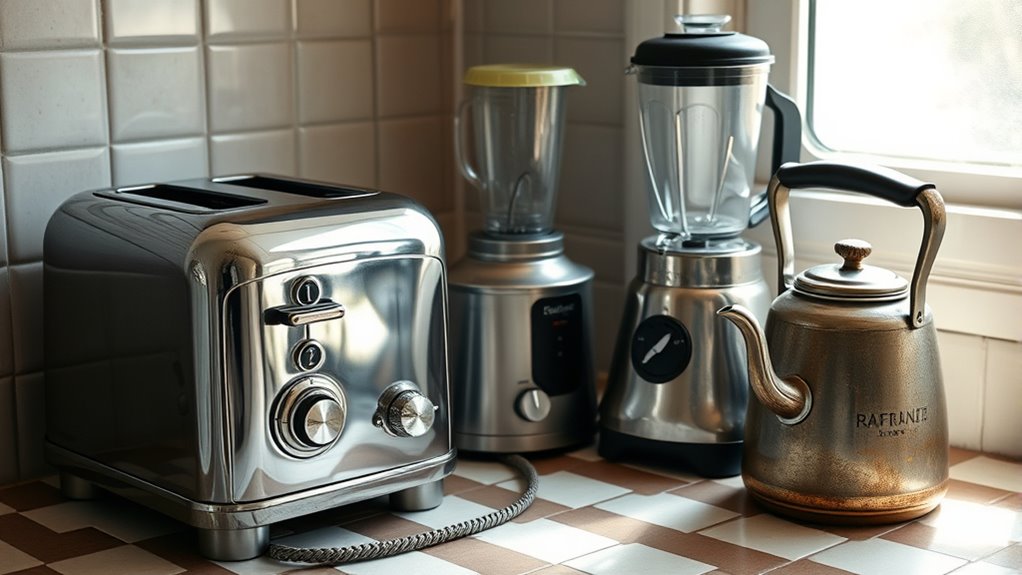

To safely use old kitchen appliances today, start by thoroughly inspecting them for frayed cords, cracks, or signs of burning. Always plug them into grounded outlets, avoid overloading circuits, and keep them clean to prevent overheating. Regular maintenance and quick repairs are essential, especially since vintage models often lack modern safety features. Stay vigilant for warning signs like melting plastic or unusual smells, and if you continue exploring, you’ll discover more tips to keep your kitchen safe.
Key Takeaways
- Inspect appliances thoroughly for damage or wear before plugging in or use.
- Use grounded outlets and avoid overloading circuits to prevent electrical hazards.
- Keep appliances clean and free of dust or debris to reduce fire and overheating risks.
- Replace worn cords, damaged plugs, and faulty parts promptly for safety.
- Never leave vintage appliances unattended during operation and address any unusual signs immediately.
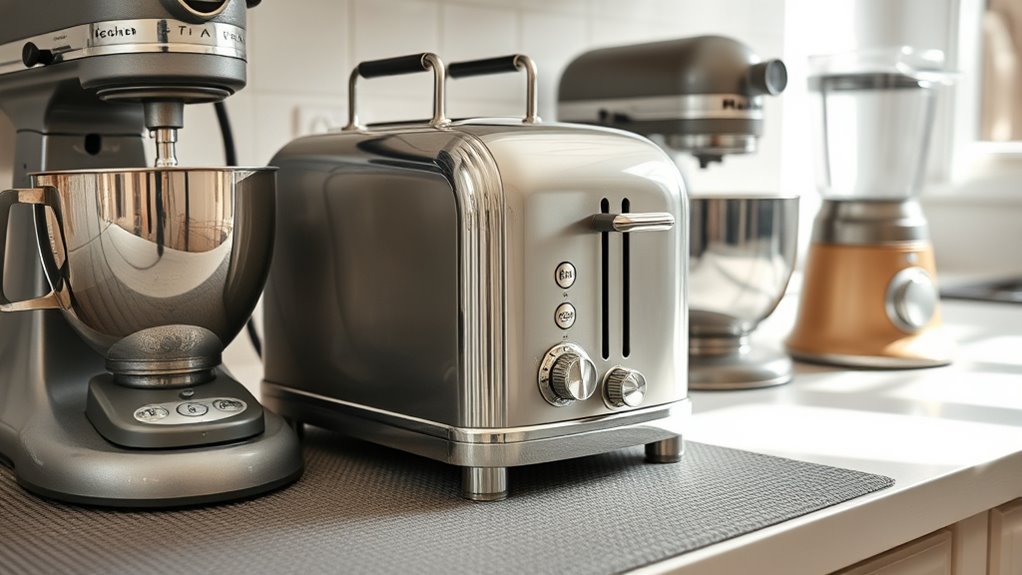
Old kitchen appliances can be a cost-effective and nostalgic way to cook, but using them safely is essential to prevent accidents or damage. Many vintage appliances were built before modern safety standards, so you need to be extra cautious when operating them. The risk of electric shock is a significant concern, especially if the wiring is worn or damaged over the years. Frayed cords, exposed wires, or cracked insulation can pose serious hazards. Always inspect your appliances thoroughly before plugging them in. If you notice any irregularities, avoid using the appliance until it has been repaired or replaced. Using old appliances with damaged wiring increases the risk of electric shock, which can cause severe injuries or even be fatal. Additionally, these appliances can become fire hazards if they are not maintained properly. Outdated electrical components may overheat or spark, especially if they haven’t been used in a while or if the internal parts have degraded over time. To minimize this risk, always ensure that your appliance is in good working order. Keep an eye out for signs of wear such as scorch marks, melting plastic, or burning smells when you operate vintage appliances. Never ignore these warning signs, and disconnect the appliance immediately if you notice anything unusual. It’s also wise to use appliances on grounded outlets, which provide an extra layer of safety against electrical faults. Avoid overloading circuits, as older appliances often draw more power than modern ones, and this can overload your electrical system, increasing the risk of fire. Moreover, never leave old appliances unattended while in use. Many vintage models lack modern safety features like automatic shut-offs or overheating protection, so a small malfunction can quickly turn dangerous. Make sure to keep your appliances clean and free of dust, grease, or debris, as these can also cause overheating or fires. Regular maintenance, such as replacing worn cords or updating old plugs, enhances safety and prolongs the life of your appliances. It’s also helpful to know the history of your appliance’s electrical safety standards and updates, which can guide necessary upgrades. When in doubt, consult a professional electrician who can assess your vintage appliances and make necessary upgrades to meet current safety standards. Remember, age alone doesn’t make an appliance unsafe, but neglecting proper maintenance and safety checks can turn a nostalgic treasure into a hazard. By staying vigilant and proactive, you can enjoy your old kitchen appliances while keeping yourself and your home safe from electric shocks and fire risks.
vintage kitchen appliance safety inspection kit
As an affiliate, we earn on qualifying purchases.
As an affiliate, we earn on qualifying purchases.
Frequently Asked Questions
Can I Still Find Replacement Parts for Vintage Appliances?
Yes, you can still find replacement parts for vintage appliances through vintage repair specialists, online marketplaces, and antique appliance stores. Parts availability varies depending on the model and age, but dedicated collectors and repair experts often keep stock or can source rare components. Regularly check vintage repair forums and specialty shops, as they’re valuable resources for maintaining and restoring your old appliances with authentic parts.
Are Old Appliances More Energy-Efficient Than Modern Ones?
You might find it surprising, but old appliances often aren’t more energy-efficient than modern ones. While they may seem charming, they usually lack the advanced energy savings and eco-friendliness features built into new models. Upgrading can reduce your energy consumption and help the environment. So, if you’re aiming for better eco-friendliness, investing in newer appliances is a smart move that benefits both your wallet and the planet.
How Do I Dispose of or Recycle Outdated Kitchen Appliances?
You should start by checking local recycling programs or appliance disposal events in your area. Consider appliance donation if it’s still in working condition, helping someone in need. Always disconnect and clean the appliance before recycling or donating. Many communities have specific disposal guidelines, so follow them carefully. This way, you guarantee your outdated kitchen appliances are responsibly recycled or donated, reducing environmental impact and helping others.
What Are Signs My Appliance Is Unsafe to Use?
A stitch in time saves nine, so watch for signs your appliance is unsafe. If you notice frayed cords, sparks, strange noises, or visible corrosion, stop using it immediately. These issues increase electric shock risks and suggest internal damage. Discoloration, burning smells, or frequent breaker trips also indicate it’s time to replace the appliance. Always prioritize safety—if in doubt, consult a professional or dispose of the appliance properly.
Can I Convert Old Appliances to Be More Energy-Efficient?
Yes, you can convert old appliances for better energy efficiency through appliance upgrades and vintage restoration. Start by replacing outdated parts with modern, energy-saving components. Consider sealing leaks or insulating where possible. You might also upgrade motors or controls to newer standards. These efforts help preserve your vintage appliances while reducing energy consumption, making them safer and more efficient for everyday use. Just guarantee you follow safety guidelines during modifications.

GE 3-Outlet Extender Wall Tap, Grounded Adapter Plug, Indoor Rated, 3-Prong, Perfect for Travel, UL Listed, White, 52203
Expansion – Make room for your additional power needs by converting 1 grounded outlet into 3.
As an affiliate, we earn on qualifying purchases.
As an affiliate, we earn on qualifying purchases.
Conclusion
By following these safety tips, you can enjoy your vintage appliances without worry. Did you know that appliances over 20 years old are more likely to cause electrical fires? That’s a 50% higher risk compared to newer models. Regular inspections, proper maintenance, and cautious use help minimize these dangers. So, embrace your old kitchen treasures—just do it safely. With a little care, you can keep them running smoothly and safely for years to come.

Bergen Industries Inc PS913163 3-Wire Appliance and Power Tool Cord, 9 ft, 16 AWG, 13A/125V AC, 1625w, Black
For use with MAJOR APPLIANCES, MOTORS and POWER TOOLS, U-Ground NEMA 5-15
As an affiliate, we earn on qualifying purchases.
As an affiliate, we earn on qualifying purchases.

RKURCK Thermal Circuit Breaker 20 Amps, Thermal Overload Protector L1 Series 125-250V AC 50V DC Push Button Manual Reset Circuit Breaker 20A 2 Pcs
Compact, single pole, push-to-reset thermal circuit breakers
As an affiliate, we earn on qualifying purchases.
As an affiliate, we earn on qualifying purchases.