
The journey from iceboxes to smart fridges started with early food preservation methods like salting and using natural ice stored in cellars. As technology advanced, mechanical refrigeration replaced ice, making cooling more efficient and safer. In the 20th century, household refrigerators became common, with innovations focusing on energy efficiency and eco-friendly refrigerants. Today, smart technology and environmental concerns shape modern designs. Continue exploring to discover how each step has transformed food storage forever.
Key Takeaways
- Early refrigeration relied on natural ice, snow, and traditional preservation methods like salting and drying.
- Ice harvesting and insulated ice houses extended ice availability before mechanical refrigeration was developed.
- Mechanical refrigeration innovations in the 19th century replaced natural ice, enabling year-round, large-scale food storage.
- The 20th century saw the transition from iceboxes to electric refrigerators using safer, more efficient refrigerants.
- Modern smart refrigerators incorporate IoT technology, automation, and eco-friendly refrigerants, evolving from simple iceboxes to connected devices.

Samsung 22 cu. ft. Smart 3-Door French Door Refrigerator with External Water Dispenser, Stainless Steel, RF22A4221SR/AA
MODERN DESIGN: Explore features that are not only useful but beautiful. Anchored by a Fingerprint Resistant Finish that…
As an affiliate, we earn on qualifying purchases.
As an affiliate, we earn on qualifying purchases.
Early Methods of Food Preservation
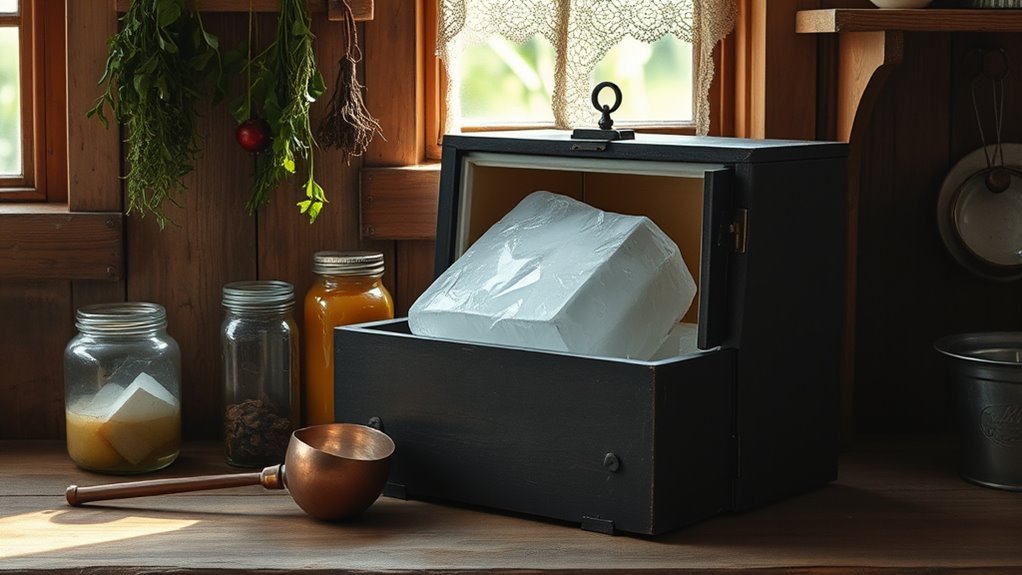
Before modern refrigeration, people relied on various traditional methods to keep food fresh. These preservation techniques prioritized food safety and extended shelf life without electricity. Salting, smoking, and drying were common methods, reducing moisture and inhibiting bacterial growth. Canning involved sealing food in jars and boiling them to kill microbes, creating a vacuum that preserved food for months. Sugaring, like making jams and jellies, also helped preserve fruits by creating an environment unsuitable for bacteria. In some regions, ice and snow were stored in cellars to cool perishable items naturally. These methods required skill and understanding of local climate, but they notably improved food safety and freshness. Such techniques laid the foundation for the development of more advanced refrigeration systems later on. The use of temperature control was essential in these early preservation methods, setting the stage for modern refrigeration technology. Additionally, the development of insulation techniques helped in maintaining consistent low temperatures in iceboxes and early cold storage.
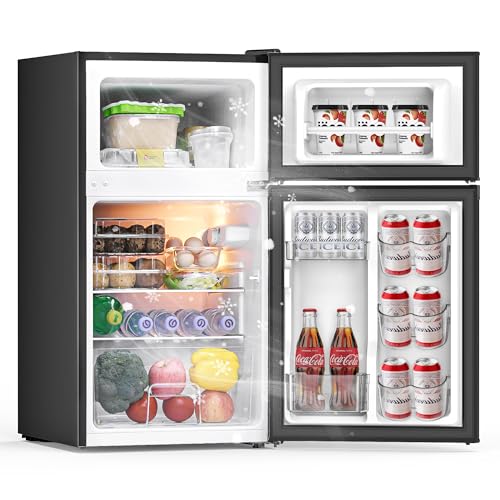
Frostorm 3.2 Cu Ft Mini Fridge with Freezer – Energy Efficient, Double Door Upright Freezer for Bedroom, Office & Dorm,restaurants | Small Fridge, Glass Shelves,Interior Light,ETL Certified,etc
【True Double Door Design with Separate Freezer 】Experience organized cooling with dedicated compartments. This 3.2 cubic feet mini…
As an affiliate, we earn on qualifying purchases.
As an affiliate, we earn on qualifying purchases.
The Birth of Ice-Based Cooling Systems
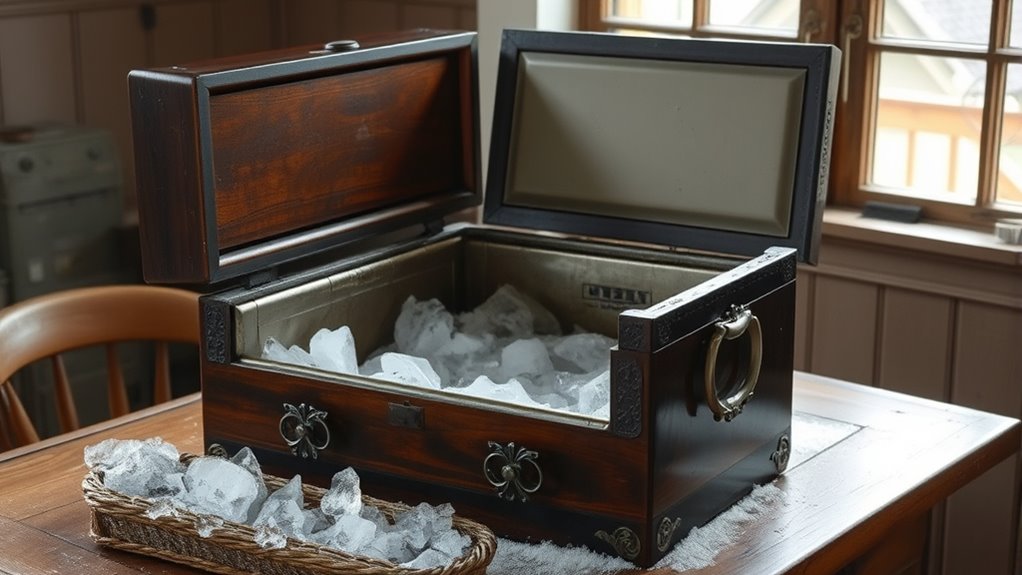
You see, early on, people stored ice in insulated pits to keep food cold, relying on natural ice during winter. They also used techniques to harvest ice from lakes and rivers, which became essential for preserving perishables. Later, mechanical ice-making devices revolutionized this process, making ice more available year-round and paving the way for modern refrigeration. Additionally, the development of artificial ice production further transformed the industry, enabling widespread access to ice regardless of seasonal limitations.
Early Ice Storage Methods
Long before modern refrigerators, people relied on natural ice to keep their food cool. They used early ice storage methods to preserve perishable items, often placing ice in insulated pits or simple structures. These preservation techniques slowed bacterial growth and extended shelf life. To visualize, consider this table:
| Ice Storage Method | Location | Insulation Materials |
|---|---|---|
| Ice cellars | Underground basements | Straw, sawdust, hay |
| Ice pits | Shaded outdoor areas | Earth, wood lining |
| Ice houses | Remote, cold environments | Thick stone, snow |
| Ice boxes | Indoor, near kitchens | Sawdust, straw |
| Snow storage | Mountain regions | Snow-packed chambers |
These methods laid the foundation for refrigeration, showcasing innovative preservation techniques using natural ice. Additionally, insulation materials played a crucial role in maintaining the low temperatures needed for ice storage, highlighting the importance of effective thermal insulation in historical cooling systems. Proper ventilation was also essential to prevent moisture buildup and maintain ice integrity over time, and advances in material technology have further improved the efficiency of modern cooling systems.
Natural Ice Harvesting Techniques
Natural ice harvesting techniques marked the beginning of large-scale ice production, transforming how people preserved and cooled food. During winter, you would locate frozen lakes and ponds, then carefully cut blocks of ice using saws or axes. These blocks, known as ice harvesting, were then removed and stored in insulated ice houses to protect against melting. This natural cooling method allowed communities to extend food preservation well into warmer months. Ice harvesting required skill and knowledge of weather patterns and ice thickness. Once stored, the ice could be shipped or used locally to keep perishables fresh, and communities relied heavily on climatic conditions to ensure successful harvests. Properly managing storage techniques was crucial to prevent spoilage and waste during transportation and storage. This process laid the foundation for modern refrigeration by harnessing natural cooling, making ice more accessible and reliable before mechanical refrigeration innovations emerged. Additionally, the development of refrigeration techniques helped improve the efficiency and safety of ice harvesting and storage. As technology advanced, mechanical refrigeration replaced natural ice harvesting, greatly increasing the scale and reliability of ice production worldwide. The reliance on technological advancements eventually led to the development of mechanical refrigeration, revolutionizing food preservation and storage worldwide.
Mechanical Ice Making Innovations
The development of mechanical ice making innovations revolutionized cooling systems by enabling the production of ice on a large scale, independent of natural conditions. These innovations relied on advances in compressor technology and the cooling cycle, which allowed machines to continuously produce ice efficiently. You can now generate ice rapidly, essential for food preservation and industrial use. The key was the invention of the vapor compression cycle, which compresses refrigerant to absorb heat and create ice. This breakthrough made ice production reliable, scalable, and less dependent on weather. As a result, ice machines became crucial for commercial and domestic cooling. Refrigeration technology also improved safety and hygiene standards by reducing reliance on traditional ice sources. The evolution of compressor designs further enhanced efficiency and expanded the capabilities of ice-making equipment. A deeper understanding of cooling cycles contributed to optimizing the process, making it more energy-efficient and environmentally friendly. Additionally, innovations in energy efficiency have helped reduce operational costs and environmental impact over time.

ZeroR AC Refrigerant R134a Replacement – Eco-Friendly, 100% Natural Hydrocarbon Gas – Compatible and Easy to Install with R134a A/C Recharge Systems – 3 Cans (6oz Each)
GREEN REFRIGERATION SOLUTION: ZeroR AC Refrigerant is a 100% natural hydrocarbon gas, offering a more eco-friendly alternative to…
As an affiliate, we earn on qualifying purchases.
As an affiliate, we earn on qualifying purchases.
The Rise of Mechanical Refrigeration
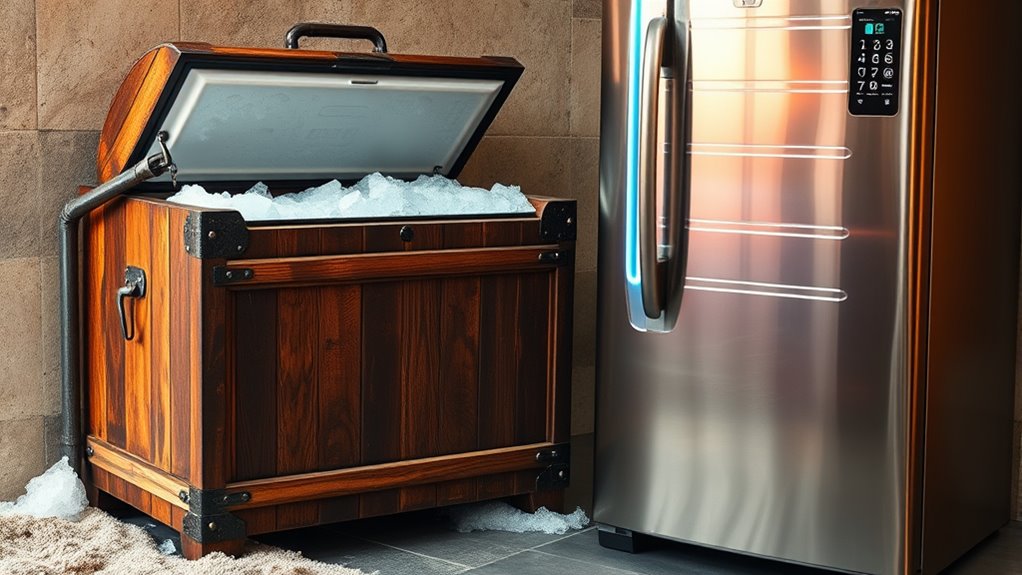
Advancements in technology during the 19th century sparked the rise of mechanical refrigeration, transforming how you preserve food and control temperature. Central to this shift was the development of compressor technology, which enabled continuous cooling cycles. Early compressors improved efficiency, making refrigeration more practical for everyday use. Alongside these innovations, refrigerant evolution played a vital role. Initially, toxic gases like ammonia and sulfur dioxide were used, but as safety concerns grew, new refrigerants such as chlorofluorocarbons (CFCs) and later safer alternatives were developed. These changes allowed refrigeration systems to become more reliable and widespread. As a result, you moved from reliance on ice blocks to mechanically cooled environments, paving the way for modern refrigerators and transforming food preservation in homes and industries alike. Additionally, innovations in electric refrigeration systems further enhanced efficiency and usability in both residential and commercial settings, supported by ongoing sound design advancements to improve system diagnostics and user interfaces.

North Dakota Maps – 1974 Ice Box Canyon, ND – USGS Historical Topographic Wall Art – 35in x 44in, Large Wall Art Map
USGS MAPS: These map posters chart topographic data and geographic features recorded by the United States Geological Survey….
As an affiliate, we earn on qualifying purchases.
As an affiliate, we earn on qualifying purchases.
Technological Innovations in the 20th Century
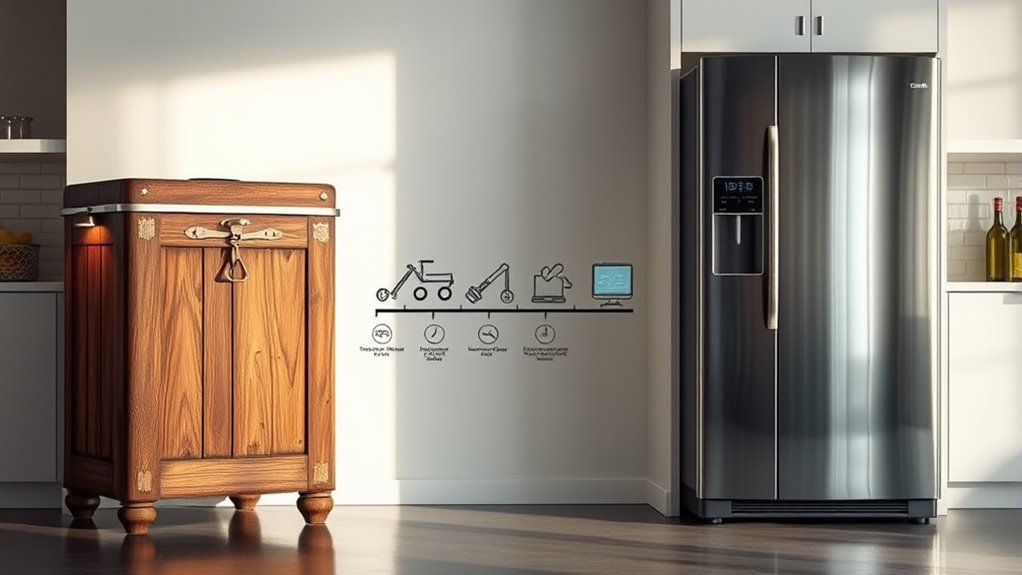
Throughout the 20th century, innovations in refrigeration technology accelerated rapidly, making refrigerators more accessible and user-friendly. You benefit from advanced methods of innovative cooling that improved efficiency and reliability. The refrigerant evolution played a crucial role, evolving from toxic gases like CFCs to safer, environmentally friendly substances such as HFCs and later, natural refrigerants. These changes allowed for more compact, powerful, and energy-efficient appliances. You’ll notice that technological improvements enabled better temperature control, reduced noise, and longer-lasting components. As a result, refrigerators became an essential part of everyday life, simplifying food preservation. Advances in refrigerant technology further contributed to reducing environmental impacts and enhancing appliance performance. This period marked a significant leap forward, setting the foundation for future innovations like smart technology and automation.
The Transition to Household Refrigerators
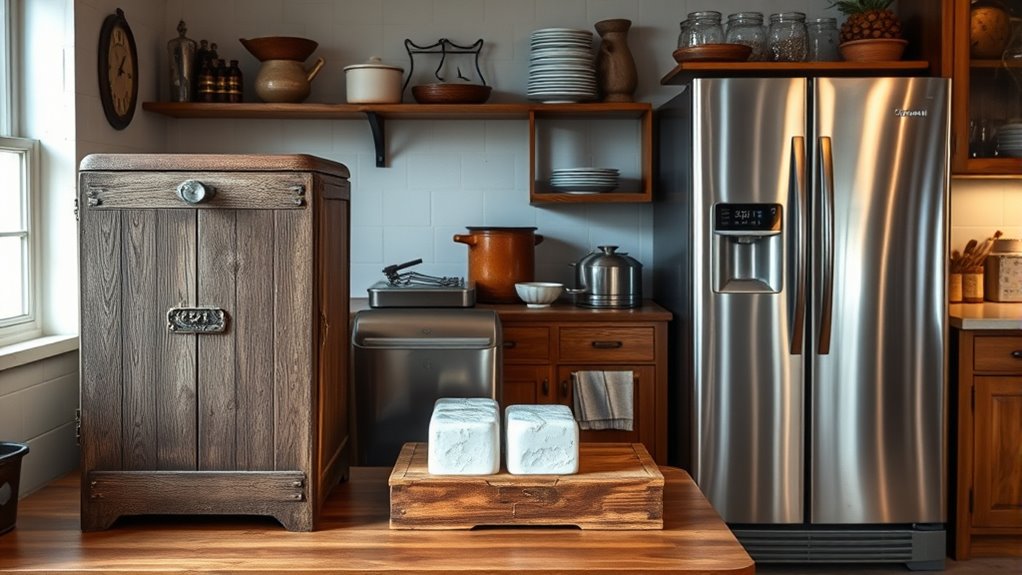
As refrigeration technology improved, it gradually shifted from industrial and commercial use to become a household essential. Early on, ice harvesting played a key role, as large blocks of ice were cut from lakes and stored in icehouses to keep food cold. This method made refrigeration accessible to more households, though it was labor-intensive and seasonal. As scientific understanding advanced, refrigerant evolution transformed the process, replacing dangerous substances like ammonia and sulfur dioxide with safer, more efficient refrigerants. These innovations led to the development of compact, reliable household refrigerators. By the early 20th century, electric-powered units became common, offering a convenient alternative to iceboxes. This progression marked a significant step toward modern refrigeration, fundamentally changing how families preserved and stored food. Additionally, ongoing research into sound healing science and innovative technologies continues to influence modern appliance designs, making refrigerators smarter and more energy-efficient. As a result, the refrigeration industry continues to evolve, integrating new features and sustainable practices.
Cultural and Lifestyle Changes Influencing Design
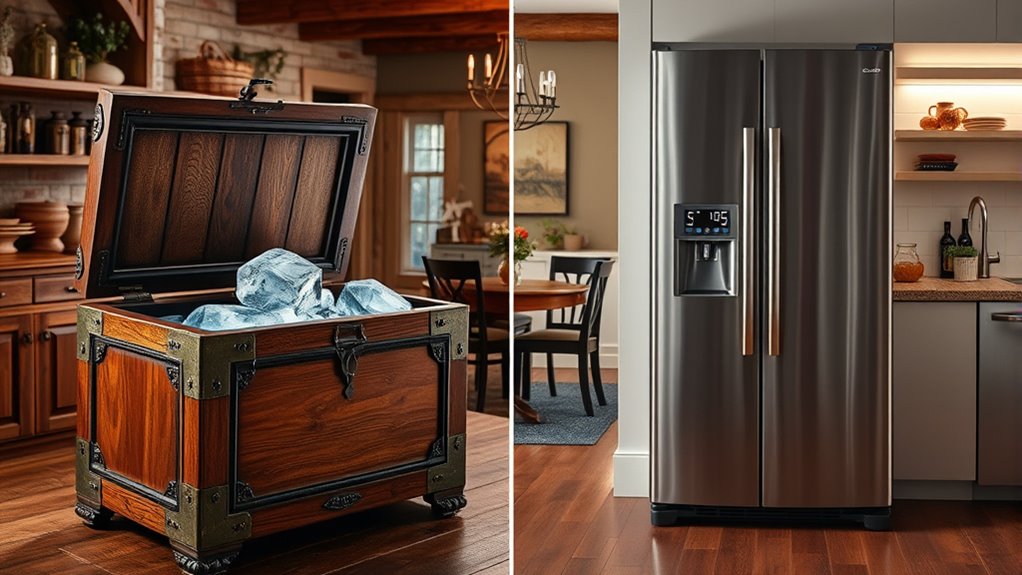
Changes in family dynamics and societal values have profoundly shaped refrigerator design over time. Cultural influences and lifestyle adaptations drive how appliances fit into daily life. You’ll notice that modern refrigerators now accommodate diverse diets, meal prepping, and entertainment needs. For example:
- Customizable storage options for cultural foods
- Smart features aligning with busy, tech-savvy lifestyles
- Design elements reflecting aesthetic preferences and space constraints
- Enhanced organization to support healthier, time-efficient routines
These changes guarantee the fridge isn’t just a storage unit but a reflection of evolving social norms and personal habits. As cultural influences shift and lifestyles become more dynamic, refrigerator design continues to adapt, making appliances more integrated and responsive to your everyday needs.
Environmental Concerns and Sustainability Efforts

You can see how manufacturers are choosing eco-friendly refrigerants to reduce environmental impact. Innovations in energy efficiency help you save power and lower your carbon footprint. These efforts are shaping the future of sustainable refrigeration for everyone.
Eco-Friendly Refrigerant Choices
Eco-friendly refrigerants have become a vital focus in the effort to reduce the environmental impact of refrigeration technology. As you seek sustainable options, green refrigerants and eco friendly gases are gaining popularity. These substances have lower global warming potential and ozone depletion risks. They include:
- Hydrofluoroolefins (HFOs), which offer efficient cooling with minimal environmental impact
- Natural refrigerants like ammonia, CO₂, and hydrocarbons, which are readily available and less harmful
- Hydrofluorocarbons (HFCs) evolving to more eco-friendly variants
- Alternatives that combine safety, efficiency, and sustainability
Switching to these refrigerants helps cut down greenhouse gases and supports global climate efforts. By choosing eco friendly gases, you contribute to a healthier planet while maintaining effective refrigeration.
Energy Efficiency Innovations
Innovations in energy efficiency are transforming refrigeration technology to reduce environmental impact while maintaining ideal performance. Modern refrigerators now feature advanced insulation materials that minimize heat transfer, cutting down energy consumption. Energy labels play a vital role by helping consumers identify models with superior efficiency, encouraging eco-friendly choices. Manufacturers are continuously improving compressor designs and fan systems to optimize power use. Additionally, smart sensors adjust operation based on usage patterns, further reducing waste. These advancements not only lower electricity bills but also lessen greenhouse gas emissions. As you select a new fridge, look for high energy ratings and innovative insulation materials. These improvements demonstrate a strong commitment to sustainability, making your appliance both more eco-friendly and cost-effective over its lifespan.
The Era of Smart and Connected Refrigeration
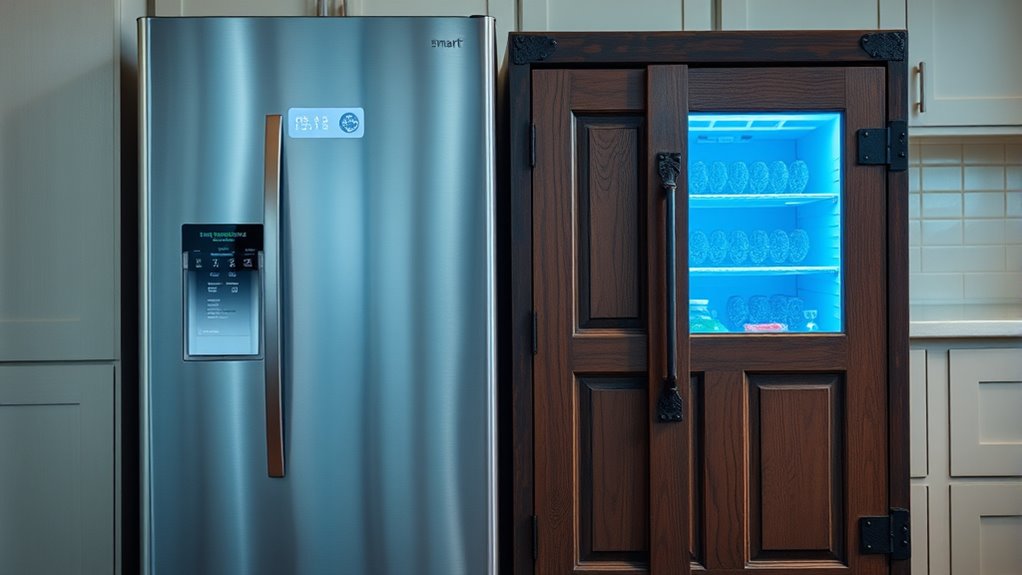
As technology advances, refrigerators have transformed into smart, interconnected devices that seamlessly integrate into our digital lives. You can now control your fridge with voice commands, making meal prep and grocery management easier. Smart sensors monitor temperature, humidity, and door status to optimize freshness and energy use automatically. These innovations enable you to receive real-time alerts about expired items or low supplies. Features like touchscreens provide instant access to recipes and shopping lists. Additionally, Wi-Fi connectivity allows you to check your fridge remotely. Some models even suggest recipes based on your current inventory. This era of smart and connected refrigeration enhances convenience, reduces waste, and adapts to your lifestyle, making your kitchen smarter and more efficient.
Future Trends and the Next Generation of Refrigeration
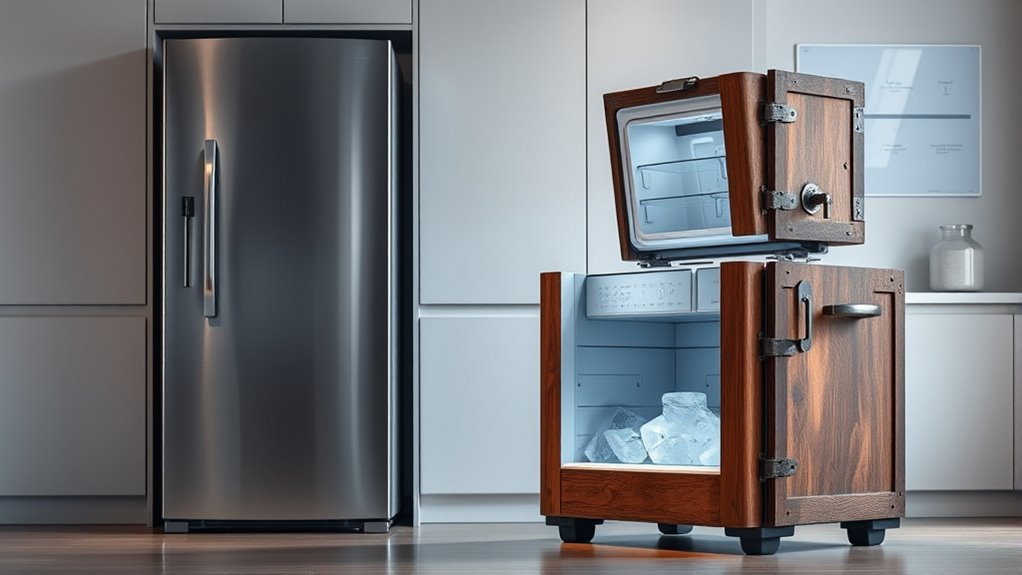
Looking ahead, the next generation of refrigeration will focus on integrating advanced technologies like artificial intelligence and machine learning to create more intuitive and adaptive systems. Quantum cooling promises highly efficient, environmentally friendly cooling methods that reduce energy consumption profoundly. Additionally, innovations in biodegradable insulation will make refrigerators more sustainable by decreasing environmental impact and enhancing energy efficiency. These advancements will enable appliances to optimize performance automatically, adjusting temperature and humidity based on usage patterns and food freshness. Smart sensors will monitor food quality, alerting you when items are nearing expiration. Overall, future refrigeration will prioritize sustainability, efficiency, and user convenience, combining cutting-edge science with eco-conscious design to meet the demands of modern living.
Frequently Asked Questions
How Did Early Societies Store Perishables Before Refrigeration?
Before refrigeration, you relied on ice storage and natural cooling to preserve perishables. You stored food in cool cellars, underground vaults, or near water sources to maintain low temperatures. Using large blocks of ice, you slowed bacterial growth, keeping food fresh longer. Natural cooling methods like snow and ice harvesting helped extend the life of perishable goods. These techniques required careful planning but were effective in early societies.
What Role Did Refrigeration Play in Global Trade Expansion?
Refrigeration revolutionized global trade by enabling cold storage and the Ice trade, which allowed perishable goods like meat, dairy, and produce to be transported over long distances. You can now ship fresh products worldwide, boosting economies and expanding markets. This technology reduced spoilage, increased trade routes, and made global commerce more efficient, transforming how nations exchange food and other temperature-sensitive goods.
How Do Different Cultures’ Food Preservation Methods Compare?
You’ll notice that different cultures rely on various food preservation methods like fermentation techniques and drying methods. For example, Koreans use kimchi fermentation, while Middle Eastern cultures often dry fruits and meats. These methods help preserve flavors and nutrients without refrigeration, reflecting local climate and customs. Comparing these, you see how each culture adapts preservation techniques to sustain food, enhance taste, and maintain tradition across generations.
What Are the Safety Concerns Associated With Early Refrigeration Methods?
Think of early refrigeration like a ticking time bomb—hidden safety hazards lurk beneath. You risk refrigerant leaks that can cause health issues or fires. These methods also lacked proper insulation, making temperature control unreliable and increasing spoilage. Without strict safety standards, you might encounter hazardous chemicals or unsafe conditions, which could threaten your health and safety. Always be cautious with older refrigeration systems to avoid these dangers.
How Has Refrigeration Technology Impacted Modern Food Industries?
Refrigeration technology has revolutionized modern food industries by markedly reducing food waste and improving food safety. You benefit from longer shelf lives, which means less spoilage and waste. Additionally, energy-efficient innovations help lower energy consumption, making operations more sustainable. This advancement allows you to store and distribute fresh products more effectively, ensuring consumers receive quality food while minimizing environmental impact.
Conclusion
Your journey through refrigerator history shows how technology transforms daily life, much like a steady stream shaping a river’s course. Today’s smart fridges symbolize innovation’s promise, quietly guarding your sustenance and connecting you to a future of sustainability. As you reflect, remember that each invention is a ripple in the pond of progress, reminding us that even the simplest act—keeping food fresh—can reflect humanity’s endless pursuit of convenience, connection, and care.