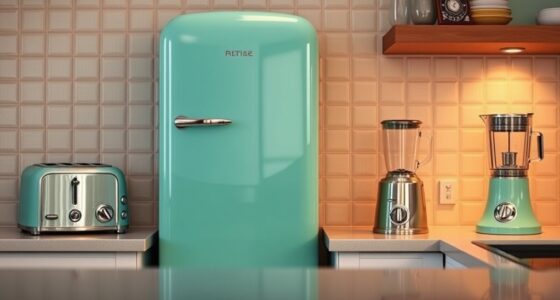
During the 1970s, appliance colors like harvest gold and avocado green became bold statements of style and personality. These hues reflected the era’s experimental spirit, making kitchens lively and personalized. They also signaled a shift away from traditional palettes, embracing vibrancy and self-expression. These colors weren’t just functional—they created moods and fostered social interactions. If you want to uncover more about this colorful decade, there’s plenty more behind the vivid choices that defined an era.
Key Takeaways
- Harvest gold and avocado green exemplify the bold, expressive color palette popular in 1970s appliance design.
- These hues reflected cultural shifts toward vibrant, unconventional aesthetics challenging traditional muted tones.
- Colors like harvest gold and avocado green aimed to evoke warmth, calmness, and optimism in home environments.
- Their use signaled a move toward appliances as style statements, emphasizing individuality and personality.
- The nostalgic appeal of these colors continues to influence vintage-inspired décor and retro design trends today.
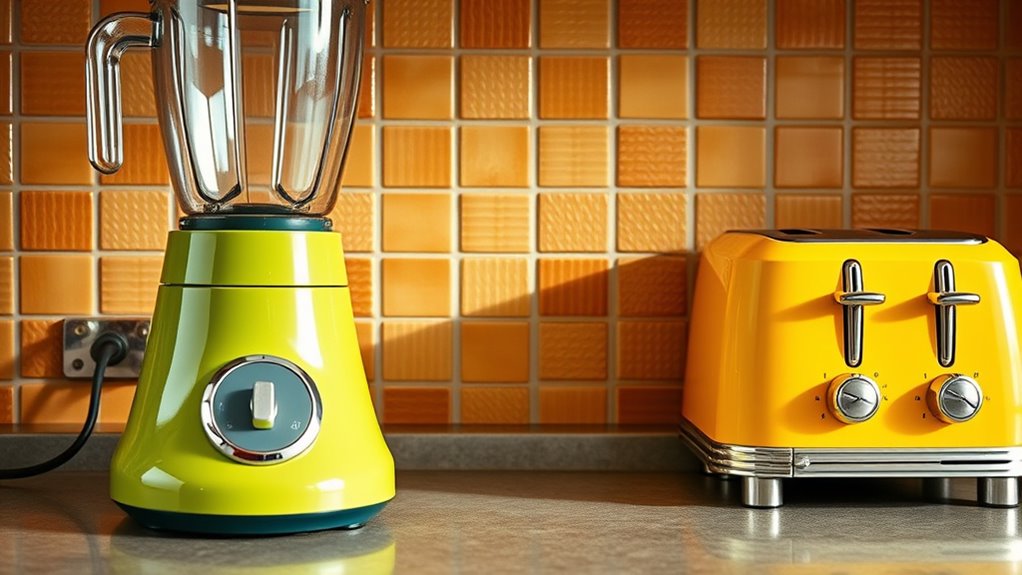
The 1970s was a vibrant decade for appliance colors, reflecting the bold and experimental spirit of the era. During this time, kitchens weren’t just functional spaces—they became expressive showcases of personality and style. If you’re exploring retro kitchen trends, you’ll notice how color choices played a pivotal role in shaping the overall vibe. Bright oranges, deep browns, and, most notably, shades like harvest gold and avocado green, defined the decade’s aesthetic. These colors weren’t accidental; they were carefully chosen to evoke specific feelings and responses, tapping into the principles of color psychology. Bright, lively hues aimed to energize and uplift, transforming mundane chores into more enjoyable experiences.
The 1970s appliance colors reflected bold, energetic choices that expressed personality and style in vibrant, nostalgic kitchens.
As you look back, you’ll see how these appliance colors influenced the ambiance of kitchens. For example, avocado green wasn’t just a trendy color—it was believed to promote a sense of calm and balance, making the space feel more inviting. Harvest gold, with its warm, sunny tone, created a cozy atmosphere that encouraged comfort and social interaction. These choices weren’t just about style—they reflected a desire to create spaces that felt cheerful and optimistic amid the social upheavals of the time. When you incorporate these colors into your kitchen today, you tap into a nostalgic wave that’s both playful and meaningful. Retro kitchen trends from the 70s show that color can be a powerful tool for setting mood, making your kitchen a place where you want to gather and spend time.
The boldness of these appliance colors also signaled a break from more subdued, traditional palettes of earlier decades. Instead of beige or white, homeowners embraced hues that made a statement and expressed individuality. This shift was partly driven by the cultural desire to challenge conventions and embrace new, experimental aesthetics. When you choose appliances in these vibrant shades, you’re participating in a timeless trend that emphasizes personality and daring design. Today’s modern reinterpretations of these colors carry the same emotional weight; they remind us of a time when kitchen appliances weren’t just utilitarian objects but statements of style and attitude.
In essence, the notorious 70s appliance colors like harvest gold and avocado green weren’t just about looks—they were about creating emotional connections and setting a tone. They exemplify how color psychology can influence environment and mood. Whether you’re restoring a vintage kitchen or just looking to add a splash of retro charm, understanding the significance behind these hues helps you appreciate their lasting impact on design. These colors continue to inspire, proving that bold choices can stand the test of time and remain relevant in both style and emotional resonance.
Frequently Asked Questions
Were 70S Appliance Colors Popular Worldwide or Mostly in America?
You’ll find that 70s appliance colors were mostly popular in America, reflecting regional color preferences and local trends. While some global appliance trends existed, many countries didn’t embrace these bold hues as much. In Europe and Asia, more subdued or traditional colors remained dominant. So, the vibrant and daring 70s appliance colors primarily defined American kitchens, showcasing regional tastes rather than a worldwide phenomenon.
Did Appliance Color Influence Consumer Purchasing Decisions in the 70S?
Color psychology played a key role in your purchasing decisions during the 70s, as vibrant hues like harvest gold and avocado green made appliances stand out. These bold colors, driven by marketing strategies, appealed emotionally and created a visual statement in your kitchen. The striking contrast between sleek modern designs and eye-catching colors influenced you to choose appliances that matched your personality and lifestyle, making color a powerful factor in your buying choices.
How Did Manufacturers Decide on Specific Colors Like Harvest Gold or Avocado Green?
Manufacturers’ color inspiration in the 70s came from consumer aesthetic preferences, influenced by trends in interior design and popular culture. You’ll see they chose shades like harvest gold and avocado green to match the era’s bold, earthy style. They studied what consumers liked, aiming to appeal visually and emotionally. By aligning appliance colors with prevailing trends, manufacturers hoped to boost sales and create products that fit seamlessly into homes.
Are Vintage 70S Appliances With Original Colors Valuable Today?
Like a rare gem, vintage 70s appliances with their original colors are highly valuable today. You can find enthusiasts enthusiastic for retro kitchen aesthetics, making well-preserved units worth hundreds or even thousands. If you’re into vintage appliance restoration, keeping these original colors boosts their worth and appeal. Their nostalgic charm and authenticity make them a prized addition to any collection or retro kitchen setup.
Did Color Trends Differ Across Various Appliance Types, Like Refrigerators Versus Toasters?
Yes, color trends did differ across appliance types. You’ll notice refrigerators often featured bold shades like avocado green or harvest gold, aligning with consumer color preferences of the era. Meanwhile, toasters and small appliances favored more neutral tones, but still followed the vibrant trends. This variation helped create cohesive appliance color coordination in kitchens, reflecting what consumers liked and wanted to match their décor, making certain colors more popular in specific appliance categories.
Conclusion
Remember, history often repeats itself, and the bold colors of the 70s remind us to embrace individuality. Whether you love or loathe these vintage hues, they’ve left a lasting mark on design. So, don’t be afraid to mix and match or revive these shades in your own space. After all, beauty is in the eye of the beholder, and sometimes, the quirkiest colors make the biggest statement. Keep bold, keep true to your style.