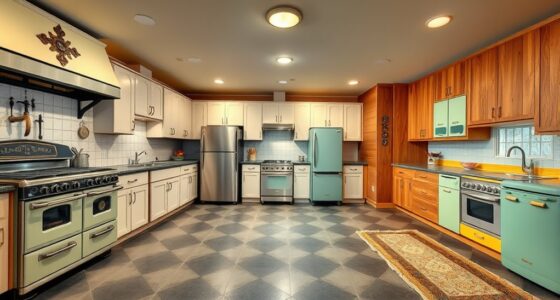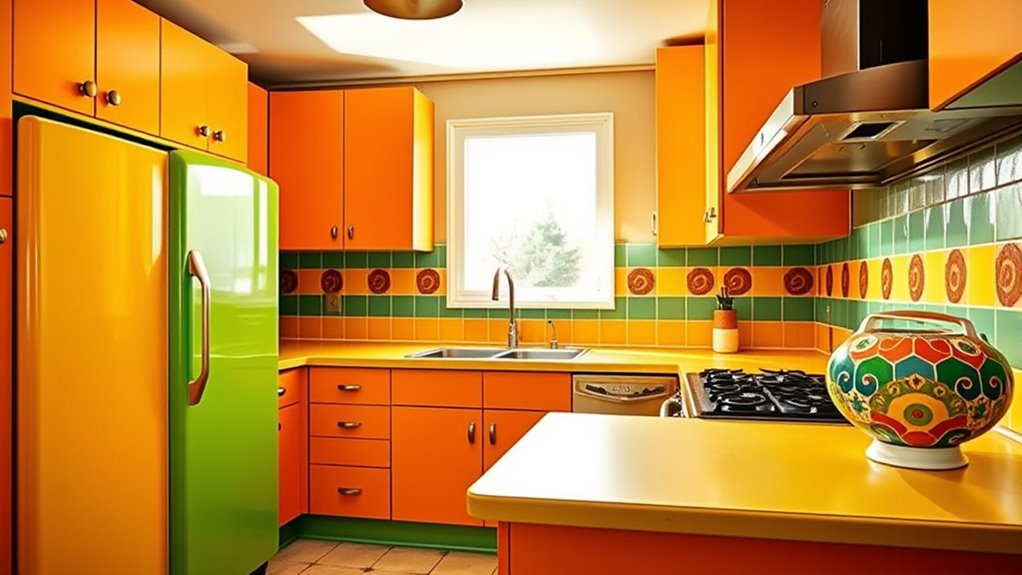

Transform your kitchen into a lively 1970s-inspired space by adding bold, vibrant colors like avocado green or burnt orange and incorporating funky geometric patterns in tiles, wallpaper, or accessories. Select retro appliances such as colorful toasters or refrigerators to serve as focal points, balancing them with neutral tones for cohesion. Vintage-inspired lighting and playful textures will complete the look. Keep exploring to discover how to blend nostalgic charm with modern functionality effortlessly.
Key Takeaways
- Incorporate vibrant hues like avocado green, burnt orange, and mustard yellow for an authentic 70s look.
- Use bold geometric patterns in tiles, wallpaper, and accessories to create lively visual interest.
- Feature vintage appliances as colorful focal points to evoke nostalgia and add personality.
- Balance bold colors with neutral tones and practical designs for a cozy, functional space.
- Add vintage-inspired lighting and geometric motifs to enhance the retro aesthetic while maintaining modern efficiency.
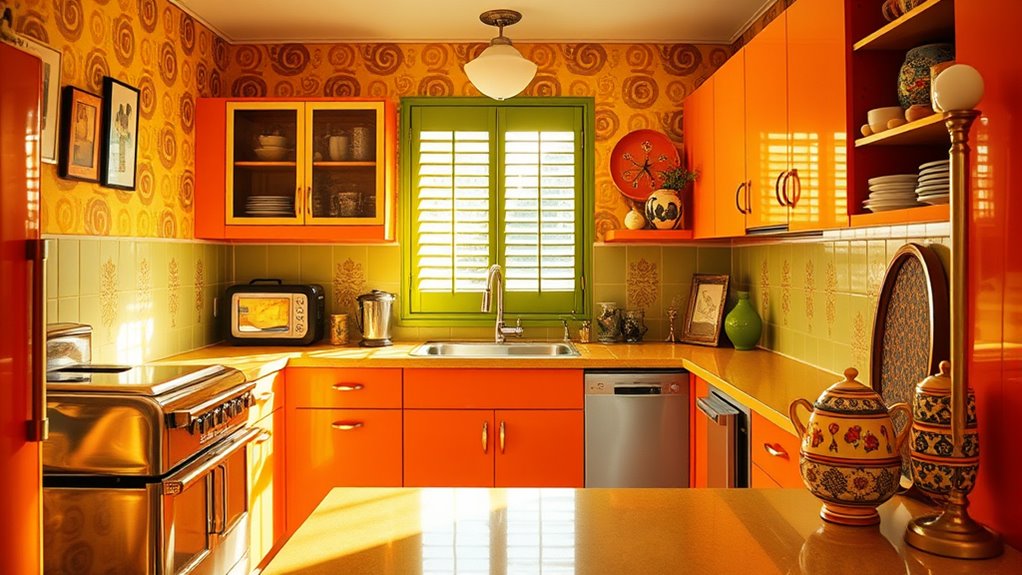
The 1970s kitchen aesthetic is making a strong comeback, blending bold colors, retro patterns, and vintage appliances to create a nostalgic yet modern space. You’re drawn to this style because it captures a playful spirit, combining function with fun. To achieve this look, start with the core elements: retro appliances and geometric designs. These features instantly evoke the era and give your kitchen that authentic 70s vibe. Retro appliances, like colorful toasters, mixers, or refrigerators, are more than just functional; they’re statement pieces. Their vibrant hues—think avocado green, burnt orange, or mustard yellow—bring energy and warmth to your space. When you incorporate these appliances, you’re not just adding a splash of color—you’re creating a focal point that transports you straight to the decade.
Retro appliances and bold geometric patterns bring vibrant, nostalgic energy to your 70s-inspired kitchen.
Geometric designs are another essential aspect. Whether it’s on your tiles, wallpaper, or even your cabinetry, these patterns define the 70s aesthetic. You might choose bold, angular shapes like triangles, diamonds, or hexagons for your backsplashes or flooring. These patterns aren’t subtle; they command attention and set a lively tone. You can also integrate geometric motifs into accessories or textiles, such as curtains or tablecloths, to reinforce the theme without overwhelming the space. Combining these patterns with the bold colors of your appliances creates a cohesive, energetic atmosphere that’s both nostalgic and fresh.
When you design with this style, consider balancing the vivid hues with neutral tones to prevent the space from feeling overwhelming. Warm browns, creams, or even matte black accents work well to ground the look. It’s important to keep your layout functional, so place your retro appliances where they can be admired but don’t clutter the workspace. Use geometric patterned tiles as a backsplash or flooring to give visual interest without sacrificing practicality. Additionally, vintage-inspired lighting fixtures—like pendant lamps with brass or colorful glass—complement the overall aesthetic. Incorporating energy-efficient solutions can also keep your retro-inspired kitchen aligned with modern sustainability goals.
In essence, embracing the 1970s kitchen revival means you’re curating a space full of personality. Retro appliances serve as colorful focal points, while geometric designs add structure and rhythm to the room. By blending these elements thoughtfully, you’ll create a lively, inviting kitchen that’s a perfect mix of nostalgia and contemporary style. It’s about celebrating bold choices and playful patterns, all while maintaining a cozy, functional environment that feels both retro and relevant today.
Top picks for "1970 kitchen revival"
Open Amazon search results for this keyword.
As an affiliate, we earn on qualifying purchases.
Frequently Asked Questions
What Are the Key Design Elements of 1970S Kitchens?
You notice that the key design elements of 1970s kitchens include retro lighting fixtures that add a funky vibe and terrazzo countertops, which bring a vibrant, speckled look. Bold colors like avocado green, mustard yellow, and burnt orange dominate the space. Funky patterns on wallpaper and textiles, combined with open shelving and quirky appliances, complete the nostalgic feel. These elements create a lively, eclectic atmosphere typical of the era.
How Can I Incorporate Vintage Appliances Authentically?
To incorporate vintage appliances authentically, you should focus on maintaining vintage appliance authenticity by choosing original or well-replicated pieces. Mix retro appliances seamlessly with modern elements for authentic retro appliance integration. Keep the color palette bold and playful, and verify your appliances stand out as statement pieces. Regularly clean and restore vintage items to preserve their charm, and consider displaying them prominently to celebrate their nostalgic appeal.
What Color Palettes Best Reflect 1970S Kitchen Trends?
Did you know that bright oranges, avocado greens, and mustard yellows dominated 1970s kitchens? To reflect those trends, choose retro color schemes with bold, vibrant shades. Popular kitchen shades include avocado green, burnt orange, and harvest gold. These hues create an authentic vintage vibe, giving your space a lively, nostalgic feel. Mix and match these colors for a fun, authentic 1970s-inspired kitchen that truly stands out.
Are There Modern Updates That Complement 1970S Styles?
Yes, you can update your 1970s-inspired kitchen with retro-inspired accessories like vintage-style appliances or colorful dishware. Pair these with a contemporary minimalist contrast, such as sleek cabinetry or simple countertops, to create a balanced look. This mix highlights the bold spirit of the 70s while keeping the space fresh and modern. You’ll enjoy a stylish, functional kitchen that pays homage to the past with a contemporary twist.
How Do I Balance Bold Patterns Without Overwhelming the Space?
You should balance bold patterns by practicing pattern mixing with care, pairing them with solids or subtle designs. Focus on color harmony by choosing colors that complement each other, preventing the space from feeling overwhelming. Use a dominant pattern and support it with smaller, less busy patterns to create visual interest without clutter. This approach keeps your kitchen lively yet cohesive, making the bold 1970s style feel fresh and inviting.
Conclusion
As you embrace the 1970s kitchen revival, you’ll enjoy the vibrant colors and funky patterns that make your space uniquely yours. Did you know that during the 1970s, homeowners often spent up to 30% of their renovation budget on bold decor? It’s a reminder that embracing bold choices can transform a kitchen into a lively, inviting hub. So go ahead—dare to be different and bring that joyful, nostalgic vibe into your home today.