
Mid-century modern design, emerging after World War II, focuses on clean lines, functional forms, and simple beauty. It features geometric shapes, open spaces, and a mix of natural materials like wood and stone. Bright accent colors and bold patterns add vibrancy, while iconic furniture emphasizes practicality and sleekness. This style also integrates indoor-outdoor flow and timeless decor elements. To fully capture its essence, exploring its details will help you bring this classic aesthetic into your space.
Key Takeaways
- Emphasizes clean lines, geometric shapes, and seamless indoor-outdoor integration for a modern aesthetic.
- Uses natural materials like wood, stone, and plastics, combined with bold accent colors and simple patterns.
- Features functional furniture with minimalist design, emphasizing practicality and multi-purpose use.
- Incorporates iconic elements such as sputnik chandeliers, geometric textiles, and vintage fixtures.
- Prioritizes a calm, spacious environment with a focus on simplicity, natural materials, and subtle decorative accents.
Origins and Historical Context
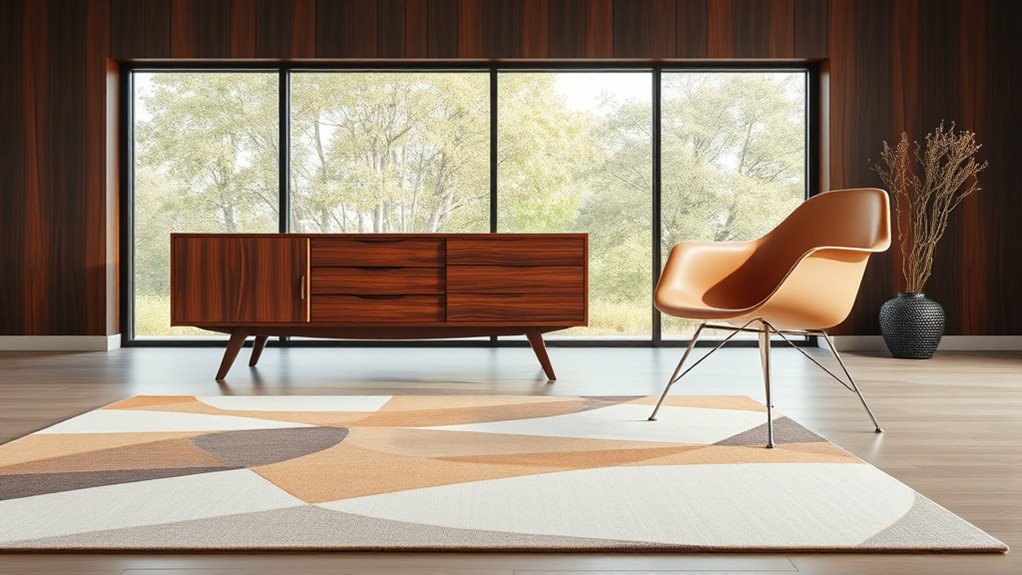
Mid-Century Modern design emerged after World War II, reflecting a desire for simplicity, functionality, and new materials. During this period, vintage photography captures the 1950s lifestyle, showcasing clean lines, open spaces, and a sense of optimism. You might notice how homes and furniture in these photos emphasize practicality without sacrificing style, inspired by post-war innovation. This era was marked by a shift toward minimalism, as people sought efficient solutions for everyday living. The cultural atmosphere embraced modernism, emphasizing new technologies and materials like plastic and plywood. The use of innovative building techniques allowed for more open floor plans and unique architectural features characteristic of the style. As a result, Mid-Century Modern style became a reflection of the societal push for progress, shaping both architecture and interior design to mirror a forward-thinking mindset rooted in the 1950s lifestyle. Additionally, the types of honey produced during this period often featured in home recipes, highlighting natural ingredients and traditional health remedies. The adoption of new construction methods also contributed to the distinctive aesthetic and functionality of Mid-Century Modern homes. Understanding the historical context of this design movement can help appreciate its enduring appeal and influence on contemporary aesthetics.
Signature Architectural Features

What makes Mid-Century Modern architecture instantly recognizable are its signature features, which emphasize clean lines, geometric shapes, and a seamless integration with the surrounding environment. You’ll notice the use of geometric motifs, such as rectangular and circular forms, that create visual interest and structure. These designs often incorporate bold contrasts, like stark black and white or vibrant colors against neutral backgrounds, to highlight architectural elements. Flat planes, large windows, and open floor plans further define this style, blurring indoor and outdoor spaces. The focus on simplicity doesn’t mean minimalism; rather, it’s about striking visual clarity. Natural materials are also a key component, adding warmth and authenticity to the design. These features combine to produce buildings that feel both functional and aesthetically striking, capturing the essence of Mid-Century Modern’s innovative spirit.
Furniture Design and Materials
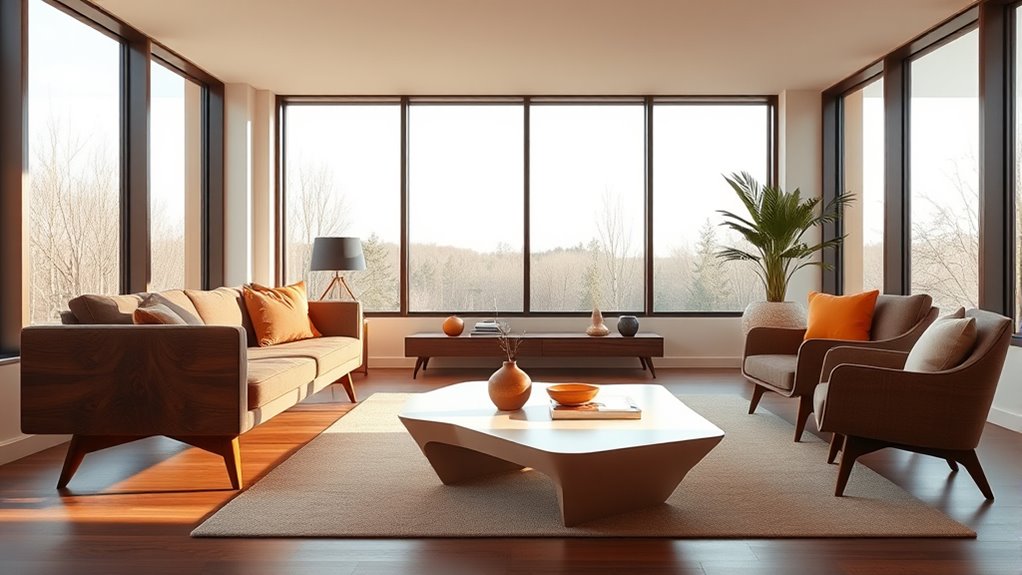
The clean lines and geometric shapes that define Mid-Century Modern architecture extend seamlessly into furniture design, creating cohesive and stylish interior spaces. You’ll notice vintage textures like teak, walnut, and molded plastics, which add warmth and character. Sculptural forms stand out, turning functional pieces into artful statements. The focus is on simplicity, with a mix of organic curves and angular lines that emphasize form and function. This approach results in furniture that feels both timeless and innovative. Additionally, the use of electric-powered elements in some furniture designs reflects a commitment to integrating modern technology with classic aesthetics. Being aware of legislative changes can influence the availability and features of modern furniture incorporating tech elements. Understanding cybersecurity considerations is also important when integrating tech-enabled furniture into smart home systems. Recognizing material durability is essential for maintaining furniture longevity in various environments. Incorporating sustainable materials is increasingly common, aligning with eco-conscious design trends and ensuring longevity.
Color Palette and Patterns

Color palettes in Mid-Century Modern design often feature warm earth tones combined with bold accent hues, creating a vibrant yet balanced atmosphere. You’ll notice the use of color combinations like mustard yellows, avocado greens, and burnt oranges paired with striking teals or deep browns. These choices add warmth while maintaining visual interest. Pattern styles are typically simple yet impactful, including geometric shapes, atomic-inspired motifs, and abstract designs. You might see chevrons, circles, or starbursts integrated into textiles, wallpapers, or accent pieces. These patterns emphasize clean lines and symmetry, reinforcing the modern aesthetic. By balancing subtle hues with bold patterns, Mid-Century Modern spaces evoke a lively, inviting vibe without feeling overwhelming.
Lighting and Decor Elements
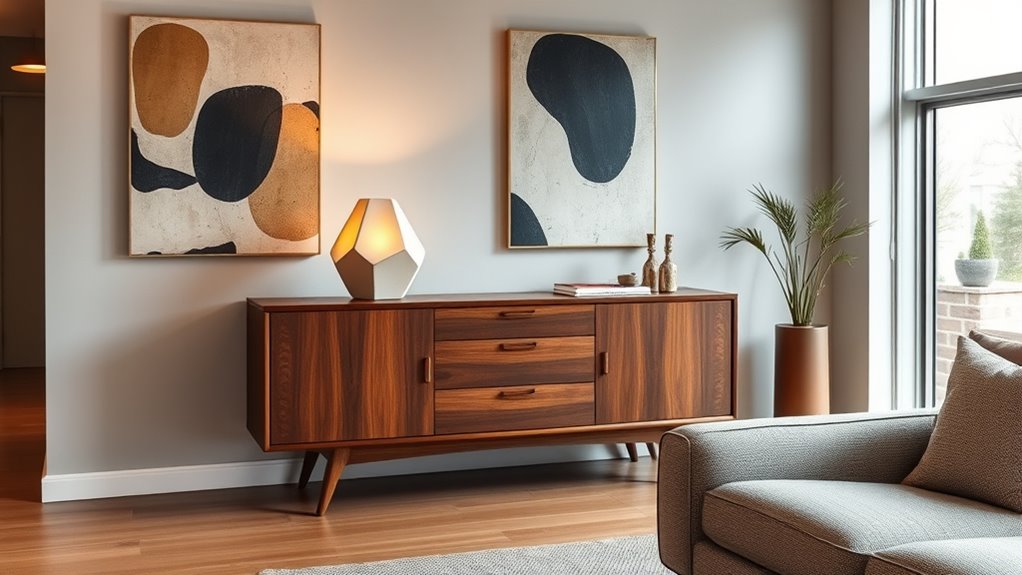
Lighting and decor elements in Mid-Century Modern spaces play an essential role in highlighting the bold patterns and warm palettes you’ve already explored. Vintage lighting fixtures, such as sputnik chandeliers and arc floor lamps, add authentic character and serve as statement pieces. Decorative accents like geometric vases, sculptural sculptures, and colorful textiles enhance the aesthetic and create visual interest. You’ll want to focus on clean lines and organic shapes to maintain the style’s simplicity. Incorporating warm metallic finishes, like brass or copper, adds a subtle touch of sophistication. Carefully selected lighting and decor elements help balance the space, emphasizing the style’s blend of form and function. These details ultimately create a cohesive, inviting environment that showcases Mid-Century Modern design’s timeless appeal.
Influence on Contemporary Design
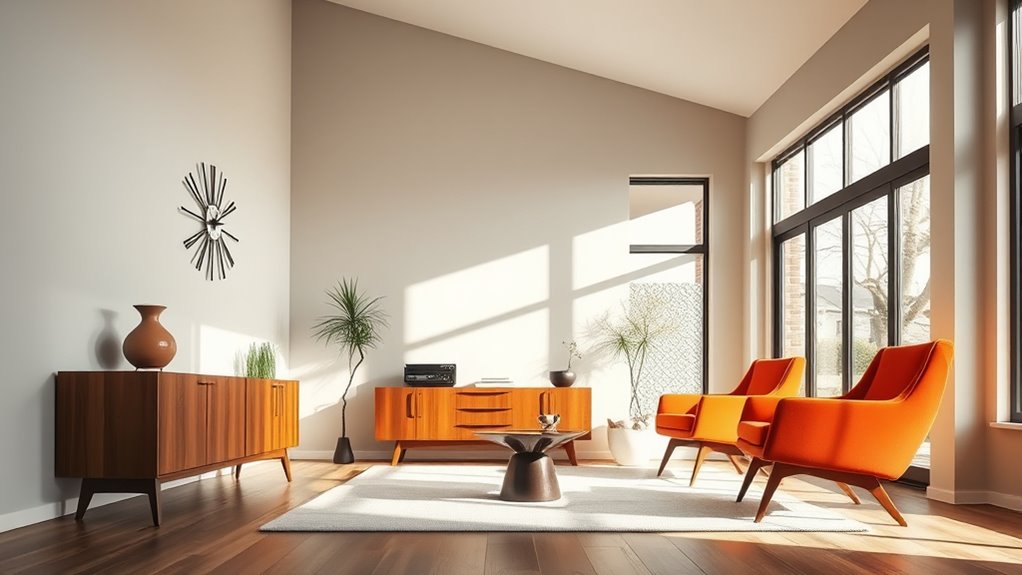
You’ll notice how the minimalist aesthetic appeal of mid-century modern design continues to shape today’s spaces, emphasizing clean lines and simplicity. The use of natural materials like wood and stone adds warmth and sustainability that many designers still prioritize. Functional furniture remains essential, blending practicality with sleek style to create timeless, efficient interiors. Incorporating natural materials is a hallmark of this style, connecting the space to nature and enhancing its rustic charm. Additionally, the influence of global economic outlook can be seen in the emphasis on durable, high-quality materials that stand the test of time. Moreover, understanding personal finance management, such as managing investments in real estate or retirement accounts, can be beneficial when considering long-term interior design investments. Staying informed about market trends can help homeowners make smarter choices that align with the evolving landscape of contemporary design. Recognizing the importance of sustainable and eco-friendly materials can also guide selections that support environmental responsibility while maintaining style.
Minimalist Aesthetic Appeal
The minimalist aesthetic, rooted in mid-century modern design, has profoundly shaped contemporary interiors by emphasizing simplicity and function. It encourages clean lines and open spaces, allowing you to focus on essential elements. Geometric patterns often appear in furniture and decor, adding visual interest without clutter. You’ll notice that decorative accents are sparingly used, serving as focal points rather than overwhelming the space. This approach promotes a sense of calm and order, making rooms feel larger and more inviting. The use of simplicity and function reinforces the core principles of minimalism, ensuring that each element contributes meaningfully to the overall design. Additionally, the integration of hidden elements can subtly enhance the sleekness and elegance of a space, reflecting the influence of design principles that prioritize both form and practicality. Incorporating natural materials further aligns with this aesthetic, emphasizing harmony with the environment and timeless appeal. Incorporating sustainable material choices supports environmentally conscious design while maintaining the aesthetic’s elegance.
Use of Natural Materials
Natural materials such as wood, stone, and leather play an essential role in shaping contemporary mid-century modern design, bringing warmth and authenticity to sleek interiors. These materials emphasize sustainable sourcing, reflecting a growing commitment to environmentally friendly practices. You’ll notice how material textures add depth and tactile interest, creating a balanced contrast with clean lines and minimalist forms. Using natural materials also supports eco-conscious choices, ensuring your space feels both stylish and responsible. By selecting authentic, sustainably sourced elements, you connect your interior to nature while maintaining the timeless appeal of mid-century modern aesthetics. This focus on natural materials enriches your environment, making it inviting, durable, and aligned with contemporary values of sustainability and craftsmanship.
Functional Furniture Design
Functional furniture design is at the heart of contemporary mid-century modern aesthetics, emphasizing clean lines, versatility, and practicality. You’ll notice how pieces seamlessly combine form and function, reflecting a vintage branding that values simplicity and efficiency. This approach prioritizes ergonomic comfort, making furniture not only stylish but also comfortable for everyday use. It encourages multi-purpose furniture that adapts to your space and needs.
- Emphasis on space-saving, multi-use designs
- Focus on ergonomic comfort for everyday use
- Integration of vintage branding elements for timeless appeal
- Use of versatile materials that enhance durability and style
Tips for Incorporating Mid-Century Modern Style
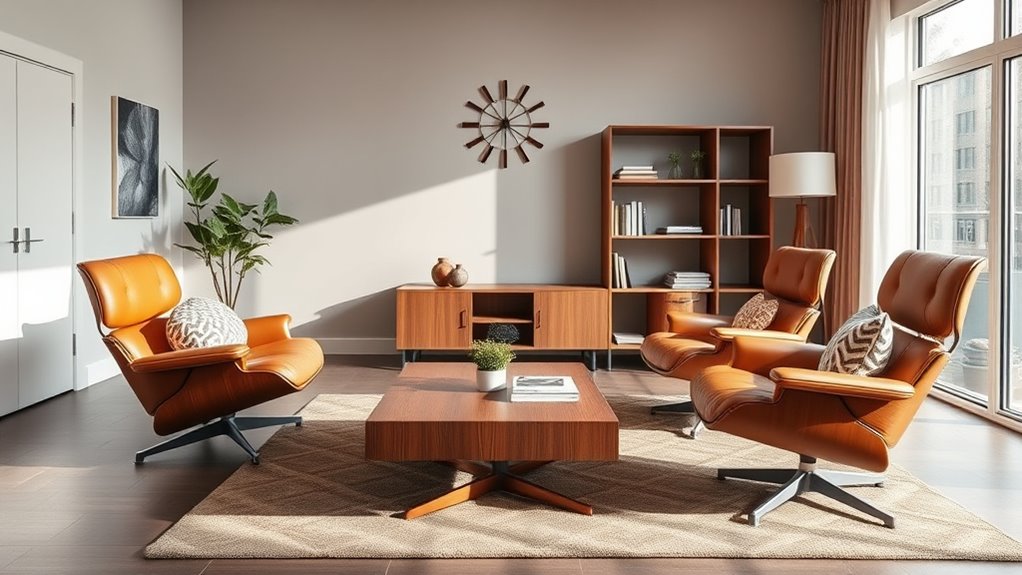
Wondering how to seamlessly infuse your space with mid-century modern charm? Start by choosing statement wall art that features bold, geometric designs or abstract prints, which instantly evoke the era’s aesthetic. Incorporate textile patterns like chevrons, atomic motifs, or simple stripes into your throw pillows, rugs, or curtains to add visual interest. Stick to a neutral color palette with pops of vibrant hues such as mustard yellow, teal, or burnt orange to keep the look cohesive. Keep furniture sleek and functional, emphasizing clean lines. Minimal accessories and uncluttered surfaces help highlight your selected wall art and textiles. With these tips, you’ll create a balanced space that celebrates mid-century modern style without feeling overwhelming.
Frequently Asked Questions
How Can I Identify Authentic Mid-Century Modern Furniture?
To spot authentic mid-century modern furniture, look for quality materials like teak, walnut, or plywood, and notice craftsmanship that emphasizes sleek, simple lines. Design era indicators include minimalist forms, tapered legs, and integrated hardware. You can also research maker marks or labels, and compare pieces to known authentic designs. Trust your instincts and examine details closely to verify the furniture’s authenticity and connection to the iconic style.
What Are Common Misconceptions About Mid-Century Modern Design?
They say a picture is worth a thousand words, but misconceptions about mid-century modern design often cloud its true essence. You might think it’s only about vintage appeal or sleek furniture, but it’s also about modern minimalism that emphasizes function over form. Many believe it’s overly simplistic or outdated, but in reality, it balances timeless elegance with innovative ideas, making it a versatile style still relevant today.
Which Brands Are Best for Authentic Mid-Century Modern Pieces?
You should look for brands known for vintage authenticity and strong brand reputation, like Herman Miller, Eames, and Knoll. These manufacturers offer genuine mid-century modern pieces that are both authentic and well-crafted. By choosing reputable brands, you guarantee you’re investing in quality, preserving the integrity of the design style, and avoiding fakes. Always verify the provenance and authenticity to make sure you’re getting true vintage mid-century modern furniture.
How Does Mid-Century Modern Differ From Scandinavian Design?
You might think mid-century modern and Scandinavian design are similar, but they differ in influences and style. Mid-century modern emphasizes bold, organic shapes and innovative materials, drawing from diverse influences like Bauhaus and Japanese design. Scandinavian design focuses on simplicity, functionality, and a light color palette rooted in nature. While both prioritize clean lines, mid-century modern tends to be more expressive, whereas Scandinavian design keeps things minimal and cozy.
Can Mid-Century Modern Style Work in Small Spaces?
Yes, mid-century modern style works well in small spaces. You can use compact furniture that maintains clean lines and functional design, making the room feel open and uncluttered. Incorporate multifunctional decor, like a sofa bed or storage ottomans, to maximize space. Focus on minimalism and strategic placement to create a stylish, comfortable environment that embodies mid-century modern aesthetics without feeling cramped.
Conclusion
Embracing mid-century modern design means creating a space that’s timeless and authentic. Remember, a house is made of walls and beams; a home is built with love and care. So, don’t be afraid to mix retro elements with your personal touch. With its clean lines and warm hues, this style invites you to enjoy simplicity and comfort every day. After all, the little details make the biggest difference in turning a house into a home.