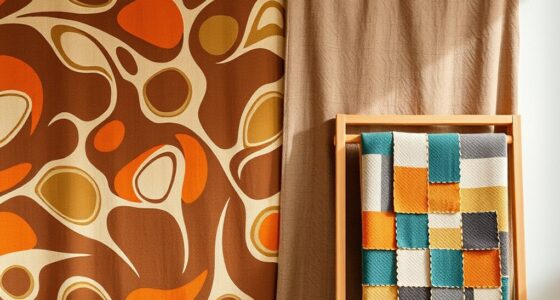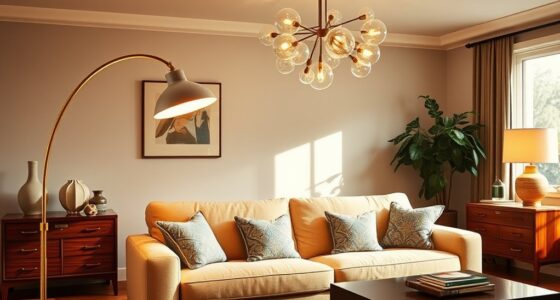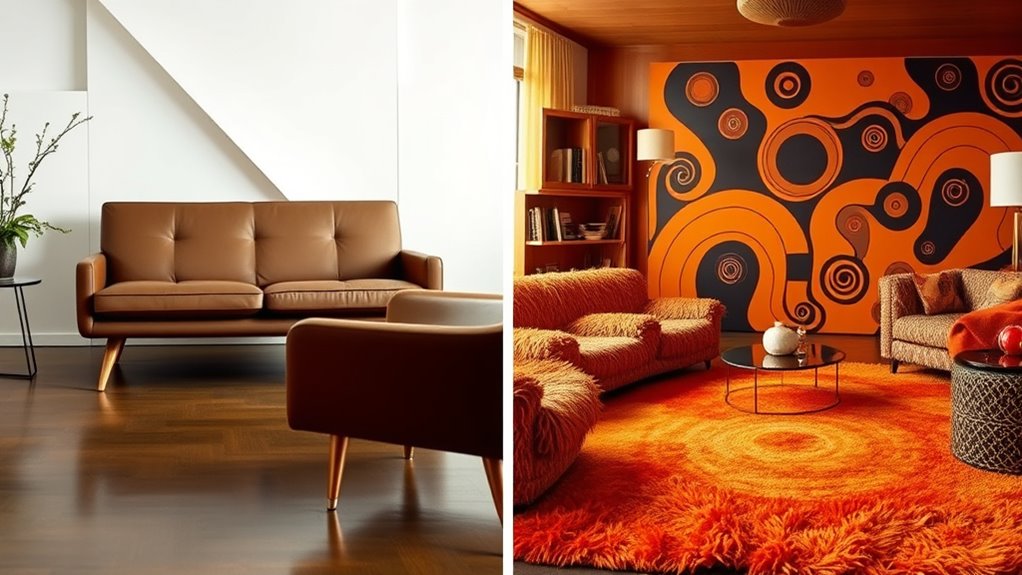
Mid-Century Modern design shifts from sleek, natural materials like teak and walnut to the bold, eclectic use of plastics, fiberglass, and bright fabrics seen in the 1970s Groovy Style. While Mid-Century Modern emphasizes neutral tones and clean lines for a calm, timeless look, the 1970s style bursts with vibrant colors, playful shapes, and experimental materials, creating lively environments. If you explore further, you’ll discover how these styles reflect different cultural eras and taste shifts.
Key Takeaways
- Mid-Century Modern emphasizes natural materials, clean lines, and muted earthy tones, creating a timeless and serene aesthetic.
- 1970s Groovy Style employs bold colors, eclectic materials like plastics and fiberglass, and playful, experimental shapes.
- The transition reflects a shift from understated sophistication to vibrant, energetic environments.
- While Mid-Century Modern focuses on craftsmanship and minimal ornamentation, 1970s style embraces maximalism and visual dynamism.
- Both styles influence contemporary design, showcasing a progression from natural simplicity to bold, colorful expression.
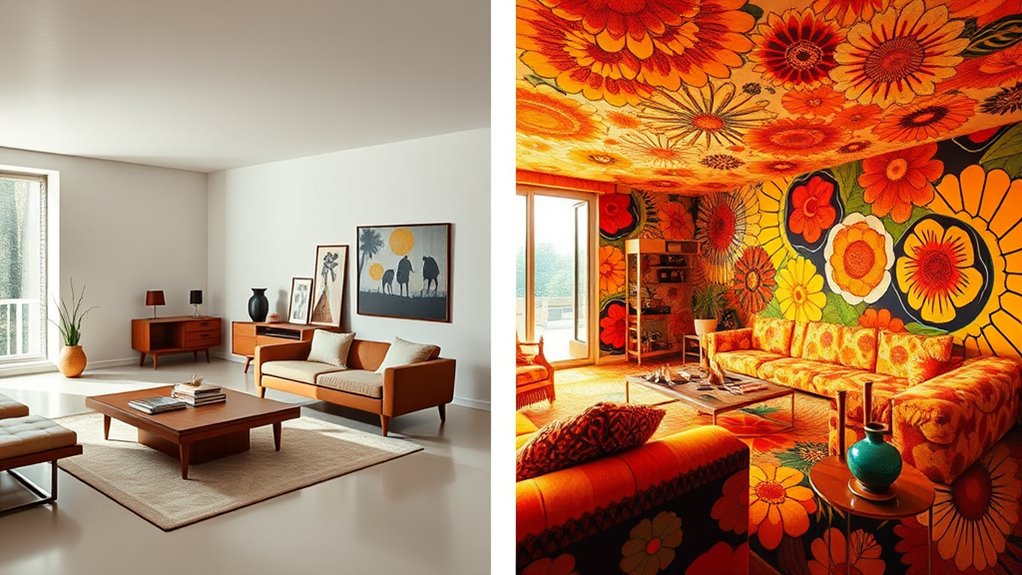
When comparing Mid-Century Modern and 1970s Groovy Style, it’s clear that both design movements have left a lasting mark on interior aesthetics, but they do so with very different approaches. One of the first differences you’ll notice is in the furniture materials used. Mid-Century Modern furniture emphasizes sleekness and simplicity, often crafted from natural materials like teak, walnut, and rosewood. These woods are chosen for their durability and warm, rich tones, giving furniture a timeless quality. You’ll find clean lines, smooth surfaces, and minimal ornamentation, which highlight the craftsmanship and natural beauty of the materials. In contrast, 1970s Groovy Style embraces a more eclectic mix, featuring materials like molded plastics, fiberglass, and bright-colored fabrics. These materials allow for bold, experimental shapes and playful designs, reflecting the era’s love for innovation and fun. You might notice curved forms, chunky textures, and a penchant for mixing different surfaces, such as shiny plastics combined with plush upholstery. Additionally, the use of innovative materials in the 1970s contributed to the era’s distinctive and expressive aesthetic. Color palettes also vary remarkably between the two styles. Mid-Century Modern tends to favor muted, earthy tones—warm browns, soft beiges, olive greens, and mustard yellows—that create a calm, harmonious environment. The colors are often understated, meant to complement the natural look of the furniture and emphasize simplicity. You’re likely to see monochromatic schemes or subtle contrasts, which contribute to the streamlined, uncluttered feel of this style. On the other hand, the 1970s Groovy Style bursts with vibrant, saturated colors. Bright oranges, hot pinks, lime greens, and electric blues dominate the palette, creating an energetic, lively atmosphere. These bold hues are often paired with geometric patterns and psychedelic motifs, making spaces feel playful and expressive. The use of contrasting colors is common, adding visual interest and a sense of fun that defines the decade’s aesthetic. In essence, your choice between these styles depends on the atmosphere you want to create. If you prefer a timeless, understated look rooted in natural materials and subdued colors, Mid-Century Modern offers sophistication and serenity. But if you’re drawn to lively, eye-catching environments filled with bold colors and innovative materials, the 1970s Groovy Style might be more your vibe. Both movements, with their distinct materials and palettes, continue to influence contemporary design, each telling a different story about the era they represent.
Frequently Asked Questions
How Did Cultural Influences Shape Each Design Style?
You see that cultural symbolism and fashion influences heavily shape each design style. Mid-century modern reflects post-war optimism, emphasizing clean lines and functional forms inspired by societal stability. In contrast, 1970s groovy style draws from counterculture movements, bold colors, and psychedelic patterns influenced by music and fashion trends. These cultural elements directly inform the aesthetics, making each style a visual expression of the era’s values and societal shifts.
Which Materials Were Predominantly Used in 1970S Groovy Decor?
Like a kaleidoscope bursting with color, 1970s groovy decor uses plastics extensively, making furniture and accessories lightweight and vibrant. You’ll find bold color palettes dominating spaces, with psychedelic patterns and metallic finishes adding a funky vibe. Materials like acrylics, vinyl, and shag rugs define this era, creating a playful, energetic atmosphere. These choices reflect the decade’s love for experimentation, turning everyday objects into eye-catching statement pieces.
How Did the Social Movements Impact Mid-Century Modern Design?
Social activism greatly influenced mid-century modern design by encouraging aesthetic innovation that emphasized simplicity, functionality, and social consciousness. You’ll notice designers focusing on clean lines and sustainable materials, reflecting the era’s desire for progress and equality. This movement inspired a shift toward designs that promoted inclusivity and practicality, making the space more accessible and aligned with the social values of the time, fostering a sense of community and purpose through style.
Were There Regional Differences Within Each Style?
You’ll notice regional differences within each style, reflecting local cultures, materials, and climates. In mid-century modern design, Scandinavian minimalism contrasted with California’s relaxed vibe, while in the 1970s groovy style, urban funk clashed with bohemian influences in rural areas. These regional variations showcase stylistic diversity, revealing how designers adapted global trends to local tastes and needs, creating unique expressions within each era’s overarching aesthetic.
How Do These Styles Influence Modern Interior Design Trends?
You influence modern interior design trends by blending furniture color palettes inspired by Mid-Century Modern’s muted tones with the bold, vibrant hues of 1970s Groovy Style. Incorporate statement lighting fixtures to create focal points and set moods. This mix allows you to craft spaces that feel both nostalgic and fresh, reflecting a dynamic evolution in design that appeals to contemporary tastes while honoring retro aesthetics.
Conclusion
As you delve into the world of design, you’ll realize that choosing between Mid-Century Modern and 1970s groovy style is like picking your favorite star in a galaxy of brilliance. Each offers a universe of bold lines, vibrant colors, and iconic shapes that could transform your space into a time-traveling masterpiece. Whether you embrace sleek minimalism or psychedelic funk, remember—your decor choices could be so influential, they might just rewrite the history of style itself.