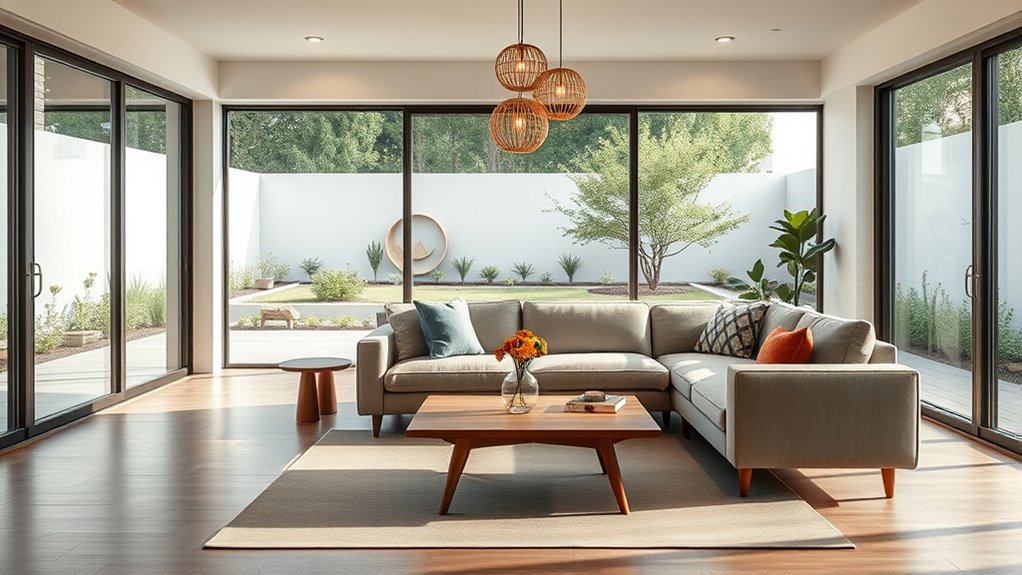

Mid-Century Modern has greatly shaped global interior styles like Scandinavian and Japanese design. It emphasizes clean lines, natural materials, and minimalist aesthetics, inspiring sustainable and functional spaces worldwide. Scandinavians adapt these principles with airy spaces and cozy touches, while Japanese design focuses on tranquility and organic textures. These influences highlight a shared appreciation for simplicity, nature, and mindfulness. To discover how these styles reflect broader values and cultural adaptations, keep exploring these timeless design principles.
Key Takeaways
- Mid-Century Modern principles of simplicity and functionality have been globally embraced, influencing diverse regional design styles.
- Scandinavian adaptations emphasize natural materials, light, and minimalism, reflecting sustainability and cozy aesthetics.
- Japanese design incorporates natural textures and minimalism, promoting mindfulness and organic beauty.
- Cultural adaptations blend local traditions with Mid-Century Modern values, showcasing universal appeal.
- The style’s eco-conscious, minimalist ethos continues to shape contemporary global interior design trends.
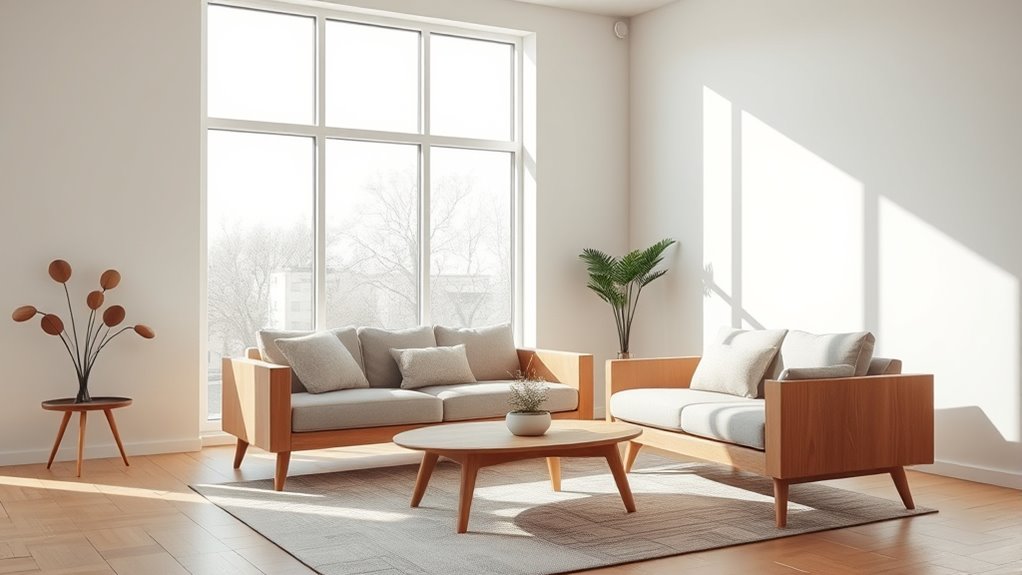
Have you ever wondered how Mid-Century Modern design has left its mark worldwide? This influential style, with its emphasis on clean lines and functional beauty, has shaped contemporary interiors far beyond its American origins. At its core, Mid-Century Modern champions sustainable design by prioritizing natural materials and simplicity, reducing excess and waste. Its minimalist aesthetics promote a sense of calm and clarity, encouraging you to focus on essential elements rather than clutter. These principles have resonated across cultures, inspiring adaptations that blend local traditions with the timeless appeal of Mid-Century Modern.
Mid-Century Modern design worldwide: minimal, sustainable, and inspired by natural beauty and local traditions.
In Scandinavia, for example, this style evolved into Scandinavian design, which emphasizes light, airy spaces, and natural warmth. The Scandinavian approach takes sustainability seriously, often using sustainably sourced woods and eco-friendly finishes. The minimalist aesthetics are reflected in the sleek furniture pieces and understated décor, creating environments that feel both cozy and uncluttered. You’ll notice how these interiors maximize natural light, making spaces feel open and inviting while reducing the need for artificial lighting. This harmony between functionality and beauty aligns perfectly with the Mid-Century Modern ethos of simplicity and purpose.
Meanwhile, Japanese design incorporates many similar ideals, emphasizing minimalism and natural materials. The influence of Mid-Century Modern can be seen in the clean, uncluttered spaces and the focus on craftsmanship. Japanese interiors often utilize wood and natural fibers, echoing the Mid-Century Modern love for organic textures. The minimalist aesthetic here isn’t just about looks—it’s about creating a peaceful, meditative environment that fosters mindfulness and clarity. By stripping away unnecessary ornamentation, Japanese designers encourage you to focus on the quality of each piece and the harmony of the space.
Both Scandinavian and Japanese adaptations show how Mid-Century Modern’s principles can be tailored to different cultural contexts while maintaining their core values. The style’s emphasis on sustainable design and minimalist aesthetics isn’t just a passing trend; it’s a response to global concerns about resource use and environmental impact. Additionally, the use of natural materials enhances the organic feel and sustainability of these designs. As you explore these interiors, you’ll see how they embody a mindful approach to living—where beauty, function, and sustainability go hand in hand. The global reach of Mid-Century Modern proves that its timeless appeal lies in its simplicity and respect for nature, inspiring a more thoughtful way to design and inhabit spaces worldwide.
Frequently Asked Questions
How Did Mid-Century Modern Design Influence Contemporary Architecture?
Mid-century modern design influences contemporary architecture by emphasizing minimalist aesthetics and functional forms, which you see in today’s sleek, clean lines. It promotes the use of sustainable materials, making buildings eco-friendly and energy-efficient. You’ll notice open floor plans and large windows that connect indoor and outdoor spaces, creating a sense of simplicity and harmony. This style’s timeless appeal shapes current trends, blending sustainability with minimalist elegance in innovative ways.
What Are the Key Differences Between Scandinavian and Japanese Mid-Century Modern Styles?
Think of Scandinavian and Japanese styles as two branches of the same tree. Scandinavian design emphasizes minimalism, light wood, and functionality, reflecting a cozy, practical philosophy. Japanese style, on the other hand, values simplicity, natural materials like bamboo and paper, and a Zen-inspired philosophy. Both embrace clean lines but differ in material choices and cultural design philosophies, creating distinct yet harmonious aesthetics.
Which Designers Significantly Shaped the Mid-Century Modern Movement Globally?
You should explore designers like Charles and Ray Eames, who profoundly shaped mid-century modern globally. Their collaborations with other designers led to innovative material uses like molded plywood and fiberglass, revolutionizing furniture. Meanwhile, Finnish designer Alvar Aalto pioneered material innovations with bentwood and laminated wood. These designers’ creative partnerships and focus on new materials helped spread mid-century modern’s sleek, functional style worldwide, influencing countless contemporary designs.
How Has Mid-Century Modern Influenced Modern Interior Decoration Trends?
Mid-century modern influences your interior design by emphasizing clean lines, functional furniture, and warm furniture color palettes. You’ll notice minimalist decor trends inspired by its simplicity and focus on form. These elements encourage a clutter-free space that feels both stylish and timeless. By incorporating natural materials and sleek silhouettes, you create a modern look rooted in mid-century principles, making your home feel welcoming, balanced, and effortlessly chic.
Are There Cultural Adaptations of Mid-Century Modern in Non-Western Countries?
You’ll notice that non-western countries adapt mid-century modern styles through cultural fusion and regional adaptations. Designers incorporate local materials, colors, and traditional patterns, blending them seamlessly with sleek, modern furniture. This creates a unique aesthetic that respects cultural identity while embracing modern design principles. Such regional adaptations make mid-century modern more relatable, fostering a diverse global style that celebrates both innovation and heritage.
Conclusion
As you explore the world of mid-century modern design, you’ll see its influence spreading like vibrant paint on a blank canvas, shaping homes and minds across continents. Its sleek lines and warm simplicity act as a bridge, connecting cultures with a shared love for timeless elegance. Embrace this design movement’s gentle whisper through history, reminding you that beauty and function can dance together harmoniously, creating a tapestry that’s forever woven into the fabric of our global aesthetic.