
During the Atomic Age, space-inspired decor became popular, blending futuristic designs with vibrant colors to evoke the cosmos. You’ll see sleek, rounded furniture with shiny metallic finishes that resemble spaceship parts, along with bold star charts and celestial motifs. Deep navy, shimmering silver, and rich gold dominate the palette, creating an atmosphere of wonder and exploration. If you want to explore how these unique styles continue to influence design today, there’s more to discover below.
Key Takeaways
- The Atomic Age decor style draws heavily from mid-20th-century futuristic visions of space and technology.
- Furniture features sleek, rounded shapes with metallic finishes, reminiscent of spaceship components.
- Celestial color palettes include deep navy, silvers, golds, and vibrant accents like red and turquoise.
- Decor elements often showcase star charts, cosmic motifs, and lighting resembling planets or stars.
- The style reflects optimism and innovation during the space race era, celebrating progress and exploration.

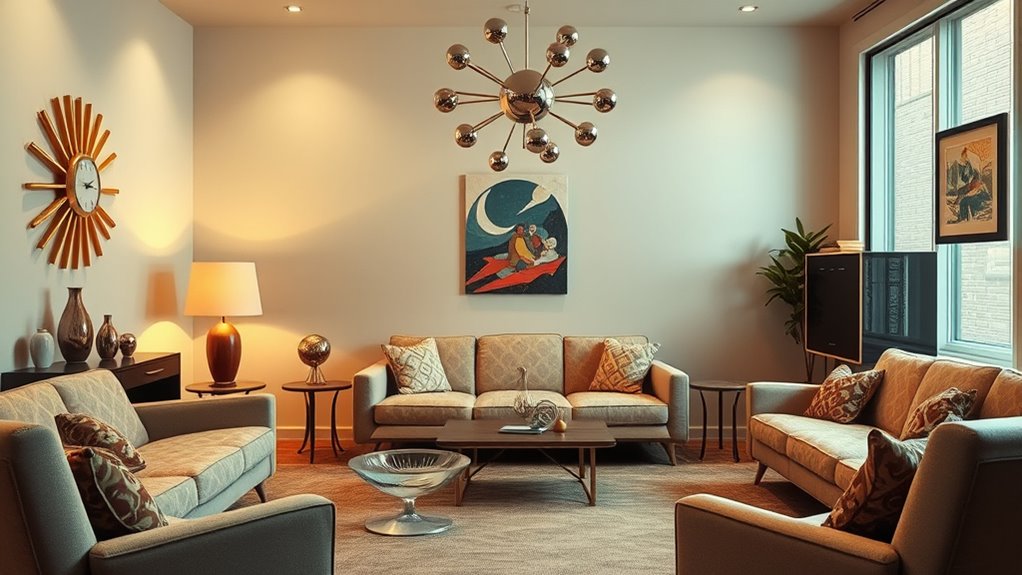
During the mid-20th century, the excitement about space exploration profoundly influenced interior design, leading to a distinctive style known as space-inspired decor. You’d find yourself immersed in a world where futuristic visions of the cosmos shaped every detail of your home. Retro futuristic furniture became a staple, characterized by sleek curves, bold shapes, and shiny surfaces that echoed the optimism of the space age. Imagine sitting in a chair with a smooth, rounded form that looks like it belongs in a spaceship, or resting on a sofa with streamlined edges and metallic finishes. These pieces weren’t just functional—they were statements of progress and imagination, blending the new aesthetic of the era with everyday comfort.
Step into a space-inspired world with sleek, bold furniture and cosmic colors that celebrate progress and imagination.
Celestial color palettes dominated this style, transforming interiors into vibrant, otherworldly spaces. You’d see deep navy blues reminiscent of the night sky, shimmering silvers that evoke stars’ glow, and rich golds that add a touch of cosmic luxury. These colors weren’t just decorative; they created an atmosphere that felt both futuristic and mysterious, inviting you to imagine living among the stars. Accents of bright reds, oranges, and turquoise brought energy and contrast, mimicking nebulae and planetary surfaces. The palette made the space feel alive, dynamic, and full of possibility, reflecting the era’s obsession with exploration and discovery.
The furniture’s design and colors worked together to evoke a sense of wonder. You might choose a coffee table with a circular top and metallic legs that resemble a spaceship’s landing pad or opt for storage units with rounded edges and glossy finishes. Lighting played a crucial role too, with fixtures resembling planets or stars, casting a glow that enhanced the celestial theme. Wall decor often included abstract patterns inspired by cosmic phenomena or star charts, further immersing you into the space-age fantasy.
This style was more than just aesthetics; it represented a cultural shift towards embracing the future. As you decorate your space with retro futuristic furniture and celestial colors, you’re participating in a movement that celebrated innovation and human achievement. The mid-century space-inspired decor isn’t just about looking stylish; it’s about capturing the optimism of an era eager to reach for the stars. By integrating these elements into your home, you preserve a piece of history that continues to inspire curiosity and wonder long after the space race has passed.
Frequently Asked Questions
What Materials Were Commonly Used for Space-Inspired Decor?
You’ll notice that space-inspired decor often uses synthetic plastics and molded fiberglass, reflecting the era’s fascination with futuristic materials. These materials allow for sleek, bold shapes and vibrant colors, making your space feel modern and dynamic. Synthetic plastics are lightweight and versatile, while molded fiberglass offers durability and a smooth finish. Incorporating these materials can give your decor that authentic mid-century, space-age look.
How Did Space Themes Influence Other Mid-Century Design Trends?
Space themes deeply influenced mid-century design trends by inspiring you to embrace futuristic art and planetary motifs. You incorporate sleek, modern lines alongside bold, celestial patterns, creating a sense of optimism and innovation. You see this influence in furniture with space-age curves, wall art featuring planets and stars, and lighting fixtures resembling rockets. These elements help you connect the era’s fascination with space to everyday living, making your space feel forward-thinking and imaginative.
Were There Any Notable Designers Specializing in Atomic Age Decor?
You’ll find that famous designers like Raymond Loewy and George Nelson specialized in atomic age decor, showcasing signature styles that blend futuristic shapes with sleek, streamlined forms. Their work embodies the space-inspired aesthetic, emphasizing bold geometric patterns and innovative materials. By adopting these signature styles, you can easily incorporate atomic age elements into your space, giving it a modern yet nostalgic mid-century vibe that’s both stylish and timeless.
How Durable Were Mid-Century Space-Inspired Furnishings?
Ever wonder if those sleek, space-inspired furnishings could withstand time? Thanks to innovative manufacturing, mid-century space decor was surprisingly durable, with materials designed for longevity. You’ll find that their sturdy construction and quality finishes meant they held up well over decades. While some pieces might show minor wear, their overall resilience guarantees you can enjoy authentic atomic age style without worry—these designs were built to last.
Did Space-Inspired Decor Affect Household Technology Designs?
Yes, space-inspired decor influenced household technology designs by incorporating futuristic color schemes and planetary motifs. You’ll notice these elements in appliances and gadgets, making them feel modern and innovative. Designers aimed to evoke a sense of exploration and the future, so they used vibrant, metallic colors and space-themed patterns. This approach helped create a cohesive aesthetic that unified home decor with emerging technological advancements, making your space feel both stylish and forward-looking.
Conclusion
So, next time you marvel at your space-themed lamp or rocket-shaped chair, remember—you’re not just decorating; you’re living in a retro homage to humanity’s wildest dreams. Who knew that the atomic age’s obsession with the cosmos would turn your living room into a launch pad for nostalgia? Embrace it—because nothing says “futuristic” quite like mid-century space decor, proving that even in the past, we couldn’t resist reaching for the stars… or at least pretending we did.