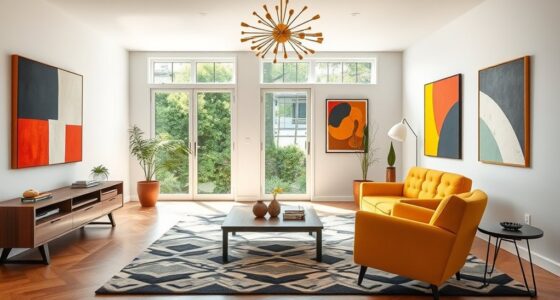
Streamline Moderne is a sleek, futuristic style from the 1930s that emphasizes smooth, aerodynamic forms and shiny surfaces. Designed to evoke speed, efficiency, and modernity, it features rounded corners, horizontal lines, and innovative materials like chrome and stainless steel. Influenced by technological advances in transportation, it represents an optimistic look toward the future. If you stay curious, you’ll uncover how this style continues to inspire contemporary design and architecture today.
Key Takeaways
- Streamline Moderne emerged in the 1930s as a sleek, futuristic evolution of Art Deco, emphasizing speed and efficiency.
- It features smooth curves, horizontal lines, rounded corners, and flat roofs to evoke motion and modernity.
- The style uses materials like chrome, glass blocks, aluminum, and stainless steel for shiny, reflective surfaces.
- Influenced by technological innovations such as trains, ocean liners, and automobiles, emphasizing progress.
- Its design symbolizes optimism about the future, combining form and function with a streamlined, aerodynamic aesthetic.
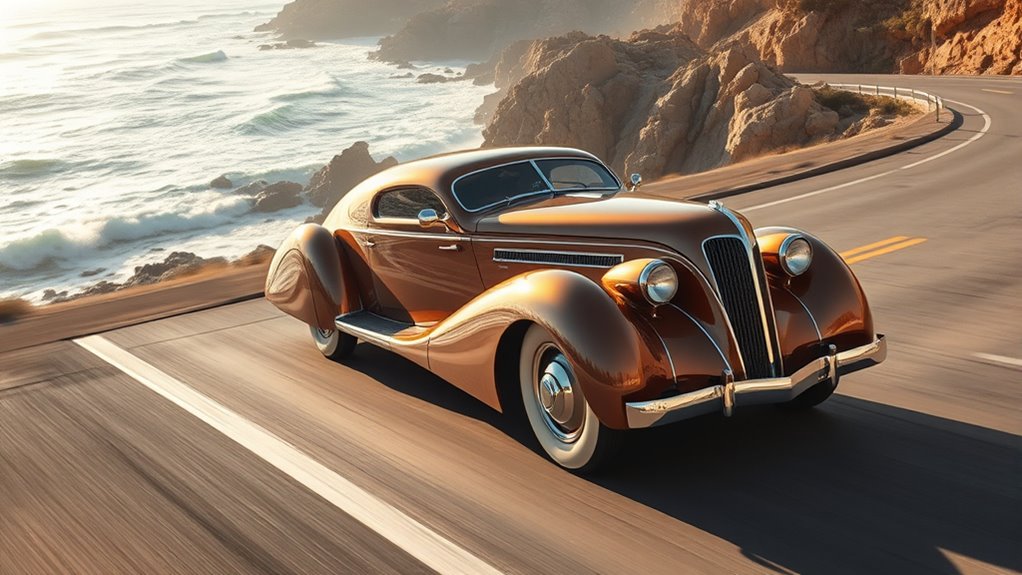
Have you ever noticed the sleek, aerodynamic look of buildings and vehicles from the early 20th century? That’s the hallmark of Streamline Moderne, a style that emerged in the 1930s as a response to the rapid advancements in transportation and technology. Its aesthetic influences draw heavily from the desire to evoke speed, efficiency, and modernity. You’ll see this reflected in the architectural features, which emphasize smooth curves, horizontal lines, and a sense of motion. Unlike the more ornate Art Deco style that preceded it, Streamline Moderne strips away unnecessary embellishments, favoring clean, streamlined forms that suggest movement even when still.
When you look at buildings designed in this style, you’ll notice how the aesthetic influences shape every detail. The emphasis on aerodynamic shapes isn’t just about looks; it’s about aligning architecture with the technological innovations of the time—think of ocean liners, trains, and automobiles. These influences are evident in the rounded corners, porthole windows, and long horizontal banding that create a sense of speed and progress. The architectural features often include rounded corners, flat roofs, and smooth wall surfaces made from stucco, glass blocks, or metal. These elements work together to produce a sleek, unified appearance that feels both futuristic and functional.
You’ll also see how the aesthetic influences extend to the use of materials and decoration. Chrome accents, glass blocks, and neon lighting became common, emphasizing the style’s affinity for shiny, reflective surfaces that catch and play with light. The architectural features promote simplicity and efficiency, which was a deliberate move away from the ornate detailing of earlier styles. Instead of intricate carvings or floral motifs, you get streamlined forms that seem to propel forward, embodying a sense of optimism and technological progress that defined the era. Additionally, the architectural features often incorporate new materials like aluminum and stainless steel, highlighting the era’s focus on innovation and modern manufacturing techniques.
In essence, the aesthetic influences of Streamline Moderne reflect a desire to look ahead—to embody speed, modernity, and the future. Its architectural features serve that purpose well, creating structures that look like they’re in motion, even when stationary. This style captures the spirit of innovation and the fascination with machines that characterized the 1930s. When you’re inside or looking at a building in this style, you’re witnessing a visual language that celebrates progress, sleekness, and the sleek, aerodynamic aesthetic that continues to influence design today.
Frequently Asked Questions
How Did Streamline Moderne Influence Modern Architectural Design?
You see how streamline Moderne influences modern architecture through its futuristic aesthetics and aerodynamic design. It encourages you to prioritize sleek lines, curved forms, and smooth surfaces, making buildings more visually dynamic and efficient. This style inspires current trends like glass facades and organic shapes, emphasizing motion and progress. By adopting these principles, you create spaces that feel innovative, functional, and aligned with the sleek, forward-looking spirit of today’s architectural landscape.
What Are the Key Materials Used in Streamline Moderne Buildings?
Imagine walking into a Streamline Moderne building like the Chrysler Air Terminal, where sleek curves and horizontal lines catch your eye. You’ll notice the key materials include stucco, glass, aluminum, and sometimes stainless steel, chosen for their smooth finishes and durability. These building materials, combined with advanced construction techniques, help create the streamlined, aerodynamic look that defines this style, emphasizing speed and modernity.
Which Famous Landmarks Feature Streamline Moderne Elements?
You’ll notice famous landmarks like Miami’s Ocean Drive, the Hoover Dam, and the Brooklyn Bridge featuring streamline features. These landmarks showcase sleek curves, rounded edges, and aerodynamic forms typical of the Streamline Moderne style. These design elements emphasize speed and efficiency, making the structures visually dynamic. As you explore, see how these landmarks embody the elegance and modernity of late Art Deco, blending form and function seamlessly.
How Does Streamline Moderne Differ From Traditional Art Deco?
You’ll notice that Streamline Moderne differs from traditional Art Deco by emphasizing sleek, aerodynamic forms over ornate luxury motifs. It features smooth curves, long horizontal lines, and minimal geometric patterns, giving a sense of speed and efficiency. Unlike the decorative excess of classic Art Deco, this style focuses on clean, streamlined shapes, often inspired by transportation design. It’s all about modernity, simplicity, and a futuristic feel, making it distinctly different and more functional.
Are There Contemporary Designs Inspired by Streamline Moderne?
You’ll notice contemporary designs inspired by streamline moderne, like Tesla’s sleek electric cars emphasizing automotive aesthetics with smooth curves and aerodynamic shapes. In interior decor trends, minimalist spaces incorporate streamlined furniture with clean lines and rounded edges, echoing the style’s elegance. This influence persists, blending retro-futuristic appeal with modern functionality, creating spaces and vehicles that feel both nostalgic and cutting-edge, appealing to those who favor sleek, functional design.
Conclusion
So, step into the sleek, shimmering world of Streamline Moderne, where smooth surfaces and swift shapes symbolize sophistication. This style’s seamless surfaces and sweeping curves showcase a stunning, streamlined spirit that still inspires. Embrace the elegance, energy, and effortless flow of this late Art Deco style, and let its timeless taste take your design dreams to new heights. With its bold beauty and boldness, Streamline Moderne continues to captivate and charm with its cool, contemporary charm.