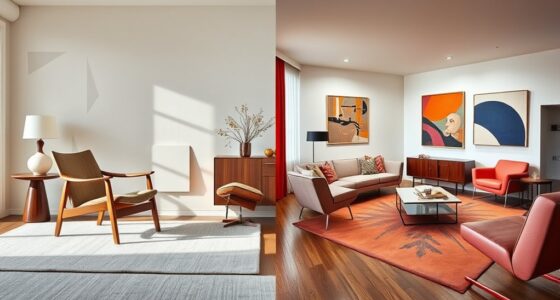
The Moonshot and the 1960s space race heavily influenced design by emphasizing sleek, futuristic styles rooted in innovation and adventure. You’ll notice this in the popularity of metallic finishes, bold geometric patterns, and streamlined shapes in furniture, architecture, and fashion. Space exploration’s excitement inspired a cultural shift toward modern, high-tech aesthetics that symbolize progress and daring. If you continue exploring, you’ll discover how these influences shaped everything from everyday objects to iconic fashion trends.
Key Takeaways
- The Moonshot inspired sleek, futuristic aesthetics emphasizing streamlined forms and aerodynamic designs in architecture and consumer products.
- Space exploration themes introduced bold geometric patterns and metallic finishes, reflecting technological mastery and adventure.
- 1960s design adopted space-inspired motifs, such as rocket shapes and shuttle imagery, influencing fashion, décor, and graphic arts.
- Innovations in materials, like metallic fabrics and shiny surfaces, emerged to emulate astronaut suits and spacecraft exteriors.
- The cultural fascination with space fostered a perception of progress and daring, shaping modern aesthetics towards innovation and exploration.
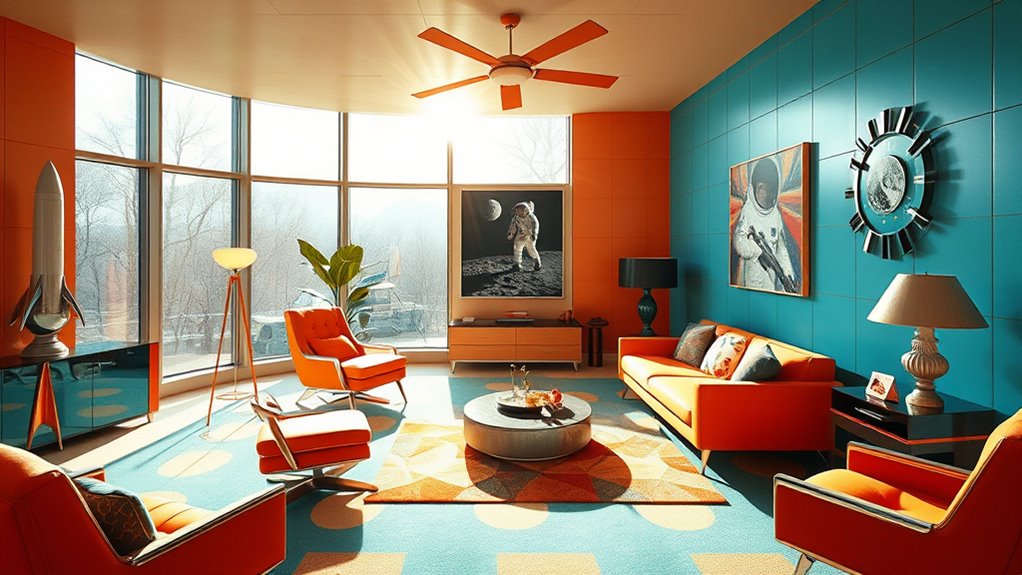
The fascination with rockets and space exploration led to a new visual language that emphasized simplicity, functionality, and futurism. You’ll notice this in the way furniture, architecture, and even automobiles of the 1960s adopted a more streamlined, aerodynamic look. The moon landing became a cultural touchstone, inspiring everything from home décor to graphic design. The sleek, metallic finishes and bold, geometric patterns borrowed directly from rocket aesthetics. This visual vocabulary helped communicate a sense of possibility, adventure, and technological mastery. It was a way for society to connect with the excitement of space exploration, making it accessible and stylish. Additionally, the emphasis on cutting-edge materials reflected the era’s fascination with high-tech innovations and progress. In fashion, space-inspired trends emerged as well, blending science fiction with everyday wear. Metallic fabrics and shiny accessories became popular, often reflecting the influence of astronaut suits and spacecraft exteriors. You might have seen metallic jumpsuits or space-themed prints that evoke the bold lines and shapes of rockets and shuttles. Designers embraced this aesthetic to symbolize innovation, daring, and the future. These trends weren’t just fleeting; they reflected a cultural shift towards embracing technology and science as integral parts of modern identity. The influence of the Moonshot transformed how people saw the future—not as distant or abstract, but as something within reach, shaped by human ingenuity and the desire to explore beyond our planet.
Frequently Asked Questions
How Did Moon Landing Technology Influence Consumer Electronics Design?
Your consumer electronics today show the influence of moon landing technology through retro futurism and ergonomic innovation. You notice sleek, space-inspired designs with smooth curves and minimalist interfaces, reflecting the optimism of the era. The integration of advanced materials and compact circuitry was driven by lunar tech, making devices more user-friendly. This blend of futuristic aesthetics and ergonomic improvements continues to shape modern gadgets, echoing the spirit of the 1960s space achievements.
What Role Did Nasa’s Funding Play in 1960S Industrial Innovation?
Ever wonder how NASA’s funding fueled industrial innovation? You see, government investment in aerospace research during the 1960s propelled advancements across industries. With NASA backing, companies pushed technological boundaries, developing new materials and manufacturing techniques. This infusion of funds sparked creativity and efficiency, inspiring industries beyond space exploration. So, NASA’s role wasn’t just about reaching the Moon; it was about transforming the entire industrial landscape through strategic investment.
Were There Any Fashion Trends Directly Inspired by Space Exploration?
You notice that space-inspired clothing became a hit in the 1960s, directly influenced by astronaut fashion trends. People started wearing metallic fabrics, helmet-inspired headgear, and sleek, futuristic styles reminiscent of space suits. These space-inspired clothing trends reflected the excitement of the era’s space race, making ordinary fashion feel innovative and forward-thinking. As a result, astronaut fashion trends profoundly impacted 1960s style, blending science fiction with everyday wear.
How Did Space Race Urgency Impact Architectural Styles of the Era?
You see how the space race urgency pushed architects to embrace futuristic aesthetics and structural experimentation. You notice bold shapes, sleek lines, and innovative materials reflecting a desire to look ahead. This era’s buildings often feature geometric forms and space-inspired elements, embodying a sense of progress and optimism. The drive to explore new frontiers inspired designs that broke traditional rules, making architecture a symbol of innovation and forward-thinking during the 1960s.
Did Space-Themed Motifs Influence Popular Art Beyond Design?
Think of cosmic abstract art as a starburst in your mind—bright, bold, and reaching for the unknown. You’ll find space-themed motifs deeply influenced popular art, inspiring retro-futuristic aesthetics that paint the era’s optimism. From album covers to fashion, these motifs transformed everyday visuals, making the cosmos a canvas for imagination. This celestial influence turned art into a voyage, inviting you to explore the universe’s limitless possibilities.
Conclusion
As you reflect on how the Moonshot fueled 1960s design, remember that necessity is the mother of invention. The Space Race pushed you to innovate, blending science and style in ways you might not have imagined. It’s proof that when you aim for the stars, you often land among new ideas and bold aesthetics. So, keep reaching high—because sometimes, chasing the impossible leads to the most extraordinary breakthroughs.