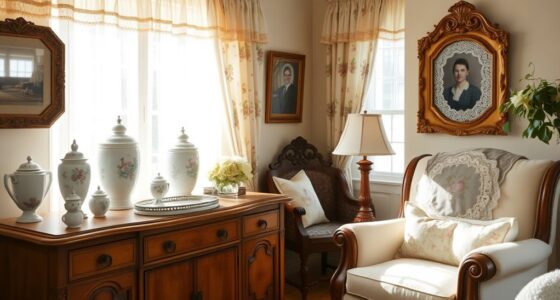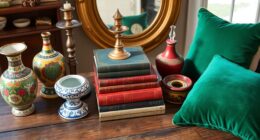
Retro luxury blends the refined geometric elegance of Art Deco with the bold excess of 1980s glam, offering a unique mix of timeless sophistication and daring expressiveness. Art Deco brings structured symmetry, luxurious materials, and intricate details, creating a calm, regal vibe. In contrast, 1980s glam emphasizes flashy finishes, neon accents, and oversized accessories for a vibrant, energetic look. Exploring both styles reveals how they can complement each other for a standout, luxurious aesthetic. If you’re curious, more insights await.
Key Takeaways
- Art Deco exudes refined geometric elegance with symmetry, luxurious materials, and intricate detailing, emphasizing timeless sophistication.
- 1980s Glam features bold metallic finishes, neon accents, and oversized accessories, creating a flamboyant, energetic visual impact.
- Art Deco’s structured, calm, and regal aesthetic contrasts with 1980s Glam’s playful excess and vibrant flamboyance.
- Decor and fashion in Art Deco focus on sleek designs and ornate details, while 1980s Glam highlights flashy, statement pieces.
- Both styles embody luxury but differ in expression: Art Deco is elegant and refined, 1980s Glam is bold and exuberant.
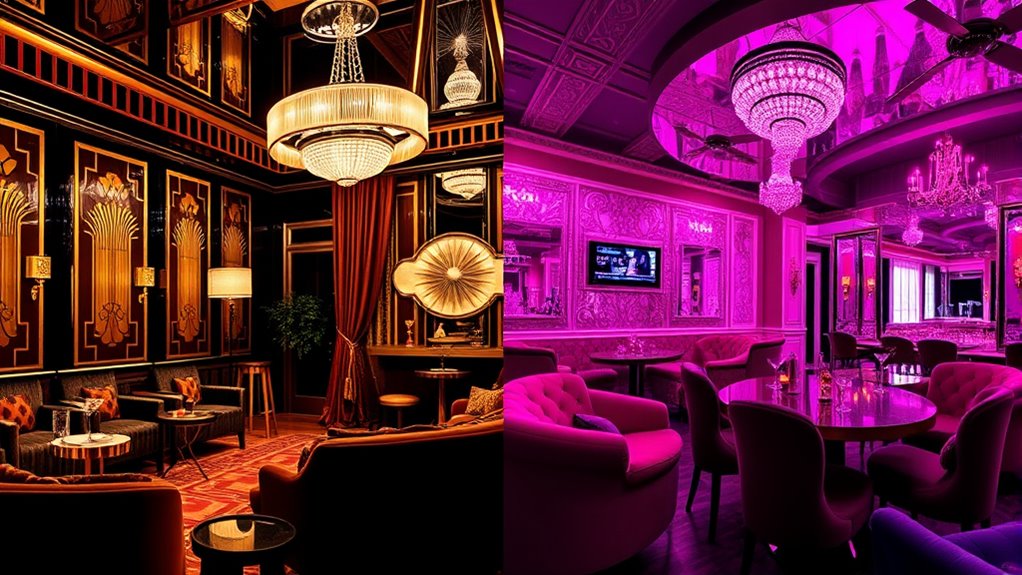
Retro luxury combines timeless elegance with nostalgic charm, allowing you to indulge in classic styles that never go out of fashion. When you explore the world of vintage-inspired design, two distinct eras stand out—Art Deco opulence and 1980s glam. Each offers a unique way to bring richness and personality into your space or wardrobe, but they do so with markedly different vibes.
Explore vintage-inspired style with Art Deco elegance or 1980s glam, each offering a distinct expression of retro luxury.
Art Deco motifs are characterized by their geometric patterns, bold lines, and a sense of structured sophistication. You’ll notice the use of luxurious materials like marble, chrome, and inlaid wood, creating a sense of grandeur that feels both refined and glamorous. When you incorporate Art Deco motifs into your decor or fashion, you’re embracing a style that’s rooted in the early 20th century but still feels fresh and relevant. The symmetrical shapes and intricate detailing evoke a sense of order and stability, yet they exude a mesmerizing allure that commands attention. Think of sleek, streamlined furniture, ornate mirrors, and jewelry featuring stepped patterns—each piece is designed to catch the eye and express a sense of timeless elegance. The use of AI tools in designing and customizing Art Deco-inspired decor can further elevate your space with innovative precision.
Transitioning into the 1980s glam, you’ll find a style that’s all about excess and boldness. The 1980s glam aesthetic bursts with metallic finishes, oversized accessories, and vibrant colors. It’s a celebration of flamboyance, where more is definitely more. You’re encouraged to embrace your daring side with statement jewelry, sequined fabrics, and high-shine footwear. The era’s aesthetic is unapologetically flashy, emphasizing luxury through bold contrasts and dramatic silhouettes. Think power suits with shoulder pads, neon accents, and shimmering embellishments—each piece screams confidence and exuberance. The spirit of 1980s glam is about creating a visual impact, making sure you stand out in any setting.
While Art Deco motifs bring a sense of structured sophistication rooted in history, 1980s glam invites you to indulge in playful extravagance. Both styles embody luxury but do so with contrasting philosophies: one through refined geometric elegance, the other through vibrant, unapologetic excess. Whether you prefer the calm, regal aura of Art Deco or the energetic, shiny appeal of 1980s glam, both allow you to express your personality and sense of style with confidence. Embracing either or blending the two results in a unique aesthetic that celebrates the best of retro luxury—timeless, bold, and irresistibly enthralling.
Frequently Asked Questions
What Are the Key Design Elements of Art Deco Luxury?
You notice that art deco luxury features bold geometric motifs and lavish ornamentation, creating a sense of glamour and sophistication. You’ll see sleek lines, symmetrical patterns, and rich materials like gold, chrome, and exotic woods. These design elements work together to convey opulence and glamour, emphasizing elegance and modernity. By incorporating these features, you bring a timeless sense of luxury and style into your space, making it truly stand out.
How Did 1980S Excess Influence Modern Interior Design?
Think of the 1980s excess as a fireworks display, exploding with boldness and flamboyance. You see it in modern interior design through luxury lifestyle choices and fashion trends that embrace opulence, shiny surfaces, and bold colors. This era’s love for over-the-top elements encourages you to mix textures, statement pieces, and glamour, making spaces feel lavish and vibrant. It’s a daring, energetic style that continues to influence contemporary aesthetics.
Which Materials Define the Opulence of Each Era?
You’ll notice that Art Deco’s opulence is defined by luxurious textiles like velvet and silk, paired with decorative veneers such as ebony and ivory, creating a sleek, glamorous look. In contrast, the 1980s exude richness through bold materials like metallic finishes and mirrored surfaces, combined with plush textiles. These materials reflect each era’s unique sense of luxury—sophistication in Art Deco and exuberance in the 1980s.
How Do Color Palettes Differ Between the Two Styles?
Imagine you’re stepping into a world of glamour—your color palette sets the tone. Art Deco’s pastel hues and shimmering jewel tones evoke sophistication, while 1980s bold color schemes burst with neon, hot pinks, and electric blues. You’ll find the former elegant and restrained, perfect for understated luxury, whereas the latter screams exuberance and excess, capturing the vibrant energy of the decade. Your choice reflects whether you prefer refined or daring aesthetics.
Are There Notable Designers Associated With Each Period?
You’ll find famous fashion icons shaping each period’s style. For Art Deco, designers like Émile-Jacques Ruhlmann and Jean Dunand popularized luxurious motifs and geometric patterns. In the 1980s, icons like Gianni Versace and Vivienne Westwood brought bold, edgy designs with signature motifs like metallics and oversized silhouettes. These designers define each era’s look, blending opulence and excess to create memorable, distinctive styles you’ll recognize instantly.
Conclusion
As you step back into these shimmering eras, remember: elegance and excess dance on a fine line. Will you embrace the refined glamour of Art Deco’s timeless allure or succumb to the bold extravagance of the 1980s? Both worlds beckon with their own charm, but it’s your choice—will you chase fleeting flash or timeless style? Ultimately, retro luxury invites you to decide: is it the whisper of sophistication or the roar of excess that truly captivates your soul?