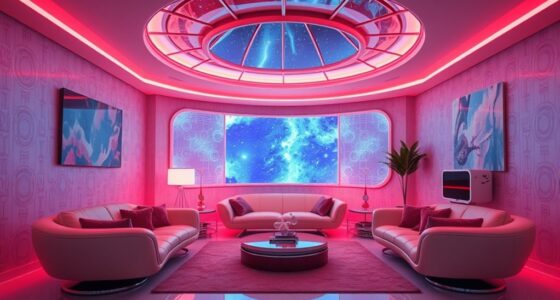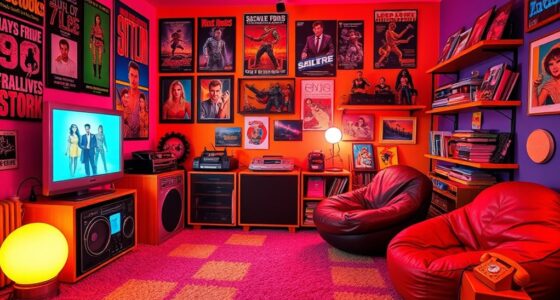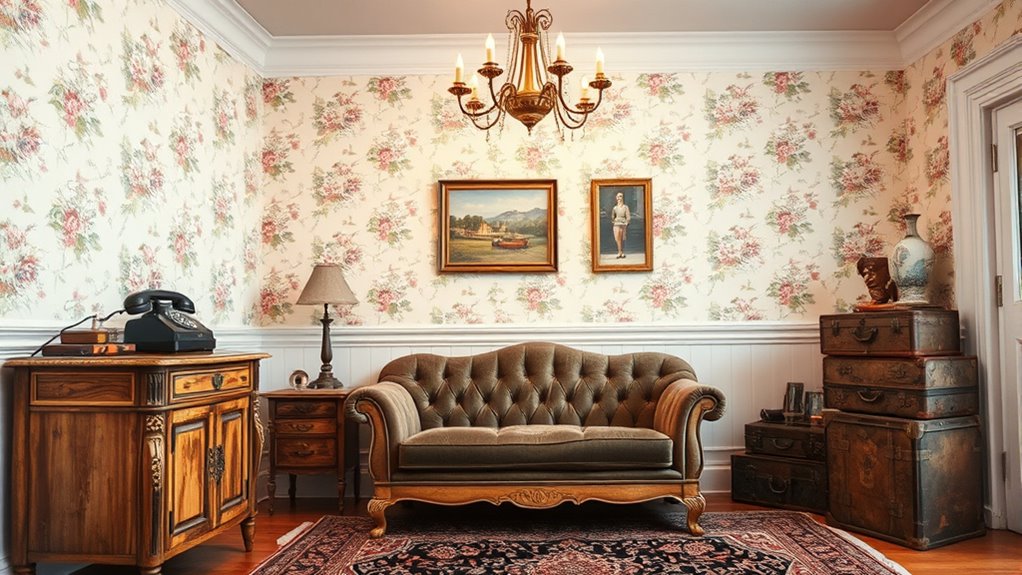

Understanding the difference between design and decor helps you create authentic vintage interiors. Design involves structural elements like architectural features and color palettes that set the overall style and vibe of the space. Decor includes finishing touches like furniture, textiles, and accessories that personalize and add character. By combining both thoughtfully, you shape a space that feels cohesive and true to its era. Keep exploring to discover how balancing these aspects enhances your vintage aesthetic.
Key Takeaways
- Design establishes the structural framework and style foundation through architectural features and color schemes.
- Decor involves finishing touches like accessories and textiles that personalize and add character to the space.
- Architectural elements define the vintage era and influence furniture and decor choices for authenticity.
- Color palettes evoke specific moods and eras, harmonizing with structural features to reinforce vintage style.
- Combining structural design and flexible decor creates a cohesive, authentic vintage interior with personalized charm.

Have you ever wondered what truly differentiates design from decor? It’s a question that often confuses many, especially when it comes to creating vintage style interiors. Design involves a strategic process that shapes the overall vision of a space, focusing on architectural elements and how they set the foundation for your aesthetic. When you think about design, you’re considering the structural features—arched doorways, crown moldings, exposed beams, or vintage mantels—that give a space its distinctive character. These architectural elements aren’t just decorative; they define the style’s authenticity and influence how you choose other elements, like furniture and accessories.
Design shapes the space with architectural features that define vintage authenticity.
Color palettes play a essential role in vintage design, but they’re more than just a matter of picking pretty shades. They help evoke a specific era or mood, whether it’s the soft pastels of the 1950s or the rich, moody hues of the Victorian period. When you’re designing a space with a vintage theme, you select a color palette that harmonizes with the architectural elements, reinforcing the overall style. For example, if you’re working with a 1920s-inspired interior, you might opt for muted golds, deep greens, and black accents to evoke the glamour of that era. These choices are deliberate, rooted in understanding the historical context and how color influences perception.
Decor, on the other hand, involves the finishing touches—how you accessorize and personalize the space once the structure and color are decided. While design sets the framework, decor transforms it into a cozy, lived-in environment. In vintage interiors, decor includes items like antique picture frames, retro lighting fixtures, vintage textiles, and curated collections of trinkets. These elements bring character and personality, making the space feel authentic and inviting. Unlike design, which is more about planning and structural choices, decor is flexible and can be swapped out or rearranged to update the look without altering the core design.
Additionally, understanding cultural influences and how they shape vintage styles can deepen the authenticity and appeal of your interior. To truly master vintage interiors, you need both. Your design provides the foundation—carefully selecting architectural elements and color palettes that reflect the era. Then, your decor adds layers of charm and personality, making the space uniquely yours. When approached thoughtfully, the distinction between design and decor becomes clear: one creates the framework, and the other adds the finishing touches that breathe life into your vintage vision.
Top picks for "design decor approach"
Open Amazon search results for this keyword.
As an affiliate, we earn on qualifying purchases.
Frequently Asked Questions
How Do I Blend Vintage With Modern Elements Seamlessly?
To blend vintage with modern elements seamlessly, start by mixing eras thoughtfully, pairing vintage furniture with sleek, contemporary pieces. Use color pairing to create harmony—combine neutral tones with bold accent colors for balance. Incorporate modern accessories like lighting or artwork to update the space without overpowering vintage charm. Keep a consistent style theme, and don’t be afraid to experiment; it’s all about creating a cohesive, stylish look.
What Are Common Mistakes in Vintage Interior Design?
You might overlook antique authenticity, risking your vintage space feeling inauthentic or cluttered. Avoid mismatched or overly bright color palettes that clash with vintage pieces, disrupting harmony. Don’t forget to balance modern elements carefully, or they can overshadow your antiques. Keep the focus on authentic vintage items, and choose a cohesive color palette that enhances, rather than competes with, your vintage aesthetic. This guarantees a timeless, harmonious interior.
How Can I Update Vintage Spaces Without Losing Charm?
You can update vintage spaces without losing charm by carefully choosing antique accessories that add character, while modernizing with fresh furniture or lighting. Focus on color palette choices that complement the vintage vibe—neutral tones with pops of bold color work well. Keep balance in mind, blending old and new elements seamlessly, so the space feels refreshed yet retains its nostalgic appeal. This approach maintains charm while giving your space a stylish upgrade.
What Are Budget-Friendly Ways to Achieve Vintage Decor?
They say “a penny saved is a penny earned,” and that’s true for vintage decor. You can achieve this look on a budget by trying DIY projects and thrifting regularly. Repurpose old furniture, create unique accessories, and hunt for vintage finds in thrift stores or flea markets. These affordable methods help you craft a charming vintage space without breaking the bank, proving that creativity often beats cost.
Which Vintage Styles Suit Small Spaces Best?
You’ll find that vintage styles like Shabby Chic and Cottagecore suit small spaces best. Incorporate antique furniture pieces to add character without overwhelming your room. Use floral patterns in textiles or wallpaper to create a cozy, charming vibe. Keep clutter minimal and choose light, soft colors to make the space feel larger. These approaches help you achieve a vintage look that’s stylish and functional in small areas.
Conclusion
Whether you’re embracing design or decorating, remember that both reflect your personality, your passion, your story. Design shapes the vision, creates the structure, sets the tone. Decor adds the character, infuses the charm, completes the look. Together, they transform a space into a sanctuary. So, choose what speaks to you, blend what inspires you, and let your vintage style tell your unique story. Because in the end, it’s your home, your style, your soul.