From the 1900s to the 1980s, design styles shifted dramatically. You’ll see bold Art Deco patterns with luxurious materials, moving to minimalist Bauhaus influences emphasizing simplicity. The mid-century embraced playful, comfortable aesthetics, while the 1960s and 70s celebrated eclectic, expressive vibes. Finally, the 1980s introduced high-tech, futuristic looks with neon accents and sleek finishes. If you continue exploring, you’ll discover how each decade’s style reflects the social and technological changes of the era.
Key Takeaways
- The 1900s–1920s featured Art Deco with bold geometric patterns, luxurious materials, and glamorous color schemes.
- The 1920s–1930s shifted to Bauhaus-inspired minimalism, emphasizing functionality, subdued colors, and clean typography.
- The 1950s showcased post-war optimism with pastel palettes, playful patterns, and rounded, cheerful fonts.
- The 1960s–1970s embraced eclectic styles with psychedelic patterns, earthy tones, and expressive, bold typography.
- The 1980s–1990s were characterized by high-tech aesthetics, metallic finishes, neon accents, and futuristic fonts.

Throughout history, design styles have evolved in response to cultural shifts, technological advances, and changing tastes. If you’re exploring how design has transformed over the decades, understanding these influences helps you grasp why certain aesthetics, like interior color palettes and typography trends, came to define each era.
Design styles evolve with culture and technology, shaping interior palettes and typography across eras.
In the early 20th century, the Art Deco movement emerged, characterized by bold geometric patterns, luxurious materials, and rich, contrasting colors. You’d notice interiors featuring shiny metals, lacquered surfaces, and vibrant color schemes that conveyed glamour and optimism. Typography trends from this period favored sleek, sans-serif fonts that matched the streamlined, modern look, emphasizing clarity and sophistication. These styles reflected a society enthusiastic for progress and luxury, embracing modernity with open arms.
Moving into the 1920s and 1930s, the influence of the Bauhaus school brought a shift toward minimalism and functional design. Interior color palettes became more subdued, favoring earthy tones and monochrome schemes that emphasized simplicity and utility. Typography trends leaned heavily toward clean, sans-serif fonts that prioritized readability, mirroring the era’s focus on practicality and innovation in industrial design. This period marked a move away from ornate decoration towards stripped-down elegance, aligning with the growing influence of technology and mass production.
The post-war boom of the 1950s introduced a new optimism, reflected in lively interiors with pastel shades, bold accent colors, and playful patterns. The interior color palettes became brighter and more welcoming, echoing the era’s focus on comfort and family life. Typography trends also evolved, with the rise of playful, rounded fonts that complemented the cheerful, optimistic mood. This decade was about creating inviting spaces that celebrated modern convenience, with design becoming more accessible and user-friendly.
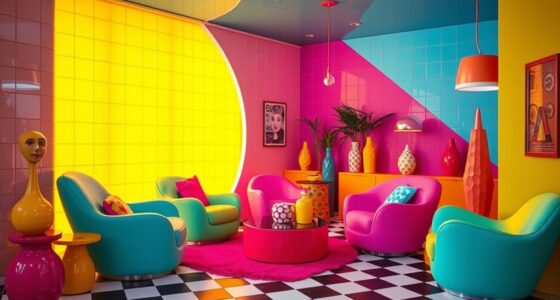
The 1960s and 1970s brought countercultural influences, leading to eclectic and vibrant styles. Interiors featured psychedelic patterns, earthy tones, and experimental color combinations. The interior color palettes often incorporated warm, saturated hues that expressed freedom and individuality. Typography trends mirrored this, embracing bold, expressive fonts that broke traditional rules. These styles celebrated self-expression, making spaces feel more personalized and dynamic.
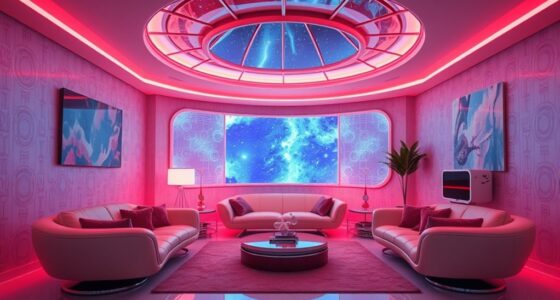
By the 1980s and 1990s, design shifted towards sleek, high-tech aesthetics. Interiors adopted metallic finishes, neon accents, and bold geometric patterns. Color palettes became more dramatic, with black and neon hues dominating. Typography trends favored futuristic, angular fonts that conveyed innovation. This era reflected the rise of digital technology, emphasizing a sleek, cutting-edge look that was both functional and visually striking.
Understanding this timeline helps you see how each decade’s design reflects its cultural spirit, from bold luxury to minimalist practicality and beyond. Additionally, the influence of technological advances is evident in the typography trends, which shifted to more modern and streamlined fonts over time. Whether you’re revamping your space or just appreciating design history, recognizing these trends in interior color palettes and typography trends offers insight into the evolving story of style.
Top picks for "decade design styl"
Open Amazon search results for this keyword.
As an affiliate, we earn on qualifying purchases.
Frequently Asked Questions
How Do Cultural Influences Shape Design Styles Over Decades?
You can see how cultural influences shape design styles over decades through cultural symbolism and global fusion. As you observe trends, you’ll notice designers incorporate symbols, motifs, and colors rooted in specific cultures, reflecting their values and history. Global fusion blends diverse cultural elements, creating innovative styles that resonate worldwide. This evolution allows design to be a mirror of societal changes, embracing multiculturalism and the interconnectedness of our modern world.
What Are Emerging Design Trends for the Upcoming Decade?
They say “the future belongs to those who prepare for it,” and upcoming design trends reflect that. You’ll see a rise in futuristic minimalism, emphasizing sleek, functional spaces, and biophilic aesthetics, bringing nature indoors for wellness. Expect eco-friendly materials, smart technology, and organic shapes to dominate. Your design choices will likely blend simplicity with sustainability, creating environments that are both innovative and calming. Stay ahead by embracing these evolving, nature-inspired ideas.
How Can I Incorporate Vintage Styles Into Modern Interiors?
To incorporate vintage charm into your modern interior, start by selecting key vintage pieces like a retro sofa or antique accents. Mix these with sleek, contemporary furniture for a modern fusion look. Use vintage-inspired accessories, such as patterned rugs or ornate lighting, to add warmth and character. Keep a balanced color palette and avoid overwhelming the space, allowing vintage charm to enhance your modern design seamlessly.
Which Design Styles Are Most Sustainable and Eco-Friendly?
Think of your home as a garden, thriving with eco-friendly practices. You’ll find that design styles like Scandinavian and Japandi shine brightest in sustainability, using sustainable materials that grow like roots and promote eco consciousness. These styles embrace minimalism, reducing waste and energy use. By choosing eco-friendly practices, you nurture a space that’s not only stylish but also kind to the planet, making your home a lush oasis of mindful living.
How Have Technological Advancements Impacted Design Aesthetics Historically?
Technological advancements have considerably shaped design aesthetics through digital innovation and material evolution. You see this in how digital tools enable precise, creative expression, transforming traditional styles. Material evolution introduces sustainable, innovative materials that influence aesthetics, making designs more eco-friendly and functional. As you incorporate these advancements, your designs become more dynamic, versatile, and aligned with modern trends, reflecting a seamless blend of technology and artistic vision throughout history.
Conclusion
As you trace the evolution of design styles through the decades, you realize it’s like a tapestry woven with innovation, culture, and shifting tastes. Each era adds a new thread, shaping the vibrant fabric of our aesthetic landscape. Embrace this journey, for understanding past styles helps you craft your own unique expression. Just as a river flows onward, your design choices flow from history, guiding you toward a future inspired by the rich currents of the past.