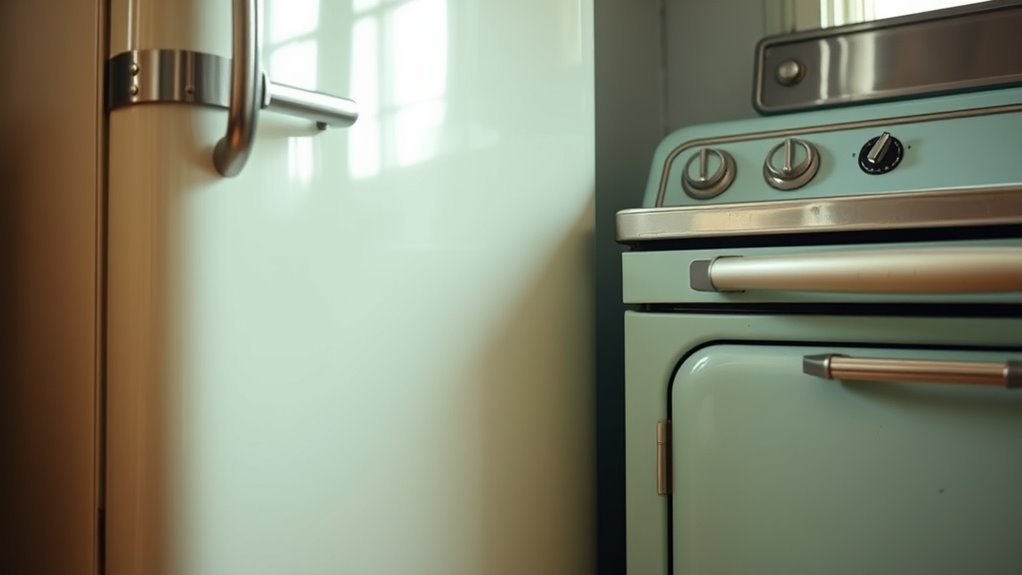

Using vintage appliances like old fridges and ovens can be risky if their electrical wiring and components haven’t been thoroughly inspected and updated. Many built before modern safety standards may have frayed wiring, faulty thermostats, or worn-out parts that could cause electrical fires or leaks. To guarantee safety, you should have a professional evaluate their condition and perform any necessary upgrades. Keep exploring to discover essential steps for safely restoring and maintaining vintage appliances.
Key Takeaways
- Vintage appliances may have outdated wiring and components, increasing fire and electrical hazards if not properly inspected.
- Regular safety evaluations, including professional assessments, are essential before using vintage fridges or ovens.
- Upgrading cords, plugs, and internal parts helps ensure electrical safety and compliance with modern standards.
- Testing appliances in controlled settings can identify potential issues with heating elements or refrigerant leaks.
- Prioritizing safety through inspections and necessary repairs allows for safe enjoyment of vintage appliances while preserving their charm.

Vintage appliances add charm and character to any home, but using them requires some care and understanding. When you decide to incorporate old refrigerators or ovens, safety concerns should be at the forefront. Many vintage appliances were built before modern safety standards, so they may pose risks if not properly checked. For example, wiring might be frayed or outdated, increasing the chance of electrical fires. Components like thermostats and switches could be unreliable or worn out, which might lead to overheating or malfunction. Because of these issues, it’s essential to evaluate the condition of each appliance thoroughly before plugging it in or using it regularly.
Restoration tips can help you guarantee your vintage appliances are safe for everyday use. Start by inspecting the electrical wiring carefully—if you’re not experienced with electrical work, consider hiring a professional to assess and upgrade it. Replacing old cords and plugs with modern, grounded alternatives can notably improve safety. When it comes to internal parts, check for corrosion, rust, or damage that could compromise the appliance’s functionality. Cleaning and restoring the internal components not only prolongs the lifespan but also helps prevent potential hazards like leaks or electrical shorts.
You should also consider replacing or refurbishing key parts such as seals, gaskets, and thermostats. These components tend to degrade over time, affecting the appliance’s performance and safety. For refrigerators, ensure the cooling system functions efficiently and that there are no refrigerant leaks—these can be harmful to health and the environment. For ovens, confirm that the heating elements are in good condition and that the gas connections (if applicable) are secure and free of leaks. Additionally, understanding appliance safety standards can guide you in assessing whether your vintage piece meets current safety requirements.
Another vital step is testing the appliance in a controlled setting before committing to regular use. Use a multimeter to check electrical circuits and monitor temperature controls. If you’re unsure about any aspect of restoration, consulting an appliance repair expert is wise. They can help you identify potential safety concerns and recommend appropriate updates, making sure you enjoy your vintage piece without risking safety.
In short, while vintage appliances add undeniable charm to your home, always prioritize safety. Proper restoration, regular inspections, and, when necessary, upgrades make it possible to preserve their beauty while minimizing risks. With some careful attention and expert advice, you can enjoy the nostalgic appeal of these timeless pieces confidently and safely.
Top picks for "vintage applianc fridg"
Open Amazon search results for this keyword.
As an affiliate, we earn on qualifying purchases.
Frequently Asked Questions
Are Vintage Appliances Energy-Efficient Compared to Modern Models?
Vintage appliances generally aren’t as energy-efficient as modern models, so you might see lower energy savings with older fridges and ovens. While they can add charm, their outdated technology often leads to higher energy consumption. When considering a cost comparison, keep in mind that increased energy use can raise your utility bills over time. Upgrading to newer appliances could save you money in the long run and improve energy efficiency.
How Often Should Vintage Appliances Be Inspected for Safety?
You should inspect your vintage appliances at least once a year to guarantee safety. Regular checks help catch potential hazards like deteriorated electrical wiring before they turn into disasters. Make sure your appliances have proper certification, which verifies they meet safety standards. Don’t wait for a catastrophe—routine inspections keep your vintage treasures safe and functioning smoothly, preventing dangerous malfunctions and giving you peace of mind in your home.
Can Vintage Appliances Be Repaired or Refurbished Easily?
Yes, vintage appliances can often be repaired or refurbished, but restoration challenges exist. You’ll need to find compatible parts, which aren’t always easy to locate, and guarantee proper electrical safety. Often, fixing old wiring or outdated components requires specialized skills. While refurbishment can preserve their charm, you should expect some effort to match new parts with the original appliance to maintain functionality and safety.
Do Vintage Appliances Meet Current Safety Standards and Regulations?
You might be surprised that only about 10% of vintage appliances meet today’s safety standards. Vintage appliances often lack current safety features, and they may not conform to modern regulations. While some come with warranty coverage, manufacturers rarely recall old models, leaving you responsible for safety issues. Always have a professional inspect vintage appliances before use to ensure they’re safe and up-to-date with current safety standards.
What Are the Environmental Impacts of Using Vintage Versus New Appliances?
Using vintage appliances can be environmentally friendly because of their durability, reducing waste and the need for recycling benefits. Old appliances often last longer, which means fewer resources are used to produce new ones. While they may not be as energy-efficient as modern models, maintaining vintage appliances helps lessen environmental impact by extending their lifespan and decreasing the demand for manufacturing new products.
Conclusion
Embracing vintage appliances is like inviting a piece of history into your home’s heartbeat. While they carry charm and nostalgia, remember they might not dance to today’s safety tune. Treat them like delicate stories—appreciate their beauty but handle with care. With careful inspection and occasional upgrades, you can keep these relics humming safely, blending timeless elegance with modern peace of mind. After all, preserving their character shouldn’t mean risking your home’s safety.