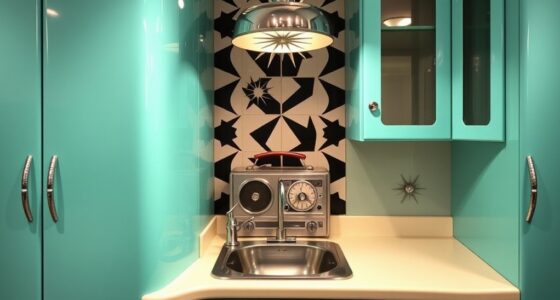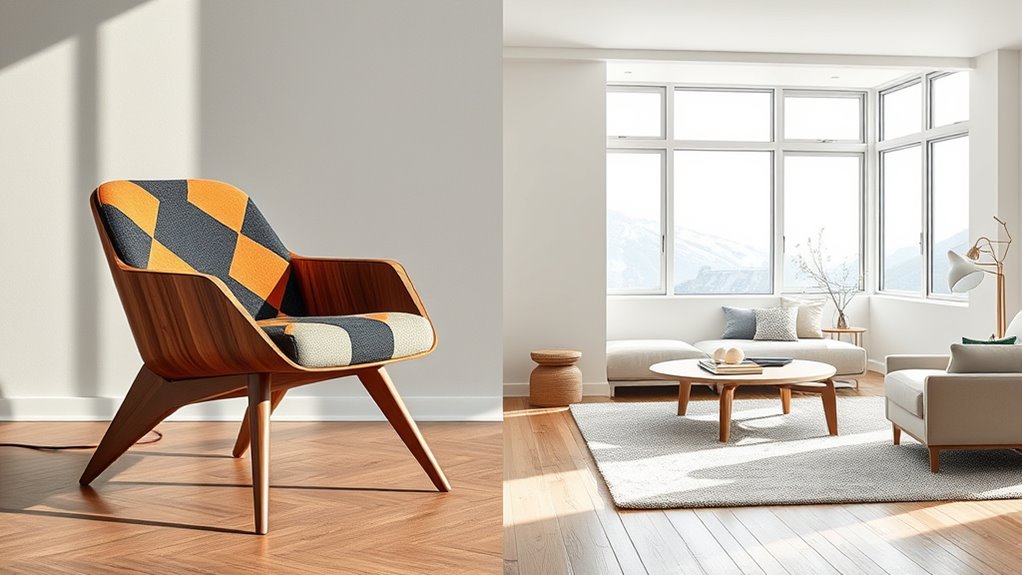

Mid-Century and Scandinavian styles both emphasize form and function but differ in vibe. Mid-Century features bold, statement pieces with warm colors, sleek finishes, and artistic shapes, creating an energetic and retro atmosphere. Scandinavian focuses on minimalism, light colors, natural materials, and effortless simplicity, fostering calm and cozy environments. If you’d like to discover how these contrasting styles can shape your space, explore more about their unique characteristics and design principles.
Key Takeaways
- Mid-Century emphasizes bold, statement furniture with warm colors and sleek finishes, while Scandinavian favors minimalism and light, neutral tones.
- Mid-Century features sculptural shapes and rich materials like polished wood and metals; Scandinavian highlights natural textures like light oak and linen.
- Mid-Century creates an energetic, curated ambiance; Scandinavian promotes tranquility, simplicity, and a cozy, clutter-free environment.
- Mid-Century appeals to those seeking retro flair and vibrant accents; Scandinavian attracts those desiring calm, open, and functional spaces.
- Both styles prioritize sustainability but differ in aesthetic focus: artistic statement versus understated practicality.
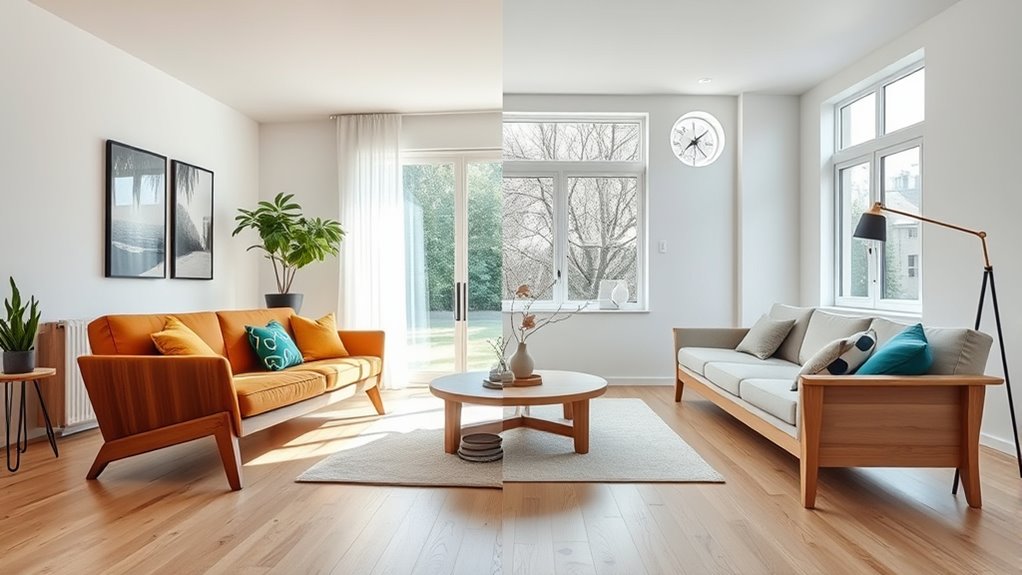
Ever wonder how Mid-Century and Scandinavian design styles compare? Both have left a considerable mark on modern interiors, yet they carry distinct characteristics that set them apart. Understanding these differences can help you choose the style that best reflects your personality and aesthetic preferences. Let’s start with their approach to design philosophy. Mid-Century style emphasizes form and function, blending sleek lines with innovative shapes. It often features bold, statement pieces that draw attention, creating a sense of curated sophistication. Scandinavian design, on the other hand, champions a minimalist approach. It’s about simplicity, functionality, and creating a calm, inviting space. The focus is on clean lines, clutter-free environments, and a sense of effortless beauty that doesn’t feel overdone. Both styles also prioritize energy efficiency and sustainable materials, aligning with modern ecological values.
Mid-Century emphasizes bold forms and statement pieces, while Scandinavian focuses on minimalism and cozy simplicity.
When it comes to color palette choices, these styles diverge markedly. Mid-Century design tends to embrace warmer, richer hues. Think mustard yellows, avocado greens, burnt oranges, and deep browns. These colors often appear on furniture or accent walls, giving a space a vibrant, energetic feel. The palette can be bold but balanced, with contrasting shades that highlight the geometric forms typical of the style. Scandinavian interiors, however, favor a lighter, more subdued color scheme. Whites, soft grays, pastels, and natural wood tones dominate Scandinavian spaces, creating a bright, airy atmosphere. This minimalist approach to color helps to amplify natural light and foster a sense of tranquility. It’s about keeping things simple and letting the textures and materials take center stage.
In terms of textures and materials, Mid-Century design often incorporates polished wood, plastics, and metals, emphasizing sleek finishes and smooth surfaces. Scandinavian style leans towards natural materials like light oak, linen, wool, and leather, which contribute to a warm, cozy ambiance. The furniture in Scandinavian spaces tends to be more understated and functional, prioritizing comfort without sacrificing style. Both styles value craftsmanship, but Mid-Century pieces often feature more sculptural, artistic elements, whereas Scandinavian furniture emphasizes practicality and durability.
Ultimately, your choice between Mid-Century and Scandinavian design hinges on what vibe you want to create. If you love bold colors, statement pieces, and a touch of retro flair, Mid-Century might be your go-to. If you prefer a serene, light-filled environment with a minimalist approach, Scandinavian style could be more your speed. Both styles celebrate timeless design principles but cater to different aesthetic sensibilities. Recognizing these nuances will help you craft a space that feels authentic to your personality and lifestyle.

Karl home Accent Chair Mid-Century Modern Chair with Pillow Linen Fabric Upholstered Lounge Arm Chair with Solid Wood Frame & Soft Cushion for Living Room, Bedroom, Balcony, Beige
MID-CENTURY CHARMING – Designed with curved arms and flared legs, this accent chair with extra pillow is full…
As an affiliate, we earn on qualifying purchases.
As an affiliate, we earn on qualifying purchases.
Frequently Asked Questions
How Do Materials Differ in Mid-Century and Scandinavian Furniture?
You’ll notice that mid-century furniture often uses rich wood finishes like walnut, with smooth, polished surfaces, emphasizing warmth and luxury. Scandinavian pieces favor lighter woods such as pine or oak, with matte or untreated finishes that highlight natural grain. Fabric choices differ too; mid-century styles often incorporate bold, patterned textiles, while Scandinavian designs lean toward simple, neutral fabrics that create a calm, minimalist aesthetic.
Which Style Is More Sustainable or Eco-Friendly?
You’ll find Scandinavian design tends to be more eco-friendly, thanks to its focus on sustainable material choices and eco-conscious manufacturing processes. This style prioritizes natural, renewable resources like light woods and minimal chemical treatments. In contrast, mid-century furniture often uses a wider range of materials, including plastics and plywood, which may be less sustainable. If sustainability matters most to you, Scandinavian design aligns better with your eco-friendly values.
Are There Cultural Influences Specific to Each Design Style?
You notice that each style reflects its origins vividly; Scandinavian design embodies cozy minimalism inspired by Nordic landscapes, emphasizing cultural symbolism like simplicity and functionality. Mid-century modern, rooted in post-war optimism, showcases bold shapes and innovative craftsmanship influenced by American and European cultures. You see regional craftsmanship shine through in handcrafted woodwork and textiles, making each piece a celebration of local traditions and cultural identity.
How Do Price Points Compare Between Mid-Century and Scandinavian Pieces?
You’ll find that mid-century pieces often have a higher price variation due to their vintage appeal and designer origins, placing them on a broader affordability spectrum. Scandinavian design tends to be more affordable overall, thanks to mass production and simpler materials. If you’re budget-conscious, Scandinavian pieces usually offer better value, but if you seek historical or collectible items, mid-century furniture might come with a higher price tag.
Can These Styles Be Blended Effectively in Interior Design?
Yes, you can blend mid-century and Scandinavian styles effectively in your interior design. Focus on maintaining color harmony by using neutral tones with pops of bold color, and pay attention to furniture proportions—select pieces that balance sleek, clean lines with cozy, functional shapes. Combining these styles creates a harmonious space that feels both timeless and inviting, highlighting the best of both worlds without overwhelming your room.

Honyee Modern Oval Coffee Table, Small Coffee Tables for Living Room – Oak Wood Top with Solid Legs, Wooden Center Table Easy Assembly for Living Room &Bedroom,Office, Natural
Stylish Oval Coffee Table: this unique coffee table features a sleek oval design that adds elegance to any…
As an affiliate, we earn on qualifying purchases.
As an affiliate, we earn on qualifying purchases.
Conclusion
While mid-century and Scandinavian styles often seem similar, their differences truly shape your space. If you prefer bold, vintage-inspired pieces, mid-century might be your choice. But if you want a minimal, cozy vibe, Scandinavian design fits perfectly. Don’t worry—mixing elements from both styles can create a unique, personalized look. Ultimately, your space should reflect your personality, blending these iconic styles to craft a home that feels both stylish and comfortable.

ONBRILL 44" Sideboard Buffet Cabinet with Outlet & 2 Open Storage Spaces, Fluted Sideboard Cabinet with Sliding Door & Adjustable Shelves, Mid-Century Accent Coffee Bar Console Table with Wooden Feet
SIDEBOARD CABINET WITH BUILT-IN OUTLET: This sideboard cabinet boasts mid-century modern aesthetics, making it a showstopping accent piece…
As an affiliate, we earn on qualifying purchases.
As an affiliate, we earn on qualifying purchases.

Signature Design by Ashley Galliden Farmhouse Dining Table, Light Brown
DINING TABLE: This dining table expertly refines the raw beauty of wood, bringing a rustic vibe to urban…
As an affiliate, we earn on qualifying purchases.
As an affiliate, we earn on qualifying purchases.